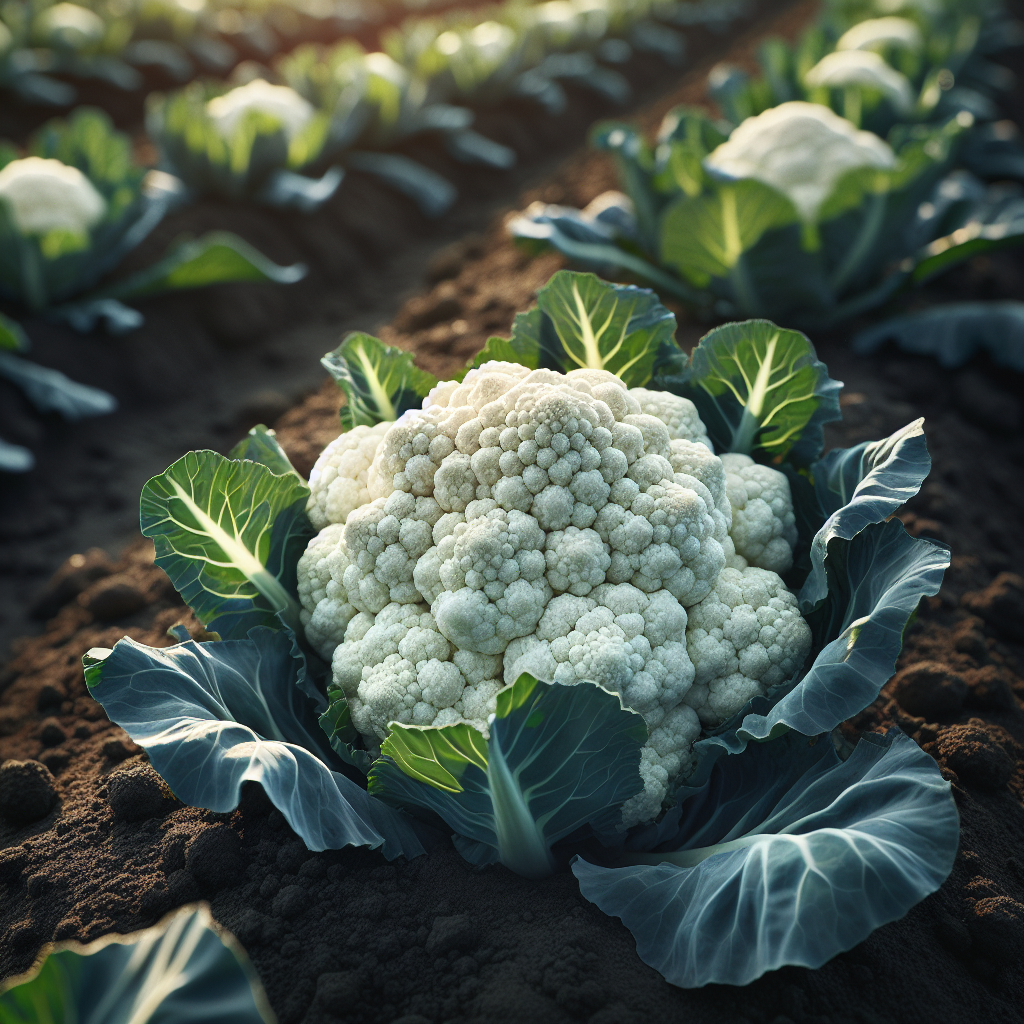
Introduction to Snowball Cauliflower
A traditional white cauliflower type, Snowball is one of the most recognizable heirloom-style market classes within cauliflower production. It is valued for producing medium to large, smooth, tightly packed white curds surrounded by substantial wrapper leaves that help protect quality. In many seed catalogs, "Snowball" has historically referred not just to one exact line, but to a family of closely related strains selected for uniform white heads, relatively short maturity, and dependable cool-weather performance.
For growers, the appeal is straightforward: when managed well, this variety can produce attractive, dense heads with a clean dome shape and mild, sweet flavor. However, it is less forgiving than many brassicas. Cauliflower is among the most exacting cool-season vegetables because the edible curd forms only when plant growth remains uninterrupted. Even short stress periods from drought, heat, root damage, nutrient deficiency, or erratic temperature can produce small "button" heads, ricey curds, loose texture, or uneven maturity.
Snowball is especially well suited to regions with long, mild springs or cool autumns. In hot climates, it performs best as a fall-to-winter crop. In cold temperate areas, it is often grown for late spring or early summer harvest from transplants. Compared with some colorful or loose-curded modern specialty types, Snowball is bred for the classic market-standard white head. For a broader species overview, see our Cauliflower guide.
Botanical Profile of Snowball Cauliflower
This crop belongs to the Brassicaceae family, which includes cabbage, broccoli, kale, mustard, and turnips. Botanically, cauliflower is a modified inflorescence: the edible head is composed of proliferated, arrested flower meristems that develop into the curd before elongating into true flower stalks if left unharvested.
Snowball plants generally form a rosette of broad, blue-green to gray-green leaves with a waxy bloom that helps reduce moisture loss. Mature plants typically reach 45-70 cm in height and 50-75 cm in spread, depending on spacing, fertility, and season. The root system is relatively shallow compared with deep-rooted crops, with the majority of active feeder roots concentrated in the upper 20-30 cm of soil. This shallow rooting explains why consistent irrigation and careful cultivation are so important.
Key varietal traits commonly associated with Snowball strains include:
- White, compact, hemispherical to slightly flattened curds
- Fine bead size and dense internal structure
- Moderate wrapper leaf coverage, often good enough to assist natural blanching
- Strong preference for cool, even growing conditions
- A maturity window often around 65-85 days from transplant, depending on strain and season
Unlike broccoli, which tolerates moderate variation and still produces side shoots, cauliflower is more singular in its production habit. One high-quality head is the goal. Once the curd initiates, marketable success depends on maintaining a narrow range of favorable conditions so the curd enlarges without discoloring, loosening, or developing fuzziness.
Snowball is generally grown as an annual vegetable, though the species is biennial by nature. If not harvested and if vernalization and seasonal conditions align, the plant will bolt, flower, and set seed in a second growth phase.
Soil, pH, and Climate Requirements for Snowball Cauliflower
This crop performs best in deep, friable, highly fertile soils rich in stable organic matter. Ideal texture is a moisture-retentive but well-drained loam or sandy clay loam. Heavy clay can work if well structured and amended with compost, but poorly drained soil sharply increases risk of root stress, stunting, and diseases such as Damping-off and Black rot. Very sandy soils can also be used, but they require more frequent irrigation and split fertility programs because nutrients leach quickly.
The optimal pH range is 6.5-7.2. Cauliflower is notably sensitive to acidic conditions. Below pH 6.2, nutrient imbalances become more likely, especially reduced availability of molybdenum, which can cause "whiptail" disorder in brassicas. In molybdenum deficiency, leaves become narrow, distorted, and poorly developed, and curd formation may be compromised. If soil tests show pH below target, apply agricultural lime well before planting, ideally 2-3 months in advance.
Calcium availability is also important. Although blossom-end rot is not the issue here as in fruiting crops, low available calcium in rapidly growing tissues can contribute to physiological stress and poor leaf function. Maintain adequate soil calcium through liming and balanced fertility rather than relying on foliar rescue alone.
Climate is the decisive factor in Snowball success. Ideal daytime temperatures are 15-21°C, with nights around 10-16°C. Growth slows markedly below 7°C, though plants can tolerate light frost once established. Exposure to prolonged temperatures above 26°C often leads to leaf stress, reduced curd quality, bitterness, purple or yellow tinting, leafiness in the curd, or premature buttoning. Sudden swings between cool and hot weather are particularly damaging during curd initiation.
For moisture, target consistently damp soil in the top 15-20 cm without waterlogging. In practical terms, soil should feel cool and slightly moist when squeezed, holding shape briefly before crumbling. If the top 5 cm becomes powdery and dry during active growth, yield and uniformity decline quickly. Conversely, if the root zone stays saturated and smells sour or anaerobic, roots lose oxygen and plants may wilt even though the soil is wet.
A useful irrigation benchmark is about 25-40 mm of water per week under cool conditions, rising on lighter soils or during windy periods. Rather than large infrequent soakings, Snowball benefits from even replenishment. Irregular watering commonly causes growth checks that later show up as undersized or uneven curds.
Step-by-Step Planting & Propagation
Snowball Cauliflower is almost always propagated from seed. Direct sowing is possible in mild climates with stable cool weather, but transplanting is far more reliable because it allows better spacing, stronger establishment, and more precise scheduling.
Schedule backward from your ideal harvest window. In warm regions, aim for fall planting so curds develop in cool weather. In cold temperate zones, start seed indoors for a spring crop after hard frost danger declines.
Start seeds 4-6 weeks before transplanting. Sow 0.5-1 cm deep in sterile, well-aerated seed mix. Maintain germination temperatures around 18-24°C. Seedlings usually emerge in 4-10 days.
Provide strong light immediately after emergence. Leggy seedlings perform poorly and are more prone to transplant shock. Keep temperatures slightly cooler after germination, around 14-18°C during the day, to encourage compact growth.
Feed lightly but consistently. Once the first true leaves form, apply a diluted balanced liquid fertilizer every 7-10 days if using a low-fertility seed mix.
Harden off for 5-7 days. Gradually expose seedlings to outdoor conditions, wind, and sun. Avoid letting seedlings become root-bound; oversized transplants often button prematurely.
Transplant at 4-5 true leaves. The ideal transplant is sturdy, stocky, 10-15 cm tall, and actively growing. Set seedlings at the same depth they grew in trays.
Use proper spacing. For full Snowball heads, space plants 45-60 cm apart within rows and 60-75 cm between rows. Tighter spacing may produce smaller but more uniform heads. On market beds, two staggered rows per 75-90 cm bed often work well.
Water in thoroughly. Immediately after transplanting, irrigate enough to settle soil around roots and eliminate air pockets. For the first 7-10 days, keep the root zone evenly moist while plants re-establish.
Direct sowing, where used, should be done into finely prepared soil once temperatures are suitable. Sow shallowly, keep seedbeds consistently moist, and thin early to final spacing. However, because any interruption in early growth reduces final head size, transplanting remains the professional standard.
For succession planting, stagger sowings every 10-14 days rather than planting all at once. This helps avoid a narrow harvest flush and reduces risk if one planting encounters a heat spike.
Care & Maintenance regimes for Snowball Cauliflower
Strong Snowball crops come from uninterrupted vegetative growth. Think of management as a system: steady nitrogen, even moisture, minimal root disturbance, and careful canopy protection.
Irrigation management: Maintain uniform soil moisture from transplanting through harvest. During early establishment, water lightly and frequently enough to keep the top 5-8 cm moist. Once roots expand, irrigate more deeply to wet the upper 20-25 cm of soil. Signs of underwatering include dull blue-gray leaves, midday wilting that persists into evening, slowed new leaf expansion, and eventual small curds. Signs of overwatering include persistent leaf droop despite wet soil, yellowing lower leaves, algae or moss on the soil surface, and a sour smell in the bed. Drip irrigation is ideal because it keeps foliage dry and reduces Black rot and Downy mildew pressure.
Fertility: Snowball is a heavy feeder, especially for nitrogen and potassium. A soil test is best, but broadly, work in mature compost plus a balanced pre-plant fertilizer. Avoid raw manure immediately before planting because it can create excessive ammonium, salinity, and disease risk. After establishment, side-dress nitrogen 2-3 weeks after transplanting and again at the onset of vigorous canopy growth. If leaves are pale green, growth is slow, and petioles are thin, the crop may be underfed. If leaves are dark, excessively lush, and floppy, you may have overapplied nitrogen, which can delay maturity and increase disease susceptibility.
Mulching: Apply clean straw or leaf mulch after plants establish. This buffers soil moisture, reduces weed competition, keeps shallow roots cool, and limits mud splash that can spread pathogens. Organic mulch is particularly helpful in regions with fluctuating moisture.
Weed control: Cauliflower competes poorly when young. Keep beds weed-free during the first 4-6 weeks. Cultivate shallowly because roots are near the surface. Deep hoeing can prune feeder roots and trigger stress responses that later affect curd size.
Blanching: One hallmark of quality Snowball production is preserving the curd's bright white color. Although many Snowball plants self-wrap reasonably well, exposed heads can yellow, tan, or develop slight bitterness under strong sun. When the curd reaches about 5-8 cm across, gather several outer leaves loosely over the head and secure them with soft twine, a rubber band, or a leaf tie. Do not tie too tightly; trapped moisture and poor air movement can encourage rot. Check tied heads every few days because curds can enlarge rapidly in ideal weather.
Temperature protection: Use row cover after transplanting for insect exclusion and to moderate wind stress. In hot spells, temporary shade cloth of 20-30% can reduce curd discoloration. In cold snaps, floating row cover helps buffer frost injury, especially on younger transplants.
Growth disorders to watch for:
- Buttoning: tiny premature heads caused by transplant shock, cold stress, old seedlings, or nutrient shortage
- Riciness: fuzzy, granular curd surface triggered by heat or overmaturity
- Leafy curds: leaves emerging through the head, often from heat or uneven growth
- Purple tint: anthocyanin response to cold or high light; usually cosmetic
- Browning: sun exposure, age, or boron imbalance in some soils
For broader bed-building and fertility practices, see soil health strategies.
Pests, Diseases & Organic Management
Snowball Cauliflower attracts the standard suite of brassica pests, and because the marketable portion must be cosmetically clean, preventive management is far more effective than rescue treatments.
Cabbage worms and loopers: Imported cabbageworm and Cabbage looper larvae chew irregular holes in leaves and can contaminate heads with frass. Exclusion with insect netting or floating row cover from transplanting is the best organic tactic. If infestation occurs, use Bacillus thuringiensis var. kurstaki (Bt) on young larvae, spraying in the evening and repeating after rain if needed.
Aphids: Colonies often cluster in inner leaves or near developing curds. They stunt growth, distort leaves, and leave sticky honeydew. Strong water sprays can suppress early populations. Encourage beneficial insects and avoid excessive nitrogen that drives soft, aphid-prone growth.
Flea beetles: These create small shot-holes in young leaves, especially on spring plantings. Damage is most serious on seedlings. Row cover is again highly effective.
Root maggots: Larvae tunnel into roots, causing wilting, stunting, and secondary rot. Use crop rotation, clean transplants, and collars around stems in small-scale systems.
Slugs: In cool wet weather, Slugs can scar wrapper leaves and occasionally curds. Reduce dense surface debris, water early in the day, and use iron phosphate baits where necessary.
Major diseases include:
Black rot (Xanthomonas campestris pv. campestris): Causes V-shaped yellow lesions moving inward from leaf edges, with darkened veins. It spreads in warm, wet conditions via seed, splashing water, and tools. Use certified clean seed, avoid overhead irrigation, rotate for at least 3 years out of brassicas, and remove infected residues.
Downy mildew: More likely in cool, humid weather. Look for yellow patches on upper leaf surfaces and grayish growth underneath. Improve spacing and airflow, avoid prolonged leaf wetness, and rotate crops.
Clubroot: A serious soilborne disease that causes swollen, distorted roots and chronic wilting despite adequate moisture. It thrives in acidic, wet soils. Maintain pH above 7.0 where Clubroot is known, improve drainage, and rotate out of brassicas for several years.
Damping-off: Common in seedling trays or cold, wet seedbeds. Use sterile media, adequate airflow, and avoid oversaturation.
An organic management program for Snowball should include:
- 3-4 year rotation away from brassicas
- Insect exclusion netting from day one
- Drip irrigation instead of overhead watering
- Removal of crop residues after harvest
- Weed suppression, especially of wild mustard relatives
- Balanced fertility rather than heavy nitrogen surges
- Frequent scouting of undersides of leaves and inner wrapper leaves
Harvesting, Curing & Optimal Storage
Harvest timing determines eating quality as much as growing skill. Snowball heads should be cut when they are firm, compact, white, and dense, before the surface begins to separate into a coarse or grainy texture. Depending on strain, marketable head diameter is often 12-20 cm, but density matters more than size alone.
Use a sharp knife to cut the head with several wrapper leaves attached for protection. Harvest during the cool part of the morning when heads are fully turgid. Avoid leaving mature heads in the field during warm weather; overmature curds quickly become ricey, cream-colored, or loose.
Unlike onions or garlic, cauliflower is not truly "cured." Instead, it should be field-cooled and refrigerated as quickly as possible. Remove field heat immediately by moving harvested heads into shade, a cool wash station, or cold storage. Excessive delay after harvest leads to rapid yellowing and moisture loss.
For short-term storage, keep heads at 0-2°C with 95-98% relative humidity. Under excellent conditions, Snowball can hold 2-4 weeks, though best flavor and texture are usually within the first 7-14 days. Lower humidity causes limp wrapper leaves and dehydration. Free water sitting in packaging, however, can encourage bacterial decay, so use breathable liners or perforated packaging.
Do not store near high-ethylene-producing fruits. While cauliflower is less ethylene-sensitive than some leafy vegetables, prolonged exposure can accelerate yellowing and quality loss.
For household use, whole heads keep best unwashed in the refrigerator crisper in a perforated bag. For processing, florets can be blanched and frozen. Fresh-market growers should grade out heads with insect contamination, blackened spots, spreading curds, or severe discoloration.
Yield expectations vary widely with season and management, but healthy Snowball plants commonly produce heads in the 0.5-1.5 kg range. Uniformity depends heavily on transplant age, spacing consistency, and avoidance of stress during the 3 weeks before curd initiation.
Companion Planting for Snowball Cauliflower
Companion planting around Snowball works best when it supports three objectives: pest reduction, efficient use of space, and improved soil surface conditions without creating root competition. Because cauliflower is a shallow-rooted, nutrient-demanding brassica, companions should be chosen carefully.
Onion is one of the best companions because its pungent foliage may help confuse some insect pests while occupying a different root niche. It also fits well on bed edges where it does not heavily shade the crop.
Thyme is a useful low-growing herb around brassica beds. It attracts beneficial insects when flowering, suppresses some weeds as a living edge in managed systems, and does not compete aggressively for vertical space.
Nasturtium can function as a trap or distraction plant for Aphids and caterpillars in some gardens while also drawing pollinators and beneficial insects. It is more useful at bed margins than directly crowding the cauliflower row.
Beet is another compatible partner in diversified beds because it uses a different canopy layer and can mature before Snowball reaches maximum spread, provided spacing is generous.
Avoid planting Snowball too close to other heavy-feeding brassicas such as cabbage or broccoli, since they share the same pests, diseases, and nutrient demands. Also avoid companions that cast dense shade over the developing canopy, because reduced vigor early in growth translates directly into smaller curds later.
In practical layouts, the best companion strategy is often border planting rather than intimate mixing: thyme or nasturtium on edges, onions in adjacent narrow rows, and beets in nearby but not crowded succession strips. This preserves airflow and scouting access while still delivering ecological benefits.