Introduction to Shallot (Zebrune)
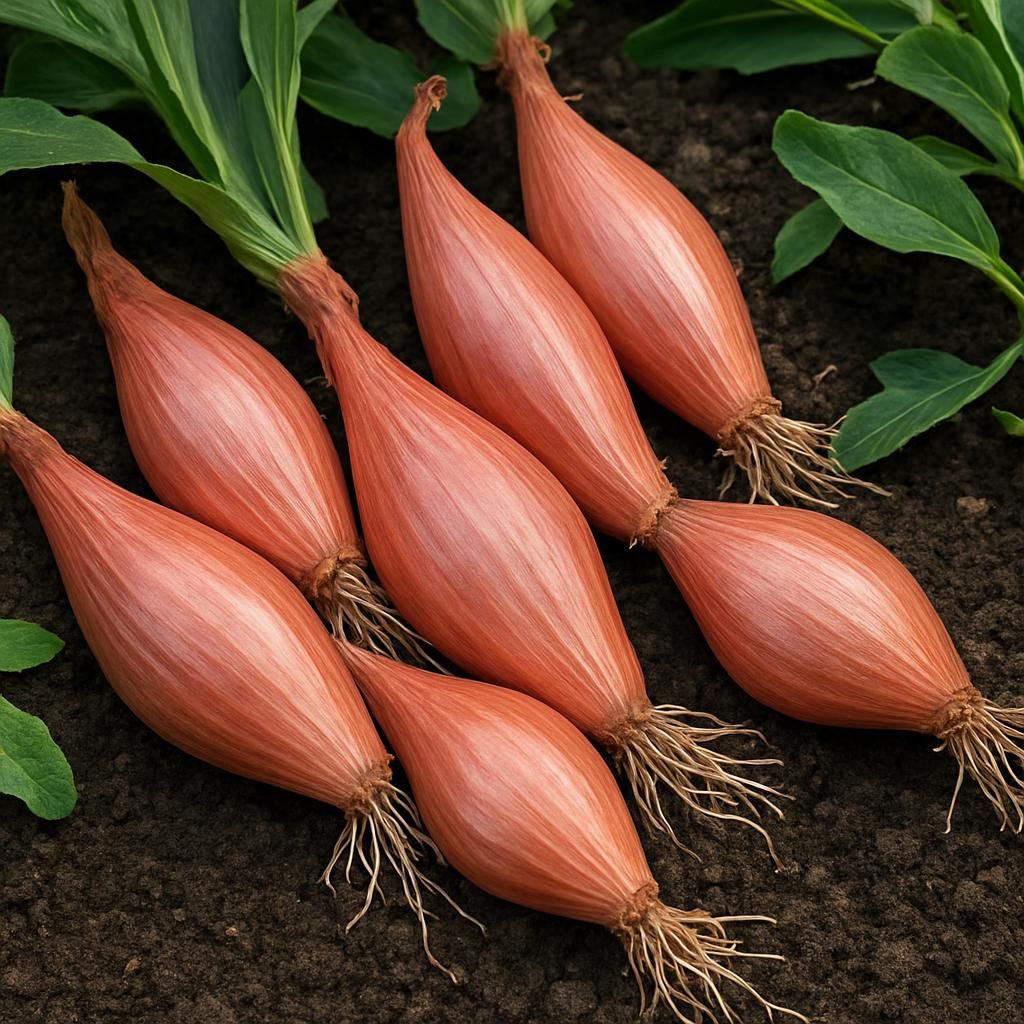
Shallot (Zebrune) is a traditional French heirloom that produces elongated, torpedo-shaped bulbs with copper-pink skins and pale flesh. The variety is renowned for its mild sweetness and complex flavor that bridges the gap between Onion and Garlic. Professional growers value Zebrune shallots for their excellent storage qualities, disease resistance, and consistent performance across temperate climates.
This definitive growing guide covers every stage of production from soil preparation through curing and long-term storage. The information is based on peer-reviewed horticultural research and field-proven practices used by commercial allium producers. Readers will learn precise planting depths, irrigation schedules, organic pest management, and post-harvest handling that maximizes market quality.
Botanical Profile of Shallot (Zebrune)
Shallot (Zebrune) belongs to the Amaryllidaceae family and is botanically classified as Allium cepa var. aggregatum. Unlike common onions, Zebrune forms clusters of 4–8 individual bulbs from a single planted set. The bulbs are spindle-shaped, averaging 8–12 cm in length and 2–3 cm in diameter at maturity. Foliage consists of hollow, blue-green leaves that reach 30–45 cm in height before lodging signals harvest readiness.
The plant exhibits a biennial life cycle but is grown as an annual for bulb production. Zebrune shallots are photoperiod-sensitive and require 14–16 hours of daylight to initiate bulbing. The variety shows strong tolerance to cool spring temperatures and moderate resistance to downy mildew.
Soil, pH, and Climate Requirements for Shallot (Zebrune)
Shallot (Zebrune) performs best in well-drained, fertile loam or sandy loam soils with high organic matter. The crop demands consistent moisture during early growth but will not tolerate waterlogged conditions that promote root rot. Optimal soil temperature for root establishment is 10–15 °C.
| Parameter | Ideal Range | Notes |
|---|---|---|
| Soil pH | 6.0–6.8 | Maintain with lime or sulfur amendments |
| Soil Type | Loam / Sandy Loam | 2–3 % organic matter recommended |
| Soil Temperature | 10–15 °C at planting | Avoid planting in cold, wet soils |
| Air Temperature | 15–24 °C day / 7–13 °C night | Tolerates light frost down to –4 °C |
| Day Length | 14–16 hours | Long-day variety; plant in early spring |
| Drainage | Excellent | Raised beds recommended in heavy soils |
Step-by-Step Planting & Propagation
Zebrune shallots are propagated vegetatively from disease-free bulb sets rather than seed. Select firm, 1.5–2 cm diameter sets free of mold or soft spots. Plant sets 10–15 cm apart in rows 30–45 cm apart, positioning the pointed end upward and covering with 2–3 cm of soil. For earlier harvests, start sets indoors 4–6 weeks before the last frost and transplant at the two-leaf stage.
Direct seeding is possible but slower; sow seeds 1 cm deep in a fine seedbed and thin to 5 cm spacing once seedlings reach 8 cm. Regardless of method, ensure soil remains evenly moist until establishment. Mulch with 5 cm of clean straw after planting to suppress weeds and stabilize soil temperature.
Care & Maintenance regimes for Shallot (Zebrune)
Consistent cultural care maximizes bulb size and storage life. Apply a balanced organic fertilizer at planting and again at bulbing initiation. Maintain soil moisture at 60–70 % field capacity during active growth and reduce irrigation two weeks before harvest to encourage curing.
| Growth Stage | Watering Frequency | Fertilizer Application | Pruning / Other Tasks |
|---|---|---|---|
| Establishment (0–4 wks) | 2–3 times/week, 2.5 cm | 5-5-5 organic at 500 kg/ha | Weed control, mulch application |
| Vegetative (4–10 wks) | 1–2 times/week, 2.5 cm | Side-dress 3-2-3 at 300 kg/ha | Remove flower stalks (bolting) |
| Bulbing (10–14 wks) | Weekly, 2 cm | Kelp or fish emulsion foliar (optional) | Monitor for thrips |
| Pre-harvest (last 2 wks) | Withhold if soil moist | None | Cease irrigation, prepare curing area |
Pests, Diseases & Organic Management
Common pests of Shallot (Zebrune) include onion thrips, cutworms, and slugs. Scout weekly and deploy floating row covers during early growth. For thrips, release predatory mites and apply insecticidal soap or neem oil at the first sign of silvery leaf streaks.
Major diseases are downy mildew, purple blotch, and fusarium basal rot. Practice strict 3–4 year crop rotation with non-allium crops and remove volunteer plants. Copper-based fungicides and potassium bicarbonate sprays provide organic suppression when applied preventively during humid periods.
Harvesting, Curing & Optimal Storage
Harvest when 50–70 % of tops have naturally lodged and bulbs show mature skins. Lift gently with a fork on a dry day and shake off loose soil. Cure in a well-ventilated, shaded location at 20–25 °C with 60–70 % relative humidity for 10–14 days until necks are completely dry.
Store cured shallots in mesh bags or shallow crates at 0–2 °C and 65–70 % humidity. Properly cured Zebrune shallots maintain quality for 6–8 months. Avoid refrigeration below 0 °C to prevent sprouting and internal breakdown.
Companion Planting for Shallot (Zebrune)
Shallot (Zebrune) benefits from strategic companions that deter pests and improve soil health. Plant near Carrot to mask scents from carrot fly and near Lettuce to utilize vertical space. Aromatic herbs such as Thyme and Rosemary repel thrips and aphids.
Avoid planting near Beans and Peas as alliums can inhibit legume nodulation. Follow shallots with heavy feeders such as Tomato or Corn in rotation to restore soil nutrients. For more companion strategies, see Summer Companion Planting: 10 Organic Pairings to Boost Small Farm Resilience.