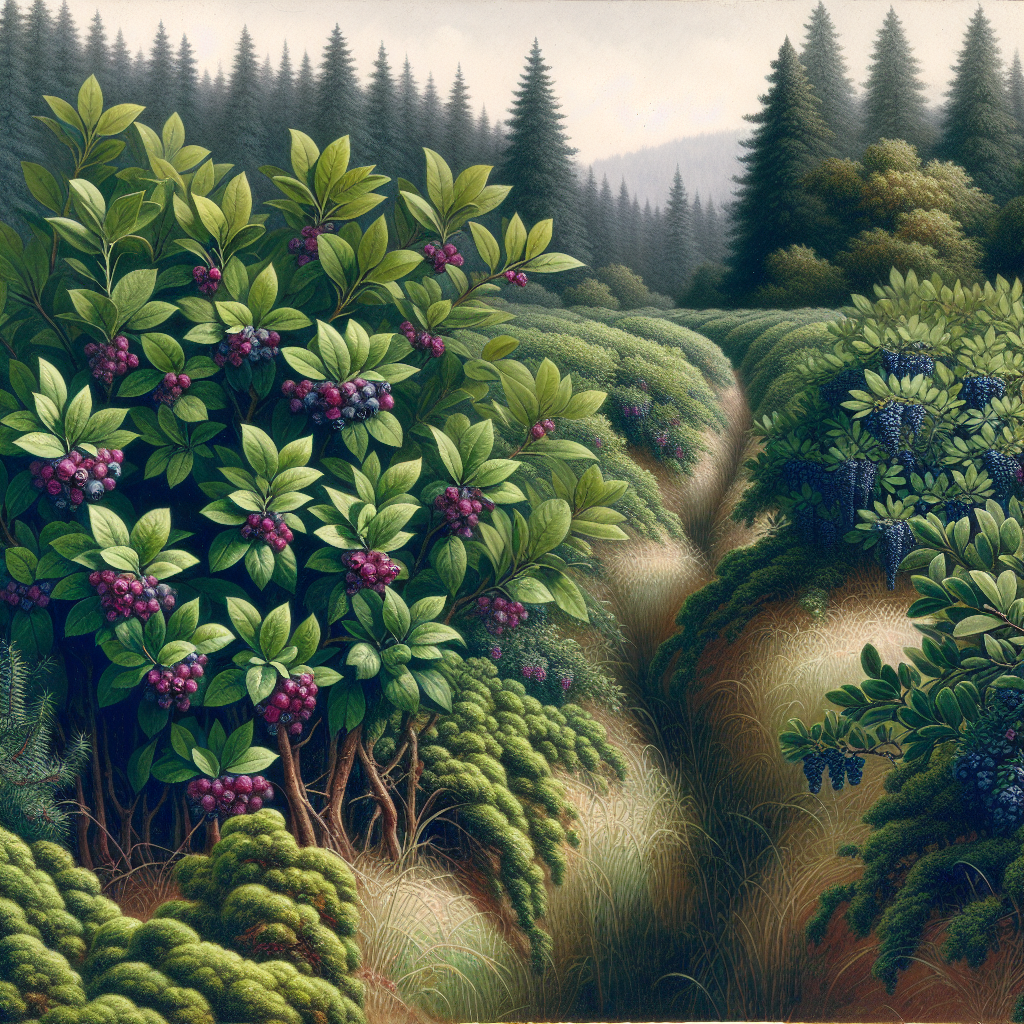
Introduction to salal
Salal, scientifically known as Gaultheria shallon, is a resilient evergreen shrub notorious among Pacific Northwest farmers as a pervasive agricultural pest. Thriving in coastal forests, clearcuts, and disturbed sites, salal rapidly colonizes farmland, forming dense thickets that smother crops and reduce yields. While valued in native ecosystems for wildlife forage and ornamental use, its aggressive growth makes it a formidable invader in commercial agriculture, particularly in blueberry orchards and other berry operations where it competes directly with cultivated plants.
This comprehensive diagnostic and management guide equips growers with professional-grade strategies to tackle salal infestations. From early identification to organic control methods and long-term prevention, we'll cover everything needed to restore productivity. Salal's leathery leaves, purple berries, and rhizomatous root systems enable it to persist through mechanical disturbance, chemical treatments, and harsh conditions, demanding integrated approaches for effective control. Understanding its biology is key to success in regions like British Columbia, Washington, and Oregon, where salal impacts thousands of acres annually.
Farmers often underestimate salal until it overtakes fence lines, irrigation ditches, and field margins, leading to significant economic losses. Early intervention is critical, as mature stands can regenerate from root fragments, prolonging eradication efforts. This guide draws on decades of agronomic research to provide actionable advice tailored for small to mid-sized operations. For more on integrated pest management, check out this insightful Spring Pest Patrol: Organic AI Strategies to Shield Your Crops from Common Invaders.
Identifying Symptoms & Damage
Salal damage manifests gradually but devastatingly in agricultural settings. Initial signs include scattered seedlings and sprouts emerging in shaded understories or along field edges, often mistaken for harmless natives. As infestations mature, characteristic symptoms emerge: dense clusters of waist-high to 15-foot shrubs with glossy, oval leaves (2-5 inches long) that remain green year-round. Purple-black berries (1/3 inch diameter) appear in summer, attracting birds that spread seeds into crop rows.
Damage to crops is primarily competitive—salal deprives raspberry bushes, young fruit trees, and row crops of sunlight, moisture, and soil nutrients. In Hass Avocado groves or strawberry fields, salal thickets reduce air circulation, fostering secondary issues like powdery mildew or root rot. Visual indicators include stunted crop growth adjacent to salal patches, yellowing leaves on perennials, and bare soil under thickets where nothing else survives.
Physical damage occurs when salal's tough stems snag harvest equipment or harbor pests like aphids and slugs, which migrate to crops. Root systems, extending 10-20 feet via rhizomes, bind soil, complicating tillage and irrigation. Diagnostic tip: Scratch a stem—salal's reddish wood and bell-shaped white-pink flowers (April-June) confirm identity. Differentiate from similar invasives like trailing blackberry by salal's untoothed leaves and lack of thorns. Scout field margins weekly during spring growth flushes for proactive detection.
Lifecycle and Progression of salal
Salal's lifecycle is perennial and clonal, ensuring persistence across seasons. Germination occurs year-round from bird-dispersed seeds, but vegetative spread via underground rhizomes dominates, producing new shoots up to 20 feet from parent plants. Shoots emerge in spring (March-May), with rapid vertical growth peaking by July. Flowering follows in late spring, yielding berries by August that persist into winter, providing food for dispersers.
Progression unfolds in phases: Year 1 seedlings establish shallow roots; by Year 2-3, rhizomes form, enabling colony expansion. Mature plants (5+ years) reach 6-15 feet, with thickets shading out competitors. Dormancy is minimal due to evergreen habit, allowing photosynthesis through mild winters. Peak biomass accumulation occurs in moist, acidic soils (pH 4.5-6.5), with dieback only under prolonged drought or fire.
Reproductive output is prolific: A single shrub produces thousands of viable seeds annually, viable for decades in soil banks. Rhizome fragments as small as 1 inch regenerate fully, making incomplete removal futile. Lifecycle bottlenecks include seedling establishment (vulnerable to mulch smothering) and rhizome depletion after repeated cutting. Monitor progression via annual mapping to target young colonies before maturity.
Environmental Triggers & Risk Factors
Salal thrives in mild, maritime climates with 40+ inches annual rainfall, temperatures rarely below 0°F, and partial shade. Key triggers include soil disturbance from logging, tillage, or construction, exposing mineral soil for seedling germination. Acidic, well-drained sandy loams favor invasion, as do edges of clearcuts transitioning to farmland.
Risk factors amplify spread: Proximity to native forests introduces seed rain; overgrazed pastures lack competition; poor irrigation creates moist microhabitats. Climate change extends salal's range northward, with warmer winters boosting rhizome vigor. Over-mature apple orchards or abandoned fields are hotspots, as salal exploits canopy gaps. High deer populations (deer) browse competitors, favoring unpalatable salal. Risk assessment: Map high-risk zones (fence lines, ditches) and monitor post-disturbance.
Organic Control & Treatment Plans
Organic management emphasizes persistence over quick fixes, integrating mechanical, cultural, and biological tactics. Phase 1 (Initial Assault): Mow or cut salal to 6 inches repeatedly (every 4-6 weeks, March-October) for 2-3 years to exhaust rhizomes. Use chippers to mulch debris on-site, denying light to regrowth.
Phase 2 (Smothering): Cover stumps with heavy black plastic or cardboard (overlapped 2 feet) secured with stakes, layered with 6-12 inches wood chips or straw. Maintain for 2+ years, checking quarterly. Solarization with clear plastic in summer amplifies heat kill.
Phase 3 (Biological Boost): Introduce goats or sheep for 4-6 week rotations to browse foliage, weakening plants pre-mulching. Companion plant aggressive cover crops like clover to outcompete seedlings.
Treatment Plans: For small infestations (<1 acre), hand-pull seedlings and mulch stumps. Medium sites (1-5 acres): Combine mowing with tarping. Large areas: Sequential goat grazing + mulching + prescribed burns (if permitted). Monitor with soil cores for rhizome depletion. Avoid tilling, which fragments roots. Success metrics: No shoots for 2 consecutive years. Rotate tactics to prevent adaptation.
Preventing salal in the Future
Prevention hinges on habitat denial and monitoring. Maintain 10-20 foot vegetated buffers with mowed grass or gravel around fields to intercept seeds. Plant competitive barriers like dense thyme or yarrow hedges along edges. Scout weekly during berry season, hand-pulling seedlings immediately.
Soil management: Raise pH above 6.5 with lime in high-risk zones, as salal dislikes alkalinity. Improve drainage to dry out microsites. Clean equipment to avoid rhizome transport. Long-term: Integrate agroforestry with salal-tolerant crops, harvesting berries commercially to reduce pressure. Annual audits using grid sampling ensure early detection. Educate crews on ID to sustain vigilance.
Crops Most Affected by salal
Salal disproportionately impacts Pacific Northwest berry and fruit crops. Blueberries suffer most, with salal invading acidic soils and mimicking growth habits, reducing yields by 50%+ in unmanaged orchards. Raspberries and blackberries face direct competition for canes and light. Strawberries lose runners to shading.
Orchards like Honeycrisp Apple and pear experience edge encroachment, stunting young trees. Vegetable fields (potato, corn) see seedling smothering. Forage crops and Christmas trees (Douglas-fir) are overrun in plantations. Native understory mimics make it insidious in agroforestry. Prioritize protection for high-value berries.