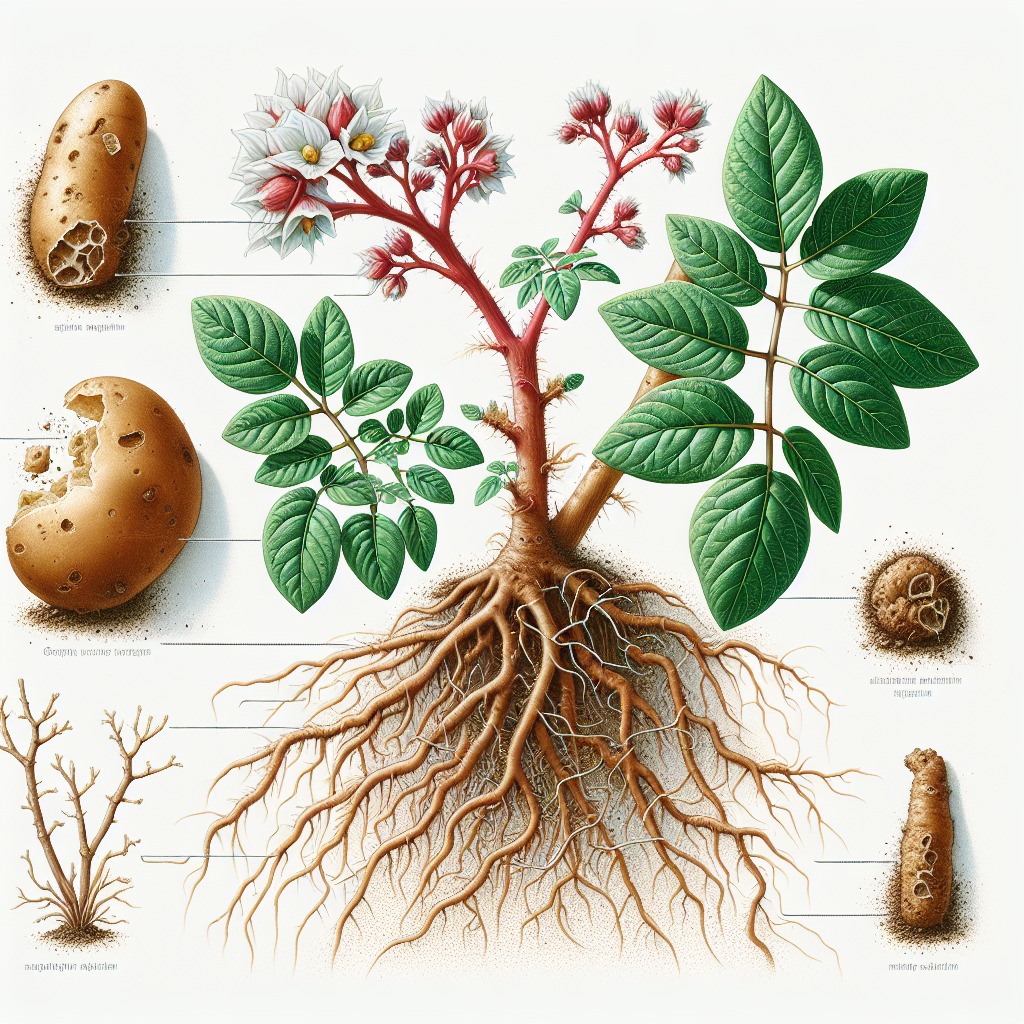
Introduction to Rhizoctonia root rot
Rhizoctonia root rot is one of the most pervasive soilborne diseases in agriculture, caused by the fungus Rhizoctonia solani. This pathogen attacks the roots and lower stems of plants, leading to severe yield losses in both field crops and horticultural plants. Unlike foliar diseases, Rhizoctonia operates below ground, making it insidious and challenging to detect until significant damage occurs. Farmers worldwide report losses up to 50-70% in susceptible crops under favorable conditions. The disease is particularly problematic in warm, humid climates where soil moisture persists.
The fungus persists in soil for years as sclerotia—hard, resting structures that resemble mustard seeds—or as dormant mycelium in plant debris. Infection typically begins at the seedling stage but can strike mature plants during stress periods. For more on related root rots, understanding the pathogen's biology is key to effective management. This guide equips growers with diagnostic tools, lifecycle insights, and proven organic strategies to combat Rhizoctonia root rot effectively.
Identifying Symptoms & Damage
Early detection is critical for managing Rhizoctonia root rot. Initial symptoms appear in seedlings as water-soaked lesions at the soil line, rapidly progressing to reddish-brown discoloration and girdling of the hypocotyl. Affected seedlings often fail to emerge or topple over in a phenomenon known as damping-off. In older plants, look for stunted growth, yellowing lower leaves, and wilting during the day, even under adequate moisture.
Root systems exhibit dark brown to black rot, with a characteristic 'honey-brown' mycelial growth under humid conditions. Shredded or rotted cortex layers expose the stele, and sclerotia may form on infected tissues. Stems show cankers at the base, often with a sharp demarcation between healthy and diseased tissue. In advanced stages, plants collapse entirely, mimicking drought stress.
To confirm, excavate roots carefully and slice longitudinally. Unlike Pythium infections, which produce watery rot, Rhizoctonia causes drier, firmer decay with web-like hyphae. Laboratory diagnosis via culturing on selective media or PCR confirms R. solani. Differentiate from Fusarium by the absence of pink pigmentation and from Phytophthora by the lack of oospores. Field scouting in rows reveals irregular patterns, often worse in compacted or poorly drained spots.
Economic damage includes reduced stand establishment (up to 30% in potatoes) and weakened mature plants prone to lodging. In potato crops, it leads to black scurf on tubers, lowering market grade. Tomatoes show stem girdling, resulting in fruit drop. Accurate identification prevents misdiagnosis with nutrient deficiencies or other root rot complexes.
Lifecycle and Progression of Rhizoctonia root rot
Rhizoctonia solani is a versatile, soilborne fungus with a complex lifecycle adapted for long-term survival. It exists primarily as sclerotia or mycelium in soil organic matter, remaining viable for 5-10 years. Infection initiates when germinating sclerotia or hyphae contact host roots, favored by soil temperatures of 20-35°C (68-95°F) and moisture levels near field capacity.
The pathogen penetrates roots via enzymatic degradation of cell walls, colonizing the cortex and vascular tissues. Hyphae branch dichotomously, forming a characteristic 90-degree pattern visible under microscopy. Under high humidity, cottony mycelium spreads to adjacent plants, creating 'web-like' lesions. Sclerotia form in 7-14 days on dying tissues, completing the cycle.
Progression varies by anastomosis group (AG)—AG-2-1 affects cereals, AG-3 potatoes, AG-4 broad hosts. Seedlings succumb in 3-5 days; mature plants decline over weeks. No sexual stage exists; reproduction is asexual via sclerotia and hyphae. Crop debris harbors inoculum, splashing absent due to soil habitat. Understanding this lifecycle underscores sanitation's role, as tilling buries sclerotia deeper, reducing activity. Integration with soil health strategies disrupts the cycle effectively.
Environmental Triggers & Risk Factors
Rhizoctonia root rot flourishes under specific conditions: warm soils (above 18°C/65°F), excessive moisture, and neutral to alkaline pH (6.5-7.5). Compacted, heavy clay soils retain water, promoting infection. High residue from previous crops like corn or soybeans builds inoculum.
Risk spikes after prolonged wet spells, especially post-transplanting when roots are tender. Over-fertilization with nitrogen creates lush growth susceptible to girdling. Continuous monocropping exhausts soil antagonists. Poor drainage in low-lying fields or over-irrigated greenhouses amplifies spread. Acidic amendments (e.g., sulfur) suppress sclerotia germination.
Susceptibility increases under abiotic stress—drought, heat, or nutrient imbalance weakens defenses. Tillage timing matters; delayed tilling leaves residue surface-exposed. Crop rotation with non-hosts like onion reduces buildup. Monitor soil moisture with tensiometers to stay below 20 kPa in vulnerable periods.
Organic Control & Treatment Plans
Organic management emphasizes cultural practices over chemicals. Start with certified disease-free seeds and solarize soil pre-planting: cover moist soil with clear plastic for 4-6 weeks in summer, heating to 45-50°C kills sclerotia.
Apply biocontrols like Trichoderma viride or Bacillus subtilis as seed treatments (10g/kg seed) or soil drenches (5-10 kg/ha). These antagonists parasitize Rhizoctonia hyphae. Compost teas rich in beneficial microbes suppress pathogen growth. Mustard biofumigants release isothiocyanates toxic to sclerotia.
Improve drainage with raised beds (20-30 cm high) and organic amendments like vermicompost (5 t/ha) to enhance aeration. Mulch with straw post-emergence to moderate soil temperature. Foliar biostimulants (seaweed extracts) boost root vigor. Remove and destroy infected plants promptly to limit spread.
For outbreaks, drench with hydrogen peroxide (1:100 dilution) or potassium bicarbonate. Integrate companion planting with marigolds, which exude alpha-terthienyl inhibiting R. solani. Monitor weekly; rogue 10% infection early. Resistant varieties like certain potato cultivars reduce reliance on inputs.
Preventing Rhizoctonia root rot in the Future
Prevention hinges on integrated soil health. Rotate crops with grasses or brassicas (3-4 years), avoiding solanaceous hosts. Use well-drained fields; install tile drains if needed. Acidify soil to pH 6.0 with elemental sulfur (500 kg/ha).
Incorporate cover crops like clover or rye to outcompete inoculum. Deep till (20-30 cm) annually to bury sclerotia. Test soil health annually for microbial balance. Seed with hot water treatment (50°C for 25 min) for high-value crops.
Promote biodiversity with intercropping garlic, whose allicin deters fungi. Avoid overhead irrigation; drip systems keep foliage dry. Sanitize tools with 10% bleach. Long-term, build humus levels above 4% to foster suppressive soils. Early scouting and threshold-based action prevent establishment.
Crops Most Affected by Rhizoctonia root rot
Rhizoctonia root rot impacts a wide host range, with severe losses in root and tuber crops. Potatoes suffer black scurf and stem cankers, reducing tuber quality by 20-40%. Tomato transplants girdle easily, causing 30% stand loss. Bean crops show hypocotyl rot, especially in wet springs.
Cereals like wheat and rice experience sheath blight progression to roots. Turfgrasses develop brown patch. Turf and ornamentals are vulnerable too. Tropicals such as ginger and turmeric face soft rot in humid zones. Prioritize prevention in these high-value targets.