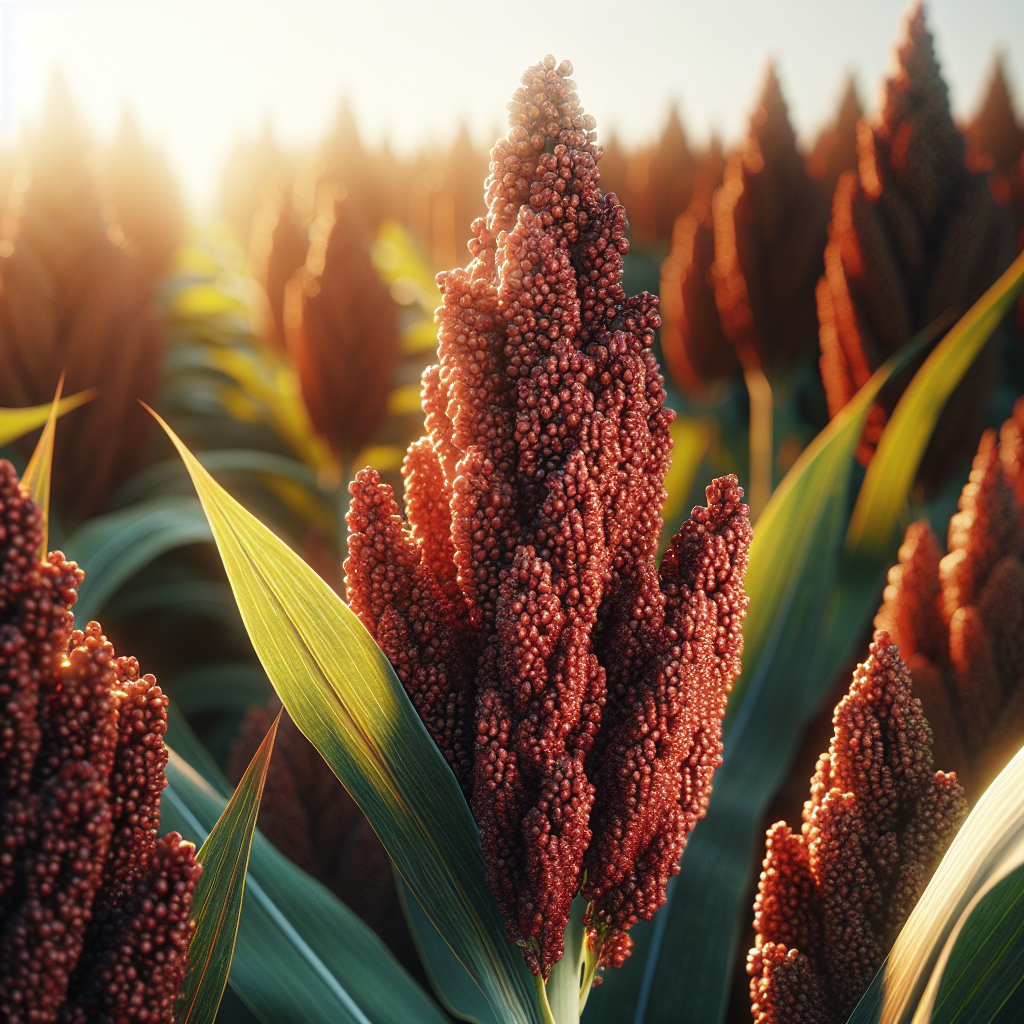
Introduction to Red Sorghum
A warm-season cereal originally domesticated in Africa, this crop has become one of the world’s most dependable grains for dryland agriculture. Red-seeded sorghums are especially valued in regions with erratic rainfall because they combine respectable grain yield with exceptional resilience under heat, temporary drought, and moderate soil stress. The red coloration of the grain usually reflects tannins or other phenolic compounds in the outer layers, traits that can improve bird resistance and storage stability but may also influence palatability for some feed uses.
In practical farming, red sorghum is used for human food, livestock feed, poultry rations, brewing, biofuel, silage, stover, and soil-building residue. Compared with corn, it generally tolerates water deficits and high temperatures better, especially once roots are established. It is not a miracle crop, however: top yields still depend on correct timing, warm soils at planting, early weed control, balanced nitrogen management, and harvesting at the right grain moisture.
Historically, sorghum spread from northeastern Africa into India, the Middle East, and later the Americas, where it became indispensable in low-rainfall grain belts. Red grain forms are common in traditional farming systems because they often deter birds better than white types and perform reliably in mixed-use systems where grain and fodder are both important. For growers seeking resilient cereal production, red sorghum remains one of the best tools for climate-variable environments.
Botanical Profile of Red Sorghum
This species belongs to the grass family, Poaceae, and is a C4 plant, meaning it uses a highly efficient photosynthetic pathway under high light, high heat, and limited moisture. That C4 metabolism explains much of its remarkable water-use efficiency and its ability to continue productive growth when daytime temperatures exceed the comfort range of many temperate cereals.
Plants typically range from 1 to 4 meters tall depending on genetics, fertility, and moisture. Grain-oriented red sorghum cultivars are often shorter and sturdier than forage or sweet types, reducing lodging risk and concentrating energy into panicle and seed formation. The root system is fibrous and surprisingly deep for an annual cereal, with effective extraction of subsoil moisture when the profile is not compacted.
Leaves are long, narrow, and often coated with a waxy bloom that reduces transpiration. Stems may be dry-pith or juicy depending on the type. The inflorescence is a terminal panicle, which may be compact, semi-compact, or open. Red sorghum grains are enclosed to varying degrees by glumes, and seed color can range from brick red and copper to deep mahogany. Some red cultivars carry condensed tannins, which can reduce bird damage and fungal pressure in storage, though high-tannin grain may require ration balancing in animal feeding.
Flowering is influenced by cultivar maturity and photoperiod sensitivity. Many improved grain sorghums are less daylength sensitive than traditional landraces, allowing more predictable maturity. Pollination is mainly self-pollinated, though some cross-pollination occurs under field conditions. From emergence to harvest, crop duration usually ranges from 90 to 140 days, with early varieties suited to short rainy seasons and later ones better where a longer warm season is available.
Soil, pH, and Climate Requirements for Red Sorghum
This crop performs best in full sun, warm temperatures, and well-drained soils with moderate water-holding capacity. Ideal soils are loams, sandy loams, or silt loams with good internal drainage, but one of sorghum’s agronomic strengths is that it can still produce in lighter, lower-fertility soils where other cereals fail. Heavy clays can work if drainage is adequate and crusting is minimized during emergence.
The preferred soil pH is about 5.8 to 7.5, with the sweet spot near 6.2 to 7.0. It tolerates moderately acidic soils better than some cereals, but when pH drops below 5.5, aluminum toxicity and nutrient lock-up can suppress root growth, tillering, and grain fill. Strongly alkaline soils above about 8.0 may induce micronutrient deficiencies, particularly iron and zinc, visible as interveinal chlorosis in young leaves.
For temperature, germination begins slowly around 15 to 16°C, but field planting should ideally wait until the top 5 cm of soil is consistently 18 to 21°C or warmer. Below that threshold, emergence becomes patchy and seedlings are more vulnerable to rot, insects, and competition. The optimal growing range is roughly 26 to 34°C. Vegetative growth remains strong in hot weather, and established plants can withstand short periods above 38°C if soil moisture is not critically low.
Rainfall needs depend on yield target. A subsistence crop may produce under 350 to 450 mm seasonal rainfall, while strong commercial grain yields often need 500 to 750 mm well distributed through establishment, stem elongation, flowering, and grain fill. The most drought-sensitive window is from boot stage through flowering and early grain fill. Severe moisture stress then can reduce pollen viability, seed set, and final kernel weight.
Soil moisture should be kept in the moderate range during establishment: not waterlogged, not powder dry. A practical target is about 60 to 80% of field capacity during germination and early vegetative growth. If you squeeze a soil sample from root depth, it should hold together briefly and crumble with light pressure, not ooze or smear. Overwatering signs include yellowing lower leaves, slow growth despite adequate fertility, sour-smelling soil, standing water after irrigation, shallow root systems, and increased lodging later. Underwatering signs include rolled leaves by mid-morning, bluish-gray foliage, reduced leaf expansion, uneven plant height, and poor head exertion near flowering.
For growers improving marginal land, building organic matter and aggregation is worth the effort. Better soil structure increases infiltration, reduces crusting, and helps seedlings emerge evenly. For broader strategies on maintaining fertility and tilth, see soil health tips.
Step-by-Step Planting & Propagation
Propagation is by seed, almost always direct sown. Transplanting is rarely practical except in research or seed increase work because sorghum establishes best when roots develop undisturbed in warm soil.
Select adapted seed. Choose a red grain cultivar suited to local daylength, rainfall pattern, and intended use. Bird-prone areas often benefit from red or tannin-containing lines, while feed markets may prefer lower tannin forms.
Prepare a clean seedbed. Fine but firm soil is ideal. Avoid fluffy, freshly over-tilled beds that dry out rapidly or cause seed to be planted too deep. In conservation systems, residue retention helps preserve moisture, but make sure seed-to-soil contact remains good.
Correct major soil constraints before planting. Apply lime several months ahead if pH is too low. Base phosphorus and potassium should be incorporated or banded according to soil test results. Sorghum responds strongly to phosphorus in cool or low-P soils because early root development is critical.
Plant only into warm soil. Sow after frost danger has fully passed and soil has stabilized above 18°C. Planting too early is one of the most common causes of weak stands.
Set proper seeding depth. Place seed 2.5 to 4 cm deep in moist soil. In sandy or drying surfaces, 5 cm may be acceptable if moisture is deeper. Shallower than 2 cm risks desiccation; deeper than 5 cm can delay emergence and reduce stand vigor.
Adjust spacing to system. For grain production, row spacing of 45 to 75 cm is common. In higher rainfall or mechanized systems, narrower rows improve canopy closure and suppress weeds. In drier zones, slightly wider rows can reduce competition for limited moisture. In-row density often targets 120,000 to 220,000 plants per hectare depending on cultivar and rainfall. Low-rainfall dryland systems generally perform better at the lower end; irrigated or high-fertility systems can support more.
Ensure even emergence. Seedlings should emerge within 5 to 10 days in warm conditions. Gaps often indicate crusting, seedling disease, birds, uneven planting depth, or cold soil.
Thin if necessary. In small plots, thin once plants reach 8 to 10 cm tall, keeping the strongest, most uniformly spaced seedlings. Crowded stands produce thinner stems and smaller heads, especially under limited moisture.
Replant quickly if stand loss exceeds economic threshold. Sorghum can compensate somewhat by tillering, but severe gaps reduce yield and weed competitiveness.
Care & Maintenance regimes for Red Sorghum
The first 30 to 40 days determine much of the final outcome. Early growth can appear slow compared with aggressive weeds, so maintaining a clean field during establishment is essential. Once canopy closure begins, sorghum becomes much more competitive.
Water management should follow growth stage. During germination and seedling establishment, keep the top rooting zone evenly moist but never saturated. If irrigating, a light, frequent schedule may be needed until roots penetrate deeper, after which deeper and less frequent irrigation is superior. As a field guide, aim to wet the soil to 30 to 45 cm depth during vegetative growth, then 45 to 60 cm during boot to grain fill, depending on soil texture. Allow mild drying between irrigations, especially on heavier soils, but do not let plants repeatedly wilt at flowering. The most critical irrigations are usually at panicle initiation, boot stage, flowering, and early grain fill.
Nitrogen should be matched to realistic yield goals. Excess nitrogen creates lush, weak growth, delayed maturity, and lodging risk, especially where storms occur during grain fill. Deficiency appears as pale green to yellow lower leaves beginning at the tip and progressing along the midrib, reduced leaf area, and small panicles. Moderate programs often split N applications: part at planting and the remainder at 4 to 6 leaf stage or just before rapid stem elongation. Sulfur and zinc may be limiting on sandy, low-organic soils.
Weed control is most important from emergence to about knee-high growth. Mechanical cultivation works well while roots are still relatively shallow and rows remain visible. Avoid deep cultivation after the crop is established because pruning feeder roots during dry weather can reduce performance. Organic mulches are less common in broadacre systems but can help in garden-scale plantings.
Watch for lodging pressure. Excessive nitrogen, dense stands, shading, prolonged cloudiness, or late storms can weaken stems. If plants are stretching with dark lush foliage, reduce additional N and avoid over-irrigating. Good potassium nutrition helps strengthen tissues.
Red sorghum often ratoons or regrows after cutting in warm regions, particularly if harvested for forage or if heads are removed before complete plant senescence. For grain systems, this regrowth is usually undesirable unless dual-purpose management is intended.
Pests, Diseases & Organic Management
Birds are among the most significant threats, especially from milk stage to hard dough. Red grain types often suffer less damage than white-seeded types, but bird pressure can still be severe in small plantings. Netting, synchronized planting across a district, scare devices rotated frequently, and timely harvest all help. Small isolated plots are the most vulnerable.
Common insect pests include sorghum midge, shoot fly, stem borers, aphids, armyworms, and head bugs depending on region. shoot fly damage is most severe in late-sown crops, where larvae destroy the central growing point and create a deadheart symptom. stem borers tunnel in stalks, reducing vigor and increasing lodging. aphids may colonize undersides of leaves and produce sticky honeydew that interferes with photosynthesis and harvest.
Organic management starts with prevention: use locally adapted seed, avoid delayed planting, maintain field sanitation, rotate away from successive grass crops, and conserve beneficial insects with flowering borders. Intercropping or border plantings with cowpea can increase system diversity and support beneficials, though competition must be managed. Neem-based sprays, insecticidal soaps for aphids in small plots, Bacillus thuringiensis products for young caterpillars, and pheromone or light trapping may be useful depending on local regulations and target species.
Disease issues include anthracnose, grain mold, downy mildew, rust, smut, and charcoal rot. anthracnose causes leaf lesions with dark fruiting bodies and can also infect stems. grain mold is especially problematic when rain persists during grain maturation; red pericarp and tannin traits sometimes reduce severity, but variety selection and harvest timing remain critical. charcoal rot becomes more severe when drought stress follows good vegetative growth, particularly in high-nitrogen fields.
Organic disease suppression relies on resistant cultivars, wide enough spacing for airflow, rotation of at least 2 to 3 years away from sorghum or related grasses, prompt residue decomposition, and avoiding overhead irrigation during heading if possible. Seed health matters: plant clean, vigorous seed to reduce smut and seedling blights. In small-scale systems, remove and destroy heavily infected heads to reduce inoculum carryover.
Harvesting, Curing & Optimal Storage
Harvest timing depends on intended use. For green chop or silage, cutting usually occurs from soft dough to early hard dough, when sugar, starch, and moisture are balanced for good fermentation. For grain, harvest should wait until physiological maturity and suitable field drying have occurred.
Mature grain sorghum heads turn from green to their final red or bronze hue, glumes dry, and kernels become hard enough that a thumbnail barely dents them. Grain moisture at physiological maturity is commonly around 30 to 35%, which is still too high for safe storage. Combine harvest generally works best once grain falls to about 18 to 22%, followed by artificial drying to safer levels. In small farms without mechanical drying, cut heads or whole plants and cure under cover with excellent airflow until grain moisture reaches about 12 to 13% for short-term storage and 10 to 12% for longer storage in warm climates.
If heads are harvested manually, spread them in a thin layer on clean tarps, mats, or raised racks, protected from dew and rainfall. Turn daily to prevent heating. Never heap partially dried heads overnight; internal heat and mold can build rapidly. Thresh only when grain is fully hard and dry enough to break cleanly rather than flatten under pressure.
Storage losses often come from moisture migration, insects, and hidden mold. Safe stored grain should be cool, dry, and clean. Use insect-tight bins, sealed drums, or lined sacks kept on pallets off the floor. Relative humidity in the storage space should ideally stay below 65%. If grain smells musty, feels warm, or cakes together, it is too wet or beginning to spoil. Check monthly for weevils, moths, condensation under lids, and hot spots. Red sorghum usually stores well when thoroughly dried, and its harder seed coat can give a slight advantage against mechanical damage.
Stover also has value. After grain harvest, stalks can be baled for roughage, chopped for mulch, or incorporated for organic matter. If disease pressure was high, residue management should prioritize sanitation rather than carryover.
Companion Planting for Red Sorghum
In mixed cropping, the best partners are species that either fix nitrogen, occupy a different root zone, suppress weeds, or attract beneficial insects without heavily shading the young sorghum stand. The classic pattern in many dryland systems is sorghum with a low-growing legume. Peanuts are an excellent option in lighter soils because they cover the ground, reduce erosion, and contribute biological nitrogen to the system over time. Soybeans can also work well in wider row spacing where rainfall is adequate and competition is managed carefully.
For ecological support, sunflower can be used sparingly on field margins rather than densely within rows, where it may compete too strongly for light and moisture. Flowering companions such as clover on borders or off-season strips can support pollinators and beneficial insects, though living understories should not be established until sorghum is well rooted in dry environments.
Good companion strategy depends on water availability. In high-rainfall areas, intercropping can improve land-use efficiency and suppress weeds. In low-rainfall zones, companions should be used conservatively, often as border crops or in skip-row systems, because excessive interspecific competition can reduce sorghum grain yield. The most successful combinations keep the cereal dominant while using legumes or insectary plants to strengthen the broader farm ecology.