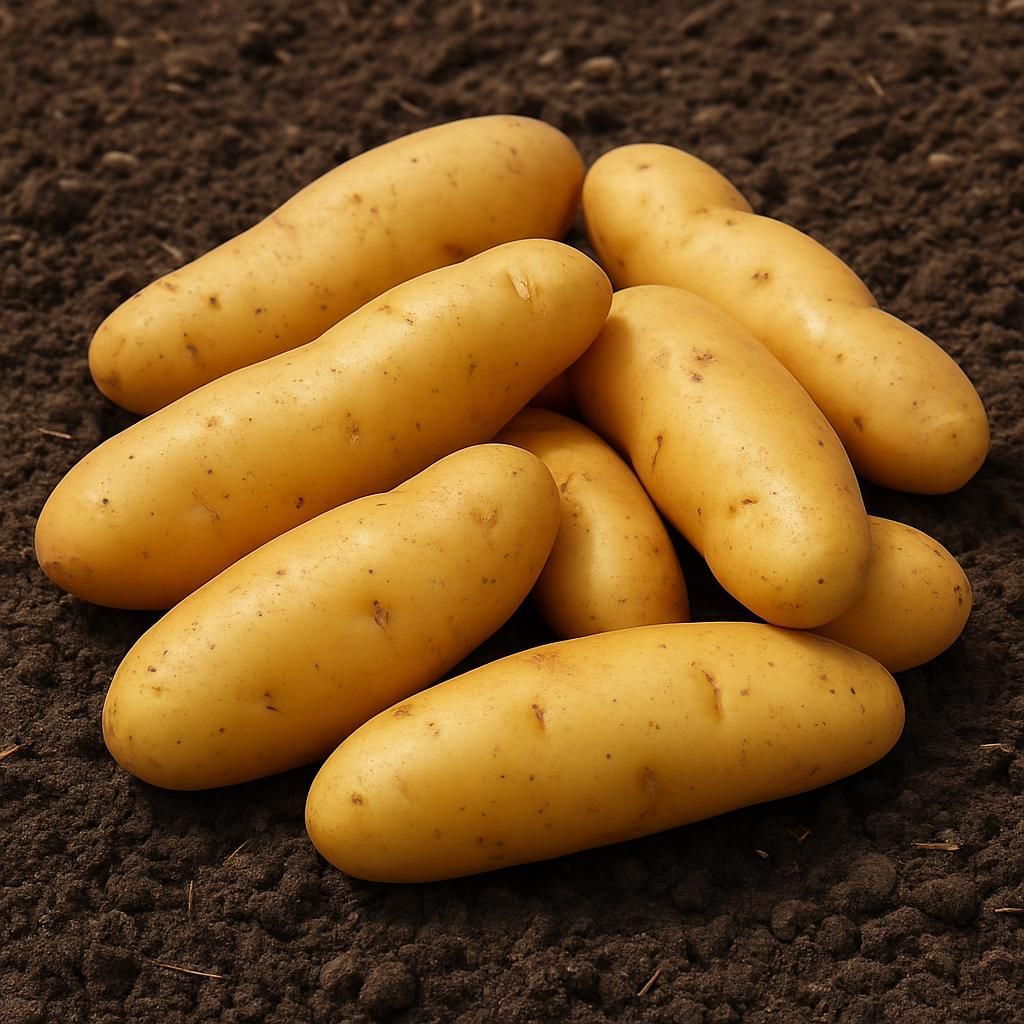
Introduction to Potato (La Ratte)
La Ratte, also known as La Ratte d'Artois, is a heritage French fingerling potato variety celebrated by chefs for its exceptional flavor and creamy consistency. Originating in northern France, this elongated tuber has become a favorite among small-scale and specialty growers seeking premium market potatoes. Its thin, smooth yellow skin and firm, yellow flesh make it ideal for roasting, steaming, and salads where texture retention is essential.
Growing La Ratte successfully requires attention to soil health, precise planting timing, and proactive disease management. The variety is moderately productive but rewards careful cultivation with superior culinary quality. This guide provides practical, research-backed recommendations tailored to both home gardeners and commercial producers.
La Ratte matures in approximately 90-110 days and performs best in cool-season conditions. Its resistance profile and flavor profile make it a standout choice for direct-to-chef or farmers-market sales. Understanding its specific agronomic needs is the foundation of consistent success.
Botanical Profile of Potato (La Ratte)
La Ratte belongs to the nightshade family Solanaceae and is botanically classified as Solanum tuberosum 'La Ratte'. It produces elongated, finger-like tubers typically 3-5 inches long with shallow eyes and minimal skin russeting. The plants exhibit compact, upright growth reaching 18-24 inches in height with medium-green foliage.
The variety flowers sporadically with small white blooms, though tuber formation occurs primarily through vegetative propagation via seed tubers. La Ratte tubers have a relatively high dry-matter content for a waxy type, contributing to their signature buttery mouthfeel. The skin is thin and tan-yellow, protecting the firm, golden-yellow flesh that holds shape well during cooking.
As a determinate variety, La Ratte sets tubers in a concentrated period, making harvest timing critical for optimal quality. The plant's moderate vigor requires balanced nutrition to avoid excessive foliage at the expense of tuber development.
Soil, pH, and Climate Requirements for Potato (La Ratte)
La Ratte demands well-drained, fertile loamy soils with high organic matter. Heavy clay or waterlogged conditions promote rot and reduce tuber quality. Ideal soil structure supports root expansion and tuber bulking while preventing compaction.
| Parameter | Ideal Range | Notes |
|---|---|---|
| Soil Type | Sandy loam to loam | Good drainage essential |
| Soil pH | 5.8 - 6.5 | Avoid alkaline soils to prevent scab |
| Organic Matter | 3-5% | Incorporate compost or aged manure |
| Soil Temperature | 45-70°F (7-21°C) | Plant when soil reaches 50°F minimum |
| Air Temperature | 60-75°F (15-24°C) daytime | Cool nights improve tuber quality |
| Frost Tolerance | Light frost tolerant | Protect young shoots from hard freezes |
| Sunlight | Full sun (6-8 hours) | Essential for photosynthesis and yield |
Consistent moisture without saturation is critical during tuber initiation. Mulching helps regulate soil temperature and moisture while suppressing weeds. Test soil annually and amend based on results to maintain optimal nutrient balance.
Step-by-Step Planting & Propagation
Begin by sourcing certified disease-free seed tubers of La Ratte. Avoid grocery-store potatoes, which may carry viruses or be treated with sprout inhibitors. Select firm, medium-sized tubers with multiple eyes for cutting.
Cut seed pieces 1.5-2 ounces each, ensuring at least one or two eyes per piece. Allow cut surfaces to suberize (dry and form a protective cork layer) for 24-48 hours before planting. This reduces rot risk in cool, moist soils.
Plant in early spring when soil temperature reaches 50°F (10°C). Space seed pieces 10-12 inches apart in rows 30-36 inches wide, planting 4-6 inches deep. In heavier soils, plant slightly shallower to aid emergence.
For raised beds or containers, maintain similar spacing and ensure excellent drainage. Water lightly after planting to settle soil around seed pieces without creating waterlogged conditions. Mark rows clearly for subsequent hilling operations.
Care & Maintenance regimes for Potato (La Ratte)
Proper hilling is essential for La Ratte. Begin when plants reach 6-8 inches tall, mounding soil around stems to cover lower leaves. Repeat every 2-3 weeks until plants flower, protecting developing tubers from sunlight and greening.
| Growth Stage | Watering Schedule | Fertilizer Application | Pruning / Hilling Notes |
|---|---|---|---|
| Planting to Emergence | Keep soil moist but not wet | None; rely on soil reserves | No hilling yet |
| Vegetative (6-12") | 1-1.5 inches/week | Side-dress with balanced organic NPK | First hilling when 6-8" tall |
| Tuber Initiation | Consistent moisture critical | Reduce nitrogen; boost potassium | Second hilling; avoid foliage damage |
| Bulking | Maintain even moisture | Light potassium boost if needed | Final hilling; monitor for pests |
| Maturation | Reduce water 2-3 weeks before harvest | None | Allow natural senescence |
Monitor soil moisture with a finger test or tensiometer. Overwatering during bulking can cause hollow heart or rot. Use drip irrigation or soaker hoses to deliver water directly to the root zone while keeping foliage dry.
Pests, Diseases & Organic Management
La Ratte is susceptible to common potato pests including Colorado potato beetle, aphids, and wireworms. Handpick beetles and larvae in small plantings; for larger areas, use floating row covers during early growth or apply organic-approved spinosad or neem-based sprays.
Major diseases include early blight, late blight, and common scab. Practice 3-4 year crop rotation with non-host crops such as corn or beans. Remove and destroy infected foliage promptly. Copper-based fungicides can suppress blight when applied preventively under cool, wet conditions.
Potato cyst nematodes may build up in continuous potato plantings. Biofumigation with mustard cover crops and resistant rootstocks help manage populations. Maintain field sanitation by removing volunteer plants and debris after harvest.
Harvesting, Curing & Optimal Storage
Harvest La Ratte when vines begin to yellow and die back, typically 90-110 days after planting. Use a garden fork to gently lift tubers, avoiding skin damage. Allow tubers to air-dry on the soil surface for 1-2 hours before moving to storage.
Cure in a dark, well-ventilated area at 50-60°F (10-15°C) with 85-90% humidity for 7-14 days. This thickens the skin and heals minor wounds, extending storage life. Avoid washing tubers before storage to prevent rot.
Store in cool (38-45°F / 3-7°C), dark, humid conditions with good air circulation. Use slatted crates or mesh bags. Check monthly and remove any sprouted or rotting tubers. Properly cured La Ratte can store 4-6 months with minimal quality loss.
Companion Planting for Potato (La Ratte)
La Ratte benefits from strategic companions that deter pests and improve soil health. Nasturtium and marigold repel Colorado potato beetle and aphids while attracting beneficial insects.
Plant beans or peas nearby to fix nitrogen and improve soil fertility for subsequent seasons. Cabbage family members can be interplanted to maximize space, though avoid planting near tomato or eggplant to reduce shared disease pressure.
Avoid planting near walnut trees due to juglone toxicity. Clover as a living mulch suppresses weeds and provides habitat for predatory insects. Rotate companions annually to maintain soil balance and break pest cycles.