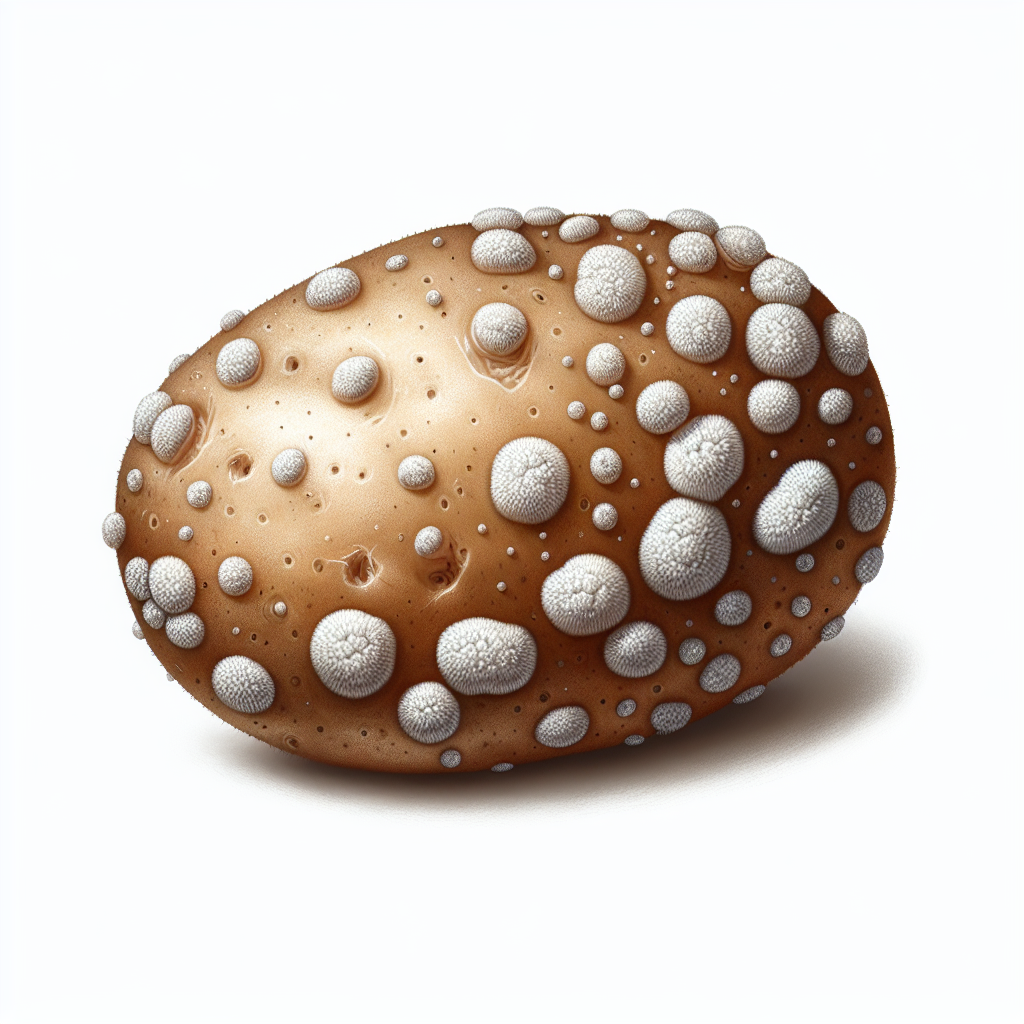
Introduction to Silver Scurf
Silver scurf, caused by the fungus Helminthosporium solani, is one of the most prevalent post-harvest diseases impacting the potato industry globally. First identified in the late 19th century, it has become increasingly problematic due to its ability to spread rapidly in storage facilities and its resistance to some traditional fungicides. Unlike more destructive diseases like early blight or late blight, silver scurf primarily affects the cosmetic appearance of potato tubers, rendering them unmarketable for fresh consumption while still suitable for processing in many cases.
The disease manifests as irregular, silver-gray patches on the potato skin, often accompanied by slight depressions and russeting. These symptoms not only lower the visual appeal but also increase the tubers' susceptibility to dehydration, shriveling, and secondary infections. Annual global losses attributed to silver scurf are estimated in the millions of dollars, particularly in regions with intensive potato production like North America, Europe, and parts of Asia. Understanding its biology and implementing integrated management strategies are crucial for growers aiming to protect their yields and profitability.
This guide provides comprehensive diagnostic criteria, lifecycle insights, risk factors, organic control methods, prevention techniques, and details on affected crops. By following these professional-grade recommendations, farmers can significantly reduce silver scurf incidence and maintain high-quality potato stocks through harvest and storage.
Identifying Symptoms & Damage
Early detection of silver scurf is essential for timely intervention. The hallmark symptom is the appearance of superficial, irregular lesions on potato tubers, typically measuring 1-10 mm in diameter. These lesions start as faint, silvery-gray patches that expand over time, often coalescing into larger discolored areas covering up to 50% of the tuber surface in severe cases.
Affected skin may feel slightly raised initially before becoming sunken and corky. In humid conditions, a sparse, olive-gray mycelial growth may be visible on the lesions. Unlike Rhizoctonia black scurf, which produces raised, black sclerotia, silver scurf lesions are flat to slightly depressed and lack discrete fungal structures on the surface. Cutting into infected tubers reveals no internal discoloration, distinguishing it from dry rot or soft rot pathogens.
Damage extends beyond aesthetics: infected tubers lose water 2-3 times faster than healthy ones due to disrupted periderm integrity, leading to shriveling and weight loss of up to 10-15% over storage. This accelerates senescence and invites secondary pathogens like Fusarium or bacterial soft rots. In fresh markets, even 5-10% infection can result in grade reductions, slashing pack-out values by 20-50%. Processing potatoes tolerate higher levels, but excessive infection increases peeling losses and fry color defects.
Field diagnosis involves inspecting tubers at harvest or digging. Use a hand lens to confirm the fungal mycelium. Lab confirmation via culturing on selective media (e.g., OTA or water agar) reveals the characteristic curved, multi-septate conidia of H. solani. For rapid field tests, consider ELISA kits or PCR assays available from agricultural diagnostic labs.
Lifecycle and Progression of Silver Scurf
Helminthosporium solani is a necrotrophic fungus with a lifecycle tightly linked to potato tubers and soil. Primary inoculum survives as dormant mycelium or conidia in infected seed tubers and infested soil/debris, remaining viable for 2-3 years. Infection begins in the field late in the season when senescing foliage allows spore dispersal to emerging tubers via rain splash or wind.
Conidia germinate optimally at 15-25°C (59-77°F) with free moisture, penetrating the periderm through wounds or natural lenticels. Lesions develop slowly in the field but proliferate rapidly post-harvest under cool (10-18°C/50-65°F), humid (>90% RH) storage conditions. The pathogen sporulates profusely on lesions, releasing airborne conidia that spread within storage piles, achieving 100% infection in untreated stocks within weeks.
Progression follows a predictable pattern: initial silvery specks appear 1-2 weeks post-harvest, expanding to blotches by 4-6 weeks. Peak sporulation occurs at 20-25°C, but disease advances even at refrigeration temperatures (4-10°C). Unlike obligate parasites, H. solani does not require living host tissue, thriving on dead periderm. Overwintering occurs primarily on seed tubers, perpetuating the cycle in subsequent plantings.
Understanding this lifecycle underscores the importance of seed quality and storage hygiene. For detailed insights on potato cultivation challenges, check this 1-Acre Blueprint blog post.
Environmental Triggers & Risk Factors
Silver scurf flourishes under specific conditions that favor spore germination and infection. Optimal temperatures range from 10-25°C (50-77°F), with disease severity peaking at 15-20°C (59-68°F)—common in harvest and early storage phases. High relative humidity (>90%) or free water on tubers is critical, as conidia require 8-12 hours of leaf wetness equivalent on tubers for penetration.
Key risk factors include planting infected seed tubers (carrying 20-50% surface coverage), which introduces 10^4-10^6 conidia per tuber. Soil temperatures above 20°C during late bulking promote field infections. Harvest delays in wet weather splash inoculum onto tubers, while mechanical injury from digging exacerbates entry points.
Storage practices amplify risks: poor ventilation leading to condensation, stacking densities >20 tubers high, and temperatures fluctuating between 10-20°C create ideal microclimates. Potato varieties like Russet Burbank Potato and Yukon Gold Potato show higher susceptibility due to thinner periderms, while red-skinned cultivars offer moderate resistance.
Other contributors: excessive nitrogen fertilization delays skin set, and irrigation during late-season growth maintains high humidity. Crop rotation intervals <3 years retain soil inoculum. Climate change may intensify outbreaks with warmer, wetter harvests in temperate zones.
Organic Control & Treatment Plans
Organic management of silver scurf emphasizes prevention but includes curative options. Start with certified disease-free seed tubers treated with organic fungicides like hydrogen peroxide (3-5% solutions, 10-min soak) or chlorine dioxide (50-100 ppm, 15-min dip), reducing inoculum by 70-90%. Post-harvest, apply biofungicides containing Bacillus subtilis or Trichoderma harzianum (e.g., Serenade or RootShield) via mist application in storage, achieving 50-80% control.
Physical treatments: hot water dip at 47°C (117°F) for 20-30 min kills surface conidia without cooking tubers (test small batches). UV-C light exposure (254 nm, 100-500 J/m²) on conveyor belts post-harvest inactivates spores by 95%. Dry brushing or steam cleaning removes 60-80% of visible lesions and inoculum.
Biological controls: introduce antagonistic microbes like Pseudomonas fluorescens via seed coatings. Essential oils (thymol, eugenol at 0.1-0.5%) show promise in trials, suppressing sporulation by 75%. Integrate with sanitation: remove culls immediately and use negative-pressure ventilation to dry tubers to <20% surface moisture within 2 weeks of storage.
Integrated plans: combine seed treatment + hot water + biofungicide for >90% efficacy. Monitor weekly with lesion counts; treat if >5% incidence. Rotate with non-solanaceous crops like wheat or corn to break soil cycles.
Preventing Silver Scurf in the Future
Long-term prevention hinges on cultural practices. Select resistant varieties where available (e.g., some Andean landraces or 'Defender'). Source seed from low-scurf (<2%) certified programs, testing via bioassays. Implement 3-4 year rotations with brassicas or cereals to dilute soil inoculum below infection thresholds.
Optimize field practices: avoid overhead irrigation post-tuber initiation; use drip systems. Balance N fertility (target 200-250 kg/ha) to promote rapid skin set. Harvest at vine kill (2-3 weeks post-desiccation) when soils are dry (<25% moisture), minimizing wounds with gentle diggers.
Post-harvest protocols: cure tubers at 12-15°C/95% RH for 1-2 weeks to heal abrasions, then store at 4-7°C/<95% RH with 0.1-0.2 m/s airflow. Minimize stacking; use ventilated bins. Grade out infected tubers (>10% coverage) before storage. Scout monthly, removing hotspots.
Resistant cultivar development and clean seed systems are key. Educate crews on hygiene: disinfect equipment with quaternary ammonium. For small farms, AI-driven monitoring can predict outbreaks based on weather data—see Soil Health Mastery for related strategies.
Crops Most Affected by Silver Scurf
Silver scurf predominantly targets potatoes (Solanum tuberosum), with all cultivars susceptible but varying in tolerance. Table varieties like red- and white-skinned types suffer highest cosmetic losses, while russets (Russet Burbank Potato) show moderate field resistance but storage vulnerability. Processing lines like 'Ranger Russet' and chipping cultivars ('Snowden') incur yield penalties from weight loss and peeling increases.
Rare reports note minor infections on tomatoes (Solanum lycopersicum), particularly Roma Tomato and Cherry Tomato, under high-humidity greenhouse conditions, though economic impact is negligible. Other solanaceous crops like eggplant (Black Beauty Eggplant) may host the fungus asymptomatically, serving as inoculum reservoirs.
Globally, major potato belts (Idaho, Washington, Netherlands, China, India) report 10-40% incidence without management. In organic systems, losses reach 60%. No significant non-solanaceous hosts confirmed.