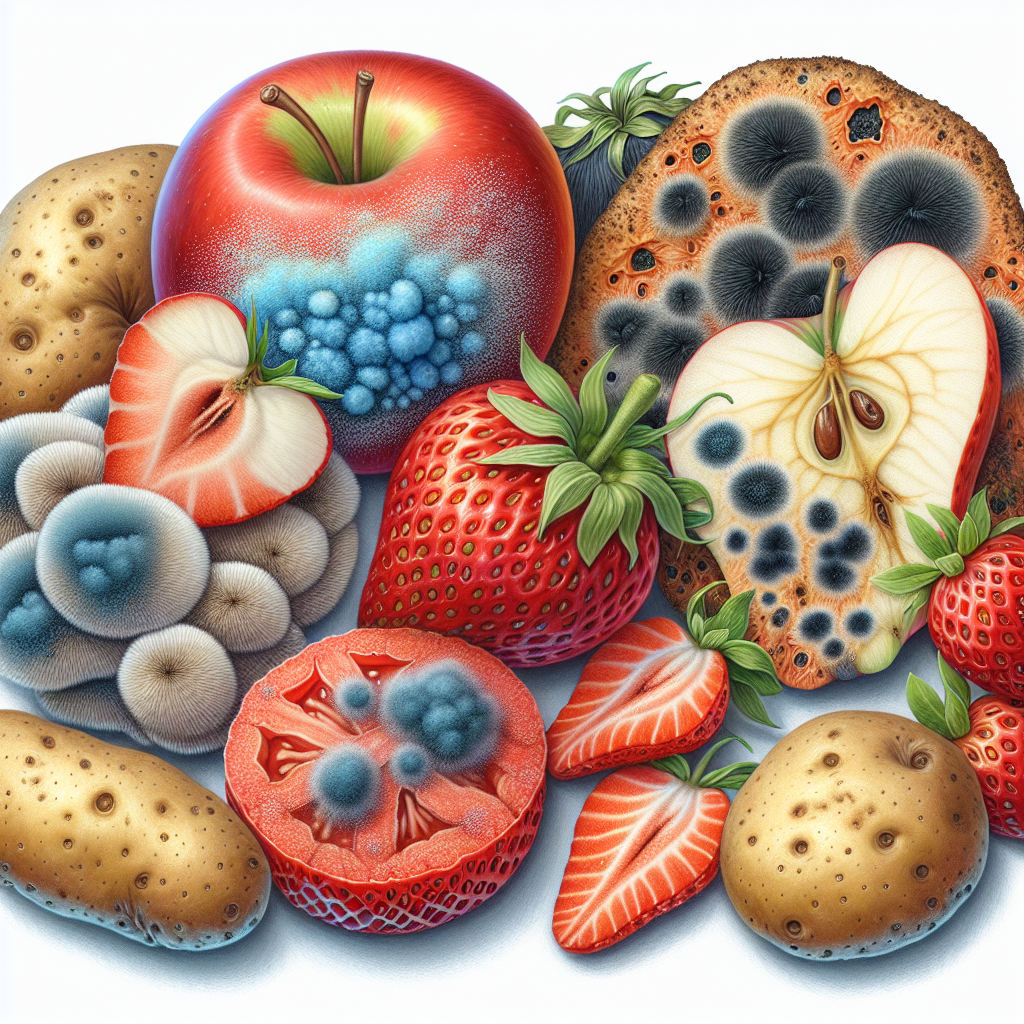
Introduction to postharvest rots
Postharvest rots represent one of the most critical challenges in modern agriculture, causing up to 30-50% losses in perishable crops after harvest. These diseases, primarily driven by opportunistic fungi and bacteria, attack fruits, vegetables, tubers, and bulbs once they are removed from the protective field environment. Unlike field diseases, postharvest rots progress rapidly due to the high moisture content and nutrient availability in harvested produce, often rendering entire shipments unsalable within days.
Common culprits include Penicillium expansum (blue mold), Botrytis cinerea (gray mold), Rhizopus stolonifer (black mold), Colletotrichum spp. (anthracnose), and bacterial soft rots caused by Erwinia carotovora and Pectobacterium spp.. These pathogens produce enzymes that break down cell walls, leading to watery breakdown, mycelial growth, and sporulation visible as fuzzy molds or slime. Globally, postharvest losses exceed $1 trillion annually, with tropical and subtropical regions suffering the most due to high temperatures and humidity. Understanding postharvest rots is essential for farmers, packers, and distributors aiming to extend shelf life and maximize market value.
The economic impact is staggering: in developing countries, smallholder farmers lose up to 40% of their yield to rots, while in developed markets, cosmetic decay leads to rejection at retail. This guide provides definitive diagnostic criteria, lifecycle insights, and proven organic management strategies to combat postharvest rots effectively. By integrating pre-harvest vigilance with post-harvest hygiene, growers can reduce losses by over 70%.
Identifying Symptoms & Damage
Accurate diagnosis of postharvest rots is crucial for timely intervention. Symptoms typically appear 2-7 days after harvest, starting at injury sites like bruises, cuts, or stem ends. Key indicators include:
- Water-soaking lesions: Initial soft, translucent spots that expand rapidly, often with a brown or black center.
- Mycelial growth: Fuzzy white, gray, blue-green, or black mold covering lesions. For example, Botrytis produces gray powdery spores, while Penicillium shows blue-green fuzz.
- Sporulation: Powdery spore masses on lesion surfaces, especially under high humidity.
- Odor: Foul, fermented smells from bacterial rots like soft rots.
- Internal breakdown: Firm fruits become spongy; fruits like apple or mango develop cavities filled with rot.
Damage patterns vary by pathogen:
| Rot Type | Key Symptoms | Affected Produce |
|---|---|---|
| Blue Mold (Penicillium) | Blue-green spores, flat lesions | Citrus, apple, pear |
| Gray Mold (Botrytis) | Gray fuzz, rapid spread | Strawberry, grape, tomato |
| Black Mold (Rhizopus) | Black whiskers, cottony growth | Tomato, stone fruits |
| Bacterial Soft Rot | Slimy, watery collapse, fishy odor | Potato, onion, leafy greens |
| Anthracnose (Colletotrichum) | Sunken black spots, pink spore masses | Avocado, mango, papaya |
Microscopic confirmation involves spore morphology: Penicillium conidia are brush-like chains, Botrytis has branched conidiophores. Use a 10x hand lens for field diagnosis. Economic damage includes weight loss (10-20%), off-flavors, and mycotoxin contamination (e.g., patulin from Penicillium), posing health risks.
Lifecycle and Progression of postharvest rots
Postharvest rots follow a latent infection model, with pathogens often present on produce pre-harvest but dormant until storage conditions activate them. The lifecycle includes:
- Inoculation: Spores land on wounds during harvest, transit, or packing. Latent infections from field pathogens like anthracnose activate post-harvest.
- Germination: Spores germinate in 6-24 hours at 20-30°C and >90% RH, producing infection hyphae.
- Penetration: Hyphae enter via wounds or natural openings (e.g., lenticels in potato). Pectinases dissolve middle lamella.
- Colonization: Rapid mycelial growth (up to 1 cm/day), leading to tissue maceration.
- Sporulation: Under light and high humidity, conidia form for secondary spread within storage.
- Quiescence: Some pathogens (e.g., Colletotrichum) remain dormant until ethylene peaks during ripening.
Progression accelerates with ethylene exposure, wounding, and temperatures above 15°C. In cool storage (0-5°C), progression slows, but bacterial rots thrive at 20-40°C. A single lesion can infect adjacent fruit via contact spread, creating 'nest rot' in bins.
Environmental Triggers & Risk Factors
Postharvest rots flourish under specific conditions:
- High humidity (>90% RH): Essential for spore germination; condensation on cold produce triggers outbreaks.
- Warm temperatures (15-30°C): Optimal for most fungi; bacterial rots peak at 25-35°C.
- Wounds and bruises: Mechanical injury from harvest tools, rough handling, or drops provides entry points.
- Poor ventilation: CO2 buildup (>5%) and low O2 promote anaerobes.
- Contaminated surfaces: Dirty bins, packing sheds harbor 10^6 spores/m².
Risk factors include:
- Over-mature harvest: Weakened defenses.
- Rainy pre-harvest weather: Increases latent infections.
- Long transit times: Without refrigeration.
- Mixed loads: Ripe fruits emit ethylene, ripening neighbors prematurely.
In tropical climates, ambient storage sees 50% losses in 3 days; controlled conditions extend to weeks.
Organic Control & Treatment Plans
Organic management emphasizes prevention over cure, as no post-infection treatments fully stop rots. Read our detailed guide on Why Misidentifying Plants Costs Small Farms Thousands - And How AI Camera Diagnosis Fixes It Fast for early detection tips.
Immediate Post-Harvest Actions (within 24 hours):
- Curing: Dry wounds to form protective barriers. E.g., cure onion at 30-35°C, 65-75% RH for 3-5 days.
- Hot Water Dips: 48-52°C for 2-5 min kills surface spores on mango or citrus (OMRI-approved).
- Biofungicides: Apply Bacillus subtilis (Serenade) or Streptomyces (Actinovate) dips; yeasts like Candida oleophila compete for space.
Storage Protocols:
- Rapid cooling to 0-10°C based on crop (e.g., strawberry at 0°C).
- Maintain 85-95% RH with ventilation.
- Use modified atmosphere: 2-5% O2, 5-10% CO2.
Sanitation Plan:
- Disinfect tools/bins with 10% bleach or hydrogen peroxide.
- Remove cull piles; compost at >55°C.
- UV sanitation in packing areas.
Integrated Organic Plan:
- Pre-harvest: Apply potassium phosphite for resistance.
- Grading: Remove >5% damaged fruit.
- Monitoring: Weekly inspections; discard nests.
Success rates: 80-90% loss reduction with full protocol.
Preventing postharvest rots in the Future
Long-term prevention builds resilience across the supply chain:
- Pre-Harvest Practices: Harvest at optimal maturity; avoid mechanical harvesters on bruise-prone crops like peach. Use Thai Basil intercrops for natural antifungal volatiles.
- Gentle Handling: Foam-lined bins, padded conveyors; train pickers.
- Variety Selection: Choose rot-resistant cultivars, e.g., 'Hass Avocado' ([/wiki/hass-avocado]) over susceptible types.
- Field Sanitation: Remove infected debris; rotate crops to break pathogen cycles.
- Storage Tech: Invest in ventilated crates, ethylene absorbers (KMnO4), or ozone generators (organic-approved low doses).
- Supply Chain: Shorten transit; use refrigerated trucks.
- Monitoring Tools: Digital thermohygrometers, AI imaging for early rot detection.
Annual audits reduce recurrence by 60%. For more on small farm strategies, check Soil Health Mastery: 5 Proven Strategies for Small Farms to Build Fertile Ground Without Breaking the Bank.
Crops Most Affected by postharvest rots
Postharvest rots strike a wide range of commodities, with losses highest in high-value perishables:
- Fruits (40-60% losses): Apple, orange, banana, mango, strawberry, grape, avocado.
- Vegetables (20-50%): Tomato, potato, onion, cucumber, leafy greens.
- Tubers/Roots: Sweet potato, cassava.
- Others: Citrus, stone fruits like peach, pineapple.
Tropical crops suffer most without cold chain; temperate fruits fare better with refrigeration. Prioritize high-risk crops in management plans.