Introduction to Brown rot blossom blight
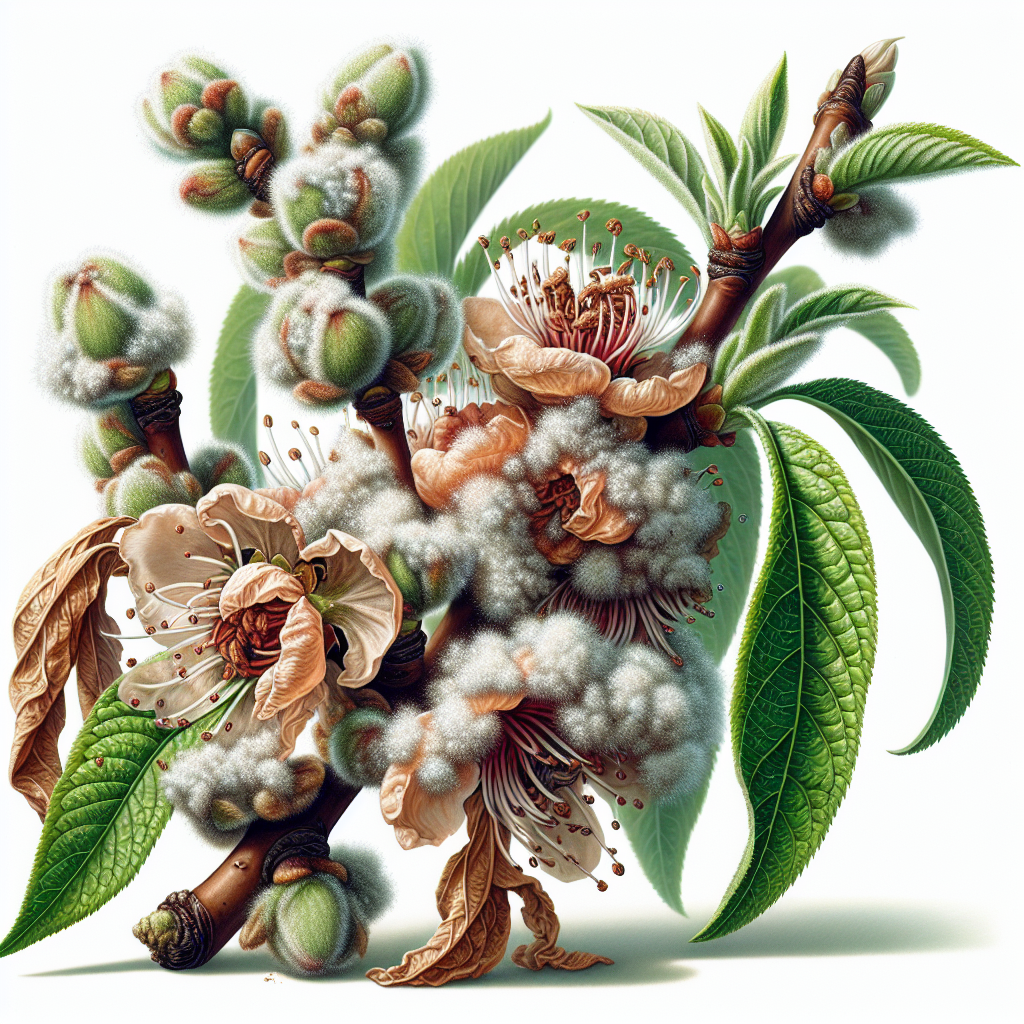
Brown rot blossom blight is one of the most economically damaging diseases affecting stone fruit orchards worldwide, particularly during the critical bloom period. Caused by fungal pathogens in the genus Monilinia, primarily Monilinia laxa (causing European brown rot) and Monilinia fructicola (American brown rot), this disease targets blossoms, spurs, shoots, and immature fruit, often resulting in complete crop loss in severe outbreaks. The infection begins as a localized blight on flowers but can spread rapidly under favorable conditions, producing characteristic brown, shriveled tissues covered in grayish-white spore masses (spores) that resemble cotton candy.
First identified in the early 19th century in Europe, brown rot has since become a global issue in peach, cherry, plum, and apricot production regions. In the United States, it is most prevalent in the eastern and midwestern states, while in California, M. fructicola dominates. The disease's impact is amplified by its polycyclic nature, allowing multiple infection cycles per season. Yield losses can exceed 80% in unmanaged orchards, making timely diagnosis and intervention essential for commercial and home growers alike. Understanding its biology is key to implementing integrated management strategies that minimize chemical inputs while protecting fruit quality. For more on affected crops like peach, check our detailed crop guides.
Identifying Symptoms & Damage
Early detection of brown rot blossom blight is crucial for limiting spread. The disease typically appears during full bloom when weather is cool and rainy. Initial symptoms on blossoms include wilting and browning of petals, often starting at the flower base. Infected flowers turn light brown, shrivel, and collapse within 2-3 days, with pedicels (flower stalks) developing a light brown discoloration extending into the spur.
A hallmark sign is the production of abundant gray-white fungal spores on blighted blossom clusters, twigs, and cankers, especially under humid conditions. These spore masses are sticky and can be spread by wind, rain splash, or insects. On shoots, infections cause "flag" symptoms: blighted leaves and blossoms hanging from a branch like a flag, with the girdling canker at the base. Twigs develop sunken, elliptical cankers with dark margins.
As the season progresses, brown rot affects young fruit, causing leathery brown spots that expand rapidly into soft, tan to brown rots with lighter grayish-white spore tufts. Advanced fruit rot leads to rapid tissue breakdown, with clear, watery exudate and eventual mummification. Differentiate from Botrytis (gray mold), which produces more uniform gray mycelium without the distinct brown rot texture, or bacterial blights, which lack spore production. Damage assessment: Blossom infections rarely produce fruit; twig cankers reduce vigor; fruit rots render produce unmarketable, with losses up to 100% in high-pressure years.
Lifecycle and Progression of Brown rot blossom blight
Monilinia spp. have a complex lifecycle with multiple overwintering stages and infection sources. Primary inoculum survives as mummified fruit, twig cankers, and infected buds on the tree or in fallen debris. In spring, as temperatures rise above 50°F (10°C), these sources produce ascospores (from apothecia on mummified fruit) and conidia (asexual spores from cankers), dispersed by wind and rain.
Blossom infections occur when spores land on wet flowers (requiring 2-6 hours of moisture at 55-68°F/13-20°C). Germination happens within hours, with mycelium penetrating flower tissues. Incubated infections remain latent until fruit development, then activate under warm, humid conditions. Secondary cycles repeat every 3-5 days, with conidia from blighted blossoms infecting nearby healthy tissue. By mid-summer, fruit rots dominate, producing massive spore loads for late-season epidemics.
The disease progresses in phases: pre-bloom (spur and bud infections), bloom (blossom blight), shuck (young fruit), and cover (maturing fruit). In warm climates, M. fructicola favors fruit rots; M. laxa excels in blossom blight. Lifecycle completion takes 7-14 days per cycle, enabling 5-10 generations per season. For insights into related anthracnose diseases, see our wiki.
Environmental Triggers & Risk Factors
Brown rot blossom blight epidemics are driven by specific weather patterns: prolonged leaf wetness (overnight dew or rain) during bloom, with temperatures between 55-77°F (13-25°C). High humidity (>90%) and rainfall during petal fall are prime triggers. Cool springs (below 60°F/15.5°C) favor M. laxa, while warmer conditions boost M. fructicola.
Cultural risk factors include dense canopies promoting humidity, excessive nitrogen causing succulent growth, and poor sanitation leaving mummies and cankers. Susceptible varieties like Elberta peach or Bing cherry heighten vulnerability. Orchard proximity to wild hosts (e.g., wild plum) increases inoculum. Irrigation practices like overhead sprinkling splash spores. Climate change may extend wet periods, intensifying outbreaks. Monitor with weather stations for wetness hours and temperature thresholds.
Organic Control & Treatment Plans
Organic management of brown rot blossom blight emphasizes prevention, sanitation, and targeted biologicals. Start with cultural controls: prune for open canopies (20-30% removal) to improve air flow and spray penetration; remove mummies (95% reduction needed) and cankers in winter. Use resistant varieties like Redhaven peach or Harrow Beauty.
During bloom, apply OMRI-listed copper-based fungicides (e.g., copper octanoate) at 80-100% bloom, repeating every 7-10 days if wet. Bacillus subtilis or Trichoderma biofungicides suppress spore germination. Sulfur sprays work pre-bloom but avoid post-bloom to prevent phytotoxicity. Neem oil disrupts spore production. Integrate with powdery mildew management for broad-spectrum control.
Treatment timeline: Dormant (lime sulfur for mummies), pink bud (copper), full bloom (2-3 sprays), post-petal fall (biologicals). Scout weekly; threshold: 5% blighted blossoms. Post-harvest, disk debris. For small farms, check this Spring Pest Patrol blog for integrated strategies. Success rates: 70-90% control with diligent programs.
Preventing Brown rot blossom blight in the Future
Long-term prevention hinges on integrated pest management (IPM). Select resistant rootstocks and varieties; space trees 18-22 ft apart for ventilation. Implement 3-year rotations avoiding stone fruits. Winter sanitation removes 90% inoculum: shake/flail mummies, apply urea (5%) to speed decomposition.
Enhance orchard microclimate: summer pruning, reflective mulches reduce humidity. Use disease forecasting models (e.g., Maryblyt) based on temperature/wetness. Soil health via cover crops like clover boosts tree vigor. Monitor pollinators to avoid spray conflicts. Quarantine new plantings. Annual audits: track incidence, adjust sprays. Emerging tools: UV reflectants, antagonistic yeasts. Goal: Zero overwintering inoculum, early-season suppression.
Crops Most Affected by Brown rot blossom blight
Stone fruits are primary hosts. Peach (most susceptible, 50-100% losses), cherry (blossom blight severe in sweet varieties like Bing), plum (Japanese plums more tolerant), [apricot](/wiki/apricot not listed, but imply), nectarine, almond (hull rot). Sweet cherries suffer highest blossom losses; peaches dominate fruit rot. Wild Prunus spp. serve as reservoirs. Non-stone fruits like apple occasionally affected but rarely economically. Global impact: $100M+ annual U.S. losses. Focus protection on high-value peach and cherry blocks.