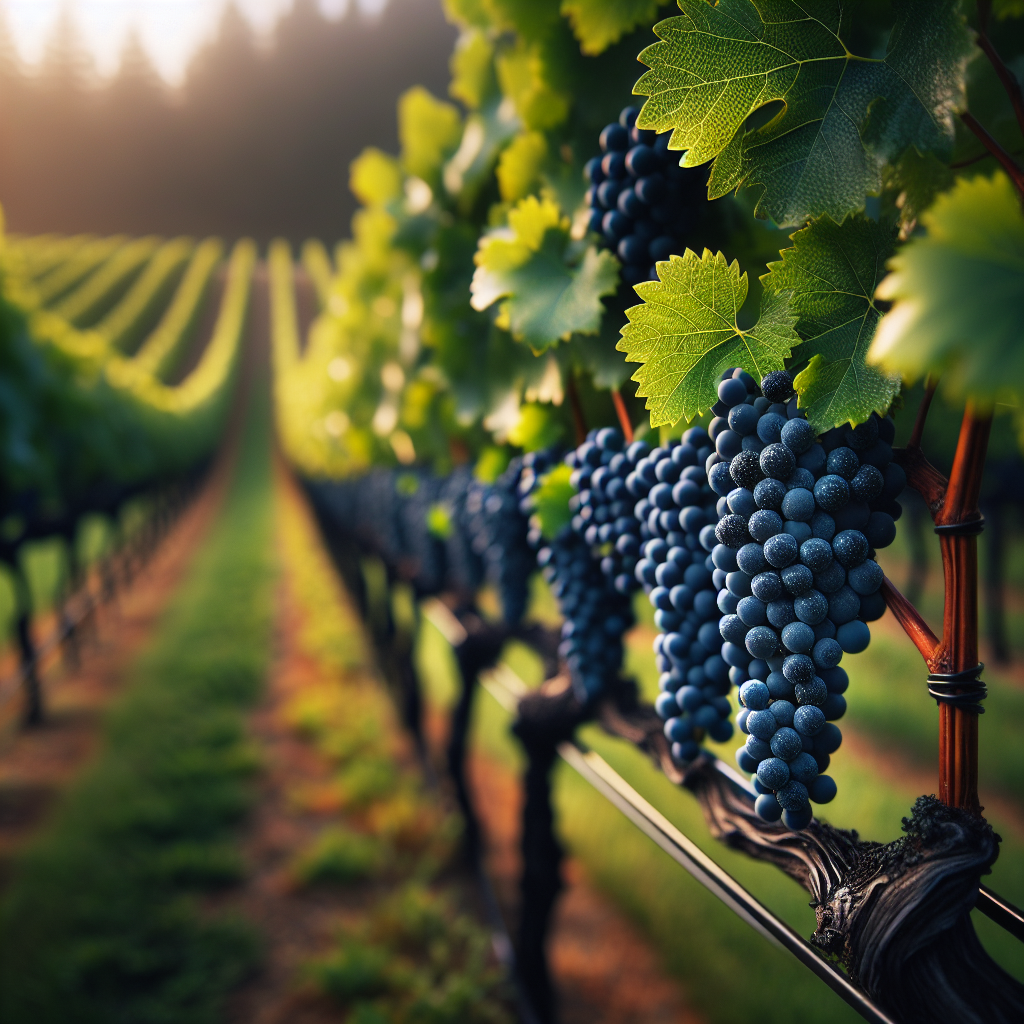
Introduction to Pinot Noir Grapes
Among wine grapes, few cultivars have a reputation as exalted—or as exacting—as Pinot Noir. Believed to have ancient roots in northeastern France, especially Burgundy, it has been cultivated for centuries and is considered one of the classic noble varieties of Vitis vinifera. Its name comes from the French pin for pine, referring to the pinecone-like compactness of its clusters, and noir for the dark color of the berries.
This is not a forgiving variety. Pinot Noir buds relatively early, ripens early to mid-season, and has tight clusters with thin skins, a combination that makes it highly vulnerable to spring frost, bunch rots, and weather swings near harvest. Yet these same traits help explain its greatness: when grown in a cool to moderate climate with long daylight, moderate vigor, and a dry finish to the season, it can produce fruit of extraordinary aromatic nuance, with red cherry, raspberry, floral, spice, and earthy notes.
Compared with more robust cultivars such as Cabernet Sauvignon Grapes, Pinot Noir demands more careful site selection and a more restrained fertility program. It performs best where growers can balance vegetative growth against fruit exposure and preserve acidity while still achieving full phenolic maturity. Vineyard establishment choices made in year one often determine quality for decades, so this crop rewards precision from the start. For broader soil-building principles that support long-lived perennial systems, see soil health strategies.
Botanical Profile of Pinot Noir Grapes
Pinot Noir belongs to the Vitaceae family and is a clonally diverse cultivar group within Vitis vinifera. It is genetically unstable and highly prone to mutation, which helps explain the existence of related forms such as Pinot Gris and Pinot Blanc. In the vineyard, this instability also shows up in clone-to-clone variation in cluster size, berry set, disease susceptibility, yield, and flavor profile.
Vines are deciduous, woody perennials with a twining growth habit. Like all grapevines, they produce tendrils opposite leaves on actively growing shoots. The leaves are typically medium-sized, orbicular to slightly pentagonal, often with three to five lobes and a somewhat blistered surface. Shoots are moderately vigorous but vigor varies greatly depending on rootstock, soil depth, water status, and nitrogen availability.
Clusters are usually small to medium, cylindrical to conical, and often compact. That compactness is agronomically important: poor air movement inside the bunch increases the risk of Botrytis cinerea and Sour rot, especially if rainfall or heavy dew occurs close to veraison or harvest. Berries are small, round, and dark blue to black with a light waxy bloom. Skins are thin and contain relatively modest tannin compared with thicker-skinned red varieties, which is why Birds, wasps, splitting, and rot can become serious concerns.
Pinot Noir is typically self-fertile because flowers are perfect, containing both male and female structures. Even so, fruit set can be inconsistent under cold, rainy, or windy bloom conditions. The variety is also known for coulure and millerandage under stress, meaning poor fruit set or uneven berry sizing may occur when temperatures are low, carbohydrate reserves are inadequate, or vine balance is poor.
Phenologically, expect budbreak on the early side, flowering in late spring, veraison in mid to late summer, and harvest earlier than many red cultivars. Because Pinot Noir can accumulate sugar before tannins, flavor compounds, and seed maturity are fully synchronized, the grower must watch fruit chemistry closely rather than harvesting on soluble solids alone.
Soil, pH, and Climate Requirements for Pinot Noir Grapes
Pinot Noir is best adapted to cool-summer to moderate temperate climates where ripening is gradual rather than rushed. Ideal growing-season conditions usually include warm days, cool nights, moderate solar exposure, and limited late-season rainfall. Regions with average growing-season temperatures around 14–18°C are often suitable, though exact performance depends on slope, aspect, wind, rootstock, and training system.
This variety strongly reflects terroir, so site is everything. Slopes with good air drainage reduce frost risk. East- or southeast-facing slopes can be advantageous in frost-prone regions because they warm gradually in the morning, helping prevent rapid thaw after cold nights. In hot inland areas, north- or northeast-facing aspects in the Northern Hemisphere may help preserve acidity and reduce sunburn.
The best soils are well drained, moderately fertile, and deep enough for root exploration without being excessively vigorous. Pinot Noir performs especially well in gravelly loams, limestone-derived soils, marl, decomposed shale, or sandy loams with good structure. Heavy clays can work if internal drainage is excellent, but waterlogged or compacted soils are a poor fit because roots need oxygen. If water stands for more than 24 hours after heavy rain, the site likely needs drainage correction before planting.
Target soil pH is generally 5.8 to 6.8, with an optimum around 6.2 to 6.5 for nutrient availability and root health. Below pH 5.5, aluminum or manganese toxicity and reduced phosphorus availability may occur; above pH 7.5, iron, zinc, and manganese deficiencies become more likely, especially on calcareous soils. Conduct a full pre-plant soil test at least 6 to 12 months before vineyard establishment, including pH, cation exchange capacity, organic matter, phosphorus, potassium, calcium, magnesium, sodium, and micronutrients.
Organic matter around 2–4% is often ideal for vineyard soils. Excessively rich soils can drive too much shoot growth, dense canopies, and delayed fruit maturity. Low organic matter soils may need pre-plant compost incorporation, but avoid over-applying manure, especially fresh or high-nitrogen amendments, because Pinot Noir quality declines when vigor is too high.
Water needs are moderate, but precision matters. During active growth, vines generally perform best when soil moisture is maintained in the root zone without saturation. A practical target is to keep soil evenly moist at roughly 50–80% of field capacity, depending on soil type and phenological stage. Moderate deficit after fruit set and especially after veraison is often used to limit vigor and concentrate fruit, but severe drought causes shriveled berries, stalled sugar accumulation, leaf yellowing, and exposed clusters that sunburn. Overwatering shows up as rank lateral growth, overly large leaves, poor fruit exposure, diluted flavors, edema-like blistering on leaves in some conditions, and soft berries prone to splitting and botrytis.
Step-by-Step Planting & Propagation
Commercially and in serious home vineyards, Pinot Noir is almost always established from dormant grafted vines rather than from seed. Seeds do not come true to type, and own-rooted vines may be unsuitable where Phylloxera is present. Use certified disease-free planting material from reputable nurseries, ideally matched to your region and with known clone and rootstock information.
Choose the site carefully. Select a location with full sun, strong air movement, and excellent drainage. Avoid frost pockets, low basins, and areas shaded by buildings or trees for part of the day.
Prepare the soil in advance. Deep-rip compacted layers if needed before planting. Correct pH based on soil test results. Incorporate stable compost only if organic matter is low, and keep nutrient additions moderate.
Install infrastructure first. Put in trellis posts, end assemblies, irrigation mainlines, and drainage improvements before planting whenever possible. Pinot Noir performs best when trellis design supports open canopies; vertical shoot positioning is the most common system in quality-focused vineyards.
Plant during dormancy. Late winter to early spring is ideal while vines are still dormant and soils are workable. In milder regions, dormant-season planting can extend through late winter. Avoid planting into cold, saturated ground.
Spacing. Typical vine spacing ranges from 0.9 to 1.5 meters within rows and 2.0 to 3.0 meters between rows, depending on vigor, mechanization, and trellis design. Higher-density plantings can enhance competition and quality on fertile soils, but only if water and canopy management are excellent.
Plant correctly. Soak bare-root vines in clean water for a few hours before planting if roots are dry. Dig a hole wide enough to spread roots naturally. Keep the graft union 5–10 cm above the finished soil surface to reduce scion rooting. Backfill firmly without burying the graft.
Water in thoroughly. After planting, irrigate deeply to settle soil around roots. The goal is full root-zone wetting, not daily surface sprinkling.
Train the trunk early. Select the strongest shoot and tie it loosely to a stake. Remove competing shoots so trunk formation is straight and rapid. Do not overcrop young vines; remove clusters in year one and usually year two if vine establishment is weak.
Propagation by hardwood cuttings is possible for research or own-rooted situations in Phylloxera-free sites, but it is not standard practice for long-term vineyard establishment. Grafting onto rootstocks selected for vigor control, nematode resistance, drought adaptation, lime tolerance, or Phylloxera resistance is far more common.
Care & Maintenance regimes for Pinot Noir Grapes
Pinot Noir succeeds when vine balance is managed relentlessly. The objective is neither maximum yield nor maximum vegetative mass, but a canopy-to-crop ratio that ripens fruit fully while maintaining healthy perennial wood.
Irrigation: Young vines need frequent but not excessive watering during establishment. In the first season, irrigate deeply when the top 5–8 cm of soil dries, adjusting for soil texture. Sandy soils may require smaller, more frequent irrigations; loams and clay loams need less frequent but deeper events. Mature vines often benefit from regulated deficit irrigation after fruit set. A common professional approach is to avoid visible stress before fruit set, then allow mild midday leaf water stress later in the season without reaching prolonged wilting. Severe drought signs include tendril drying, basal leaf drop, reduced shoot tip growth, and berry shrivel. Chronic excess water causes shallow roots, high vigor, low skin-to-pulp ratio, and higher disease pressure.
Mulching and undervine management: Organic mulches can moderate soil temperature and suppress weeds, but in cool climates they may delay spring soil warming and encourage vole habitat. Many growers prefer a clean undervine strip with cultivation or targeted weed control plus a managed cover crop in the alley. Avoid dense weeds under vines, as they compete strongly with young plants for moisture and nitrogen.
Nutrition: Pinot Noir generally requires a restrained fertility program. Excess nitrogen is one of the fastest ways to degrade fruit quality by producing dense canopies, delayed hardening of wood, and greater mildew and botrytis risk. Use petiole or leaf blade analysis around bloom or veraison to fine-tune nutrition. Nitrogen deficiency appears as pale green leaves, reduced shoot growth, and weak canopy fill; excess appears as very long internodes, dark lush foliage, and frequent lateral shoot growth. Potassium is important for sugar transport and vine function, but overcorrection can alter juice pH. Calcium, magnesium, boron, zinc, and iron should be managed from test data rather than by routine blanket application.
Pruning: Dormant pruning is critical. Pinot Noir is commonly spur-pruned on cordons or cane-pruned where site, clone, and fertility favor better bud fruitfulness on canes. Because the variety can be sensitive to overcropping, leave bud numbers according to vine vigor. Weak vines should carry fewer buds; vigorous vines can support more. Remove dead, diseased, crossing, and weak wood. Aim for a balanced architecture with renewal positions for future seasons.
Shoot thinning and positioning: In spring, thin excess shoots early when they are 10–20 cm long. Retain well-spaced, fruitful shoots and remove non-positioned, crowded, or weak shoots. As shoots elongate, tuck and position them between catch wires to maintain a narrow, vertical canopy. This improves spray penetration, sunlight distribution, and air flow.
Leaf removal: Carefully timed basal leaf removal around the fruit zone can reduce humidity and bunch rot, especially on the morning-sun side. However, overexposure of Pinot Noir clusters can cause sunburn, loss of delicate aroma compounds, and elevated fruit temperature. Remove just enough leaves to create dappled light and airflow rather than harsh direct afternoon exposure.
Cluster thinning: If fruit set is heavy or ripening is uneven, remove lagging or crowded clusters around veraison. This is especially useful where excessive crop load would prevent flavor development before autumn rains. Done correctly, thinning improves uniformity more than it increases total yield.
Frost and heat management: Because Pinot Noir buds early, spring frost is a persistent hazard. Delayed pruning, double pruning, wind machines, sprinklers, or site-based air drainage can reduce losses. In hot spells above about 35°C, berries may sunburn or cease normal ripening metabolism, so canopy retention is part of heat protection.
Pests, Diseases & Organic Management
Pinot Noir is highly disease-prone, especially in humid regions. Prevention is more effective than rescue treatment.
Powdery mildew: One of the most serious threats. Look for white-gray fungal growth on leaves, shoots, and berries, along with berry russeting or cracking. Manage with open canopies, good spray timing, sulfur where permitted and climate-appropriate, potassium bicarbonate, and biologicals as part of an integrated program.
Downy mildew: Favored by wet conditions. Symptoms include yellow oil spots on upper leaf surfaces and white sporulation underneath. Copper-based materials may be used in some organic systems, but canopy drying, airflow, and sanitation are foundational.
Botrytis bunch rot: A major Pinot Noir issue due to compact clusters and thin skins. Infected berries turn brown and soft, then may show gray fuzzy sporulation. Reduce risk through leaf removal around clusters, moderation of nitrogen, avoidance of overhead irrigation, and timely harvest before prolonged rain.
Sour rot: Often follows berry injury from splitting, Birds, wasps, or botrytis. Clusters smell like vinegar and collapse rapidly. Control vectors, maintain intact skins, and remove damaged fruit promptly.
Trunk diseases: Eutypa, Esca, and Botryosphaeria can reduce vine longevity. Prune in dry weather, sanitize tools when moving through diseased blocks, avoid large unnecessary cuts, and protect fresh pruning wounds where pressure is high.
Phylloxera: A root-feeding pest that devastated European vineyards historically. Plant grafted vines on resistant rootstocks in areas where Phylloxera is present.
Leafhoppers, Mites, Mealybugs, and Scale: These can weaken vines or vector disease. Use beneficial insect conservation, horticultural oils in dormancy where appropriate, and avoid broad-spectrum insecticides that disrupt natural enemies.
Birds and vertebrate pests: Birds can destroy a crop quickly once sugars rise. Netting is often the only dependable control for small vineyards. Deer and rabbits may browse shoots and trunks, so fencing or guards may be necessary.
For organic management, combine sanitation, weather-aware scouting, canopy control, resistant rootstocks, balanced fertility, and rotating approved materials. Remove mummified fruit, diseased wood, and dropped cluster debris. Never rely on one tactic alone.
Harvesting, Curing & Optimal Storage
Harvest timing for Pinot Noir depends on intended use, but for premium wine production it is a narrow window balancing sugar, acidity, pH, seed color, skin flavor, and tannin maturity. Fruit can look ripe before it tastes complete. Soluble solids often fall in the 22–25°Brix range for many wine styles, but numbers alone are not enough. Taste berries from multiple vineyard zones. Look for brown seeds, skins that separate reasonably easily, and flavors that shift from sharp green or herbaceous notes toward red fruit, floral, spice, and earth.
Harvest in the cool of morning and keep fruit shaded. Use clean, shallow picking lugs to avoid crushing the thin-skinned berries. Remove rotten, sunburned, underripe, raisined, or bird-damaged clusters during picking. Pinot Noir deteriorates quickly once harvested, especially in warm conditions.
There is no curing step in the manner used for onions or sweet potatoes. Instead, the key postharvest priorities are temperature control and gentle handling. For fresh short-term holding before processing, store grapes at 0–2°C with high relative humidity around 90–95%. Even under ideal conditions, wine grapes are not meant for long storage; quality falls fast due to dehydration, berry breakage, and rot.
If the crop is for home winemaking, crush or process as soon as possible after harvest. If intended for fresh eating, note that Pinot Noir is not generally grown as a table grape; its texture and cluster architecture are better suited to vinification than extended fresh-market handling.
Companion Planting for Pinot Noir Grapes
In vineyards, companion planting is usually less about traditional mixed cropping and more about functional understory and alley species that improve soil structure, attract beneficial insects, suppress weeds, and moderate excessive vigor. The best companions for Pinot Noir are plants that do not create dense humidity around clusters or compete aggressively for water in dry climates.
Garlic can be useful along vineyard margins or in nearby garden-Scale plantings because its strong aroma may help deter some pests, and its compact habit makes it manageable. Onion serves a similar role and fits well in small diversified systems around, rather than directly under, vines.
Clover is one of the most valuable vineyard companions when used deliberately as an alley or interrow cover crop. It helps protect soil from erosion, supports pollinators and beneficial insects, and can contribute biologically fixed nitrogen. However, in vigorous Pinot Noir sites, a legume cover must be managed carefully so it does not overstimulate vine growth. Mow before seed set and monitor vine vigor.
Thai Basil can attract beneficial insects in diversified plantings and works well in small vineyards or homestead systems where aromatic herb borders are desirable. Keep any companion planting far enough from the vine trunk to avoid root-zone competition and to preserve airflow in the fruiting zone.
Avoid sprawling annual vegetables, tall shading crops, or anything requiring frequent overhead irrigation near vines. The ideal companion system keeps the vineyard floor biologically active while the canopy remains dry, open, and easy to manage.