Introduction to Eutypa
Eutypa dieback, commonly known as Eutypa, is a pervasive fungal disease caused by Eutypa lata that targets the vascular tissues of woody perennial crops. First identified in Europe, it has spread globally, posing significant threats to vineyards and orchards worldwide. The pathogen infects through pruning wounds, colonizing the wood and producing toxins that disrupt plant physiology, resulting in delayed budburst, stunted 'stunted cordons' with small, yellow leaves, and characteristic wedge-shaped cankers. In severe cases, entire branches die back, leading to vine decline and up to 20-30% yield losses in affected grapes plantations. Unlike foliar diseases, Eutypa manifests systemically, making early detection challenging but crucial for long-term orchard health. This definitive guide equips growers with professional diagnostic tools, lifecycle insights, organic management plans, and prevention tactics to safeguard high-value crops. For more on related trunk diseases, see the Eutypa dieback wiki page.
Identifying Symptoms & Damage
Accurate identification of Eutypa is vital for timely intervention. External symptoms typically appear 2-5 years post-infection, starting with delayed budbreak in spring. Affected spurs produce shoots that are stunted, with shortened internodes and chlorotic, cupped leaves resembling herbicide damage. These 'stunted cordons' often display sectorial necrosis, where only part of the canopy wilts or yellows, progressing to dieback from the tips inward.
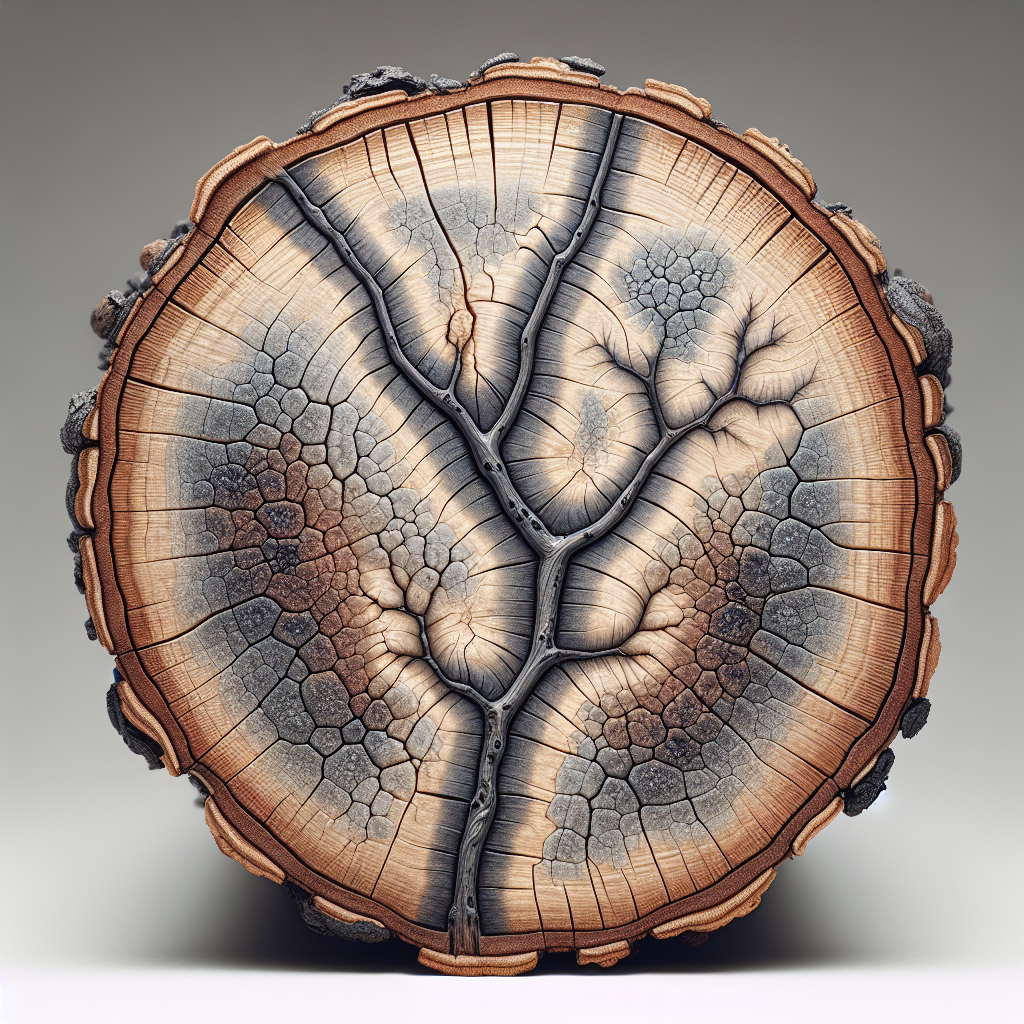
Longitudinally splitting the cane reveals the hallmark diagnostic feature: V- or wedge-shaped necrotic sectors in the wood, often with a grayish-brown discoloration extending 10-50 cm from the pruning wound. In advanced stages, silvery-gray stromata (fungal fruiting bodies) embedded in cankers produce cream-colored spore masses during wet springs. Cross-sections show black vascular streaking and tyloses blocking xylem vessels, confirmed by lab isolation of E. lata. Yield impacts are profound: infected vines show 50-90% fewer clusters, small berries, and poor ripening, compounding over years to vine mortality. Differentiate from Botryosphaeria cankers, esca, or drought stress via the specific V-shaped necrosis and toxin-induced foliar symptoms. Regular scouting post-pruning, especially in 5-10-year-old vines, prevents widespread outbreaks. For AI-assisted symptom identification, check this blog post on plant misidentification costs.
Lifecycle and Progression of Eutypa
Eutypa lata follows a polycyclic lifecycle adapted to perennial hosts. Primary inoculum consists of ascospores ejected from apothecia on dead branches or exposed wood during rainfall from winter to early spring (optimal: 10-20°C with >10 hours leaf wetness). These wind-dispersed spores (up to 1 km) infect fresh pruning wounds within 2-4 weeks, germinating and growing systemically through xylem rays.
Hyphae colonize sapwood, producing acetosyringone-like toxins that induce foliar symptoms the following season. Latent infections remain asymptomatic for 1-5 years, forming cankers up to 1 m long. Stromata mature in 2-3 years on dead wood, releasing 10^6 spores per apothecium. Progression accelerates in stressed vines, with conidia (anamorph: Libertella blepharis) forming on cankers during wet summers, though less infectious. Overwintering occurs as mycelium in wood. Disease cycles repeat annually via new spore showers on wounds, emphasizing pruning hygiene. Understanding this enables targeted interventions during high-risk windows.
Environmental Triggers & Risk Factors
Eutypa thrives in cool, wet climates with mild winters (e.g., Mediterranean, Pacific Northwest), where spore release aligns with pruning (late winter/early spring). High rainfall (>600 mm/year) and prolonged wound wetness (>48 hours) boost infection rates by 80%. Poor air circulation in dense canopies traps humidity, while mechanical wounds from frost cracks or hail serve as secondary entry points.
Risk factors include high vine density (>2,500/ha), delayed pruning after bud swell, susceptible rootstocks (e.g., 101-14 Mg), and water stress exacerbating toxin effects. Older orchards (>8 years) face higher incidence due to cumulative pruning wounds. Soil types with poor drainage promote root stress, indirectly aiding canker expansion. Climate change may intensify outbreaks via erratic wet springs. Mitigate by pruning in dry windows and monitoring spore traps.
Organic Control & Treatment Plans
No cure exists for established infections; management focuses on limiting spread and restoring vigor. Immediate Actions: Double-prune: cut back to 2-year wood beyond cankers, removing infected material and burning debris (reduces inoculum by 90%). Apply organic wound protectants like Bordeaux paste (10% copper sulfate + lime) or latex-based paints immediately post-pruning.
Biological Controls: Trichoderma spp. (e.g., T. harzianum) antagonizes E. lata in wounds; spray biofungicides (e.g., RootShield) at pruning. Bacillus subtilis-based products suppress spore germination. Nutritional Support: Foliar calcium and potassium sprays enhance compartmentalization; avoid excess nitrogen. Cultural Practices: Balance shoot growth with hedging to promote callus formation. In organic vineyards, integrate cover crops like clover to improve soil health and reduce stress.
Monitoring & Thresholds: Scout 10% of vines annually; treat if >5% stunted cordons. For integrated plans, combine with powdery mildew management. Organic yields recover 15-25% within 3 years with diligent pruning.
Preventing Eutypa in the Future
Prevention hinges on wound protection and hygiene. Prune during dry periods (relative humidity <70%) before bud swell, using pre-pruning sprays of lime sulfur (3-5%). Protect cuts with organic sealants containing clove oil or thyme extract for 4-6 weeks antifungal activity. Delay pruning until after spore season (use machine pre-pruning).
Select resistant varieties (e.g., certain Vitis interspecific hybrids) and train on balanced systems (e.g., VSP trellis) to minimize wounds. Remove wild hosts like olive and almond nearby. Sanitize tools with 10% bleach between vines. Long-term, trunk surgery on young cankers (remove 10 cm beyond necrosis) restores 70% of vines. Annual applications of compost teas boost systemic resistance. Integrated with soil health strategies, prevention sustains organic production.
Crops Most Affected by Eutypa
Eutypa lata exhibits broad host range among woody perennials, with grapes (Vitis vinifera) most severely impacted, suffering $100M+ annual losses in California alone. Stone fruits like apricot (not listed, but related to peach and plum) show high susceptibility, with cankers causing branch dieback. Cherry, almond, and walnut orchards report 10-20% incidence, especially in wet regions. Other hosts include apple, pear, persimmon, and poplars. Tropicals like avocado and mango face lower but emerging risks in subtropical areas. Focus prevention on high-value perennial crops in spore-prone climates.