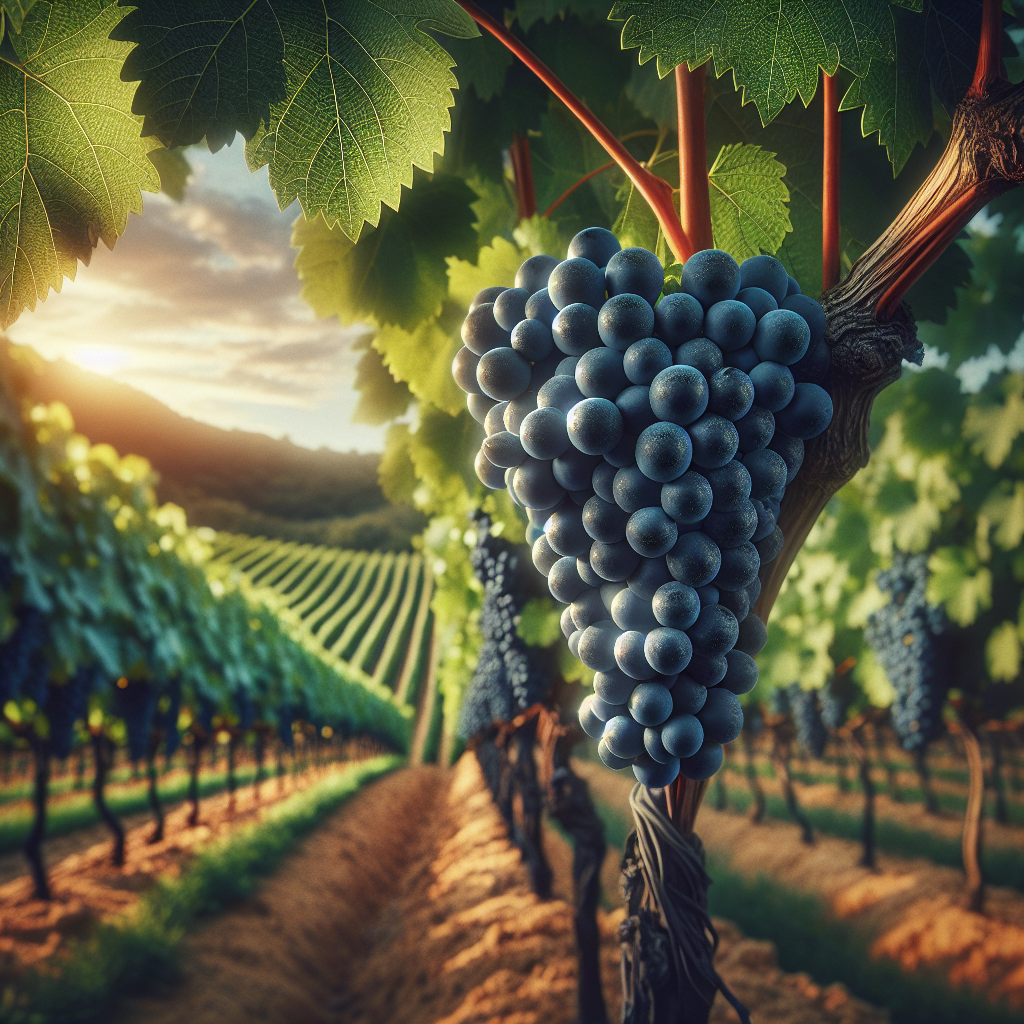
Introduction to Cabernet Sauvignon Grapes
A classic black wine grape of global significance, this cultivar originated in southwestern France and is now grown in nearly every major wine region. Genetic analysis has shown it arose from a natural cross between Cabernet Franc and Sauvignon Blanc, a lineage that helps explain its combination of aromatic lift, structural tannin, and adaptability. Growers prize it because the berries have relatively thick skins, small to medium size, and a naturally high skin-to-pulp ratio, which supports concentrated color and phenolic development.
It is not the easiest grape for every site. This variety ripens late, so it needs a long frost-free growing season and enough heat after veraison to finish sugar accumulation, seed browning, and tannin maturity. In cool regions, fruit can remain herbaceous, with bell pepper notes caused by elevated methoxypyrazines. In very hot regions, sugar can rise too quickly before flavor and tannin maturity are reached. The best results come from balanced vines carrying a moderate crop on sites with excellent sun exposure, good air drainage, and soils that limit excessive vigor.
Commercially, the cultivar is famous for producing structured, age-worthy red wines with blackcurrant, cassis, cedar, graphite, violet, tobacco, and sometimes mint or eucalyptus notes depending on site and management. For growers, that means vineyard decisions matter enormously: row orientation, canopy density, irrigation timing, rootstock choice, and yield control all directly influence fruit chemistry and final wine style. For a broader species-level background, see our Grapes guide. For broader soil stewardship principles useful in vineyards, see soil health strategies.
Botanical Profile of Cabernet Sauvignon Grapes
This cultivar belongs to the Vitaceae family and is a woody perennial vine trained for long-term production. Like other Vitis vinifera types, it climbs naturally with tendrils opposite leaves and produces fruit on current-season shoots that arise from one-year-old canes or renewal spurs. Understanding this fruiting habit is central to pruning correctly.
Key traits include:
- Growth habit: Upright to semi-upright, often well suited to vertical shoot positioning when vigor is moderate.
- Budbreak: Late relative to many cultivars, which offers some protection from spring frost.
- Bloom period: Mid-season, depending on local heat accumulation.
- Ripening: Late season; often harvested well after earlier red cultivars.
- Clusters: Small to medium, typically conical to cylindrical-conical, sometimes with shoulders.
- Berries: Small, round, blue-black to nearly black at maturity, with thick skins and abundant bloom.
- Leaves: Medium-sized, orbicular, often 3- to 5-lobed, with moderate sinus depth and a slightly blistered surface.
- Seeds: Usually 1-4 per berry, contributing to tannin load when fully mature.
The vine naturally tends toward moderate vigor on restrictive soils, but on fertile ground or with excessive nitrogen it can become highly vegetative. That is undesirable because dense canopies reduce cluster-zone light exposure, raise humidity, and increase disease pressure while delaying tannin ripening. Its thick skins improve resistance to berry splitting compared with some thin-skinned cultivars, but the variety is still vulnerable to rot under prolonged wet conditions, especially in compact canopies.
From a fruit chemistry standpoint, the cultivar often accumulates strong anthocyanin color, moderate to high tannins, and good acidity retention when nights are cool. Typical target harvest chemistry for premium red wine production may range from about 23 to 26 °Brix, pH 3.4 to 3.8, and titratable acidity near 5.5 to 7.0 g/L, though targets vary by region and intended wine style.
Soil, pH, and Climate Requirements for Cabernet Sauvignon Grapes
This variety excels on well-drained soils that moderate vigor and encourage deep rooting. Ideal textures include gravelly loam, sandy loam, decomposed rock, and well-structured clay loam with internal drainage. It can perform exceptionally on stony or alluvial soils where water does not stand around the root zone. Heavy, compacted clay is risky unless tile-drained or deeply improved before planting, because waterlogging reduces root respiration, promotes trunk disease entry through stress, and encourages excessive vegetative growth followed by uneven ripening.
A practical target is soil with:
- pH: 6.0 to 7.0 preferred; tolerable roughly 5.5 to 7.5 with good nutrient management
- Organic matter: 2-4% is often ideal in vineyards; too high can stimulate excessive vigor
- Drainage: Water should infiltrate readily; saturated conditions persisting more than 24-48 hours after heavy rain are a warning sign
- Rooting depth: At least 1-1.5 meters preferred for stable production in dry climates
The cultivar is moderately tolerant of drought once established, but that should not be confused with indifference to water status. Controlled deficit is beneficial; chronic severe drought is not. During active shoot growth and pre-bloom, vines need enough moisture to support canopy establishment. From fruit set through veraison, mild water limitation can help control vigor. After veraison, moderate but not severe water stress often improves skin-to-pulp ratio and concentration.
Useful field indicators of correct moisture include soil that feels cool and slightly cohesive at 20-40 cm depth but not sticky or anaerobic. In vineyards using soil sensors, many growers aim to avoid prolonged readings near full saturation and also avoid severe depletion beyond cultivar- and rootstock-specific thresholds. As a visual guide, slight midday leaf angle change late in the day may be acceptable under warm conditions, but persistent morning wilting, basal leaf yellowing from drought, or halted shoot tip growth too early in summer indicates stress has become excessive. Overwatering signs include lush lateral shoot growth, very long internodes, pale soft leaves, delayed lignification, poor fruit exposure, diluted flavors, and increased Downy mildew or bunch rot pressure.
Climate is decisive. This cultivar prefers temperate to warm-temperate regions with:
- Growing season length: 165-200+ frost-free days depending on site
- Heat: Warm but not extreme; enough growing degree accumulation to ripen late fruit
- Rainfall pattern: Dry late summer and early autumn are strongly preferred
- Temperature: Winter dormancy generally tolerates moderate cold, but damaging injury can occur in severe freezes; spring frost risk remains for young shoots after budbreak
- Diurnal shift: Warm days and cool nights favor color, aroma retention, and acid balance
It is especially successful on slopes with good air drainage. South- or southwest-facing slopes in cooler regions can improve ripening, while east-facing slopes in hot regions may reduce afternoon heat stress. Excessive maritime fog or autumn rain can compromise maturity and disease control.
Step-by-Step Planting & Propagation
Commercial plantings are almost always established with dormant bench-grafted vines or rooted grafted plants rather than from seed. Seed propagation is unsuitable because offspring will not be true to type and may perform unpredictably.
Choose the right planting material. Use certified disease-free vines from a reputable nursery. Select clones based on your production goals: lower-yielding, smaller-berried clones often provide higher concentration, while more productive clones can suit larger-Scale production. Match rootstock to soil pH, nematode pressure, drought level, lime content, and vigor goals.
Prepare the site 6-12 months ahead if possible. Test soil for pH, phosphorus, potassium, calcium, magnesium, salinity, and organic matter. Correct pH before planting because lime or sulfur moves slowly in vineyard soils. Deep-rip compacted layers, install drainage if needed, and remove perennial weeds thoroughly.
Lay out rows for sunlight and airflow. North-south orientation often gives even light distribution, though slope, wind, and mechanization may justify alternatives. Spacing depends on vigor and training system, but common vineyard spacing is 1.2-2.0 m between vines and 2.2-3.0 m between rows.
Install trellis infrastructure early. End posts, line posts, fruiting wire, catch wires, and anchors should be in place before vines become vigorous. This cultivar is commonly trained to bilateral cordon spur pruning or cane-pruned systems in cooler or lower-vigor sites.
Plant during dormancy or early spring. Set vines when soil is workable and not waterlogged. Keep graft unions 5-10 cm above final soil line to reduce scion rooting. Spread roots naturally and avoid J-rooting. Water in immediately to settle soil around roots.
Protect young vines. Use grow tubes or guards where rabbits, deer, wind, or herbicide drift are concerns. In hot climates, white grow tubes can reduce trunk sunburn, but monitor heat buildup and remove or ventilate when necessary.
Train a single strong trunk. In year one, select the most vigorous shoot and tie it vertically to a stake. Remove competing shoots once the selected shoot is dominant. Do not push for a full crop early; establishment is more important than fruiting.
Develop permanent structure in years two and three. Form the trunk to the fruiting wire, then establish cordons or select canes depending on your pruning system. A light crop may be possible in year three, but full production often begins in years four to five.
Propagation by hardwood cuttings is possible for own-rooted vines, but in most commercial regions grafting onto rootstocks is preferred for Phylloxera resistance, soil adaptation, and vigor control.
Care & Maintenance regimes for Cabernet Sauvignon Grapes
Successful management is about balance. This cultivar performs best when vegetative growth, crop load, and water status are all moderated rather than maximized.
Irrigation: During establishment, provide regular deep watering to encourage root penetration. Young vines may need irrigation once or twice weekly in light soils, less often in heavier soils, applying enough water to moisten the root zone to 30-45 cm depth. Mature vines are often irrigated less frequently but more deeply. A common strategy is to refill the active root zone, then allow partial drying before the next irrigation. Avoid frequent shallow watering, which promotes surface rooting and unstable vines.
Before bloom, moderate moisture supports shoot growth and inflorescence development. Around fruit set through veraison, a mild deficit helps check vigor. After veraison, maintain enough moisture to sustain leaf function and berry maturation without re-stimulating canopy growth. Severe late-season drought can cause leaf senescence, halted sugar transport, berry shrivel, and seed tannins that remain harsh. In contrast, excess late irrigation can dilute flavors and slow skin and seed maturation.
Fertilization: Use leaf petiole or blade analysis in combination with soil tests rather than routine blanket feeding. Excess nitrogen is a common mistake with this variety. It can enlarge canopy density, increase shading, and raise disease risk while reducing fruit quality. Apply nitrogen only when deficiency is confirmed, often in split low doses early in the season. Phosphorus and potassium should be corrected pre-plant where possible. Potassium deserves particular monitoring because grapevines can accumulate it readily, and excessive berry potassium may raise must pH. Zinc and boron may be needed in deficient soils, especially where poor fruit set occurs.
Pruning: Dormant pruning sets next season’s crop potential. Spur pruning on bilateral cordons is common where basal buds are fruitful. In lower-vigor or cooler sites, cane pruning may improve balance and fruitfulness. Retain enough nodes to match vine vigor; undercropping makes Cabernet excessively vegetative, while overcropping delays ripening and leaves green tannins. Aim for uniform spur spacing and renewal of old wood to reduce dead-arm buildup.
Canopy management: This is one of the most important quality tools. Shoot thinning shortly after budbreak improves spacing and reduces crowding. Vertical shoot positioning keeps shoots upright and opens the fruit zone. Lateral removal and modest leaf removal around clusters improve light interception and reduce humidity, but avoid aggressive west-side leaf stripping in very hot climates because berries can sunburn. Ideal cluster-zone light exposure is dappled to moderate, not dense shade and not harsh overexposure.
Crop regulation: In high-yielding seasons, cluster thinning may be warranted if vines are carrying more fruit than they can ripen fully. Indicators include weak shoot growth, delayed veraison, or uneven ripening across the vineyard. Remove poorly positioned, shaded, or late clusters first.
Weed and floor management: Maintain a weed-free strip around young vines to reduce competition. In mature vineyards, managed alleyway covers such as Clover can improve soil structure, support beneficial insects, and moderate erosion, but they also compete for water, so adjust irrigation accordingly. Garlic and Thai Basil are sometimes used in diversified vineyard edges or garden-Scale plantings to attract beneficial insects and suppress some pest activity. Keep trunk zones clear to reduce rodent shelter and humidity.
Pests, Diseases & Organic Management
Cabernet Sauvignon is not unusually fragile, but because it often carries compact to moderately compact clusters and is grown for premium fruit quality, disease prevention must be disciplined.
Fungal diseases:
- Powdery mildew: One of the most serious threats. Look for white-gray fungal growth on leaves, shoots, and berries, along with berry cracking and poor color development. Manage with canopy openness, sulfur sprays where appropriate, potassium bicarbonate, and timely organic fungicides.
- Downy mildew: More likely in humid, wet conditions. Oil spots on leaves and white sporulation beneath leaves are typical. Good airflow, drainage, and copper-based protectants can help in organic systems.
- Botrytis bunch rot: Usually worsens by dense canopies, rain near harvest, berry injury, or compact clusters. Leaf removal in the cluster zone, balanced irrigation, and sanitation are key.
- Phomopsis cane and leaf spot / Trunk diseases: Prune in dry weather, protect large wounds where trunk disease pressure is high, and remove infected wood.
Insect pests:
- Grape berry moth and other Fruit-feeding caterpillars: Cause entry wounds that invite rot.
- Leafhoppers: Feeding stipples leaves and can reduce photosynthetic efficiency.
- Mealybugs and Scale: May transmit viruses and create sooty mold issues.
- Spider mites: Increase under hot, dusty conditions.
- Japanese beetles or similar foliar feeders: Can skeletonize leaves in some regions.
Soil and root problems:
- Phylloxera: A major reason grafted rootstocks are standard in Vitis vinifera vineyards.
- Nematodes: Particularly important in sandy soils; select tolerant rootstocks where pressure is known.
Birds and vertebrates: Bird damage can be severe once sugar rises. Netting is often the most reliable control. Deer can browse shoots and leaves, especially in young vineyards, requiring fencing.
Organic management principles:
- Start with site selection and airflow.
- Use resistant or adapted rootstocks even though the scion is fixed.
- Keep nitrogen moderate.
- Open the canopy early rather than fighting disease late.
- Scout weekly, more often around bloom, fruit set, and pre-harvest.
- Remove mummified clusters and diseased wood.
- Encourage beneficial insects with flowering borders and restrained insecticide use.
- Maintain spray intervals based on weather risk, not calendar habit alone.
Harvesting, Curing & Optimal Storage
Wine grapes are harvested for chemistry and flavor maturity, not just color. This cultivar can appear dark well before it is truly ripe, so harvest decisions should combine laboratory data with sensory assessment.
Important harvest indicators include:
- Sugar: Commonly 23-26 °Brix for premium red wine, though style-dependent
- pH and acidity: Balanced with intended wine style and microbial stability
- Seed maturity: Seeds turning brown rather than green
- Skin maturity: Skins less astringent, with developed varietal aroma
- Pulp flavor: Less grassy, more dark-fruit expression
- Berry uniformity: Minimal green lagging clusters
Harvest in the cool morning when fruit temperature is low. Warm grapes oxidize faster and are more vulnerable to microbial spoilage. Use shallow picking bins to minimize crushing. Remove visibly diseased, sunburned, underripe, or raisined clusters during picking where quality is the priority.
There is no curing phase as used for onions or garlic; harvested fruit should be processed quickly. If temporary storage is necessary, keep grapes at about 0-2°C with high relative humidity around 90-95% and excellent sanitation. Even under ideal conditions, wine grapes are not a long-storage crop and should usually be crushed within hours, not days, for highest quality. Avoid stacking bins so deep that berries at the bottom burst under weight.
For small growers making wine, separate lots by ripeness block, soil zone, or clone if possible. Cabernet Sauvignon often benefits from selective harvesting because shaded or younger vine sections may lag behind warm, exposed sections by several days or more.
Companion Planting for Cabernet Sauvignon Grapes
In commercial monoculture vineyards, “companion planting” usually means beneficial insectary strips, alleyway covers, and border plantings rather than dense intercropping in the vine row. The goal is to support pollinators and predatory insects, improve soil aggregation, reduce erosion, and in some cases moderate vigor through managed competition.
The most useful companions are species that do not heavily shade vines, do not host major grape pests excessively, and can be managed without increasing humidity around the fruit zone.
- Clover: Excellent as an alleyway cover crop or alternating-row living mulch. It fixes nitrogen, improves soil structure, and supports beneficial insects. In low-vigor vineyards, monitor carefully because extra nitrogen release may become excessive.
- Garlic: Useful in garden vineyards and perimeter plantings. Its strong scent may help confuse some pests, and it fits well where growers want a secondary crop in non-competitive strips.
- Thai Basil: Attractive to pollinators and beneficial insects when allowed to flower. Best in vineyard edges, herb borders, or small diversified plantings rather than directly under mature vines.
- Low-growing flowering strips: Mixed species can support parasitoid wasps, hoverflies, and predatory beetles, but keep them mowed or managed to avoid excess humidity and rodent habitat.
Avoid aggressive companions directly beneath vines if water is limited. Young vines are especially sensitive to root competition. In most professional vineyards, a hybrid approach works best: maintain a relatively clean undervine strip, and use selected cover crops or flowering plants in alleys and margins.