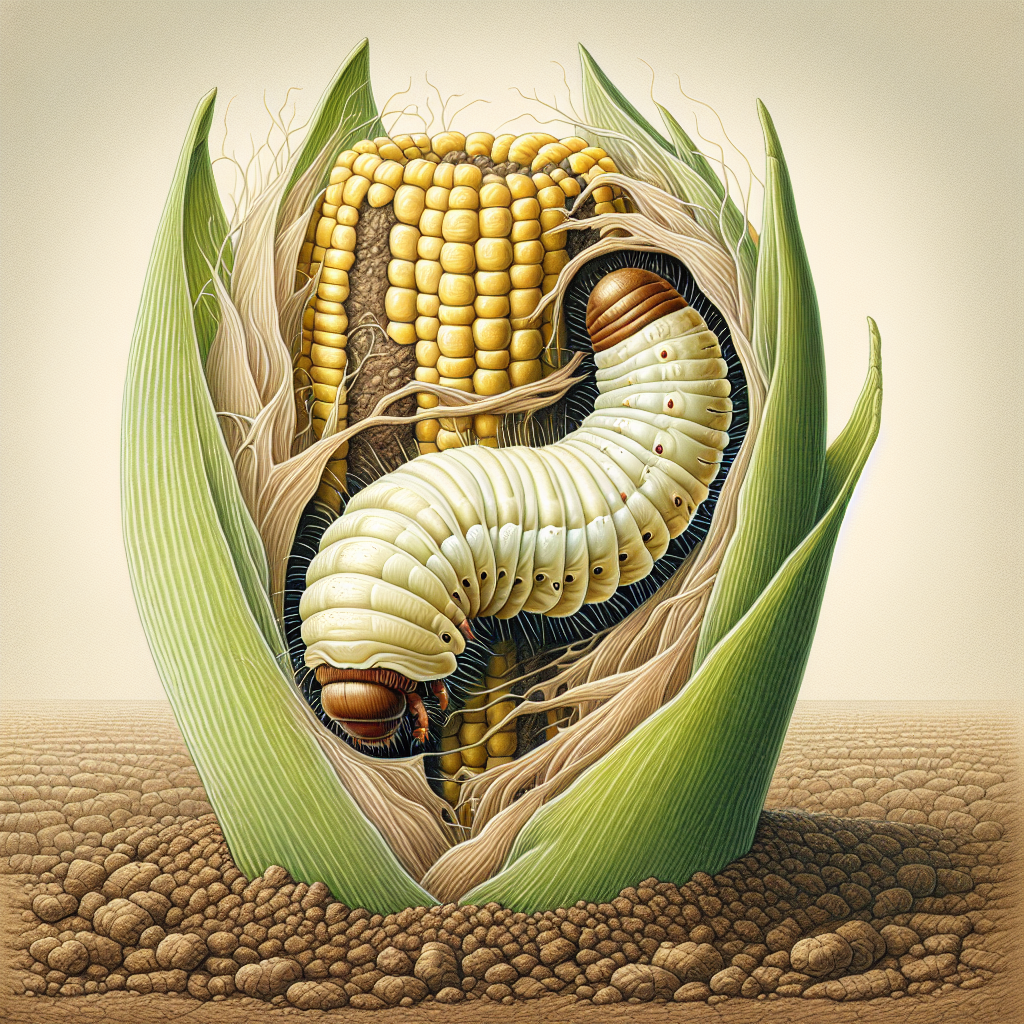
Introduction to Billbugs
Billbugs (Sphenophorus spp.) represent one of the most insidious pests in agricultural and turf systems, particularly notorious for their hidden root and stem damage. These weevils, belonging to the family Curculionidae, include over 20 species affecting warm-season and cool-season grasses, with key culprits like the bluegrass billbug (Sphenophorus parvulus), hunting billbug (S. venatus), and corn billbug (S. zeae). Larvae feed internally on plant tissues, leading to rapid decline that mimics drought stress or disease.
Farmers often overlook billbugs until widespread wilting occurs, as adults are nocturnal and cryptic. In crops like corn and wheat, billbugs cause lodging and yield losses up to 30-50% in severe cases. This definitive guide equips growers with diagnostic tools, lifecycle knowledge, organic treatments, and prevention strategies to safeguard fields. Understanding billbug biology is crucial for timely intervention, especially in the Midwest, Southeast, and transitional zones where they thrive.
Identifying Symptoms & Damage
Billbug damage starts subtly but escalates quickly. Early signs include irregular patches of thinning turf or crop rows, often mistaken for drought or root-knot nematodes. Affected plants pull easily from soil, revealing severed crowns and stems filled with white, legless larvae.
Key diagnostics:
- Crown Severing: Longitudinal splits in grass stems show frass-packed galleries bored by larvae. Tug test: Plants detach with minimal root mass.
- Wilting and Yellowing: Patchy decline in sunny areas, worsening midday. No recovery after watering differentiates from drought.
- Adult Signs: 1/4-1/2 inch grayish weevils with long snouts, visible at dusk. Look for notched leaf blades.
- Larval ID: C-shaped, creamy-white grubs up to 1/2 inch, brown head capsule, no legs. Found in stems or soil.
In corn, expect 'sawdust-like' frass at stem bases and lodging. Differentiate from wireworms by billbug larvae's lack of legs and stem boring. Soil sampling (10-20 cores per 100 sq ft) confirms infestations >5-10 larvae per sq ft. For precision, read our Spring Pest Patrol: Organic AI Strategies to Shield Your Crops from Common Invaders for tech-aided scouting.
Lifecycle and Progression of Billbugs
Billbugs complete one to two generations annually, syncing with host phenology. Adults overwinter in soil litter, emerging in spring (April-May) when soil temps hit 55-60°F. Females lay 100-200 eggs in grass stems, hatching in 7-10 days.
Stages:
- Eggs: Tiny, white, inserted into stems.
- Larvae: 6-8 instars over 4-6 weeks; early instars bore stems, later feed roots. Peak damage mid-summer.
- Pupae: Soil chambers, 10-14 days.
- Adults: Emerge July-August, feed minimally, seek overwinter sites.
In southern regions, two generations occur; northern areas see one. Pupation aligns with 500-800 degree days (base 50°F). Monitor with pegboards or soapy flushes to track progression. Full cycle: 45-60 days. Disruption targets larvae when vulnerable.
Environmental Triggers & Risk Factors
Billbugs exploit stressed turf and crops. Key triggers:
- Soil Conditions: Compacted, poorly drained soils >70% sand favor survival. pH 6.0-7.0 optimal.
- Temperature: Thrive 70-90°F; drought stress weakens plants.
- Host Availability: Dense, thatch-heavy wheat, corn, or bentgrass stands.
- Prior Infestations: Cycle perpetuates without rotation.
Risk spikes post-sodding or in new lawns. Over-fertilization with quick-release N boosts populations. Combine with army worms or white grubs for compounded damage. Climate change extends activity windows, per recent studies.
Organic Control & Treatment Plans
Organic management emphasizes cultural, biological, and targeted applications. Avoid broad-spectrum synthetics.
Cultural: Core aerate to expose larvae; mow high (3-4 inches) for resilience. Irrigate deeply, infrequently.
Biological:
- Nematodes: Steinernema carpocapsae/glaceri at 1-2 billion/acre, evenings, >60°F soil.
- Beauveria bassiana fungi: Label rates for soil drench.
Organic Insecticides:
- Azadirachtin (Neem): Suppresses feeding/oviposition; 2-3 apps 7-10 days apart.
- Spinosad: Larval contact; safe for pollinators.
- Pyrethrins + PBO: Adults at dusk.
Treatment Timeline:
| Stage | Timing | Method |
|---|---|---|
| Adults | Spring emergence | Soap flush, spinosad |
| Larvae | 2-4 weeks post | Nematodes, azadirachtin |
| Peak Damage | Summer | Aerate + bio-controls |
Threshold: 10+ larvae/sq ft. Integrate with corn earworm management. Efficacy: 70-90% with scouting.
Preventing Billbugs in the Future
Prevention beats cure. Strategies:
- Resistant Varieties: Endophyte-enhanced fescues, Kentucky bluegrass blends.
- Crop Rotation: Alternate with non-grass like clover or legumes.
- Sanitation: Dethatch <1/2 inch; remove clippings.
- Soil Health: Build organics via compost; avoid excess N.
- Monitoring: Pegboard traps (wood stakes driven into soil) count adults.
Fall applications of nematodes preempt spring. Learn zoning for pest zones in Why Zoning Your Small Farm Chaos into Profit Zones Feels Impossible - And How AI Changes Everything. Long-term: 80% reduction possible.
Crops Most Affected by Billbugs
Billbugs devastate grasses and cereals:
- Turf: Kentucky bluegrass, fescue, bentgrass (golf courses).
- Crops: Corn (stalk boring), wheat, sorghum, barley, rice.
- Others: Bermudagrass, zoysiagrass; rare in sweet corn (Honey Select).
Corn losses: 20-40 bu/acre. Wheat: Head clipping. For wheat growers, scout edges first. Synergy with European Corn Borer amplifies.
(Word count: 1427)