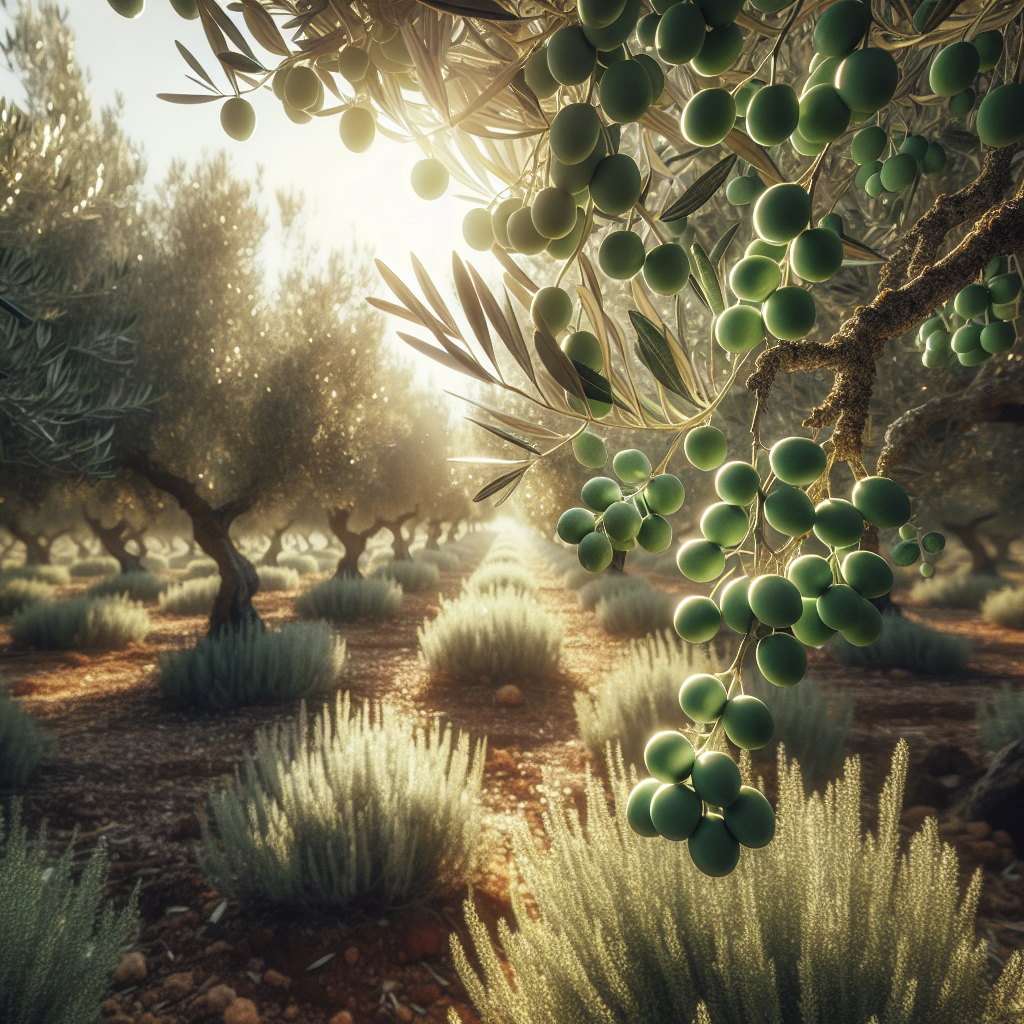
Introduction to Olive (Manzanilla)
Originating in Andalusia, especially the Seville region of Spain, Manzanilla is among the best-known table olive cultivars in commercial production. The name "Manzanilla" means "little apple," a reference to the fruit's relatively round, plump form compared with more elongated olive types. This cultivar became globally important because it combines attractive fruit size, a tender flesh texture after curing, and a mild, pleasant flavor profile that suits green table olive processing exceptionally well.
For growers, Manzanilla occupies an important niche: it is not simply an olive tree, but a cultivar selected and refined for appearance, processing quality, and marketability. Fruit is usually harvested green to straw-yellow for Spanish-style brining, though it can also be processed black-ripe. The tree is moderately vigorous, somewhat spreading in habit, and can be productive, but yields may fluctuate if bloom weather, pollination, pruning, or irrigation are poorly timed. In many orchards, it is appreciated not only for fruit quality but also for its usefulness in mixed plantings where cross-pollination improves set.
Compared with some more oil-focused cultivars, Manzanilla often demands greater attention to harvest timing and fruit handling because bruising, skin blemishes, and uneven maturity directly affect table olive value. If your goal is premium cured olives rather than oil extraction, this variety is one of the most rewarding choices in a warm, dry-summer climate. For general olive production background, see our Olive guide. For broader orchard soil strategies, the principles in soil health tips are also relevant.
Botanical Profile of Olive (Manzanilla)
Manzanilla belongs to the species Olea europaea, an evergreen, subtropical-to-warm temperate fruit tree in the Oleaceae family. Like other olives, it bears opposite, narrow-lanceolate leaves with a leathery texture, dark green upper surfaces, and silvery undersides adapted to reduce water loss. Trees can become long-lived and structurally gnarled with age, though under commercial orchard systems they are usually maintained at a practical harvest height through regular pruning.
This cultivar is especially recognized for medium-sized, nearly spherical fruit with a relatively large amount of flesh compared with pit size, making it highly desirable for table use. Fruit skin is smooth and green at commercial green-harvest stage, later shifting toward purple-black at full maturity. The pit is comparatively small and freestone tendencies are useful in processing, especially for pitted and stuffed olive markets.
Bloom occurs on one-year-old wood arising from the previous season's growth. Inflorescences are axillary panicles bearing many small, creamy-white flowers. Not all flowers are perfect; some may be staminate or functionally imperfect depending on environmental conditions. Manzanilla can set some fruit on its own, but it is commonly considered to benefit significantly from cross-pollination. Compatible pollen sources often improve fruit set consistency, especially where cool, rainy, or windy bloom periods interfere with pollen movement.
Like many olives, Manzanilla may show alternate bearing if crop load is not balanced. Heavy fruiting one year can suppress vegetative growth and reduce flowering the following season. This tendency is amplified by drought stress, poorly timed nitrogen, overcropping, and insufficient renewal pruning. Understanding that olives fruit on young wood is essential: if trees are allowed to become dense and shaded internally, productive wood migrates outward and harvest efficiency declines.
Soil, pH, and Climate Requirements for Olive (Manzanilla)
Manzanilla performs best in classic Mediterranean conditions: mild, somewhat cool winters; warm to hot, dry summers; abundant sunlight; and low atmospheric humidity during ripening. It tolerates drought better than many fruit trees once established, but table olive quality depends on steadier moisture management than many growers assume. Severe water stress may reduce fruit size, increase pit-to-flesh ratio, and intensify alternate bearing.
The ideal soil is deep, well-drained, moderately fertile loam or sandy loam with good aeration. Olive roots require oxygen as much as water; prolonged saturation is one of the fastest ways to weaken or kill young trees. If water stands in a planting hole for more than 24 hours after irrigation or rain, drainage is inadequate. Heavy clay can be used only if the site is bermed, tiled, sloped, or otherwise improved to prevent chronic root-zone wetness.
Target soil pH is roughly 6.0 to 8.5, with an ideal working range of about 6.5 to 7.8. Manzanilla tolerates mildly alkaline soils better than many fruit crops, but very high pH can lock up iron, zinc, and manganese. In calcareous ground, the first visible issue is often interveinal chlorosis on young leaves: leaf tissue turns pale yellow while veins remain green. Correct with chelated micronutrients and by improving soil organic matter and root activity rather than trying to force large pH changes in limestone-dominant soils.
Salinity tolerance is moderate but not unlimited. Olives can survive where more sensitive fruit crops fail, yet Manzanilla grown for table quality should not be exposed to chronic saline irrigation if premium fruit size and texture are expected. High sodium or chloride loads can burn leaf tips, reduce shoot growth, and lower fruit quality. If irrigation water EC is elevated, periodic leaching and gypsum use may be needed where sodium infiltration is a concern.
Winter chilling is important for floral induction, though olives require far less chill than pome fruits. Manzanilla generally fruits best where winters are cool enough to satisfy dormancy-related flowering needs but not so cold that wood or flower buds are damaged. Mature trees can tolerate brief light freezes, but temperatures below about -7 to -9°C (19-16°F) may injure wood, and harder freezes can kill scaffold limbs or whole young trees. Spring frost at bloom can sharply reduce set.
Heat is also necessary. Cool maritime summers often produce weak flowering responses, delayed ripening, and disease pressure. Ideally, choose sites with full sun, excellent air movement, and low humidity during bloom and harvest. Avoid frost pockets, valley bottoms with stagnant air, and poorly drained basins.
Step-by-Step Planting & Propagation
Commercial Manzanilla is usually propagated vegetatively so the new tree remains genetically identical to the cultivar. Semi-hardwood cuttings, mist propagation, and nursery-grown rooted liners are standard. Seed propagation is unsuitable if true-to-type fruit quality is required. Purchase healthy, disease-free nursery stock on its own roots or an appropriate root system for your region.
Select the site carefully. Choose full sun with at least 8 hours of direct light daily. Avoid low spots where cold air settles or where winter water accumulates. A gentle slope is ideal.
Test the soil before planting. Measure pH, organic matter, salinity, calcium levels, and key nutrients. Correct severe deficiencies before planting because perennial orchard establishment is much easier when the root zone starts balanced.
Prepare drainage first, fertility second. Do not over-amend the planting hole with rich compost while ignoring poor site drainage. If soil is heavy, form raised berms 30-60 cm high and several feet wide so the crown sits above saturated subsoil.
Lay out spacing according to system. Traditional orchards may use 6 x 6 m to 8 x 8 m spacing. Moderate-density hand-harvested plantings often use around 5 x 6 m or similar arrangements. Manzanilla's spreading habit means crowding increases shading and complicates harvest.
Include pollinizers if possible. Although some self-fruitfulness exists, better and more stable crops usually come with compatible olive cultivars nearby. Interplant pollinizer trees within the block or place pollinizer rows according to orchard design. Flowering overlap matters more than simply having another olive present.
Plant at the correct depth. Set the tree at the same depth it grew in the nursery container. Do not bury the trunk flare. Planting too deeply encourages crown problems and poor establishment.
Backfill with native soil. Break clods, eliminate air pockets, and water in thoroughly. Avoid large amounts of uncomposted organic material in the hole, which can sink later and pull the tree below grade.
Stake only if needed. In windy sites, use a flexible tie and remove support once the trunk can stand independently. Over-staking creates weak trunks.
Mulch wisely. Apply 5-8 cm of coarse organic mulch over the root zone, but keep it 10-15 cm away from the trunk to prevent excess moisture and collar rot.
Irrigate for establishment. Newly planted trees need consistent moisture in the upper root zone. The goal is moist but aerated soil, never swampy. In practical terms, soil should feel cool and lightly damp 10-20 cm below the surface, not sticky, sour-smelling, or waterlogged.
During the first growing season, a young tree often benefits from deep watering 1-3 times per week depending on soil type and temperature. Sandy soil may need smaller, more frequent irrigations; loam needs fewer, deeper cycles; clay demands cautious, infrequent irrigation with long drying intervals. If leaves become dull, slightly folded, or new shoot growth stalls during heat, the tree may be too dry. If leaves yellow broadly, tips blacken, or the soil stays wet for days, watering is excessive.
Care & Maintenance regimes for Olive (Manzanilla)
Water management should shift as trees mature. Established Manzanilla trees are drought tolerant, but table olive production benefits from strategic irrigation from spring shoot growth through pit hardening and fruit sizing. The most critical periods are bloom, fruit set, and early fruit enlargement. Severe moisture stress at bloom can reduce set; severe deficit during sizing reduces fruit caliber; excessive irrigation close to harvest can dilute flavor, promote soft texture, and increase splitting risk in some conditions.
A practical irrigation target is to wet the active root zone deeply, then allow the top several centimeters to dry before the next cycle. In mature orchards on loam, many growers aim to maintain roughly 60-80% of field capacity during active fruit growth rather than full saturation. Tensiometers or soil probes are ideal, but visual signs help: healthy trees hold gray-green leaves with firm texture and moderate shoot extension. Chronic overwatering produces pale foliage, weak soft shoots, reduced root vigor, and increased disease pressure.
Fertilization should be based on leaf analysis and soil testing, not guesswork. Nitrogen is the main driver of vegetative growth and crop support, but too much nitrogen creates rank canopy growth, poor light penetration, softer tissues, and increased pest susceptibility. Deficiency appears as pale green foliage and weak annual shoot growth; excess appears as overly lush, elongated shoots and delayed wood maturation. Split nitrogen applications in late winter to spring are often safer than heavy single doses. Potassium is important for fruit development and stress tolerance, while boron can be critical for flower viability and fruit set where deficient.
Pruning is essential for Manzanilla because fruit quality and harvestability depend on light distribution and renewal of fruiting wood. Train young trees to a vase or open-center form in low to moderate density orchards, typically with 3-4 main scaffold limbs. Remove narrow crotch angles and crossing branches early. For bearing trees, prune annually or biennially to maintain light penetration, remove dead wood, reduce excessive height, and renew one-year fruiting wood.
The core rule is simple: keep the canopy open enough that dappled light reaches the inner framework. If the interior becomes permanently shaded, productive shoots die back and fruit shifts to the outer shell of the canopy. This lowers fruit uniformity and makes harvest more difficult. After a heavy crop year, slightly stronger renewal pruning can help reduce alternate bearing.
Weed control is especially important during establishment. Young olives compete poorly with aggressive grasses for moisture and nitrogen. Maintain a clean weed-free strip around the trunk, ideally at least 0.6-1.0 m wide in early years. Organic mulches, shallow cultivation, or carefully managed groundcovers between rows are preferable to allowing dense sod right up to the trunk.
In container culture, which is possible but less ideal long term, use a sharply drained mix, a large pot, and very conservative watering. Roots in containers suffer quickly from stagnant media. Repot before the root mass becomes circling and woody.
Pests, Diseases & Organic Management
Manzanilla shares many of the common olive pest pressures seen across Olea europaea plantings. The exact pest complex depends heavily on region, humidity, and nearby host plants.
Olive fruit fly is often the most economically important pest where established. Adults lay eggs in fruit, and larvae tunnel through the flesh, ruining table olive quality and increasing rot. Monitor with traps before fruit becomes vulnerable. Organic management includes mass trapping, sanitation, timely harvest, and approved bait or protein-based attract-and-kill strategies where permitted. Table olives demand especially low damage thresholds because even superficial punctures reduce market grade.
Scale insects can colonize twigs and leaves, sucking sap and producing honeydew that supports sooty mold. Small infestations may be tolerated, but heavy pressure weakens trees and interferes with photosynthesis. Encourage beneficial insects, avoid excessive nitrogen, prune for air movement, and use horticultural oils during dormant or low-risk periods.
Black olive scale, Psyllids, and occasional Caterpillars may also appear. Ant control matters because ants protect scales and aphid-like insects from natural predators. Trunk barriers and orchard floor management can help break that relationship.
Peacock spot, caused by Spilocaea oleagina, is a major disease in humid or rainy olive districts. It appears as dark circular leaf lesions, often with yellow halos, leading to defoliation and reduced vigor. Manzanilla can be susceptible under wet conditions. The best prevention is canopy ventilation, reduced overhead irrigation, removal of badly infected material, and copper-based sprays timed around infection periods where organic programs allow them.
Olive knot, caused by Pseudomonas savastanoi, creates rough tumor-like galls on twigs and branches, often entering through wounds from hail, frost, or pruning. Prevent by pruning in dry weather, disinfecting tools when disease is present, and avoiding unnecessary injury. Remove infected wood well below visible knots and destroy it.
Root and crown problems are strongly associated with poor drainage rather than bad luck. Phytophthora risk rises when soil remains wet and oxygen-poor. Symptoms include weak shoot growth, sparse leaves, leaf yellowing, dieback, and bark damage at the crown. The best organic management is prevention: elevated planting, careful irrigation, and never piling mulch against the trunk.
Verticillium wilt can be serious where olives are planted after susceptible hosts. The fungus persists in soil and invades the vascular system, causing branch wilt, leaf scorch, and dieback. Avoid planting olives immediately after high-risk crops and keep trees unstressed. If you are rotating from vegetable ground, review the disease history of crops such as Tomato.
Birds may peck fruit near ripening, and rodents can gnaw bark on young trees. Tree guards, sanitation, and habitat management reduce these issues.
Harvesting, Curing & Optimal Storage
For Manzanilla, harvest timing is driven by intended end use. For classic green table olives, pick when fruit reaches full size but is still green to yellow-green, before color change advances deeply into the skin. The flesh should be firm, and oil accumulation should not yet dominate texture. In many regions this occurs from late summer into autumn, depending on climate and irrigation.
Hand harvesting is preferred for premium table fruit because bruising, stem punctures, and compression marks downgrade quality fast. Pick into shallow containers, keep fruit shaded, and process as soon as possible. Delays between harvest and brining increase enzymatic browning, softening, and fermentation problems.
Manzanilla is especially famous in Spanish-style green olive curing. The traditional process begins with sorting and washing, followed by lye treatment to remove bitterness by hydrolyzing oleuropein-related compounds. After lye penetration reaches the proper depth, olives are washed and transferred into brine for lactic fermentation. Salt concentration, temperature, and sanitation must be controlled carefully; otherwise fruit softens, develops gas pockets, or acquires off-odors.
For home-scale natural brining without lye, expect a much longer cure and a more robust flavor. Brine concentration often begins around 8-10% salt, though processors adjust based on method and microbial behavior. Weakened fruit, overripe fruit, or damaged fruit are poor candidates for long curing because they break down quickly.
For black-ripe processing, fruit is harvested later, when skin color deepens. However, Manzanilla is still best known as a green olive. Because it has a good flesh-to-pit ratio and attractive shape, it is widely used for pitted, stuffed, and cocktail olive products.
Freshly harvested uncured olives are not ready to eat and should be stored cool only briefly before processing. Once cured, keep olives submerged in clean brine to maintain texture and limit oxidation. Refrigeration extends quality after containers are opened. If storing bulk cured olives, use food-grade containers, protect from direct sunlight, and monitor brine strength and surface spoilage regularly.
Companion Planting for Olive (Manzanilla)
In olives, companion planting is less about crowding the root zone with vegetables and more about designing an orchard floor that supports pollinators, beneficial insects, erosion control, and soil structure without creating competition or humidity problems. The best companions are usually low-growing, drought-tolerant, and easy to manage.
Clover is one of the most useful living companions in wider row middles. As a legume, it can contribute biologically fixed nitrogen over time, improve soil aggregation, and provide bloom for beneficial insects. Keep it mowed and avoid allowing dense growth immediately around young trunks where it can compete for moisture.
Thyme works well in dry, sunny orchard margins because it tolerates lean soils and attracts beneficial insects while staying relatively low. Aromatic herbs like thyme also fit the Mediterranean ecology that olives prefer.
Yarrow is valuable for attracting predatory wasps, hoverflies, and other beneficial insects. It is especially useful in border strips or selected alley sections rather than directly in the tree row.
Nasturtium can be helpful near orchard edges or kitchen-scale plantings as an insect-attracting flowering companion, though in fully commercial dry orchards it is less persistent than perennial options.
The main caution is not to overplant beneath the canopy. Anything that raises humidity around the trunk, interferes with irrigation uniformity, or competes aggressively in dry months can do more harm than good. Keep the immediate root crown zone clear, and place companions where they support the orchard ecosystem without compromising light, airflow, or water efficiency.