Introduction to Black olive scale
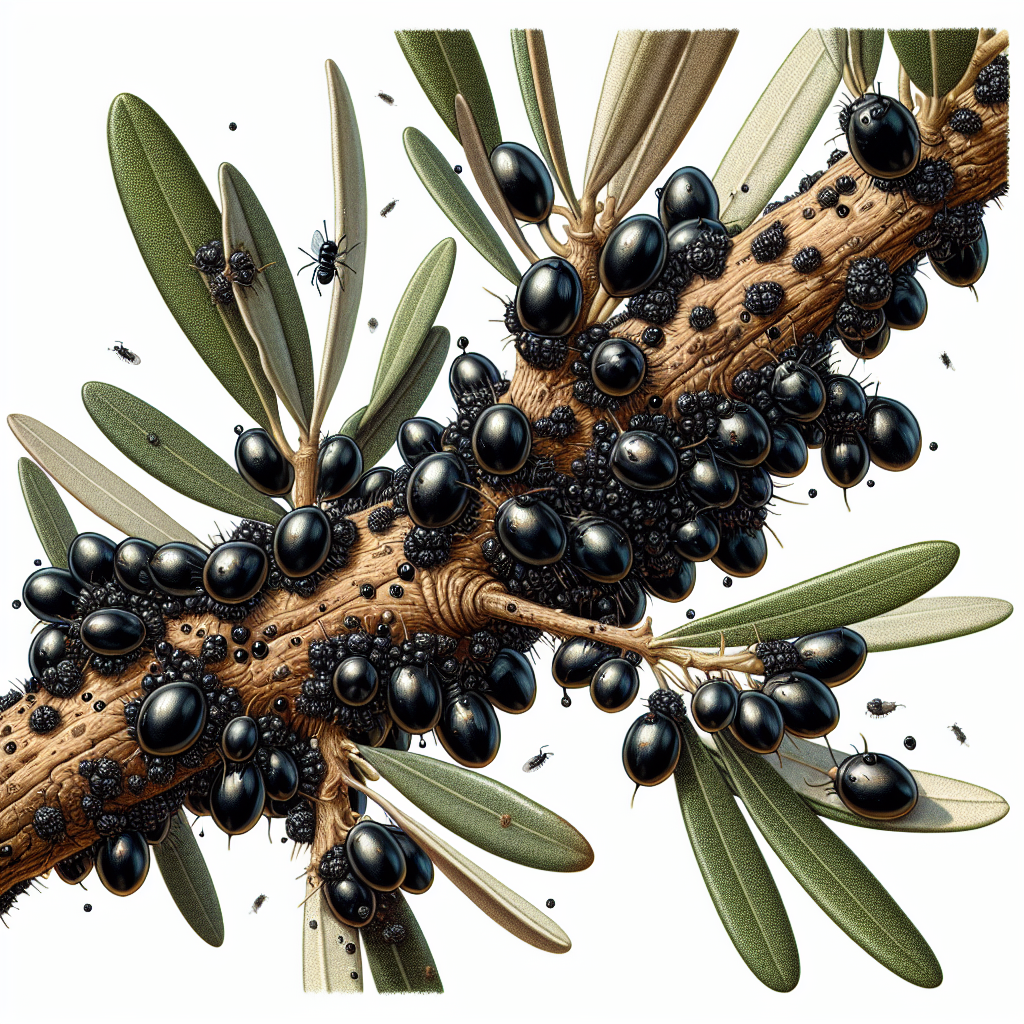
Black olive scale, scientifically known as Saissetia oleae, is one of the most destructive pests affecting olive trees worldwide, particularly in Mediterranean climates, California, and other olive-producing regions. This soft scale insect belongs to the family Coccidae and is characterized by its shiny, black, hemispherical armored shell, which protects the feeding female from predators and environmental stresses. First identified in olive groves centuries ago, black olive scale has become a persistent threat due to its ability to reproduce rapidly under favorable conditions and its resistance to some chemical controls.
Farmers and orchard managers often discover infestations too late, as scales hide under their waxy covers, silently draining tree vigor. Heavy infestations can lead to 50-80% leaf drop, stunted growth, and significant yield losses—up to 70% in severe cases. The pest's honeydew excretion fosters sooty mold fungus (Capnodium spp.), which blackens foliage and branches, reducing photosynthesis and making trees unsightly for ornamental purposes. Understanding black olive scale is crucial for olive growers, as timely intervention can preserve tree health and productivity. This guide provides professional diagnostic tools, lifecycle insights, and proven organic management strategies to combat this pest effectively.
Identifying Symptoms & Damage
Diagnosing black olive scale requires keen observation of both the pest itself and the damage it inflicts. Adult females appear as 1/4-inch (6 mm) diameter, dark brown to black, convex bumps on twigs, branches, leaves, and fruit. Their shiny, 'turtle-like' shells are diagnostic—use a knife to scrape one open; live scales exude clear honeydew. Crawlers, the tiny mobile nymphs, are orange-pink and 1/32-inch (0.8 mm) long, active mainly in spring and summer.
Primary Symptoms:
- Honeydew and Sooty Mold: Sticky, glistening droplets on leaves and branches attract ants, which 'farm' the scales. Black sooty mold grows on honeydew, coating surfaces and blocking light.
- Leaf Damage: Yellowing, curling, and premature drop of leaves, starting from the interior canopy.
- Branch Dieback: Twigs and branches wilt, with grayish bark cracking; severe cases kill entire limbs.
- Fruit Impact: Olives develop black scars, split, or drop early; reduced size and oil content.
Damage Progression: Light infestations cause subtle vigor loss; moderate ones lead to 30-50% defoliation; heavy outbreaks result in tree mortality over 2-3 years if untreated. Differentiate from scale insects, mealybugs, and sooty mold by the scale's hard shell and clustered distribution on undersides of leaves and bark crevices. Scout weekly during growing season using a 10x hand lens; thresholds are 5-10% branch infestation or visible honeydew.
Lifecycle and Progression of Black olive scale
Black olive scale completes 2-4 generations per year, depending on climate—more in warm, arid regions like California's Central Valley. The lifecycle spans 3-6 months, with overwintering as mated females or partially grown nymphs.
- Overwintering Stage (Fall-Winter): Mature females (2-5 mm) remain attached, producing crawlers only if mild weather persists.
- Eggs and Crawlers (Spring): Females lay 2,000-5,000 eggs under their shell over 2-3 months. Tiny crawlers emerge over 4-8 weeks (March-June), settling within hours to feed and secrete honeydew.
- Nymphs (Summer): Crawlers molt into sessile nymphs, developing legless, armored covers. First generation peaks May-July.
- Adults (Late Summer-Fall): Females mature, mate, and enlarge their shells. Second-third generations follow in hot climates.
Progression accelerates with temperatures above 70°F (21°C); below 40°F (4°C), development halts. Ants exacerbate spread by protecting crawlers from predators. Monitor with double-sided tape wraps on branches to capture crawlers, peaking activity signals treatment windows.
Environmental Triggers & Risk Factors
Black olive scale thrives in warm, dry conditions mimicking the Mediterranean—USDA zones 8-11. Key triggers include:
- Temperature: Optimal 68-86°F (20-30°C); mild winters allow year-round activity.
- Humidity: Low moisture favors crawler survival; irrigation stress weakens trees, increasing susceptibility.
- Poor Orchard Hygiene: Dust, pruning debris, and ant nests harbor pests.
- Tree Stress: Over-fertilization with nitrogen, drought, or root damage from Phytophthora invites infestations.
Risk factors: New plantings from infested nurseries, proximity to wild olives, and benign neglect. High nitrogen soils produce succulent growth attractive to crawlers. Ants (ants) are major vectors, tending scales for honeydew. Climate change extends generations in warming areas, per UC IPM studies.
Organic Control & Treatment Plans
Organic management emphasizes integrated pest management (IPM), targeting crawlers when vulnerable. Avoid broad-spectrum sprays to preserve beneficials like ladybugs and parasitic wasps (Metaphycus helvolus).
Cultural Controls:
- Prune infested wood in winter (20-30% canopy removal) and destroy debris.
- Irrigate deeply to reduce stress; mulch to retain moisture.
- Ant controls: Bait stations or Tanglefoot bands on trunks.
Biological Controls:
- Release Coccophagous lady beetles and Metaphycus parasitoids (commercial suppliers like Buglogical).
- Encourage native predators via flowering borders.
Organic Treatments:
- Horticultural Oils: Dormant (3-4% oil) in winter; summer (1-2%) at crawler emergence. Smothers all stages.
- Insecticidal Soaps: Potassium salts (2%) weekly on crawlers; safe for olives.
- Neem Oil: Azadirachtin disrupts molting; apply evenings.
- Spinosad: For crawler peaks, OMRI-listed.
Treatment Plan: Scout biweekly; treat at first crawler (double-sided tape confirms). Rotate modes; 3 applications 10-14 days apart. For Spring Pest Patrol: Organic AI Strategies to Shield Your Crops from Common Invaders, integrate monitoring tech. Success rates: 70-90% with IPM.
Preventing Black olive scale in the Future
Prevention focuses on exclusion and resilience:
- Quarantine New Plants: Inspect and hot-water dip cuttings (120°F/49°C for 15 min).
- Resistant Varieties: Plant Kalamata olive or Arbosana, less prone.
- Sanitation: Remove suckers, wild hosts; deep clean tools.
- Monitoring: Sticky traps, pheromone lures for ants/crawlers.
- Soil Health: Balance NPK; add compost for vigor (Soil Health Mastery: 5 Proven Strategies for Small Farms to Build Fertile Ground Without Breaking the Bank).
- Cover Crops: Clover suppresses dust, attracts predators.
Annual dormant oil plus ant baits yields 90% prevention. Long-term: IPM groves sustain yields 20-30% higher.
Crops Most Affected by Black olive scale
Primarily olive (Olea europaea), all varieties including Mission, Manzanillo, and Frantoio. Secondary hosts: Ivy, jasmine, citrus (orange, lemon), and ornamentals like bay laurel. Rare on avocado (avocado) or fig (fig). Olives suffer most—economic losses exceed $10M yearly in California alone. Differentiate from black scale on citrus.