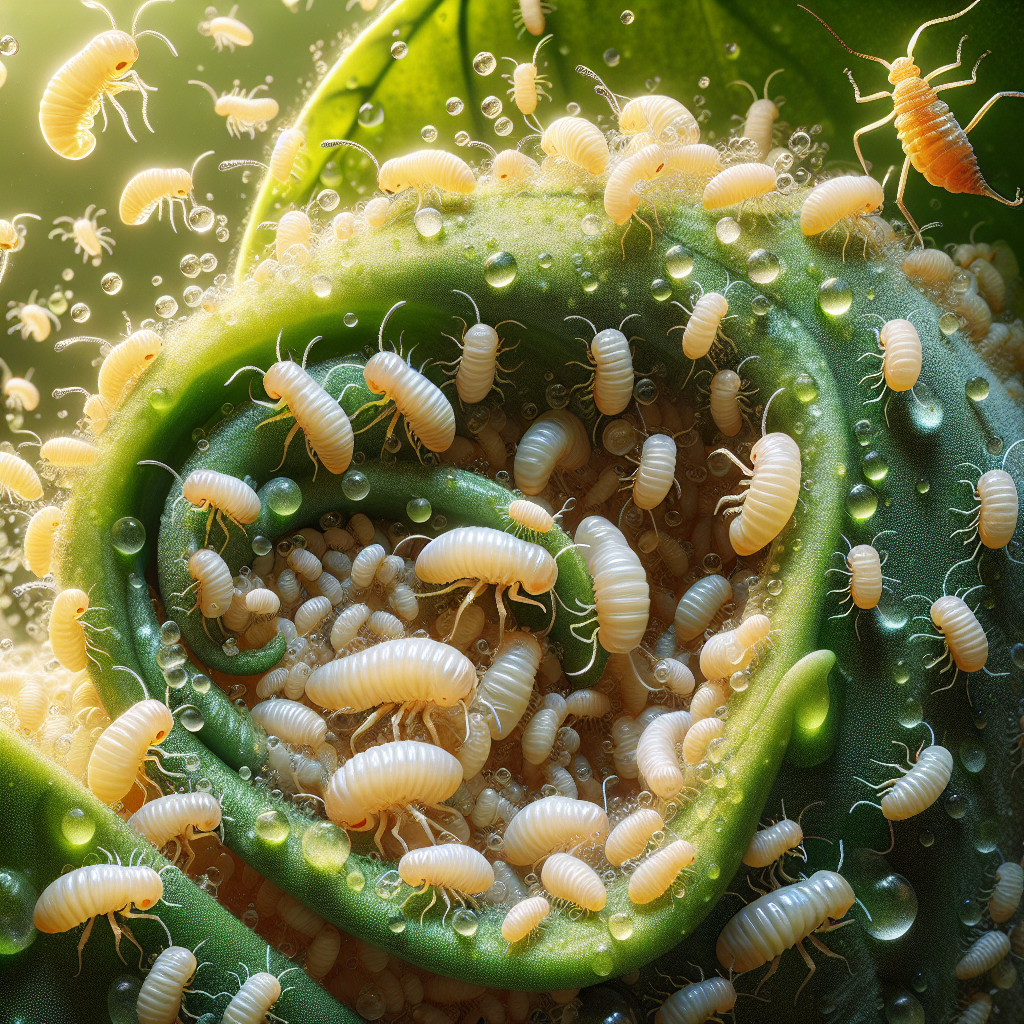
Introduction to Psyllids
Psyllids, often called jumping plant lice or psylla, belong to the Psyllidae family within the order Hemiptera. These tiny insects, typically 2-4 mm long, are notorious agricultural pests worldwide, particularly in warm, subtropical regions. Psyllids feed on plant sap using piercing-sucking mouthparts, extracting nutrients from the phloem and excreting sticky honeydew that promotes sooty mold growth. Their most devastating impact comes from vectoring deadly plant pathogens, such as the bacterium Candidatus Liberibacter species responsible for citrus greening (huanglongbing), which renders fruit unsellable and kills trees over time.
Over 2,500 psyllid species exist, but key agricultural pests include the Asian citrus psyllid (Diaphorina citri), potato psyllid (Bactericera cockerelli), pear psylla (Cacopsylla pyricola), and tomato-potato psyllid. Native to Asia, the Asian citrus psyllid has spread to the Americas, causing billions in losses to citrus industries. In cooler climates, species like the pear psylla overwinter as adults, resuming activity in spring. Home gardeners and commercial growers alike dread psyllid infestations due to rapid population buildups—females lay up to 800 eggs—and their ability to develop resistance to some chemical controls. Early detection is critical, as psyllids can reduce yields by 30-100% in severe cases. This guide provides definitive diagnostics, lifecycle insights, and proven organic management strategies to protect your crops.
Identifying Symptoms & Damage
Psyllid damage manifests in multiple ways, making accurate diagnosis essential to distinguish them from aphids or whiteflies. The hallmark sign is tiny, pear-shaped nymphs (immatures) clustered on new growth, undersides of leaves, or stems, often covered in white, waxy filaments resembling miniature cotton balls. Adults are winged, mottled green or brown, and leap like fleas when disturbed—hence the 'jumping plant lice' moniker.
Feeding causes curling, cupping, or yellowing of tender leaves, especially new flushes. Severe infestations lead to leaf scorching, premature drop, and stunted shoots. The sticky honeydew attracts ants and fosters sooty mold, a black fungal growth that blocks photosynthesis and reduces aesthetic quality. In potatoes and tomatoes, psyllids transmit 'zebra chip' disease, creating striped, unmarketable tubers. Citrus trees show blotchy, mottled leaves, bitter fruit with aborted seeds, and dieback. Examine plants weekly with a 10x hand lens: look for nymphs' legless, flattened bodies and cast skins (exuviae). Differentiate from leafcurl ash aphids by psyllids' jumping adults and waxy nymph coverings. Damage thresholds vary—10-20 nymphs per leaf warrant action in orchards. Scout at dawn or dusk when psyllids are less active.
Lifecycle and Progression of Psyllids
Understanding the psyllid lifecycle enables targeted interventions. Complete metamorphosis spans egg, nymph (5 instars), and adult stages, lasting 2-8 weeks depending on temperature (optimal 24-30°C/75-86°F). Females lay yellow-orange eggs (up to 500-800) singly or in strings on leaf undersides or buds. Eggs hatch in 3-5 days into mobile crawlers that settle and molt five times, producing waxy secretions for protection.
Nymphs feed voraciously for 10-20 days, then pupate briefly before emerging as adults. Adults live 1-3 months, mate immediately, and females oviposit within hours. In tropics, 10-20 generations occur yearly; temperate regions see 4-6, with diapause in winter. Potato psyllids overwinter as eggs in weeds; citrus psyllids as adults in shelters. Population peaks align with flush growth—spring/summer in most crops. Monitor with yellow sticky traps (20-30 cm² per tree) baited with psyllid lures or placed at canopy height. Lifecycle progression fuels explosive outbreaks: one female can produce thousands of descendants in months. Disrupt at nymph stage for maximum impact, as they cause most damage.
Environmental Triggers & Risk Factors
Psyllids flourish in hot, dry conditions (25-32°C, low humidity), stressing plants and favoring sap-suckers. New flush growth—nitrogen-rich—is prime oviposition sites, exacerbated by excessive fertilization. Poor airflow in dense canopies or crowded plantings traps humidity beneath leaves, ideal for nymph survival. Weeds like Chinese lantern (Physalis spp.) or nightshades host potato psyllids, serving as reservoirs.
Climate change extends ranges: Asian citrus psyllid now infests southern U.S. states. Overwatering promotes lush growth attracting females; drought weakens resistance. Importing infested nursery stock spreads species rapidly—quarantine is vital. Ants farming psyllids for honeydew worsen outbreaks by protecting them from predators. Risk multiplies in monocultures without diversity. For Hass Avocado groves, windbreaks reduce migration; in greenhouses, high CO2 boosts reproduction. Scout after warm spells (>25°C for 3+ days) or rain suppressing predators.
Organic Control & Treatment Plans
Organic management emphasizes IPM: monitoring, cultural, biological, and targeted organics. Step 1: Monitor with sticky traps and visual scouts; treat at 0.5-1 nymph/leaf.
Cultural: Prune for airflow, remove weeds, destroy debris. Reflective mulches deter adults. Biological: Release predators like ladybugs, lacewings, or predatory mites (Tamarixia radiata for citrus psyllids). Encourage birds with perches.
Organic Sprays:
- Insecticidal soaps/neem oil (1-2% solution) smother crawlers/nymphs; apply evenings, 7-10 day intervals, 3x max.
- Spinosad (OMRI-listed) targets nymphs; rotate to avoid resistance.
- Kaolin clay (Surround WP) coats leaves, repelling oviposition.
- Oils like horticultural (1%) suffocate all stages.
Treatment Plan: Week 1: Soap + neem on flush. Week 2: Predators + spinosad if >5 nymphs/leaf. Week 3: Kaolin barrier. Reassess traps. Avoid broad-spectrum; preserve spider mites predators. Success rates: 70-90% with diligence. See Spring Pest Patrol for timing tips.
Preventing Psyllids in the Future
Prevention beats cure: Plant resistant varieties—e.g., 'Flying Dragon' trifoliate rootstock for citrus. Sanitation—inspect transplants, rogue infested plants. Crop rotation disrupts hosts; interplant with repellents like garlic or marigold. Maintain balanced fertility—avoid excess N. Physical barriers: 50-mesh netting over seedlings; windbreaks curb migration.
Biological augmentation: Inoculative releases of parasitoids (Diaphorencyrtus albitarsis). Ant baits (iron phosphate) eliminate tenders. Monitor year-round; quarantine new stock 4 weeks. Clean tools/grafts. In orchards, strip-pick suckers. Long-term: Diverse understory boosts predators. Zero-tolerance early-season prevents buildup. Annual planning reduces risks 80%.
Crops Most Affected by Psyllids
Psyllids target phloem-rich crops, especially Apiaceae, Solanaceae, and Rutaceae. Citrus (oranges, lemons, avocado) suffer most from Asian/citrus psyllids vectoring greening. Potato/tomato hit by potato psyllid causing zebra chip—yields drop 50-80%. Pear/apple psylla causes psylla pear disorder, russeting fruit. Other hosts: eggplant, peppers, stone fruits (peach), gums (eucalyptus), and ornamentals like boxwood. Tropicals like guava, mango face lesser species. Commercial losses exceed $1B yearly in citrus alone. Home gardens see outbreaks in tomatoes/potatoes; orchards in pears/citrus. Rotate away from hosts; scout high-risk crops weekly.