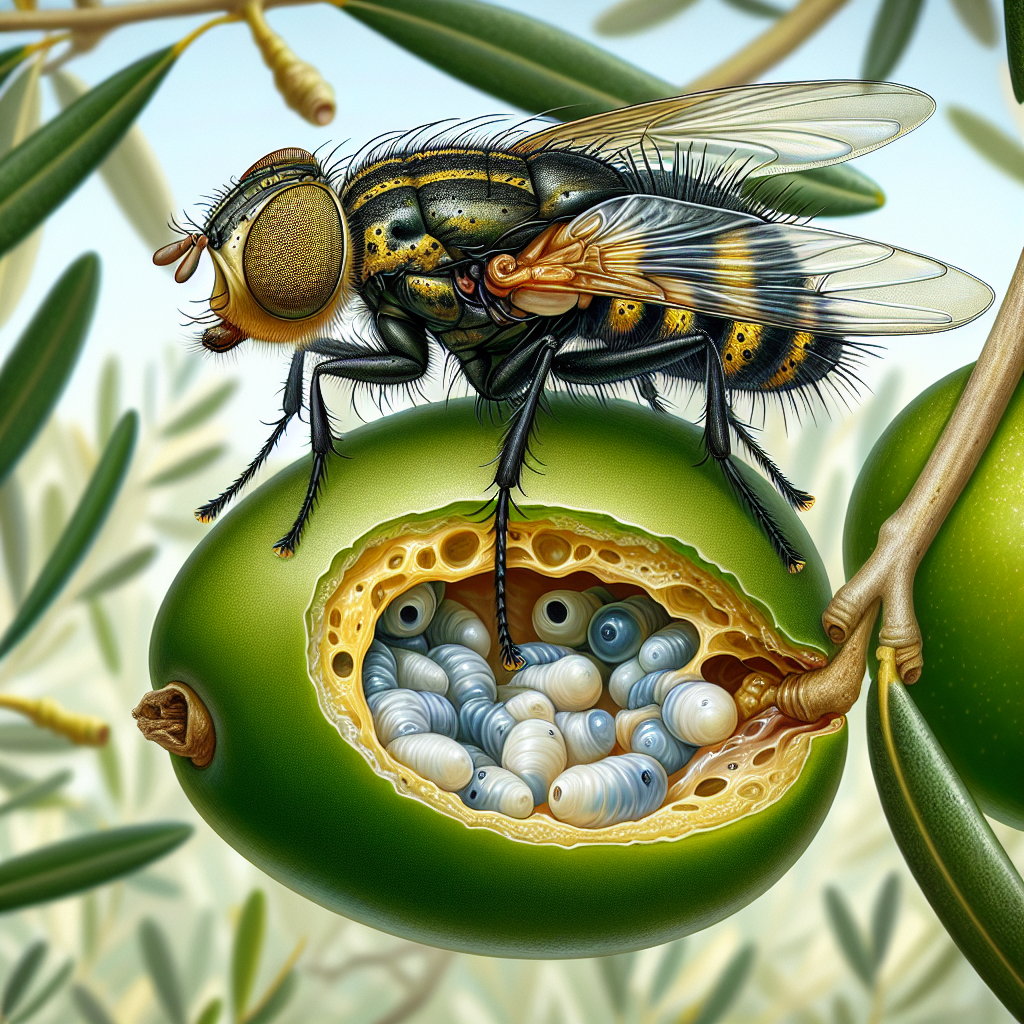
Introduction to Olive fruit fly
The olive fruit fly, scientifically known as Bactrocera oleae, stands as one of the most notorious pests in olive production, inflicting devastating damage on olive groves across the Mediterranean basin, California, Australia, and increasingly other olive-growing regions. Adult females lay eggs directly into olive fruits, where larvae tunnel through the flesh, rendering fruits unsuitable for oil extraction or table use. This pest can cause yield reductions of up to 50-100% in unmanaged orchards, making timely diagnosis and intervention critical for sustainable olive farming. Understanding its biology and implementing integrated pest management (IPM) is essential for growers aiming to safeguard their Olive crops and maintain high-quality yields.
Native to the Mediterranean, the olive fruit fly has spread globally due to international trade and favorable climates. It thrives in warm, temperate environments, with populations exploding during fruit development stages. Economic impacts are profound: infested fruits drop prematurely, oil quality declines due to rancidity, and secondary fungal infections exacerbate losses. Professional growers prioritize early detection using traps and adhere to organic-approved controls to comply with export standards and organic certifications. This comprehensive guide equips you with diagnostic tools, lifecycle insights, and actionable management plans to combat this pervasive threat effectively.
Identifying Symptoms & Damage
Spotting olive fruit fly infestations early is key to minimizing damage. Initial signs appear on developing olives as small, white eggs embedded in the fruit skin, often visible under magnification. Within days, these hatch into tiny white maggots that burrow inward, creating winding tunnels filled with frass (insect waste). Affected fruits show darkened, sunken stippling on the skin where eggs were laid, progressing to soft, rotten textures as larvae mature.
Advanced damage manifests as premature fruit drop, with infested olives appearing shriveled, asymmetrical, or leaking juice. Cut open suspect fruits to confirm: healthy olives are firm and uniform inside, while infested ones reveal creamy-white larvae (up to 8-10 mm long) surrounded by brown, decaying pulp. Heavy infestations lead to fruit abortion, reducing yields dramatically. Secondary symptoms include sooty mold growth on exuding sap and increased susceptibility to fruit rots.
Monitor groves weekly during fruit set, using yellow sticky traps or McPhail traps baited with protein hydrolysates. Damage thresholds vary: table olives tolerate <1% infestation, while oil varieties can sustain 5-10% before quality suffers. Differentiate from other pests like fruit flies by the specific olive targeting and larval tunneling pattern. Regular scouting prevents escalation, preserving fruit integrity and oil acidity levels below 0.8% for premium extra virgin olive oil.
Lifecycle and Progression of Olive fruit fly
The olive fruit fly completes 4-8 generations annually, depending on climate, with a lifecycle spanning 30-60 days per generation. Adults emerge from pupae in the soil, measuring 4-5 mm long with distinctive yellow markings on the thorax and wings. Females become sexually mature within 5-10 days, seeking out olive fruits 3-10 mm in diameter to oviposit using a sharp ovipositor. Each female lays 5-20 eggs daily, up to 500 total, preferring sun-exposed fruits.
Eggs hatch in 2-3 days into first-instar larvae, which feed voraciously on mesocarp tissue. Larvae progress through three instars over 6-15 days, growing from 0.3 mm to 9 mm, then exit the fruit to pupate in the soil or litter. Pupation lasts 10-30 days, influenced by temperature (optimal 22-28°C). Overwintering occurs as diapausing pupae, resuming activity when spring temperatures exceed 10°C.
Generational overlap peaks in late summer, complicating control. Track progression with degree-day models: egg-laying starts at 200-300 heat units (base 10°C). Disrupt lifecycle at vulnerable stages—adults via traps, larvae via baits—for maximum impact. In cooler climates, fewer generations (2-4) occur, easing management compared to subtropical areas with continuous breeding.
Environmental Triggers & Risk Factors
Olive fruit fly populations surge under specific conditions, making risk assessment vital. Warm temperatures (20-30°C) and high humidity (>60%) accelerate development and oviposition, especially during fruit sizing from June to October in the Northern Hemisphere. Drought-stressed trees produce smaller, softer fruits more attractive to females, increasing infestation rates by 20-30%.
Proximity to unmanaged groves or wild olives serves as reservoirs, with adults dispersing up to 50 km. Soil type influences pupal survival: sandy soils favor emergence, while compacted clay suppresses it. Rainy spells post-oviposition enhance larval survival by softening fruit skin. Overripe or damaged fruits from bird pecks or ants acts as entry points.
High-risk factors include early-maturing cultivars like Arbequina olive, dense canopies reducing spray penetration, and excessive nitrogen fertilization promoting lush growth. Monitor weather data: prolonged heatwaves (>35°C) kill pupae but boost survivor fecundity. IPM starts with site-specific risk mapping to prioritize high-vulnerability blocks.
Organic Control & Treatment Plans
Organic management relies on multi-tactic IPM to suppress populations below economic thresholds. Deploy monitoring traps (e.g., ChamP traps with torula yeast) at 1-2 per hectare from fruit set; capture >10 flies/trap/week signals action. Mass-trap adults using ammonium acetate-baited McPhail traps at 20-40/ha, reducing populations 50-70%.
Protein hydrolysate baits mixed with spinosad (Entrust SC, OMRI-listed) applied every 7-14 days target foraging adults, achieving 80-90% control in trials. Kaolin clay (Surround WP) creates a protective film on fruits, deterring oviposition by 60-85%; apply at 50-100 kg/ha post-fruit set, reapplying after rain. Bacillus thuringiensis (Bt) targets neonates but is less effective against later instars.
Biological controls include releases of parasitoids like Psyttalia concolor (50,000/ha) and predators such as ants. Treatment plans: Week 1-4 (fruit set): traps + baits; Week 5-12: baits + clay; Harvest: sanitation. Rotate tactics to prevent resistance. For Kalamata Olive, prioritize baits due to clustered fruits. Success metrics: <2% larval infestation at harvest. See Spring Pest Patrol: Organic AI Strategies to Shield Your Crops from Common Invaders for tech-enhanced monitoring.
Preventing Olive fruit fly in the Future
Long-term prevention hinges on cultural practices disrupting the pest's lifecycle. Early harvesting (at 50-60% veraison) removes fruit before peak oviposition, reducing overwintering pupae by 90%. Ground sanitation—flail mowing or disking litter—exposes pupae to predators and desiccation, cutting next-season emergence 70-80%.
Plant resistant cultivars like Frantoio or Koroneiki alongside susceptible ones. Prune for open canopies (20-30% light penetration) to enhance spray coverage and natural enemy efficacy. Cover crops like mustard suppress soil pupae via biofumigation. Drip irrigation maintains tree vigor without excess fruit succulence.
Quarantine protocols prevent introduction: inspect nursery stock and equipment. Annual IPM calendars synced to phenology models ensure proactive defense. Rotate bait active ingredients and integrate sterile insect technique (SIT) in large operations. Future-proof groves with windbreaks to limit dispersal and pollinator strips boosting parasitoids. Consistent application yields fly-free harvests year after year.
Crops Most Affected by Olive fruit fly
Primarily, the olive fruit fly targets Olive trees, infesting all commercial varieties but preferring early-ripening types like Arbequina, Manzanilla, and Kalamata. No other major crops serve as primary hosts, though occasional attacks occur on fig or hawthorn fruits in mixed agroecosystems. Olives comprise >95% of damage records, with table olive growers facing stringent zero-tolerance standards versus oil olives tolerating moderate levels. Global production losses exceed $1 billion annually, underscoring olives' vulnerability.