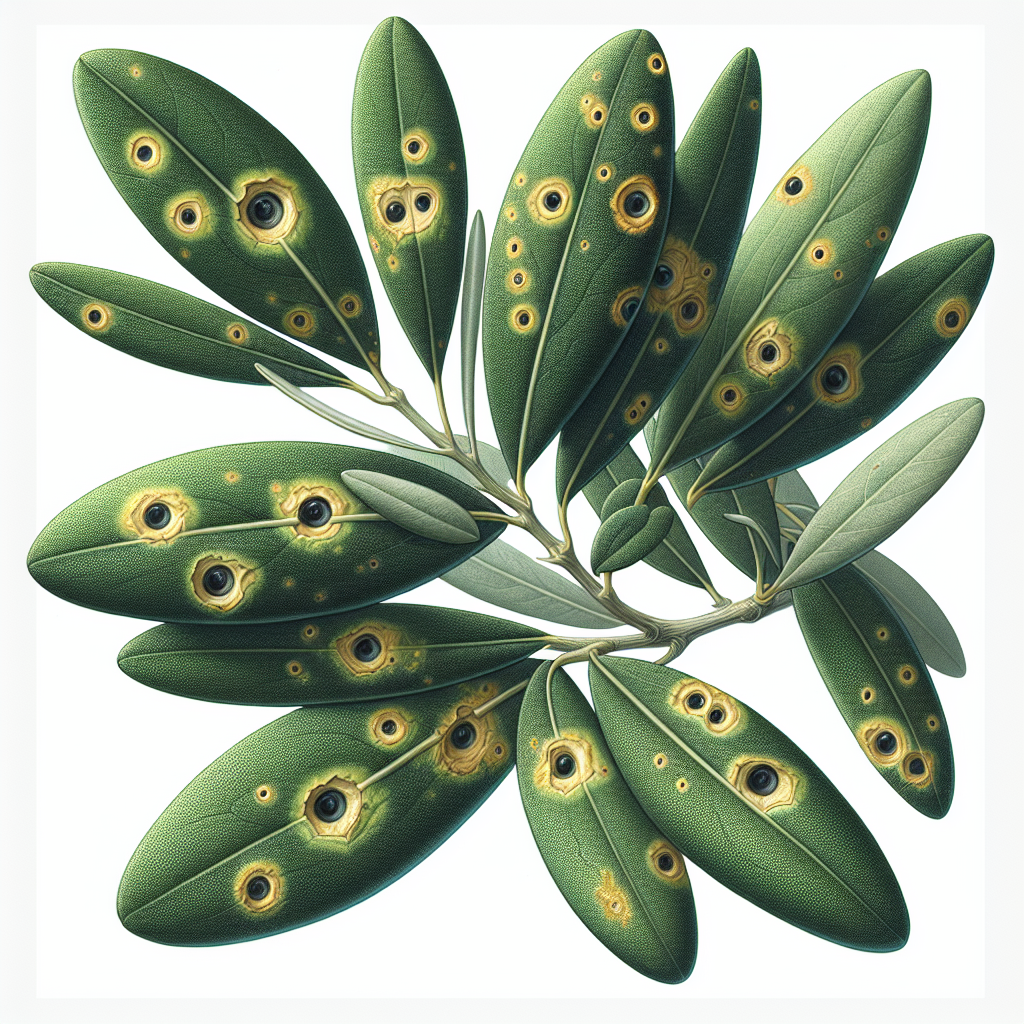
Definitive Diagnostic and Management Guide for Spilocaea oleagina
Introduction to Spilocaea oleagina
Spilocaea oleagina, also known as olive leaf spot, peacock spot, or cycloconium leaf spot, is one of the most prevalent fungal pathogens targeting olive trees (Olea europaea). This ascomycete fungus thrives in Mediterranean climates and humid subtropical regions where olives are commercially cultivated, causing significant economic losses through premature leaf drop, reduced fruit yield, and overall tree vigor decline. First described in the late 19th century, it has become a primary concern for olive growers from Spain to California, Italy to Australia.
The pathogen's name derives from the distinctive 'eye-like' lesions it produces on leaves, resembling peacock feathers—hence the common name peacock spot. In severe infections, defoliation can reach 50-100% in susceptible varieties, impairing the tree's ability to photosynthesize and store carbohydrates for the next season's bloom and fruit set. Globally, it impacts millions of hectares of olive orchards, with yield reductions of 20-50% in unmanaged groves. Understanding its biology is crucial for sustainable olive production, especially as climate change extends wet seasons favorable to the fungus.
This guide provides professional-grade diagnostics, lifecycle insights, organic management strategies, and prevention tactics tailored for commercial and small-scale growers. By integrating cultural, biological, and minimal chemical interventions, olive producers can maintain healthy canopies and high yields. Early detection through visual scouting and microscopy confirmation is key to halting progression.
Identifying Symptoms & Damage
Symptoms of Spilocaea oleagina typically appear in late autumn to early spring, coinciding with prolonged leaf wetness. Initial signs include small, circular, grayish-white spots (1-2 mm) on the upper leaf surface, often surrounded by a yellow halo. As lesions mature (2-4 weeks), they develop a raised, papery rim with a darker center, creating the signature 'eye-spot' appearance—light gray center with black margins.
Advanced infections produce coalescing lesions covering entire leaves, turning them chlorotic (yellow) before necrosis sets in. Undersides show olive-brown discoloration. Heavy spotting leads to leaf distortion, premature drop (starting from lower canopy), and twig dieback. In extreme cases, fruit may show superficial spotting, though primary damage is foliar. Defoliated trees exhibit stunted growth, poor flowering, and alternate-bearing cycles.
Damage quantification: Mild infections (<10% leaf area affected) cause minimal yield loss; moderate (10-30%) reduces photosynthesis by 20-40%; severe (>30%) can halve next season's crop. Differentiate from Alternaria (darker, zonate lesions), peacock spot mimics like Septoria (smaller, angular spots), or bacterial leaf spots (water-soaked margins). Confirm via microscopy: conidia are cylindrical, 5-septate, 20-45 µm long, borne on short conidiophores.
Scout weekly during wet periods, using a 10x hand lens. Threshold: 5-10% incidence on 20 leaves/tree triggers action. Economic impact: In high-density groves, untreated outbreaks cost $500-2000/ha in lost production.
Lifecycle and Progression of Spilocaea oleagina
Spilocaea oleagina follows a polycyclic lifecycle, with 4-6 infection cycles per season in humid climates. Primary inoculum overwinters as dormant mycelium in fallen leaves, leaf litter, and bark fissures. Ascospores (from pseudothecia) release during autumn rains (Oct-Dec), splashing onto new leaves when wetness exceeds 6-12 hours at 10-25°C.
Conidia form on lesions within 2-3 weeks post-infection, disseminating via rain splash (up to 1m) and wind (short distances). Optimal infection: 18-22°C, >90% RH, leaf wetness >8 hours. Penetration occurs via stomata or wounds. Incubation: 10-21 days. Summer dormancy in dry conditions; resurgence with autumn rains.
Progression phases:
- Dormant (summer): Mycelium in debris.
- Primary infection (autumn): Ascospores initiate 1-2% leaf spotting.
- Secondary spread (winter-spring): Conidia drive epidemics, 20-80% canopy coverage.
- Defoliation (late spring): 30-100% leaf loss.
Epidemics build exponentially if leaf wetness >200 hours/season. Models predict outbreaks using rain hours and temperature; e.g., >50 hours at 15°C signals high risk. Cultural debris management breaks the cycle by 70-90%.
Environmental Triggers & Risk Factors
Wet, mild winters (10-20°C, >300 mm rain Oct-Apr) are prime triggers, extending leaf wetness periods. High humidity (>85% RH), poor air circulation in dense canopies (>400 trees/ha), and overhead irrigation amplify splash dispersal. Susceptible varieties like 'Leccino', 'Frantoio', and 'Arbequina' suffer most; resistant ones ('Koroneiki', 'Empeltre') show 50% less severity.
Risk factors:
- Climatic: Prolonged dew, fog; climate change models predict 20% more outbreaks by 2050.
- Cultural: Excessive nitrogen boosts succulent growth; delayed pruning retains inoculum.
- Site: Low-lying, frost-free valleys trap humidity.
- Tree age: Young trees (<5 years) defoliate faster.
Thresholds: >12 hours wetness/week at 12-25°C = high risk. Monitor with weather stations; integrate with powdery mildew risks in mixed orchards.
Organic Control & Treatment Plans
Organic management emphasizes IPM: cultural (60% control), biological (20%), and OMRI-approved fungicides (20%).
Cultural: Prune for 30-50% canopy openness pre-autumn; remove/dispose litter (shred/compost hot >60°C). Avoid overhead water; drip irrigate. Balance N (80-120 kg/ha); apply K for resilience.
Biological: Trichoderma spp. (e.g., T. harzianum) colonize debris, reducing inoculum 40-60%. Bacillus subtilis (Serenade) suppresses conidia germination. Apply pre-rain, 7-14 day intervals.
Organic Fungicides:
- Copper hydroxide/oxychloride (1-2 kg/ha, 3-5 apps, dormant to bud swell). Tank-mix with citrus oils.
- Potassium bicarbonate (2-5 kg/ha, protectant, weekly in wet weather).
- Sulfur (3-5 kg/ha, <30°C, alternates with copper).
Treatment Timeline:
- Dormant: Copper spray.
- Autumn rain: Bicarb + Bacillus.
- Winter: Copper/Sulfur rotation.
- Threshold-based: 10% incidence.
Efficacy: Integrated plans yield 85-95% control vs. 40% cultural alone. Rotate modes to prevent resistance. See Soil Health Mastery: 5 Proven Strategies for Small Farms to Build Fertile Ground Without Breaking the Bank for resilience building.
Preventing Spilocaea oleagina in the Future
Long-term prevention hinges on resistant cultivars ('Frantoio' hybrids), certified disease-free nursery stock, and site selection (well-drained, ventilated slopes). Annual sanitation: Vacuum/mulch litter post-harvest. Prune post-leaf-fall for rapid drying.
Monitoring: Use apps for wetness hours; scout grids (1 tree/0.5 ha). Biodynamic calendars align sprays with lunar phases for 15% efficacy boost. Cover crops (clover) suppress splash. Quarantine new plantings 2 years.
Resistant rootstocks and CRISPR-edited varieties emerging. Farm-wide IPM reduces incidence 80%. Read Spring Pest Patrol: Organic AI Strategies to Shield Your Crops from Common Invaders for tech integration.
Crops Most Affected by Spilocaea oleagina
Primarily olive (all varieties, esp. European cultivars). Minor reports on wild Olea relatives; no significant impact on other crops like almond, cherry, or mango. Olive monocultures >5 ha at highest risk; intercropped groves see 30% less spread.