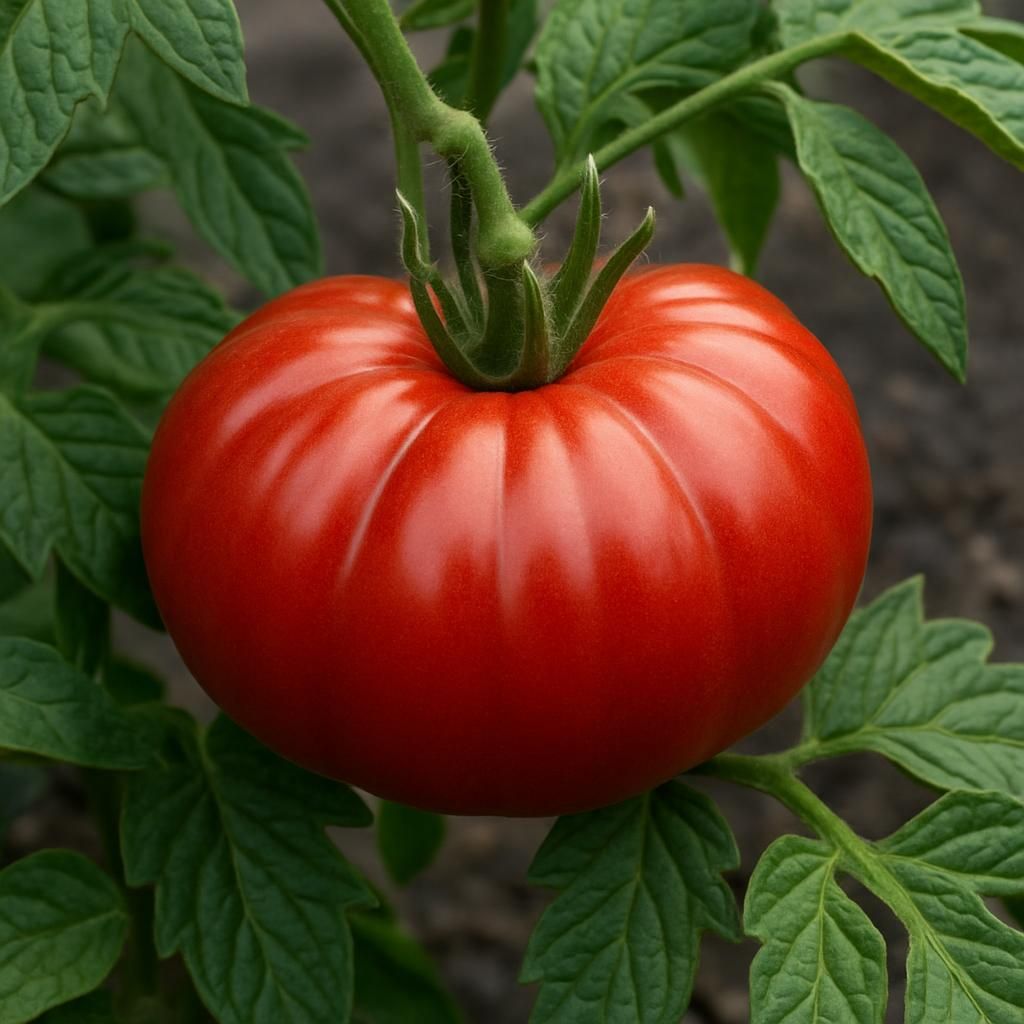
Introduction to Neves Azorean Red Tomato
The Neves Azorean Red Tomato is a distinctive heirloom originating from the volcanic soils of the Azores archipelago, specifically associated with the Neves region on São Miguel. This indeterminate variety produces large, slightly flattened, deep-red fruits weighing 200–350 g with dense, juicy flesh and a balanced sweet-acidic profile. Its genetic adaptation to saline winds, mild maritime climates, and fertile volcanic substrates makes it uniquely suited for coastal and island agriculture. Growers value it for both fresh market sales and traditional Azorean cuisine, where the fruits are prized for sauces, preserves, and sun-drying. The variety exhibits strong vigor, resistance to cracking, and consistent production through extended harvest windows when managed with proper cultural practices.
Botanical Profile of Neves Azorean Red Tomato
Neves Azorean Red belongs to the nightshade family (Solanaceae) and is botanically classified as Solanum lycopersicum 'Neves Azorean Red'. Plants are indeterminate, reaching 1.8–2.5 m in height with vigorous, sprawling vines that require sturdy support. Leaves are dark green, slightly rugose, and compound with serrated margins. Flowers are typical Solanaceous yellow blooms appearing in clusters of 6–10. Fruits develop a glossy, deep crimson skin with subtle ribbing and contain 4–6 locules filled with gel-encased seeds. The variety shows moderate tolerance to salt spray and benefits from the mineral-rich volcanic soils typical of its origin. Compared with standard Tomato cultivars, it displays slower early growth but superior flavor concentration under cooler maritime conditions.
Soil, pH, and Climate Requirements for Neves Azorean Red Tomato
Successful cultivation begins with replicating the fertile, well-drained volcanic soils of the Azores. The crop thrives in sandy loam to loam textures enriched with organic matter. A slightly acidic to neutral pH supports optimal nutrient uptake. Temperature, humidity, and wind exposure must be managed to prevent blossom drop and fruit disorders.
| Parameter | Ideal Range | Notes |
|---|---|---|
| Soil Texture | Sandy loam to loam | High organic matter content preferred |
| Soil pH | 6.0–6.8 | Avoid below 5.5 or above 7.5 |
| Temperature (Day) | 21–26 °C | Optimal fruit set window |
| Temperature (Night) | 15–18 °C | Prevents blossom drop |
| Relative Humidity | 60–75 % | Higher humidity increases disease pressure |
| Annual Rainfall | 800–1200 mm | Supplemental irrigation required in dry periods |
| Wind Exposure | Moderate protection from salt spray | Windbreaks recommended in exposed sites |
| Elevation | 0–400 m | Performs well in coastal and mid-elevation zones |
Step-by-Step Planting & Propagation
Start seeds indoors 6–8 weeks before the last expected frost. Use sterile seed-starting mix and maintain soil temperature at 24–27 °C for rapid germination (5–8 days). Transplant seedlings when they have 4–6 true leaves and outdoor soil has warmed to at least 16 °C. Space plants 60 cm apart in rows 1.2 m wide; install 2 m stakes or trellises at planting. Harden off plants over 7–10 days by gradually increasing outdoor exposure. In the Azores, direct seeding is sometimes practiced in spring after soil temperatures stabilize above 18 °C. Mulch immediately after transplanting with 5–8 cm of organic material to conserve moisture and suppress weeds.
Care & Maintenance regimes for Neves Azorean Red Tomato
Consistent moisture, balanced nutrition, and disciplined pruning are essential. Irrigate deeply once or twice weekly, aiming for 2.5–3.8 cm of water per week. Side-dress with well-composted manure or balanced organic fertilizer at flowering and again at first fruit set. Remove suckers below the first flower cluster and prune to two main leaders for improved air circulation. Monitor leaf color and growth weekly to adjust inputs.
| Growth Stage | Watering Schedule | Fertilizer Application | Pruning Schedule |
|---|---|---|---|
| Transplant to Flowering | Deep watering every 4–5 days | 1–2 cm compost tea every 14 days | Remove lower suckers weekly |
| Flowering to Fruit Set | 2.5 cm/week; maintain even moisture | Side-dress 4-4-4 organic at 0.5 kg/plant | Continue sucker removal; tie vines |
| Fruit Ripening | Reduce to 2 cm/week to concentrate sugars | Light potassium-rich tea every 21 days | Minimal pruning; focus on airflow |
| Post-Harvest | Reduce frequency as plants decline | Optional compost top-dress | Remove spent foliage and dispose |
Pests, Diseases & Organic Management
Common threats include Aphids, Spider Mites, Whiteflies, Hornworms, and fungal diseases such as Early Blight, Late Blight, and Septoria Leaf Spot. Implement weekly scouting and maintain plant vigor through proper spacing and pruning. Use floating row covers during early growth to exclude pests. Apply neem oil or insecticidal soap at the first sign of infestation. Copper-based sprays and Bacillus subtilis products provide organic control of foliar diseases. Rotate crops on a 3–4 year cycle and remove crop debris at season end to reduce overwintering inoculum. Encourage beneficial insects by planting flowering herbs nearby.
Harvesting, Curing & Optimal Storage
Harvest when fruits reach full color and slight softening at the blossom end, typically 75–85 days after transplant. Pick in the cool morning hours and handle gently to avoid bruising. For long-term storage, cure at 18–21 °C and 85–90 % humidity for 3–5 days, then move to 10–13 °C. Fully ripe fruits store 5–7 days at room temperature; green-mature fruits can be ripened in paper bags with ethylene-producing fruits. Avoid refrigeration below 10 °C to prevent chilling injury and flavor loss. Sun-dry excess harvest on screens in warm, dry conditions or preserve as sauce and paste.
Companion Planting for Neves Azorean Red Tomato
Pair Neves Azorean Red with aromatic herbs and nitrogen-fixing companions to improve flavor, deter pests, and enhance soil fertility. Recommended partners include Basil, Marigold, Nasturtium, Garlic, and Onion. Avoid planting near Fennel or walnuts, which can inhibit tomato growth. Interplant with Lettuce or Spinach for living mulch and efficient space use. Clover or Hairy Vetch sown as cover crops between rows fix nitrogen and suppress weeds. Rotate with Legumes or Brassicas in subsequent seasons to maintain soil health and break pest cycles.