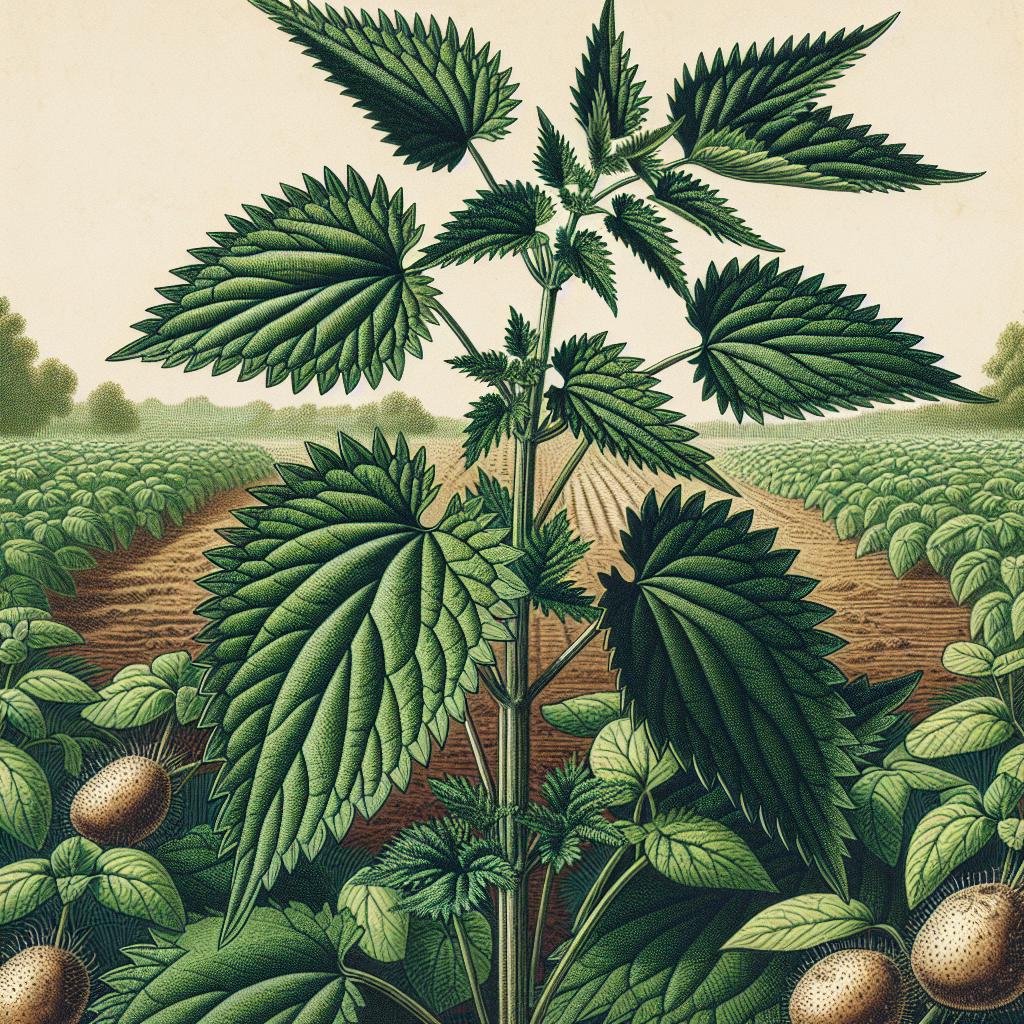
Introduction to nettle
Nettle, scientifically known as Urtica dioica, is one of the most notorious perennial weeds in agricultural systems worldwide. Often dismissed as a mere garden nuisance, nettle poses significant challenges to crop production due to its rapid growth, extensive rhizomatous root system, and ability to thrive in diverse soil conditions. The plant's stinging hairs deliver formic acid and other irritants upon contact, posing health risks to farm workers while its dense stands outcompete desirable crops for essential resources.
In farming contexts, nettle infestations can reduce yields by up to 50% in affected fields by shading seedlings, depleting soil nutrients, and serving as an alternate host for pests like aphids. Native to Europe, Asia, and North America, it has naturalized globally, particularly in temperate regions with moist, nitrogen-rich soils. Farmers encounter two main types: stinging nettle (U. dioica) and dead nettle (Lamium spp.), though the former is the primary agricultural pest due to its persistence.
Recognizing nettle early is crucial for effective management. Its opportunistic nature allows it to colonize disturbed soils, field margins, and irrigation ditches, spreading via seeds and underground rhizomes that can extend several meters. This guide equips agricultural professionals with diagnostic tools, lifecycle knowledge, and proven organic strategies to mitigate nettle's impact, ensuring sustainable crop health and productivity. By integrating mechanical, cultural, and biological controls, farms can achieve nettle-free fields without relying on synthetic herbicides.
Identifying Symptoms & Damage
Nettle identification begins with its distinctive morphology. The plant grows 2-7 feet tall, featuring opposite, heart-shaped leaves 1-6 inches long with serrated margins and pronounced veins. Fresh green stems are square and covered in stinging hairs—hollow silica-tipped structures filled with irritants that inject upon contact, causing burning welts, itching, and inflammation lasting hours to days. Flowers are small, greenish, and dioecious (separate male/female plants), appearing in drooping racemes from May to September.
Damage manifests as competition rather than direct feeding. Nettle forms dense thickets that smother young crops, blocking sunlight and releasing allelopathic chemicals that inhibit seed germination. In potato fields, nettle reduces tuber size by 20-30% through nutrient competition, particularly nitrogen and phosphorus. Roots penetrate up to 6 feet deep, exacerbating drought stress on shallow-rooted crops like lettuce.
Visual symptoms include yellowing crop leaves from nutrient deficiency, stunted growth, and bare patches where nettle dominates. In pastures, livestock avoid nettle due to stings, leading to overgrazing elsewhere. Secondary damage arises from harboring whiteflies and slugs, which migrate to adjacent crops. Early detection via scouting—look for clusters along fences or waterways—prevents establishment. Differentiate from look-alikes like mint (no stings) or clearweed (non-stinging hairs) by the characteristic sting test and rhizome presence.
Lifecycle and Progression of nettle
Nettle's perennial lifecycle ensures year-round persistence. Overwintering rhizomes—thick, cream-colored underground stems—regenerate in spring, producing shoots by March in temperate zones. Vegetative growth peaks in April-June, with plants reaching full height by early summer. Flowering occurs June-September, producing 1,000-30,000 wind-dispersed seeds per plant, viable for 2-5 years in soil banks.
Rhizome fragmentation drives clonal spread; a single 1-inch segment can produce a new plant. Seeds germinate in spring/fall under moist, disturbed conditions, developing taproots before rhizome formation in year two. Plants die back in winter but rhizomes survive -10°F (-23°C), resuming growth when soil warms. Full maturity takes 3-4 years, with peak biomass in year 2-3.
Progression stages: 1) Dormant rhizomes (winter); 2) Shoot emergence (spring); 3) Vegetative expansion (summer); 4) Seed set (late summer); 5) Senescence and rhizome storage (fall). Interrupt at pre-flowering for control. In perennial crops like strawberry, nettle synchronizes with crop cycles, requiring vigilant monitoring.
Environmental Triggers & Risk Factors
Nettle thrives in nitrogen-rich, moist soils (pH 5.5-7.5) with partial shade. Key triggers include soil disturbance from tillage, which fragments rhizomes; high manure applications boosting nitrogen; and over-irrigation creating humid microclimates. Risk factors encompass field edges near woodlands (seed sources), compacted soils favoring deep roots, and reduced tillage systems allowing seedling establishment.
Climate plays a role: mild winters and wet springs accelerate emergence, while droughts stress but don't kill established plants. Crop rotation gaps with hosts like clover invite invasion. Poor sanitation—uncontrolled ditches or fencerows—serves as reservoirs. Assess risk via soil tests (high N >50 ppm) and history of weed pressure. Read our detailed blog on Why Misidentifying Plants Costs Small Farms Thousands - And How AI Camera Diagnosis Fixes It Fast for tech-assisted ID tools.
Organic Control & Treatment Plans
Organic management targets multiple lifecycle stages. Mechanical: Mow or weed-eat pre-flower (May-June) repeatedly to exhaust rhizomes; cut below crown to prevent regrowth. Hand-pull small patches, removing full root (gloves essential). Flame weeding or tillage buries rhizomes deep (>6 inches).
Mulching: Apply 6-8 inches of straw or wood chips post-emergence to smother shoots; renew annually. Black plastic solarization (6-8 weeks summer) kills rhizomes via heat (>120°F).
Biological: Introduce grazing animals like chickens or goats post-frost when stings diminish; they consume wilted nettles. Beneficial insects like nettle weevils (Phyllobius pomaceus) offer biocontrol in some regions.
Cultural: Crop rotation with suppressants like buckwheat; dense planting shades seedlings. Vinegar (20% acetic acid) or citrus oil sprays desiccate foliage (reapply after rain).
Integrated Plan: 1) Scout weekly; 2) Mow at 4-6 inches; 3) Mulch immediately; 4) Rotate crops; 5) Monitor 2 years. For tomato fields, combine with companion marigold borders. Expect 70-90% reduction in 2 seasons. Check our wiki on Slugs and snails (pest) for co-management.
Preventing nettle in the Future
Prevention hinges on sanitation and soil health. Maintain weed-free borders with mowing or gravel barriers. Improve drainage to desiccate rhizomes; aerate compacted soils. Use cover crops like rye to outcompete seedlings. Solarize fields pre-planting.
Seed clean equipment to avoid transport. Monitor soil N levels, avoiding excess fertility. Perennial barriers (e.g., deep-rooted trees) block spread. Long-term: foster biodiversity with pollinator strips reducing nettle dominance. Annual audits prevent re-infestation.
Crops Most Affected by nettle
Nettle plagues row crops and perennials. Vegetables: potato, tomato, cabbage—yield losses 30-50% from shading/nutrient steal. Field crops: wheat, corn suffer seedling suppression. Pastures/orchards: apple, strawberry face invasion from margins. Root crops like carrot compete poorly. Organic farms hit hardest sans herbicides.