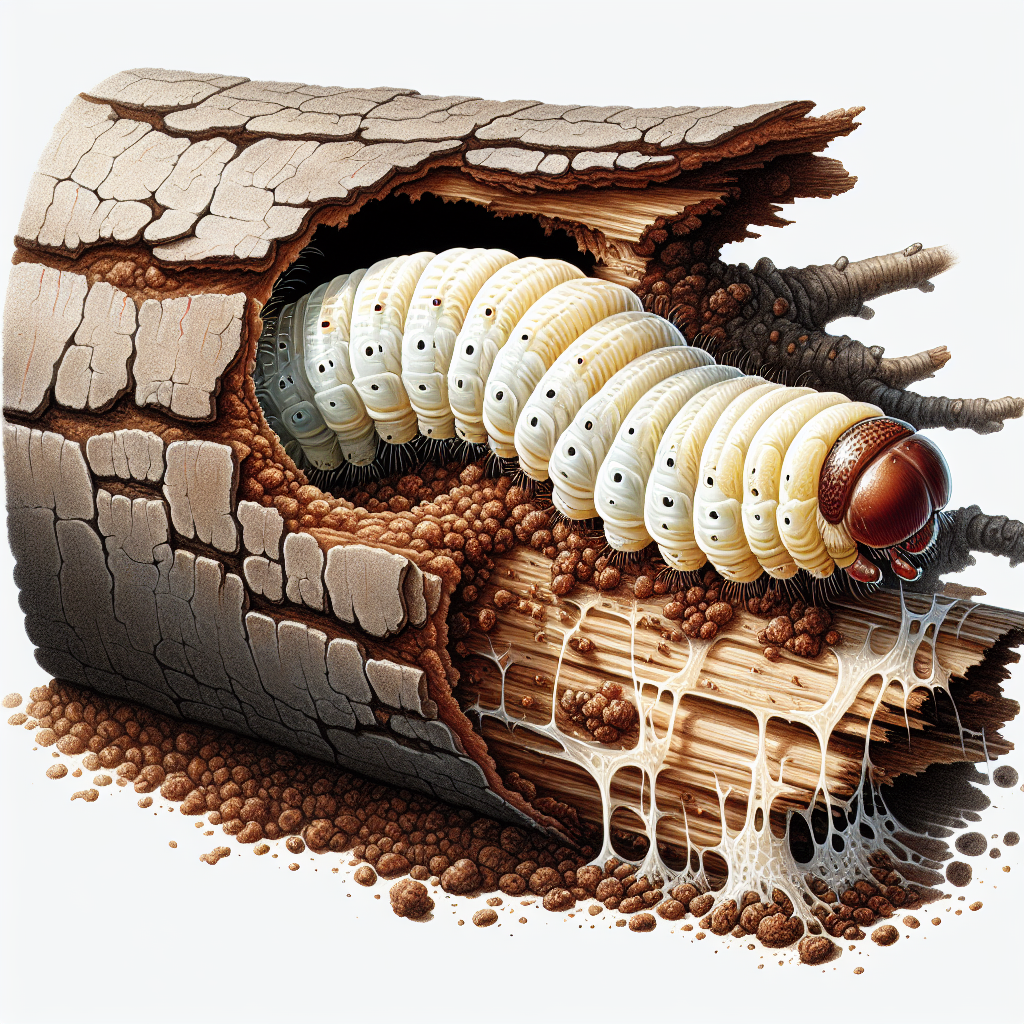
Introduction to Lesser peach tree borer
The lesser peach tree borer, scientifically known as Synanthedon pictipes, is a notorious pest in orchards, especially those growing stone fruits like peach trees. Unlike its larger relative, the peach tree borer (Synanthedon exitiosa), this smaller clearwing moth species attacks the lower trunk, crown, and roots, causing severe structural damage that can kill young trees or weaken mature ones. Native to North America, it has become a widespread threat from the eastern U.S. to the Midwest, thriving in warmer climates and infesting orchards, nurseries, and backyard gardens.
Adult moths mimic wasps with their clear wings and slender black bodies marked with yellow stripes, making them hard to spot. Females lay eggs on bark from late spring through summer, and the creamy-white larvae tunnel into the cambium layer, feeding on vital sap-conducting tissues. This girdling disrupts nutrient flow, leading to wilting branches, canopy thinning, and gummosis—oozing sap mixed with frass. Infestations often go unnoticed until trees show decline, potentially reducing fruit yields by 50% or more in severe cases. Early detection is crucial, as chemical controls are less effective against hidden larvae. For growers, understanding this pest's biology is key to implementing integrated pest management (IPM) strategies that protect valuable crops without over-relying on synthetics. Check out this Spring Pest Patrol: Organic AI Strategies to Shield Your Crops from Common Invaders for timely tips.
Identifying Symptoms & Damage
Spotting lesser peach tree borer damage requires close inspection of the tree base. Look for exit holes—small, round openings (1/4 to 1/2 inch) in the bark near the soil line or on major roots, often with sawdust-like frass and gummy sap exuding from them. The trunk may show girdling scars: longitudinal tunnels under the bark where larvae have chewed through the cambium, causing sunken, discolored patches that ooze amber-colored gum.
Affected trees exhibit wilting or yellowing leaves in the upper canopy, especially during hot, dry periods, as roots and lower trunk damage impairs water uptake. Branch dieback starts from the top, progressing downward, and severe cases lead to tree toppling in windstorms due to weakened roots. Young trees (1-4 years old) are most vulnerable, often succumbing entirely, while mature trees show stunted growth and poor fruit set. Differentiate from peach twig borer (shoots upper trunk) or borers by location—lesser peach tree borer targets below the graft union.
Secondary signs include woodpecker activity pecking at infested bark and increased susceptibility to diseases like cytosporosis or Phytophthora root rot. Use a knife to peel back bark: active larvae are pinkish, up to 3/4 inch long, with brown heads. Damage peaks in late summer, but scouts should check monthly from May to September. In Elberta peach orchards, losses can exceed 20% without monitoring.
Lifecycle and Progression of Lesser peach tree borer
The lesser peach tree borer completes one to two generations per year, depending on climate. Adults emerge in late May to July, coinciding with dogwood bloom or 400-600 heat units (base 50°F). Moths are diurnal, active midday, with females laying 100-200 eggs singly on rough bark cracks near wounds or soil line over 1-2 weeks.
Eggs hatch in 7-10 days into tiny larvae that bore directly into cambium. Larvae feed and overwinter in tunnels, molting through 5-7 instars. In spring (March-May), they resume feeding vigorously, pupating in silk-lined chambers near the surface. The full cycle spans 10-12 months in cooler areas, accelerating to two generations in the South.
Pupae form reddish cases; adults eclose by chewing out D-shaped exit holes. Overlapping generations mean multiple life stages coexist, complicating control timing. Monitor with pheromone traps (specific to S. pictipes) hung at canopy height in April—first sustained catch signals egglaying. Degree-day models (450 DD for peak flight) predict infestations accurately. In Redhaven peach groves, track progression to time interventions.
Environmental Triggers & Risk Factors
Lesser peach tree borer thrives in stressed trees: drought, mechanical injury from mowers/hedgers, or poor drainage heightens susceptibility. High soil moisture favors larval survival, while winter injury or sunscald creates egglaying sites. Over-fertilization with nitrogen promotes succulent growth attractive to females.
Warmer springs advance emergence; temperatures above 85°F boost flight activity. Orchard location matters—south-facing slopes warm faster, concentrating damage. Poor weed control allows rodent tunnels that expose roots. Companion pests like ants farm honeydew from associated aphids, worsening issues. In plum interplants, proximity spreads infestation. Climate change extends generations northward, per recent studies.
Organic Control & Treatment Plans
Organic management emphasizes prevention and biologicals. Cultural tactics: Maintain tree vigor with balanced irrigation/fertilization; mulch to 6 inches deep but keep away from trunk to deter rodents. Sanitation—remove infested wood, destroy larvae by probing tunnels with wire (late winter). Avoid trunk wounds during operations.
Biological controls: Release Trichogramma wasps (egg parasitoids) at 100,000/acre when traps show flight. Steinernema carpocapsae nematodes target larvae in soil (apply evenings, 80°F soil). Bt kurstaki sprays hit young larvae pre-tunneling (7-10 days post-flight peak).
Organic-approved insecticides: Spinosad (Entrust) or azadirachtin (neem oil) as trunk sprays at egg hatch, rotated to prevent resistance. Horticultural oils smother eggs/young larvae in dormant season. Pheromone mating disruption with hand-applied ties (200/acre) confuses males effectively in small orchards. For cherry blocks, combine with trunk wraps. Monitor efficacy with trap counts dropping 90%+ indicating success. Integrated with borers strategies, yields rebound 30-50%.
Preventing Lesser peach tree borer in the Future
Long-term prevention builds resilient orchards. Site selection: Choose well-drained soils, avoid low spots. Plant resistant rootstocks like Lovell or Gisela. Quarantine new stock—inspect for exit holes.
Monitoring protocol: Deploy 2-4 pheromone traps/10 acres; scout bases biweekly. Threshold: 5 moths/trap/week triggers action. Timing apps or degree-days ensure precision. Barrier trunk paints (white latex) deter egglaying; chipper/shred debris to kill pupae.
Crop rotation/diversity: Interplant with non-hosts like clover. Encourage predators via hedgerows (yarrow, thyme). Annual dormant oil + micronutrient sprays boost health. Scout neighbors—moths fly 100+ yards. For sustainability, audit IPM yearly; resistant cultivars like 'Contender' peach reduce needs. See Peach (crop) for varieties.
Crops Most Affected by Lesser peach tree borer
Primarily attacks Prunus species: peach (all varieties, esp. seedlings), nectarine, plum, cherry, apricot, and wild black cherry. Young transplants suffer 80% mortality; mature Elberta peach and Redhaven peach yield losses hit 40%. Santa Rosa plum and Bing cherry also vulnerable. Rare on almond or pear. Ornamental Prunus propagate infestations.