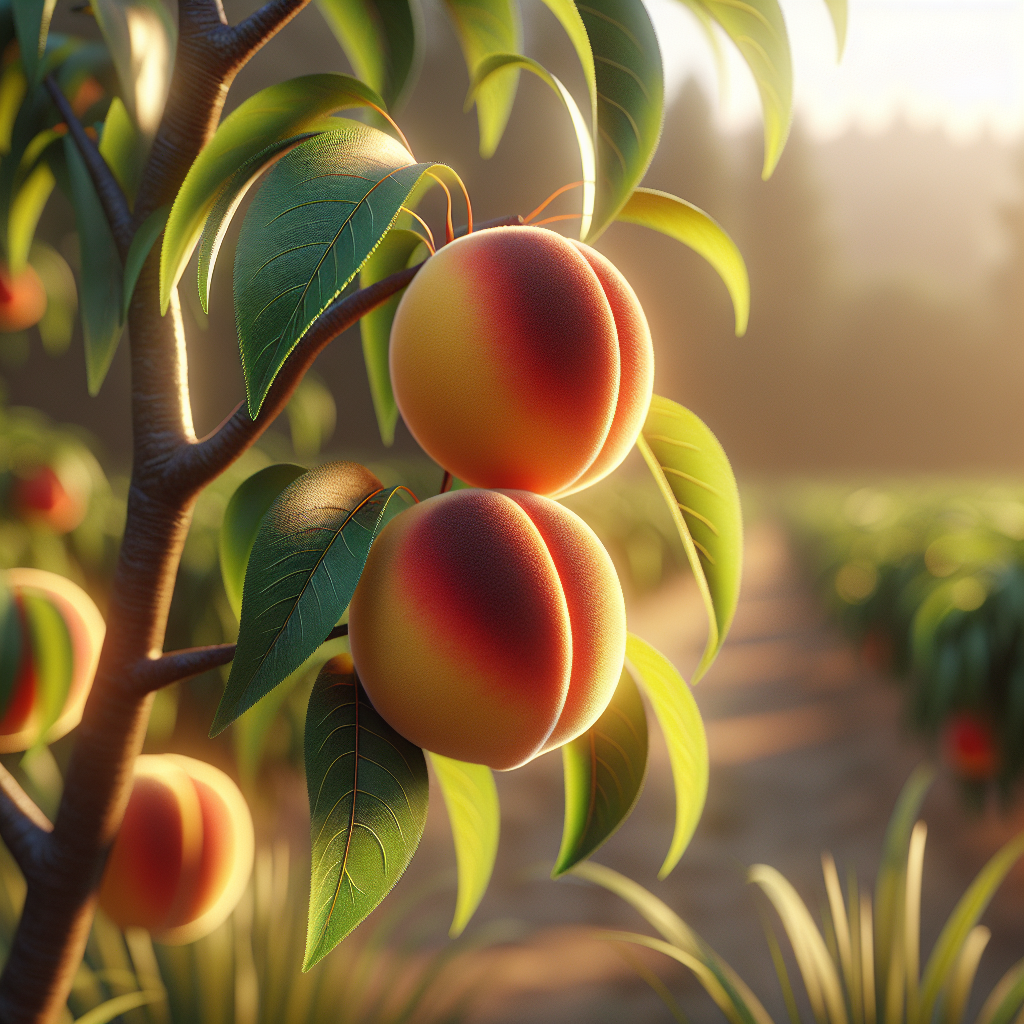
Introduction to Redhaven Peach
Few peach cultivars have earned the reputation for consistency that this classic variety has. Released in 1940 by the South Haven Experiment Station in Michigan, it quickly became a standard against which many later peaches were judged because it combined winter hardiness, attractive red-over-yellow skin, dependable productivity, and firm, flavorful yellow flesh. It is especially valued in regions where late spring frosts or colder winters make more delicate peach cultivars unreliable.
This is a freestone peach at full ripeness, though fruit may behave closer to semi-freestone when slightly underripe. Flavor is typically balanced rather than syrupy-sweet, with enough acidity to keep the fruit lively. That makes it suitable not only for fresh eating but also for canning, baking, freezing, and drying. Growers often select it when they want a midseason peach that colors well, ships better than softer heirloom types, and tolerates a wider range of temperate orchard conditions.
Redhaven is self-fertile, so a single tree can set fruit without a second peach cultivar nearby. Even so, yield and fruit set are usually better when pollinator activity is strong and the tree is managed for light penetration, balanced nutrition, and disciplined pruning. If you are new to stone fruit, the broader Peach guide gives useful context, but this cultivar needs management tailored to its growth habit and crop load.
Botanical Profile of Redhaven Peach
This cultivar belongs to the rose family, Rosaceae, and the species Prunus persica. Like other peaches, it is a deciduous tree with lanceolate leaves, pink spring blossoms, and fuzzy-skinned drupes containing a deeply furrowed stone. Redhaven is typically grafted onto rootstocks rather than grown on its own roots, so final size, precocity, soil adaptation, and disease tolerance are influenced both by the cultivar and the chosen rootstock.
On standard rootstock, mature trees commonly reach 12 to 18 feet tall and wide under backyard conditions, though commercial open-center systems may keep them pruned lower for harvest efficiency. On semi-dwarf rootstocks, height may be managed closer to 8 to 12 feet. The tree is naturally vigorous and tends to produce many upright shoots, especially after hard pruning. This vigor is useful for recovery from winter injury but can create dense shading if not managed annually.
Bloom time is midseason for peaches, which offers some protection from the latest frosts compared with very early-blooming cultivars. Flowers are showy pink and perfect, meaning each flower contains both male and female reproductive parts. Because it is self-pollinating, pollinizer compatibility is not a major limitation, but bees and other pollinating insects still improve fruit set uniformity.
Fruit is generally medium-sized to large when adequately thinned, often 2.5 to 3 inches in diameter. Skin develops a strong red blush over a yellow ground color when the canopy is open and fruit receives good sun exposure. Flesh is yellow, moderately firm, fine-textured, and aromatic. The pit tends to separate cleanly once the fruit reaches proper tree-ripe maturity, one of the reasons this cultivar became a favorite for home processing.
Chilling requirement is usually described around 800 to 950 chill hours below 45°F (7.2°C), though local performance varies with rootstock, site, and winter temperature patterns. That places it best in temperate regions with true winter dormancy. In low-chill climates, bloom and leaf-out can be uneven, reducing yield and increasing disease pressure.
Soil, pH, and Climate Requirements for Redhaven Peach
This tree performs best in deep, well-drained loam or sandy loam with good internal drainage and moderate water-holding capacity. Peach roots are highly intolerant of prolonged saturation. If water stands for more than 24 hours after heavy rain, the site is risky. Roots deprived of oxygen decline quickly, and the tree becomes vulnerable to crown rot, Phytophthora, and general short life.
Target soil pH is 6.0 to 6.8, with an ideal range near 6.2 to 6.5. At pH below about 5.5, aluminum and manganese may become overly available and root growth can suffer; phosphorus availability also declines. At pH above 7.0, iron, manganese, and zinc deficiencies become more common, often visible as interveinal chlorosis on young leaves. Before planting, a laboratory soil test is strongly recommended. If pH is too low, incorporate finely ground agricultural lime months ahead of planting. If pH is too high, elemental sulfur can help, though correction in calcareous soils is slow and partial.
Soil depth matters. A minimum effective rooting depth of 3 to 4 feet is desirable. Hardpan, compacted clay layers, or shallow bedrock restrict root exploration and magnify drought stress. If subsoil drainage is marginal, planting on a raised berm or broad mound 12 to 18 inches high can significantly improve survival.
Redhaven prefers a full-sun location with at least 8 hours of direct sunlight daily. Less light reduces flower bud formation, fruit color, sugar accumulation, and air movement within the canopy. South-facing or slightly elevated slopes are excellent because they improve cold air drainage and reduce frost pocket formation. Avoid low basins where cold air settles during bloom.
Climatically, this cultivar is best suited to temperate zones with cold winters and warm, relatively dry summers. It is generally adapted to USDA Zones 5 through 8, though exact success depends on rootstock, disease pressure, and late frost frequency. Winter hardiness is one of its strengths, but flower buds can still be injured when temperatures plunge during deacclimation periods in late winter.
Moisture management is critical. During active growth, the root zone should stay evenly moist but never waterlogged. As a practical benchmark, the top 2 inches of soil may dry slightly between irrigations, but soil at 6 to 10 inches deep should remain lightly moist and cool to the touch. Tensiometer readings around 20 to 40 centibars in loam are generally acceptable during fruit sizing; above that, stress begins to reduce cell expansion and fruit size. Chronic overwatering shows up as pale leaves, poor shoot maturation, gummy ooze near the trunk, and a general dull, stagnant appearance despite wet soil.
Step-by-Step Planting & Propagation
Start with a certified disease-free grafted tree from a reputable nursery. One-year-old bare-root whips or lightly feathered trees often establish better than oversized container stock because roots adapt more readily to the site. Choose a rootstock suited to your soil type, nematode pressure, and desired vigor.
Plant during dormancy, usually late winter to early spring before bud break, once the ground is workable. In milder climates, late fall planting can succeed if the site drains well and winter temperatures are not severe enough to damage fresh roots.
- Prepare the site well in advance. Remove perennial weeds in at least a 3- to 4-foot diameter circle. Do not rely on turf suppression alone after planting; grass competition is one of the fastest ways to stunt a young peach tree.
- Test drainage. Dig a hole 18 inches deep, fill it with water, and observe drainage after pre-wetting the soil. If water remains more than a day, improve drainage or choose another site.
- Dig a broad planting hole. Make it 2 to 3 times the width of the root spread but no deeper than the root system. Avoid glazing the sides of the hole in wet clay.
- Inspect roots. Trim broken or dead root tips cleanly. Soak bare-root trees in water for 2 to 4 hours before planting, but do not leave them submerged overnight.
- Set planting depth correctly. Position the tree so the graft union remains 2 to 3 inches above the finished soil line. Planting too deep encourages scion rooting and crown problems.
- Backfill with native soil. Avoid heavily amending the hole with compost; this can create a bathtub effect and discourage roots from moving outward. Firm the soil gently to remove large air pockets.
- Water thoroughly. Apply enough water to settle soil around roots, usually 3 to 5 gallons for a bare-root tree and more for larger stock.
- Head the tree back at planting. If planting a whip, cut it to roughly 26 to 32 inches above the ground to initiate the open-center framework. If feathered, retain 3 to 4 well-spaced lateral shoots.
- Mulch correctly. Apply 2 to 4 inches of wood chips or shredded bark over the root zone, but keep mulch 4 to 6 inches away from the trunk to prevent rodent damage and crown rot.
Spacing depends on system and rootstock. Backyard standard trees need roughly 15 to 20 feet between trees. Semi-dwarf trees may be planted 10 to 14 feet apart. In high-density commercial systems, closer spacing is possible with aggressive pruning and training.
Propagation by seed is not used for true-to-type plants because seedlings do not replicate the cultivar reliably. Professional propagation is by budding or grafting onto selected rootstocks, commonly via T-budding in summer. Home growers should purchase finished grafted trees rather than attempting to propagate from pits.
Care & Maintenance regimes for Redhaven Peach
Training and pruning determine long-term productivity more than almost any other practice. The preferred form is usually the open-center or vase system. In the first 2 to 3 years, select 3 to 4 scaffold branches with wide crotch angles, evenly distributed around the trunk and vertically separated by a few inches. Remove vigorous upright shoots competing with the center and keep the middle open to sunlight.
Annual dormant pruning is essential because peaches fruit primarily on one-year-old wood. If you fail to renew fruiting wood each year, production migrates to branch tips and fruit size declines. Remove dead, diseased, broken, and crossing wood first. Then thin out dense interior shoots and shorten excessively long fruiting shoots to balance crop load with vegetative growth. Mature trees often require removal of 40% or more of the previous season's growth.
Fruiting shoots 12 to 18 inches long with healthy flower buds are ideal. Very weak pencil-thin wood tends to produce undersized fruit, while extremely vigorous watersprouts are often too vegetative. Summer pruning can help reduce shading and improve color, but heavy summer cuts in hot climates may expose scaffolds to sunburn.
Fertilization should be guided by leaf analysis and soil testing. In the absence of lab data, young nonbearing trees may receive modest nitrogen to encourage framework development, often 0.1 to 0.25 pound of actual nitrogen per tree annually, split between spring flushes. Bearing trees commonly need more, but overapplication is a common mistake. Excess nitrogen produces rank shoots, soft fruit, delayed hardening before winter, and higher susceptibility to Aphids and Brown rot.
A practical visual target is 12 to 18 inches of annual shoot growth on mature bearing trees. Less than that may indicate undernutrition, drought, excessive crop load, or root problems. More than about 24 inches across most of the canopy usually signals excess vigor. Balanced nutrition also includes potassium for fruit size and firmness, calcium for tissue strength, boron for reproductive function in deficient soils, and zinc where alkaline conditions limit availability.
Irrigation is most critical from bloom through final swell before harvest and again after harvest while the tree stores reserves for next year. Young trees usually need deep watering once or twice weekly depending on soil texture and weather. Sandy soils may require more frequent irrigation in smaller doses; heavier loams require longer intervals. A mature tree in hot weather can use several gallons per day equivalent, best supplied through drip irrigation or micro-sprinklers that wet the active root zone without constantly soaking the crown.
Fruit thinning is non-negotiable for quality. Redhaven often sets heavily, and if fruit are left crowded, the result is small peaches, limb breakage, and biennial tendency. Thin when fruit reach about 0.75 to 1 inch in diameter, ideally within 30 to 45 days after full bloom. Leave one fruit every 6 to 8 inches along the shoot. On very vigorous wood or where premium size is desired, 8 to 10 inches is better. Proper thinning dramatically improves size, color, sweetness, and return bloom.
Weed management should keep a vegetation-free strip under the canopy at least 3 feet wide for young trees and wider for mature ones. Turf competes aggressively for nitrogen and water. If you want broader soil resilience, the principles in soil health strategies can be adapted to orchard alleys while keeping the immediate trunk zone clean.
Pests, Diseases & Organic Management
This cultivar does not escape the major peach problems, so prevention and monitoring are essential. The most important diseases include Peach leaf curl, Brown rot, Bacterial spot, Cytospora canker, and various Root and crown rots on poorly drained sites.
Peach leaf curl, caused by Taphrina deformans, distorts new leaves into thickened, puckered, often reddish tissue in spring. Once symptoms appear, in-season sprays are ineffective. The organic strategy is a thorough dormant application of fixed copper or lime sulfur after leaf drop in fall or before buds swell in late winter. Complete coverage matters.
Brown rot, caused by Monilinia species, infects blossoms, shoots, and ripening fruit, especially in wet or humid conditions. Remove mummified fruit, prune for airflow, avoid overhead irrigation, and harvest promptly at maturity. Organic fungicides based on sulfur or biologicals can help in a preventive program, but sanitation is just as important as spraying.
Bacterial spot is worse in warm, wet weather and on susceptible sites with wind-driven rain. Symptoms include angular leaf lesions and pitted, cracked fruit. Avoid excessive nitrogen, choose open sunny sites, and prune to maintain rapid drying. Copper can suppress the disease but may cause phytotoxicity if overused.
Peach tree borer and lesser Peach tree borer are among the most destructive insect pests. Larvae tunnel into the lower trunk or scaffolds, often marked by gummy sap mixed with frass. Keep trunks clear of weeds and mulch contact so infestations are visible. Beneficial nematodes applied to the trunk base at the correct timing can reduce larvae organically.
Plum curculio causes crescent-shaped egg-laying scars and wormy fruit. It is especially troublesome after petal fall. Orchard sanitation, trapping, and kaolin clay barriers can reduce damage. Oriental fruit moth attacks shoots and fruit; pheromone traps help monitor pressure and mating disruption is effective in managed orchards.
Aphids, Scale insects, Stink bugs, and Japanese beetles may also appear. Strong trees tolerate light feeding, but young trees can be distorted by Aphids. Encourage beneficial insects and avoid pushing lush growth with excess nitrogen. Thyme, Yarrow, and Clover nearby can support beneficial predators and pollinators when managed so they do not compete directly with the trunk zone.
For organic management, build a calendar around dormant copper, sanitation, pruning, pheromone monitoring, kaolin clay where needed, trunk inspections, and strict fruit cleanup. Fallen or mummified fruit should never be left under the tree if disease pressure is high.
Harvesting, Curing & Optimal Storage
This is a midseason peach, often ripening in late July to early August in many temperate regions, though local climate can shift harvest by several weeks. Harvest timing should be based on ground color, firmness, aroma, and ease of separation rather than surface blush alone. Red color can develop before the fruit is truly mature.
Look for the green background to shift to a warm yellow. Fruit should have a noticeable peach aroma and yield slightly to gentle palm pressure, not fingertip squeezing, which bruises the flesh. For fresh market handling, pick when firm-ripe. For immediate eating or preserving, tree-ripe fruit with full flavor can be harvested slightly softer.
Harvest by lifting and twisting gently rather than pulling straight down. Handle carefully; even though Redhaven is firmer than some peaches, bruising still shortens storage life and accelerates Brown rot. Pick in the cool part of the morning once surface moisture has dried.
Unlike onions or winter squash, peaches are not cured in the classic sense. However, postharvest conditioning matters. Remove field heat quickly if storing or marketing. Fruit intended for short-term storage should be cooled to around 31 to 32°F (-0.5 to 0°C) with high relative humidity, ideally 90% to 95%. Under these conditions, sound fruit may keep 1 to 2 weeks, sometimes slightly longer depending on maturity at harvest. Warmer storage rapidly reduces quality.
Do not store ripe peaches in sealed dry conditions; dehydration causes shriveling and mealiness. On the other hand, excessively long cold storage can lead to internal breakdown, woolliness, and flavor loss. For household ripening, hold firm fruit at room temperature until aromatic and slightly soft, then refrigerate briefly.
For processing, Redhaven excels in canning because the flesh holds shape relatively well and the pit separates cleanly at full ripeness. Freezing slices with a light sugar pack or ascorbic acid treatment preserves color and flavor. Drying works best when fruit is fully ripe but still sound and not oversoft.
Companion Planting for Redhaven Peach
Companion planting in peach systems should support pollination, beneficial insects, and soil cover without increasing trunk competition or disease humidity. The most useful companions are low-growing, non-invasive species that can occupy orchard alleys or the outer edge of the root zone while leaving a clear, mulch-free collar around the trunk.
Yarrow is especially useful because its umbels attract parasitic wasps, hoverflies, and predatory insects that help suppress Aphids and caterpillar pests. It is drought tolerant once established and fits well in sunny orchard margins.
Thyme works as a low groundcover in drier, well-drained edges where you want flowering habitat without excessive height. It attracts pollinators, tolerates lean soils, and does not create the lush, humid microclimate associated with taller understory growth.
Clover is valuable in alleyways or between rows as a living mulch and pollinator resource. Its nitrogen fixation can modestly support system fertility over time, though it should not be allowed to grow densely right against young trees because it competes strongly for moisture. Mow before seed set if you want to limit spread and maintain airflow.
Garlic can be planted at the outer edge of the tree's actively irrigated zone or in nearby beds rather than directly at the trunk. Many growers appreciate it as a space-efficient companion that helps diversify the orchard floor and may discourage some minor pests through its strong aroma, though it should not be viewed as a standalone pest control method.
Avoid heavy-feeding annual companions close to the root zone, especially crops needing frequent irrigation or dense summer canopy. Also avoid tall plants that shade the lower scaffolds or reduce air circulation, since humid still air increases fungal pressure on peaches.