Introduction to Leek (Musselburgh)
Musselburgh leeks are a heritage variety originating from Scotland, renowned for their exceptional winter hardiness and ability to produce long, thick stems even in harsh conditions. This variety has become a favorite among professional growers and home gardeners seeking reliable, high-yielding leeks with excellent flavor and storage potential.
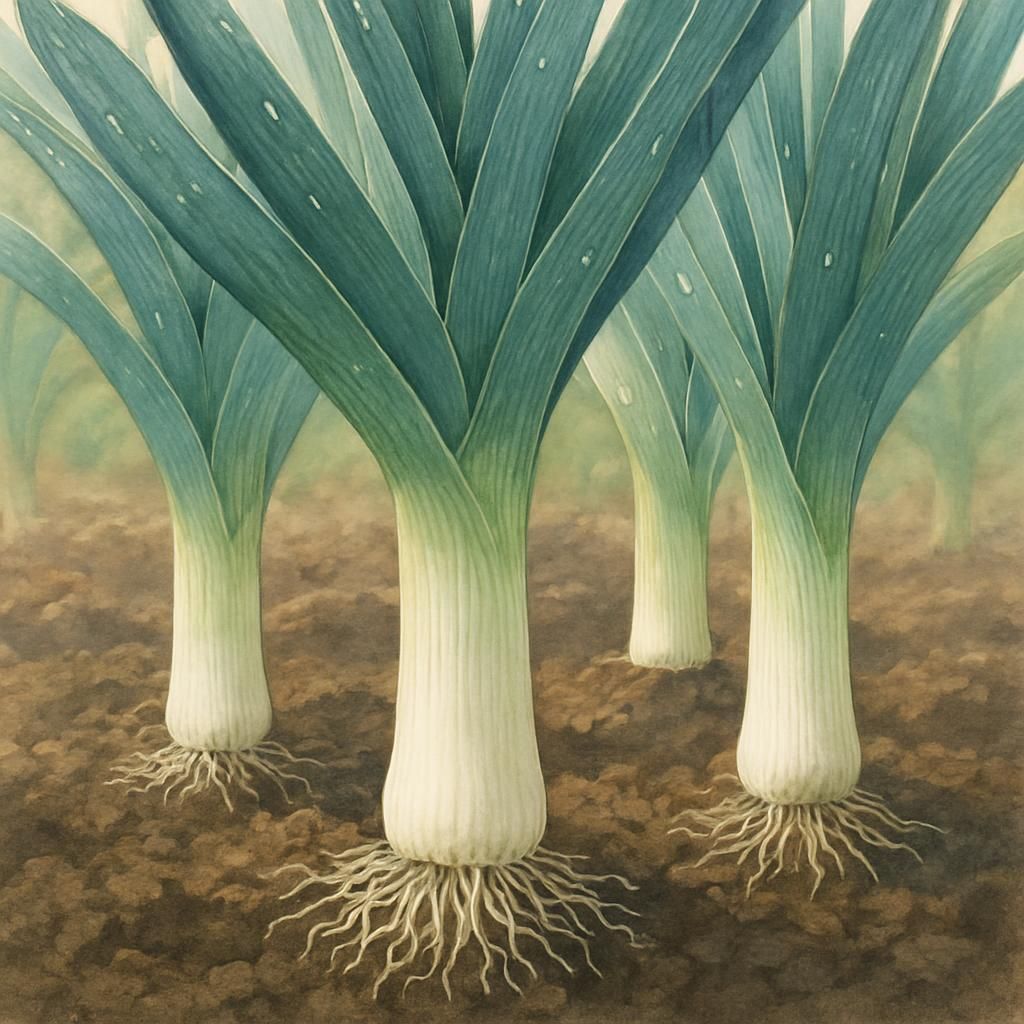
The plants develop long white shanks that can reach 8–12 inches when properly blanched, topped with broad, blue-green leaves. Their mild, sweet taste makes them ideal for soups, stews, roasting, and fresh use. As a cool-season crop, Musselburgh excels in climates with cool summers and cold winters, tolerating temperatures well below freezing.
Professional growers value Musselburgh for its consistent performance, disease resistance, and versatility in both fresh market and processing applications. The variety's long growing season (typically 120–150 days) rewards careful planning and attentive management with superior yields and quality.
Botanical Profile of Leek (Musselburgh)
Leek (Musselburgh) belongs to the Amaryllidaceae family and is botanically classified as Allium ampeloprasum var. porrum 'Musselburgh'. Unlike bulb-forming onions, leeks produce elongated pseudostems formed by overlapping leaf bases.
The plant features a fibrous root system that anchors deeply into the soil, supporting tall, upright growth. Leaves emerge in a fan-like arrangement, with the lower portions tightly wrapped to form the characteristic white shank. The blue-green foliage is waxy and resistant to frost damage.
Flowering occurs in the second year if plants are overwintered, producing tall scapes with spherical umbels of small, white to pale purple flowers. Seed production requires cross-pollination by insects, though most commercial production relies on vegetative propagation or purchased seed.
Soil, pH, and Climate Requirements for Leek (Musselburgh)
Musselburgh leeks demand fertile, well-drained soils with consistent moisture availability. Heavy clay soils should be amended with organic matter to improve structure and drainage, while sandy soils benefit from compost additions to enhance water retention.
| Parameter | Ideal Range | Notes |
|---|---|---|
| Soil Type | Loamy to sandy loam | Deep, friable structure essential |
| Soil pH | 6.0 – 7.0 | Slightly acidic to neutral preferred |
| Temperature (Growth) | 13–24°C (55–75°F) | Cool conditions promote shank development |
| Frost Tolerance | Down to -15°C (5°F) | Excellent winter hardiness |
| Sunlight | Full sun (6–8 hours) | Partial shade acceptable in warm climates |
| Soil Moisture | Consistent, never waterlogged | 25–30 mm/week during active growth |
Site selection should prioritize locations with good air circulation to minimize disease pressure while ensuring protection from strong winds that can damage foliage.
Step-by-Step Planting & Propagation
Successful Musselburgh production begins with quality seed selection and proper timing. Start seeds indoors 10–12 weeks before the last expected spring frost for early summer transplants, or direct sow in late summer for overwintering crops.
Prepare seedbeds by incorporating well-rotted compost to a depth of 30 cm. Sow seeds 1 cm deep in rows spaced 30 cm apart, thinning seedlings to 10–15 cm within rows once they reach 10 cm in height.
Transplant seedlings when they are pencil-thick, typically 15–20 cm tall. Create trenches 15–20 cm deep and plant seedlings at the bottom, gradually filling trenches as plants grow to encourage blanching of the lower stems.
For continuous harvest, succession plant every 3–4 weeks during the appropriate planting window. Maintain soil temperature between 10–20°C for optimal germination, which typically occurs within 7–14 days.
Care & Maintenance regimes for Leek (Musselburgh)
Consistent care throughout the growing season ensures maximum shank length and quality. Focus on maintaining even soil moisture, providing balanced nutrition, and implementing proper blanching techniques.
| Task | Frequency | Details |
|---|---|---|
| Watering | 2–3 times weekly | Deep watering to 15 cm; avoid overhead irrigation to reduce disease |
| Fertilizer | Every 3–4 weeks | High-nitrogen organic fertilizer (e.g., fish emulsion or compost tea) |
| Hilling | Monthly until maturity | Gradually mound soil around stems to increase white shank length |
| Weeding | Weekly | Shallow cultivation to avoid root damage; mulch to suppress weeds |
| Mulching | After establishment | 5–8 cm organic mulch layer to conserve moisture and moderate soil temp |
Monitor plants for nutrient deficiencies, particularly nitrogen, which manifests as yellowing of older leaves. Side-dress with compost or approved organic fertilizers as needed.
Pests, Diseases & Organic Management
Musselburgh leeks face several common threats including onion thrips, leek moth, and aphids. Early detection and integrated management strategies are essential for maintaining crop health.
Organic control measures include floating row covers during early growth stages, beneficial insect releases such as ladybugs and lacewings, and regular scouting. Neem oil and insecticidal soaps provide effective contact control when populations exceed threshold levels.
Diseases such as rust, purple blotch, and downy mildew can affect leeks under humid conditions. Cultural practices including proper spacing, crop rotation with non-allium crops, and removal of crop debris significantly reduce disease incidence.
Avoid planting leeks near onion or garlic crops to minimize shared pest and disease pressures. Soil solarization and compost tea applications further enhance plant resilience.
Harvesting, Curing & Optimal Storage
Musselburgh leeks reach harvest maturity when shanks measure 2–3 cm in diameter and 20–30 cm in length, typically 120–150 days after sowing. Harvest by loosening soil around plants and gently lifting to avoid damage.
For overwintering, leave plants in the ground where they can tolerate freezing temperatures; mulch heavily with straw for protection. Harvest as needed throughout winter until soil freezes solid.
Post-harvest, trim roots and outer damaged leaves, then wash thoroughly. Store at 0–2°C with 95–100% relative humidity for up to 2–3 months. Leeks can also be blanched and frozen for longer-term preservation.
Curing is not required but allowing harvested leeks to air-dry briefly before storage reduces moisture-related spoilage. Avoid storing near ethylene-producing fruits to prevent premature senescence.
Companion Planting for Leek (Musselburgh)
Leeks benefit from strategic companion planting that enhances growth, deters pests, and improves soil health. Compatible partners include carrot, celery, and strawberry, which help mask leek scents from pests.
Avoid planting near beans, peas, or sage as these may inhibit leek growth through allelopathic effects. Marigold and nasturtium serve as effective trap crops and pollinator attractants when interplanted.
Onion and garlic should be avoided as companions due to shared susceptibility to pests and diseases. Deep-rooted companions like parsley can improve soil structure without competing for nutrients.
Crop rotation with brassicas, legumes, and root vegetables maintains soil fertility and breaks pest cycles effectively over multiple seasons.