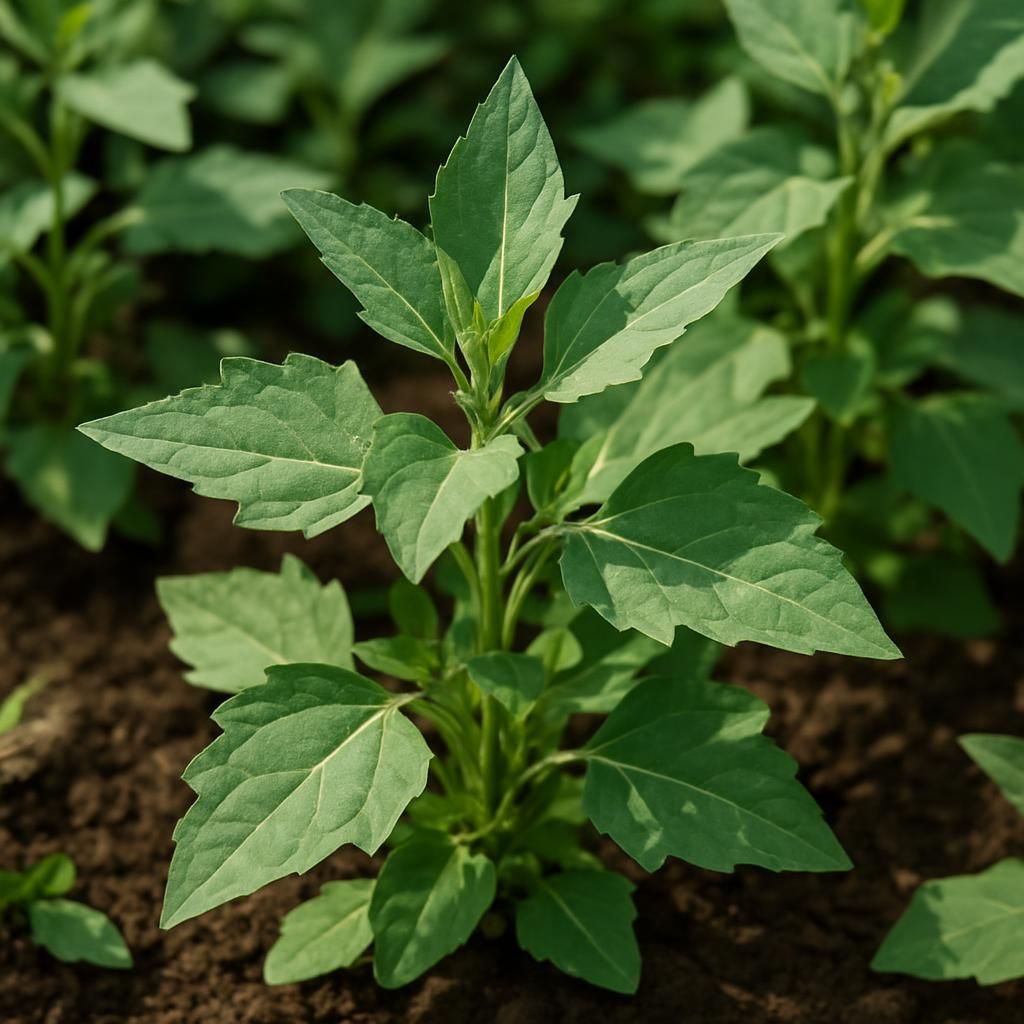
Introduction to lambsquarters
Lambsquarters, scientifically known as Chenopodium album, is one of the most nutritious and adaptable leafy greens available to home gardeners and commercial growers alike. Often dismissed as a common weed, this annual plant has been cultivated for thousands of years across Europe, Asia, and the Americas for both its vitamin-rich foliage and its edible seeds. The plant is exceptionally high in vitamins A and C, calcium, iron, and complete protein, making it a valuable addition to any diet. Its rapid growth cycle and tolerance for poor soils allow it to thrive where many other crops struggle, positioning it as an ideal choice for sustainable and low-input agriculture.
Beyond nutrition, lambsquarters plays an important ecological role. It improves soil structure through its deep taproot, which brings nutrients from deeper soil layers to the surface. The plant also serves as a beneficial insect habitat and can act as a living mulch when managed correctly. Whether grown intentionally or foraged responsibly, lambsquarters offers growers a dual-purpose crop that supports both food security and soil health.
Botanical Profile of lambsquarters
Lambsquarters belongs to the Amaranthaceae family and is characterized by its upright, branching habit reaching 0.3–2 meters in height. Young plants display distinctive diamond-shaped or triangular leaves with a mealy, silvery coating on the undersides that helps reduce water loss. The stems are often streaked with purple or red and become woody as the plant matures. Small, inconspicuous green flowers form dense clusters at the stem tips and leaf axils, eventually producing thousands of tiny black seeds.
The seeds are lens-shaped and highly nutritious, containing up to 16% protein along with essential amino acids. Because lambsquarters self-seeds prolifically, careful management is required to prevent unwanted spread while still allowing for seed saving. The plant’s ability to produce both abundant foliage and seed makes it a versatile crop for both fresh eating and grain production.
Soil, pH, and Climate Requirements for lambsquarters
Lambsquarters is remarkably adaptable but performs best under specific conditions. The following table outlines the ideal parameters for successful cultivation:
| Parameter | Ideal Range | Notes |
|---|---|---|
| Soil Type | Loamy to sandy loam | Tolerates clay if well-drained |
| Soil pH | 6.0–7.5 | Slightly acidic to neutral preferred |
| Temperature | 15–28°C (59–82°F) | Germinates at 10°C; heat tolerant |
| Sunlight | Full sun to partial shade | 6+ hours direct sun maximizes leaf quality |
| Moisture | Moderate, well-drained | Avoid waterlogging; drought tolerant once established |
| Fertility | Low to moderate | Excess nitrogen produces lush but less flavorful leaves |
The plant’s resilience allows it to grow in marginal soils, but consistent moisture during establishment improves germination rates and early vigor.
Step-by-Step Planting & Propagation
Site Selection: Choose a location with at least six hours of sunlight. Lambsquarters tolerates a wide range of soil types but benefits from loose, well-drained beds.
Soil Preparation: Loosen soil to 20–30 cm depth. Incorporate 2–5 cm of well-aged compost if fertility is very low. Avoid fresh manure, which can promote excessive leaf growth at the expense of flavor.
Sowing: Direct sow seeds 3–5 mm deep in rows 30–45 cm apart. Thin seedlings to 15–25 cm spacing once they reach 5 cm tall. For continuous harvest, sow every 2–3 weeks.
Transplanting: Although direct seeding is preferred, young plants can be transplanted successfully when they have 2–4 true leaves. Handle gently to avoid damaging the taproot.
Succession Planting: In temperate climates, sow from early spring through midsummer for a steady supply of tender leaves. In warmer regions, plant during cooler months to avoid bolting.
Care & Maintenance regimes for lambsquarters
Proper care ensures high-quality foliage and prevents unwanted seeding. The table below summarizes recommended schedules:
| Task | Frequency | Details |
|---|---|---|
| Watering | 2–3 times per week | Provide 2.5 cm water weekly; increase during heat waves |
| Fertilizer | At planting and mid-season | Side-dress with compost tea or balanced organic fertilizer (NPK 5-5-5) |
| Pruning | Every 3–4 weeks | Pinch growing tips to encourage bushiness and delay flowering |
| Mulching | After thinning | Apply 5 cm organic mulch to retain moisture and suppress weeds |
| Weeding | Weekly until canopy closes | Hand-pull competitors; lambsquarters itself can become weedy if allowed to seed |
Regular monitoring for flowering is essential. Once flower buds appear, leaf quality declines rapidly, so harvest or pinch tops promptly.
Pests, Diseases & Organic Management
Lambsquarters is generally pest-resistant but can be affected by common garden insects and diseases. Aphids may cluster on tender new growth; blast them off with water or apply insecticidal soap. Flea beetles create small holes in leaves—floating row covers during early growth provide excellent protection. Slugs and snails can damage seedlings in moist conditions; use beer traps or diatomaceous earth.
Diseases are rare but include powdery mildew in humid environments and root rot in poorly drained soils. Improve air circulation, avoid overhead watering, and rotate plantings to minimize issues. Because lambsquarters is related to spinach and beet, avoid planting in the same bed consecutively to reduce shared pathogen buildup.
Harvesting, Curing & Optimal Storage
Harvest young leaves when plants are 15–30 cm tall for the mildest flavor and most tender texture. Cut outer leaves or entire tops, leaving the central stem to regrow. For seed production, allow plants to flower and mature seed heads until they turn brown and dry. Cut entire stalks, bundle, and hang upside down in a paper bag to catch falling seeds.
Store fresh leaves in a perforated plastic bag in the refrigerator for up to one week. Blanch and freeze surplus leaves for longer storage. Seeds should be fully dried to below 12% moisture before storage in airtight containers in a cool, dark place; properly stored seeds remain viable for 3–5 years.
Companion Planting for lambsquarters
Lambsquarters pairs well with many garden crops. Plant near tomato and pepper beds to attract beneficial insects while using its deep roots to improve soil. It also grows successfully alongside corn and squash in traditional Three Sisters-style plantings. Avoid planting near slow-growing root crops such as carrot or radish because its rapid growth can shade smaller plants. Because lambsquarters is itself edible, it can serve as a sacrificial crop to draw pests away from more valuable vegetables.
For more on strategic crop pairings that improve resilience, see Summer Companion Planting: 10 Organic Pairings to Boost Small Farm Resilience.