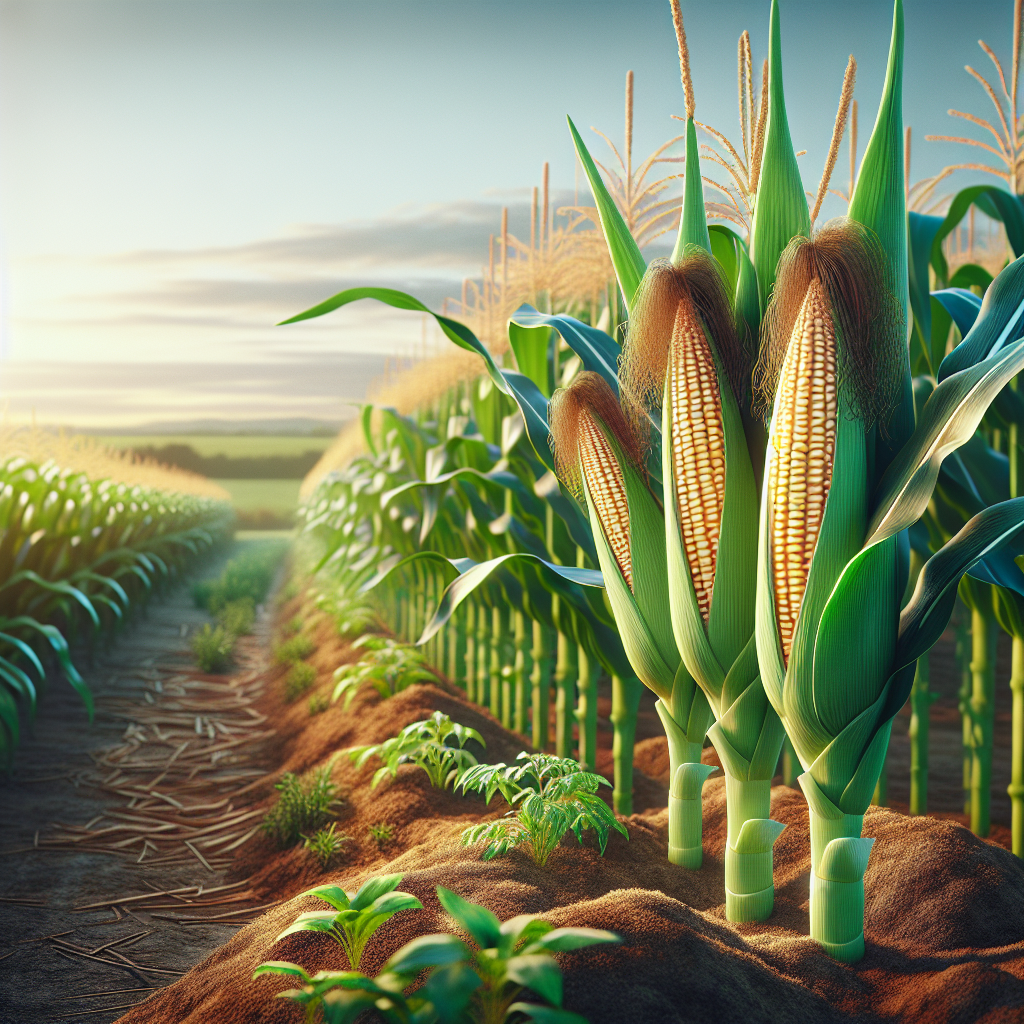
Introduction to Kandy Korn
Kandy Korn is a sweet corn type grown primarily for fresh eating, with ears harvested in the milk stage when sugars are at their peak and kernel texture is still soft and creamy. As with many premium sweet corn cultivars, its reputation rests on flavor first: growers typically select it for pronounced sweetness, attractive ear fill, and tender kernels rather than for grain use or livestock feed.
In practical field terms, this variety should be managed like a high-quality sweet corn rather than a commodity field corn. That distinction matters. Sweet corn is less forgiving of poor fertility, irregular moisture, and weak pollination than many grain corns because the marketable product is the ear itself, not dry grain yield. A crop can look vigorous from a distance and still produce patchy ears, poorly filled tips, or starchy flavor if management is off by even a little.
Historically, sweet corn emerged from naturally occurring mutations that prevented normal conversion of sugar to starch in the endosperm. Modern cultivars refined that trait for better tenderness, sweetness, and holding quality. Kandy Korn belongs in that modern tradition: it is generally best treated as a premium garden or market sweet corn requiring close harvest timing, strong nutrition, and careful isolation from incompatible corn types if seed purity or eating quality is a goal.
For general background on crop structure and pollination biology, see our Corn guide. For broader fertility-building strategies before planting, see soil health tips.
Botanical Profile of Kandy Korn
Kandy Korn is a form of Zea mays in the sweet corn group, usually classified botanically under Zea mays var. rugosa. Unlike dent or flint corn, sweet corn is harvested immature, usually 18 to 24 days after silking depending on heat accumulation and the specific genetics of the cultivar.
Plants are annual warm-season grasses with fibrous root systems, segmented stalks, broad linear leaves, terminal male inflorescences called tassels, and axillary female inflorescences that become ears. Each visible silk corresponds to a single potential kernel. Every kernel must be individually pollinated, so incomplete pollination leads directly to missing kernels, especially at the ear tip.
Kandy Korn is typically characterized by:
- Strong sweetness at harvest
- Tender pericarp relative to tougher older sweet corn lines
- Fresh-market ear quality with good kernel alignment when well pollinated
- A narrower harvest window than starchy field corn because eating quality declines rapidly after peak maturity
Because sweet corn genetics vary, growers should also verify whether the seed lot is standard sugary (su), sugary enhanced (se), or supersweet/shrunken (sh2). This matters enormously in production planning. Sugary types germinate more easily in cool soils but lose sweetness faster after harvest. Sugary enhanced types often combine tenderness with better sugar retention. Supersweets are exceptionally sweet and store better, but seed can be more fragile and demands warmer, well-prepared soil for reliable emergence. If the Kandy Korn seed packet or supplier notes an isolation requirement, follow it strictly.
Mature plants commonly reach 1.5 to 2.4 meters tall depending on fertility, spacing, irrigation, and cultivar background. Ear placement is usually mid-stalk. Most plants produce one primary marketable ear, with occasional secondary ears that are smaller and less uniform.
Soil, pH, and Climate Requirements for Kandy Korn
This crop performs best in deep, friable, well-drained loam or sandy loam with high biological activity and consistent nutrient availability. Ideal soil pH is 6.0 to 6.8, with 6.2 to 6.5 especially favorable for nitrogen uptake, phosphorus availability, and balanced micronutrient access. It will tolerate roughly 5.8 to 7.2, but outside that range yield and kernel quality tend to slip.
Avoid compacted subsoils, crust-prone clay surfaces, and waterlogged ground. Sweet corn roots need oxygen; if water stands more than 24 hours after heavy rain, root stress becomes likely. In saturated conditions, roots lose vigor, leaf color turns pale rather than healthy green, and plants may show temporary wilting even though soil is wet. That paradox is a classic sign of oxygen-starved roots.
The ideal soil profile should:
- Drain freely while holding moisture evenly
- Contain at least 3 to 5% organic matter for moisture buffering
- Be free of hardpan in the top 25 to 35 cm
- Test moderate to high in phosphorus and potassium before planting
Climate-wise, Kandy Korn needs warmth and full sun. Target a growing temperature range of 18 to 30°C, with fastest growth typically around 24 to 29°C. Germination is best when soil temperature at planting depth is at least 16°C, and more reliably vigorous above 18°C. Below about 10°C, emergence becomes poor and seed rot risk rises sharply.
Sweet corn is highly frost sensitive at all stages. Seedlings exposed to frost can be killed outright, while cool nights after planting may stunt growth and create uneven stands. Uneven stands often lead to uneven tasseling and silking, which reduces pollination quality.
A full-season crop generally needs 500 to 700 mm of total water, depending on soil type, evaporative demand, and season length. The most critical periods are:
- Emergence and early establishment
- Rapid vegetative growth from knee-high through tasseling
- Silking and kernel fill
Soil moisture should be maintained at approximately 60 to 80% of field capacity during active growth, rising toward the upper end during tasseling and silking. In simpler terms, the root zone should feel evenly moist, not sticky-saturated and not dusty-dry. If you squeeze a handful from the top 10 to 15 cm, it should form a weak ball that breaks apart with light pressure. If it smears, it is too wet; if it will not hold together at all during hot weather, irrigation is overdue.
Step-by-Step Planting & Propagation
Kandy Korn is propagated by seed. Direct sowing is strongly preferred because corn dislikes root disturbance and transplants often lag behind direct-seeded plants.
Prepare the bed thoroughly. Work soil to a fine, firm tilth. Remove perennial weeds, break clods, and incorporate finished compost or well-aged manure several weeks before sowing. Fresh manure immediately before planting can drive excessive vegetative growth and increase disease pressure.
Base fertilize according to a soil test. As a broad professional guideline, sweet corn responds well to moderate to high nitrogen, adequate phosphorus for early root development, and strong potassium for stress tolerance and ear quality. A preplant incorporation may include a balanced organic or conventional fertilizer supplying roughly 25 to 40% of seasonal nitrogen, all needed phosphorus, and most potassium.
Wait for warm soil. Sow only after danger of frost has passed and soil at 5 cm depth remains consistently above 16°C in the morning. Cold planting is one of the most common causes of erratic stands.
Plant in blocks, not single rows. Corn is wind pollinated, so at least four short rows are better than one long row. This improves pollen distribution and ear fill. Home growers often fail here; a visually neat single row often produces disappointingly incomplete ears.
Sow at the correct depth. Place seed 2.5 to 4 cm deep in moist soil. Use the shallower end in heavier soils and the deeper end in lighter, warmer soils. If the surface is dry but moisture is present lower down, plant to moisture rather than irrigating tiny shallow seed into a crusting zone.
Use appropriate spacing. For hand-managed sweet corn, aim for 20 to 30 cm between plants within the row and 75 to 90 cm between rows. Higher density can work in fertile, irrigated soils, but overcrowding often produces smaller ears and more tip blanking. A practical field density is commonly 45,000 to 60,000 plants per hectare for quality sweet corn, adjusted for cultivar vigor.
Thin promptly if over-seeded. Thin when seedlings have 2 to 3 true leaves. Delayed thinning wastes nutrients and increases competition stress.
Stagger plantings for continuous harvest. Sow every 10 to 14 days rather than planting the entire patch at once. This is especially important with premium sweet cultivars, because peak harvest quality is brief.
Isolate from other corn if needed. If nearby dent, popcorn, or other sweet corn varieties flower at the same time, cross-pollination can alter kernel quality in the current crop, especially with certain sweet corn genetic classes. Maintain isolation by distance or flowering time where practical.
Care & Maintenance regimes for Kandy Korn
Early growth should be fast and uninterrupted. Any stress before tasseling can reduce final ear size because the plant is determining its reproductive potential well before you see ears.
Irrigation: Provide deep, even watering rather than shallow frequent sprinkles. As a rule, supply 25 to 40 mm of water per week in mild conditions, rising to 40 to 50 mm during hot weather and the reproductive stage, unless rainfall covers the requirement. On sandy soils, split irrigation into smaller, more frequent applications because leaching is higher. During silking, do not allow the top 15 to 20 cm of soil to dry substantially. Moisture stress at this stage leads to poor silk emergence, pollen desiccation, and patchy kernels.
Signs Kandy Korn needs water include dull blue-green foliage, leaf rolling by late morning rather than only during the hottest hour, slowed stem elongation, and silks that emerge weakly or dry prematurely. Signs of overwatering include persistent pale leaves, sour-smelling soil, algae on the bed surface, lower leaf yellowing despite adequate fertility, and lodging from shallow roots.
Nitrogen management: Sweet corn is a heavy feeder, especially from the 6-leaf stage through tasseling. Side-dress nitrogen when plants are about 20 to 30 cm tall and again just before rapid stem extension if growth is not robust. Total seasonal nitrogen often falls in the range of 100 to 180 kg/ha depending on soil organic matter, previous crop, and yield target. Excess nitrogen late in the season can delay maturity and produce lush foliage at the expense of ear quality, so feed assertively early and judiciously later.
Weed control: The first 4 to 6 weeks are critical. Keep the crop weed-free early because corn is a poor competitor before canopy closure. Use shallow cultivation to avoid pruning feeder roots. Organic mulches can help conserve moisture, but apply only after soil has warmed; heavy early mulch can delay growth in cooler climates.
Hilling: Lightly draw soil around the base when plants are 30 to 45 cm tall. This encourages brace root support and reduces lodging in wind. Do not bury the whorl.
Micronutrients: Zinc deficiency sometimes appears in high-pH or cold soils as pale striping or banding on younger leaves. Sulfur deficiency can resemble nitrogen deficiency but often shows first on newer growth. Correct based on tissue testing where possible, especially in commercial production.
Pollination support: In small plantings, a calm weather period during pollen shed may reduce pollination. Gently shaking stalks in late morning for several consecutive days while silks are fresh can improve kernel set.
Pests, Diseases & Organic Management
The most common production problems are often preventable with sanitation, rotation, balanced fertility, and good timing.
Insect pests:
- Corn earworm is often the most damaging pest in sweet corn because larvae feed directly in the ear tip. Monitor as silks emerge. In organic systems, timely applications of Bacillus thuringiensis var. kurstaki or spinosad to fresh silks can reduce damage, though repeated treatment may be necessary under heavy pressure.
- Fall armyworm may attack whorls and ears, causing ragged leaves and frass deep in the growing point.
- European corn borer can tunnel in stalks and ears, weakening plants and reducing marketability.
- Aphids occasionally cluster on tassels and leaves, especially under excess nitrogen. They rarely justify panic unless populations explode and beneficial insects are absent.
- Seedcorn maggot and Wireworms are more likely in cold, wet soil or fields recently in sod or undecomposed organic matter.
Disease issues:
- Common rust appears as cinnamon-brown pustules on leaves, especially under humid conditions.
- Northern corn leaf blight causes elongated gray-green lesions that reduce photosynthetic area.
- Smut forms swollen galls on ears, tassels, or stems after injury or stress.
- Damping-off can wipe out seedlings in cold, wet soils.
- Stalk rots become more likely where drainage is poor or fertility is imbalanced.
Organic management principles:
- Rotate away from corn and other grasses for at least 2 to 3 years where space allows.
- Destroy post-harvest residues if borers or foliar disease were severe.
- Avoid excessive nitrogen, which can increase lush vulnerable tissue.
- Keep the crop evenly watered; drought stress followed by sudden irrigation often amplifies disease and ear defects.
- Encourage beneficial insects with flowering borders such as Nasturtium and Yarrow, while keeping airflow open in the corn block itself.
- Scout twice weekly from the 6-leaf stage onward, and every 2 to 3 days during silking.
Birds, raccoons, and deer can be major non-insect pests. Physical exclusion is often the only reliable solution. Harvesting promptly at peak maturity also reduces mammal damage.
Harvesting, Curing & Optimal Storage
Sweet corn is not cured like dry grain corn. It is harvested for immediate eating quality, and sugar loss begins as soon as ears are picked.
Harvest usually occurs about 18 to 24 days after silks first emerge, though heat and cultivar class shift that window. The best indicators are physical, not calendar-based:
- Silks turn brown and dry, but the husk remains green
- Ear feels full to the tip when gently squeezed
- Kernels near the ear midpoint exude a milky sap when punctured
- Kernels are plump, glossy, and fully expanded, not watery-flat or doughy-starchy
Pick in the cool of early morning for best sugar retention. Hold the stalk with one hand, twist the ear downward sharply with the other, and avoid tearing excessive stalk tissue.
For premium flavor, hydro-cool or refrigerate immediately after harvest. The target storage temperature is 0 to 2°C with 95 to 98% relative humidity. At room temperature, sugars convert to starch very quickly and eating quality drops within hours. Under cold storage, quality may remain good for 5 to 7 days, sometimes a bit longer depending on genetic type and harvest maturity.
Do not husk for storage unless necessary. Husks protect against moisture loss and mechanical injury. Avoid storing ears with ethylene-producing fruits if possible, and never leave harvested corn in the sun in bins or on trailers.
If freezing, blanch cut kernels or whole cobs briefly according to size, chill rapidly, drain well, and pack airtight. For seed saving, only do so if isolation was maintained and the variety is open-pollinated; many commercial sweet corns are hybrids and will not come true.
Companion Planting for Kandy Korn
The most functional companions are those that improve biological balance, suppress weeds, or make better use of vertical space without severely competing during the corn’s critical establishment phase.
Pole or climbing beans are a classic partner because they can use the stalks as support and contribute biologically fixed nitrogen to the system over time, though they should not be sown so early that they overrun young corn. In mixed plantings, wait until corn is well established before adding beans. Low, broad-leaved squash can also serve as a living mulch, shading soil, reducing evaporation, and suppressing weeds between rows.
For pest management and beneficial insect support, flowering allies such as Thyme and Clover can be useful on borders or adjacent strips rather than directly crowding the root zone. Clover is especially helpful as a living understory in wider plantings when carefully managed so it does not compete for moisture during tasseling and ear fill.
Good companion design for Kandy Korn follows a few rules:
- Keep the corn dominant in the system during the first month
- Avoid dense companions that shade seedlings early
- Maintain excellent airflow to reduce foliar disease
- Do not allow companion roots to outcompete corn for water at silking
- Place insectary species on margins if space is limited
Avoid planting next to other corn types that may cross-pollinate if you want predictable sweetness and kernel quality. Also avoid highly competitive tall crops immediately south of the block in northern hemisphere plantings, since corn demands full sun for high sugar production and strong ear fill.