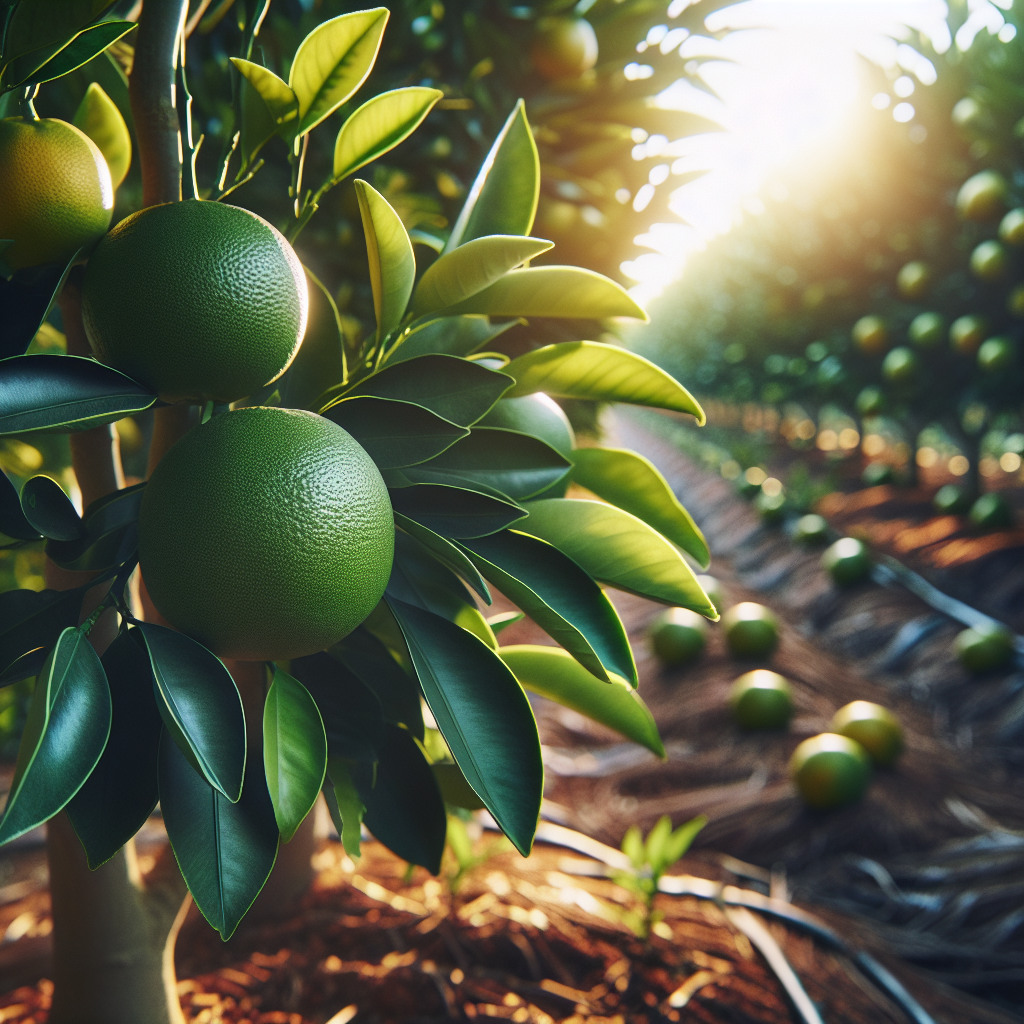
Introduction to Kabosu
A traditional Japanese citrus associated especially with Oita Prefecture, this fruit is valued less as a fresh-eating orange and more as a seasoning citrus. The fruit is typically harvested while still green for a sharper, fresher aroma, though fully mature yellow fruit develops a softer acidity and slightly fuller juice profile. Its culinary identity is comparable to other East Asian sour citrus, and growers familiar with Yuzu will recognize some similarities in orchard management, though kabosu is generally grown for somewhat different harvest timing and market use.
Historically, kabosu has been cultivated in Japan for centuries, with regional selection favoring high juice content, aromatic rind oils, and reliable fruit set under humid summer conditions. Commercial demand often centers on fruit appearance as much as juice quality: smooth skin, medium size, strong green color at early harvest, and minimal blemishing command higher prices. For small growers, that means orchard hygiene, balanced nitrogen, and careful pest suppression matter just as much as yield.
Kabosu can be productive in the ground in mild subtropical to warm temperate districts and also adapts reasonably well to large-container culture where winters are too cold. It is not the easiest citrus for marginal climates because flowers, young shoots, and small fruit can all be damaged by frost. Still, where drainage is excellent and winter lows are moderated, it can become a long-lived, highly ornamental, and economically useful tree.
Botanical Profile of Kabosu
This citrus is commonly placed under Citrus sphaerocarpa, though citrus taxonomy is notoriously complex and overlapping parentage is common across regional acid citrus types. The tree is evergreen, moderately vigorous, and typically develops a rounded canopy with dense branching if not thinned. Leaves are glossy, deep green, and aromatic when crushed, with winged petioles that can vary depending on rootstock and local strain.
Fruit are usually round to slightly flattened, medium-small, and borne singly or in clusters. The rind is relatively smooth to slightly pebbled, thin to medium in thickness, and rich in essential oils. At the preferred culinary harvest stage, peel color is deep green; if left longer, it turns yellow as chlorophyll degrades and carotenoid pigments become visible. Unlike sweet oranges, internal maturity is not judged only by sugar accumulation. In kabosu, acidity, volatile aroma compounds, juice percentage, and peel quality all matter.
Trees may show some thorniness, especially in juvenile growth or on vigorous water sprouts. Mature height depends heavily on rootstock and pruning system. On dwarfing rootstocks and in containers, trees may be maintained at 1.5-2.5 m. In open ground on standard rootstocks, trees can reach 3-5 m or more if unmanaged. The species is generally self-fertile, so a single tree can bear fruit, though good pollinator activity during bloom often improves fruit set consistency.
Flowering usually occurs in spring after the first flush of active growth. Blossoms are white, fragrant, and attractive to bees and other pollinating insects. Fruit development extends through the warm season into autumn, when the main harvest usually begins. As with many citrus, kabosu may display alternate bearing if trees are stressed, overcropped one year, or pruned/fertilized poorly. Managing crop load and maintaining even vigor are key to annual consistency.
Soil, pH, and Climate Requirements for Kabosu
The single most important site requirement is drainage. Kabosu tolerates regular moisture far better than waterlogging. Ideal soil is a deep, well-aerated loam or sandy loam with moderate organic matter and rapid internal drainage. Heavy clay can be used only if the planting area is raised significantly and surface runoff is controlled. If water remains in the root zone for more than 24-48 hours after rain, root decline and Phytophthora risk rise sharply.
Optimal soil pH is 5.8-6.8. It will usually perform acceptably up to about 7.2 if micronutrients are monitored, but iron, manganese, and zinc deficiencies become more likely in alkaline soils. In calcareous sites, leaves may yellow between veins while veins remain green, especially on young flushes. That symptom is frequently misdiagnosed as nitrogen deficiency, but with citrus it often indicates iron chlorosis from high pH. If pH is above 7.5, long-term production becomes difficult unless rootstock and fertility are managed very carefully.
Soil organic matter in the 3-5% range is excellent for field production. Too little organic matter reduces moisture buffering and biological activity; too much poorly decomposed material packed into the planting hole can create a perched water table. Never backfill planting holes with pure compost. Use mostly native soil with only modest organic amendment blended thoroughly into the broader root zone.
Kabosu prefers warm, humid to moderately humid conditions with full sun. Ideal growing temperatures are roughly 20-32°C during the active season. Growth slows below about 13°C, and cold injury becomes increasingly likely near freezing, particularly on young wood. Established trees may survive brief light frost depending on rootstock, site exposure, and acclimation, but damage to flowers and young fruit can occur even before wood is badly injured. Prolonged temperatures below -2 to -3°C are risky, and colder events can kill branches or entire young trees.
For best flowering and fruit quality, provide at least 6-8 hours of direct sun daily. In very hot inland climates above 38°C, reflected heat and desiccating winds can scorch leaves and fruit, especially when soil moisture fluctuates. Wind protection is valuable because citrus leaves transpire heavily under dry wind, and rind blemishing can reduce marketability. Good air movement is still important, however, to reduce fungal pressure. The goal is filtered protection, not a stagnant enclosed microclimate.
If you are improving orchard soil structure before planting, broad practices used in perennial fruit systems are more useful than hole-by-hole amendment; see soil health basics.
Step-by-Step Planting & Propagation
Propagation from seed is possible but not recommended for commercial or true-to-type production. Seedlings can vary in vigor, thorniness, fruit quality, and time to bearing. Most serious growers use grafted trees on selected rootstocks for uniformity, disease tolerance, and size control.
Choose nursery trees with a straight central stem, healthy green leaves, no trunk wounds, and a visible, sound graft union. Avoid pot-bound trees with circling roots, weak yellow foliage, or suckers emerging below the graft. Rootstocks commonly used for sour citrus vary by region, but priorities usually include tolerance to local soil pH, Phytophthora pressure, cold risk, and final tree size.
Plant in spring after frost danger has passed in marginal climates, or in early autumn in reliably mild regions where roots can establish before winter. In humid subtropics with intense rainy seasons, avoid planting immediately before the wettest period unless drainage is already excellent.
- Select a site with full sun and no standing water.
- Test soil pH and drainage. Dig a hole 30-40 cm deep, fill with water, and ensure it drains within several hours rather than remaining saturated the next day.
- Clear perennial weeds in at least a 1 m diameter circle.
- Dig a hole about twice the width of the root ball but no deeper than the root ball height.
- Set the tree so the top of the root ball sits 2-5 cm above surrounding soil grade. This slight elevation helps protect the crown from settling and excess moisture.
- Keep the graft union clearly above soil level at all times.
- Backfill with native soil, firming lightly to eliminate large air pockets without compacting.
- Water deeply immediately after planting to settle soil around roots.
- Apply 5-8 cm of mulch over the root zone, but keep mulch 10-15 cm away from the trunk.
- Stake only if wind is severe; remove ties once the tree stabilizes.
Spacing depends on vigor and management. For home orchards, 3-4.5 m between trees is common. For tighter plantings on smaller rootstocks, 2.5-3 m may work with regular pruning. In commercial settings, row spacing must also allow sprayer, mowing, and harvest access.
For container growing, start with at least a 40-60 L pot and move to larger containers as needed. Use a sharply drained citrus mix containing coarse bark, pumice or perlite, and a modest fine fraction for moisture retention. Containers must have large drainage openings. The most common failure in potted kabosu is not underwatering but chronic overwatering in dense media. If the mix remains wet and cool for many days, feeder roots die back and leaves yellow, curl, and drop.
Grafting methods include T-budding and chip budding onto compatible citrus rootstock. Perform budding when bark is slipping well and after selecting disease-free scion wood from productive, true-to-type trees. Remove rootstock shoots regularly so scion growth dominates.
Care & Maintenance regimes for Kabosu
Irrigation should be consistent but never stagnant. Young trees need frequent establishment watering because their root systems are small and concentrated. During the first 8-12 weeks after planting, water deeply enough to moisten the entire root ball and the adjacent soil, usually 10-20 L per watering for small trees depending on soil type, 2-3 times per week in warm weather. Sandy soils may require more frequent irrigation; heavier loams require less.
After establishment, allow the top 3-5 cm of soil to begin drying before the next irrigation, while deeper soil remains lightly moist. In practical terms, the root zone should feel cool and slightly moist at 10-15 cm depth, not muddy, sour-smelling, or airless. Mature in-ground trees often do well with deep irrigation every 7-14 days in dry weather, adjusted for rainfall, soil texture, and canopy size. Drip irrigation is ideal because it keeps foliage dry and delivers slow infiltration.
Signs of underwatering include dull leaves, midday wilting that persists into evening, curled young flush, fruit drop, and dry soil pulling away from the root ball. Signs of overwatering include yellowing leaves that do not perk up after irrigation, leaf drop without crispness, blackened feeder roots, algal growth on the soil surface, and a fermented or swampy smell in the root zone. Citrus roots need oxygen continuously; prolonged saturation is more dangerous than a short dry spell.
Fertilization should be modest and regular rather than heavy and sporadic. Kabosu responds well to split applications of a citrus fertilizer with nitrogen plus magnesium and micronutrients. Young trees may receive 3-4 light feedings from spring through midsummer. Mature trees are commonly fed 2-3 times between spring flush and early summer, with rates adjusted to canopy size and cropping level. Excess nitrogen late in the season encourages soft growth that is more vulnerable to cold, pests, and rind quality problems.
A useful nutrient target is steady leaf color and moderate flush growth, not excessive rank shoot extension. Pale older leaves may indicate nitrogen shortage; interveinal chlorosis on younger leaves suggests iron, manganese, or zinc issues, especially in alkaline soils. Foliar micronutrient sprays can correct transient deficiencies, but long-term correction depends on root-zone pH and root health.
Pruning is primarily for structure, light penetration, sanitation, and size control. Remove dead, diseased, crossing, and inward-growing shoots. Eliminate vigorous water sprouts that crowd the center or arise below the graft. Major pruning is best done after harvest or before strong spring flush, depending on climate. Avoid severe pruning in late autumn because it can stimulate tender regrowth before cold weather. Maintain enough canopy to shade scaffold limbs; sudden exposure can cause sunburn on bark.
Fruit thinning is not always necessary, but in years of very heavy set, selective thinning can improve fruit size and reduce alternate bearing. Support young trees by removing most fruit in the first 1-2 years so energy goes into root and canopy establishment.
Mulch is highly beneficial. A 5-8 cm layer of coarse organic mulch moderates soil temperature, reduces weed competition, and improves soil biology. Keep the mulch ring wide as the canopy expands, but never pile mulch against the trunk. Weed competition is especially harmful in the first few years because shallow feeder roots occupy the same zone as grasses and annual weeds.
Cold protection is essential in marginal regions. Before frost events, water the soil thoroughly if it is dry, because moist soil stores more heat than dry soil. Use frost cloth over small trees, supported so fabric does not crush foliage. Avoid plastic touching leaves during freezing conditions. Whitewash exposed trunks if winter sun follows hard frosts, reducing bark splitting.
Pests, Diseases & Organic Management
Like many citrus, kabosu can host aphids, scale insects, mealybugs, spider mites, citrus leaf miner, whiteflies, and occasionally thrips. Young flushes are especially vulnerable. aphids and soft scales excrete honeydew, which leads to sooty mold that blackens leaves and fruit surfaces. Mild infestations are often best managed by encouraging beneficial insects and avoiding excess nitrogen, which produces lush pest-prone growth.
leaf miner causes serpentine trails in tender leaves. Damage is usually cosmetic on mature trees but can distort young nursery trees badly enough to slow canopy formation. Protecting major flushes with kaolin clay or well-timed horticultural oils can help, but avoid spraying oils during very hot weather or on drought-stressed trees.
spider mites increase under hot, dusty, dry conditions. Fine stippling, bronzing, and leaf drop are typical signs. Wash dust from foliage and improve irrigation regularity. Broad-spectrum insecticides often worsen mite problems by removing predators, so organic management should prioritize biological balance and targeted sprays only when thresholds are exceeded.
Disease pressure is strongly linked to water management. Phytophthora root rot and collar rot are among the most serious problems where drainage is poor or mulch contacts the trunk. Symptoms include sparse canopy, leaf yellowing, twig dieback, gummy bark lesions at the crown, and progressive decline despite watering. Prevention is far more effective than treatment: plant high, drain well, irrigate wisely, and keep the crown dry.
sooty mold, melanose, greasy spot, and other fungal blemishes may appear in humid regions, especially where canopies remain dense or insect honeydew is present. Improve air movement by selective pruning and promptly control sap-feeding pests. Remove fallen diseased fruit and prune out dead twigs that serve as inoculum reservoirs.
citrus canker and other serious bacterial or quarantine diseases depend on region and local regulation. Always source certified clean nursery stock. Sanitize pruning tools between trees if disease is suspected. Avoid working among wet trees when bacterial disease is present, since splashing spreads inoculum.
Organic management works best as an integrated system:
- use clean planting material
- maintain balanced fertility
- keep trees unstressed but not waterlogged
- monitor new flushes weekly during peak pest season
- release or conserve beneficial insects
- use insecticidal soap, horticultural oil, or neem only when necessary and with attention to temperature and label safety
- remove heavily infested shoots on young trees when practical
Bird pecking and rind scratches can also reduce market quality. If fruit are grown for premium fresh sale, orchard netting or visual deterrents may be justified in small plantings.
Harvesting, Curing & Optimal Storage
Kabosu is usually harvested based on intended use rather than waiting for maximum sweetness. For the classic seasoning market, fruit are picked green when fully sized, aromatic, and juicy but before yellowing is advanced. At this stage, acidity is bright, peel oils are fresh, and the exterior has the premium appearance many buyers want. For juice processing or household use, slightly more mature fruit can be allowed to color further.
Harvest by clipping fruit with hand pruners, leaving a very short stem or trimming flush to avoid puncturing neighboring fruit. Never yank fruit from the tree, since torn rind increases decay risk and may damage spurs. Harvest only when fruit surfaces are dry to reduce postharvest disease spread.
Maturity indicators include full size for the cultivar strain, heavy feel for size, developed aroma in the rind, and adequate juice percentage. Skin color alone can mislead because shading, nutrition, and temperature all influence greenness. Sample fruit for juice yield and flavor before making large harvest decisions.
Unlike storage roots or dry bulbs, kabosu does not require curing in the classic sense. What it does benefit from is careful postharvest conditioning: keep fruit shaded, cool promptly after harvest, and avoid piling deeply in the field where heat builds up. Wash only if necessary and dry completely before packing.
Ideal storage is around 8-12°C with high relative humidity, roughly 85-90%. Lower temperatures may risk chilling injury in some citrus, while warmer storage shortens shelf life and increases weight loss. Under good conditions, sound fruit may store for 2-4 weeks, sometimes longer, but aroma quality is best when marketed promptly. Green fruit lose color quality and freshness faster if stored too warm or too dry.
For home use, refrigeration in a breathable bag helps preserve moisture, but fruit should still be used relatively quickly for best aroma. Juice can be frozen in small portions, and zest may be preserved, though fresh rind oils are one of the fruit's greatest assets.
Companion Planting for Kabosu
The best companions are those that attract beneficial insects, suppress aggressive weeds, protect soil, and avoid strong competition with shallow citrus feeder roots. Low-growing flowering herbs and insectary plants are usually better choices than tall annual vegetables planted too close to the trunk.
Thyme works well near the outer root zone as a living mulch in dry climates, provided irrigation is not excessive. It helps cover bare ground, draws pollinators when blooming, and does not usually become a rampant competitor. Clover can function as a nitrogen-contributing groundcover between rows or in wider orchard alleys, though it should be managed so it does not create constant humidity right against the trunk. Yarrow is especially useful as an insectary species that attracts predatory wasps, hoverflies, and other beneficials. Nasturtium can also serve as a trap and pollinator-support plant in diversified garden systems.
Keep companion plants at least 30-60 cm away from the trunk on young trees so the base stays dry and visible for inspection. In high-rainfall climates, maintain an open mulch ring immediately around the trunk even if living groundcovers are used farther out. Avoid planting heavy feeders such as large brassicas or sprawling cucurbits directly under the canopy, where they compete for moisture and complicate harvest and pest scouting.
In commercial orchards, the most effective companion strategy is often not dense interplanting but a managed understory: a stable, mowable, beneficial-friendly strip outside the immediate trunk zone, with minimal disturbance during bloom and flush periods.