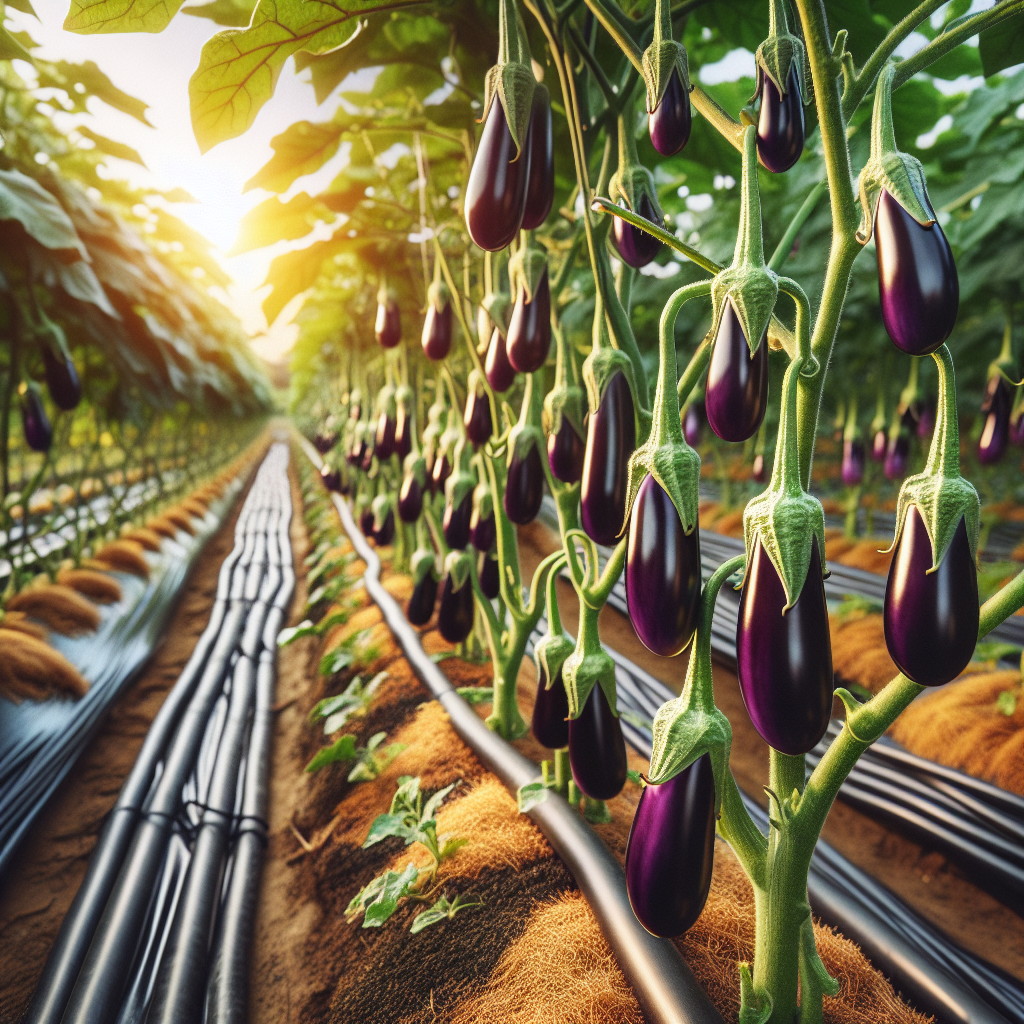
Introduction to Japanese Long Eggplant
A refined Asian eggplant type, this crop is distinguished by long, narrow, glossy fruits that are typically deep purple to nearly black, though some related selections can be lavender or violet. The flesh is tender, finely textured, and generally less seedy and less bitter than standard globe eggplants, which makes it especially valuable for stir-frying, grilling, roasting, braising, and tempura.
Historically, long-fruited eggplants were selected across East and Southeast Asia for tenderness, rapid cooking, and elegant fruit shape rather than for sheer fruit mass. Japanese long types are often confused with other Asian forms, but they are generally characterized by a slim cylindrical fruit, relatively delicate skin, and a plant habit that can be vigorous yet more open than large-fruited Italian eggplants. If you want a close relative for comparison, see Eggplant.
From a production standpoint, this crop rewards growers who can provide uninterrupted warmth. Its growth rate, flower retention, and fruit shape all improve dramatically when root-zone temperatures stay warm and the plant never experiences drought stress or cold shock. Where globe eggplants may still perform acceptably under marginal warmth, Japanese long types show their best texture and fruit set only when conditions are consistently favorable.
Botanical Profile of Japanese Long Eggplant
This crop belongs to the Solanaceae, the nightshade family, alongside peppers, tomatoes, and potatoes. It is botanically a tender perennial in frost-free climates but is grown as an annual in most temperate regions. Plants typically reach 2.5 to 4 feet tall and 2 to 3 feet wide depending on cultivar, fertility, and pruning style.
Leaves are broad, soft, and slightly fuzzy, often with a gray-green cast. Stems may show purple pigmentation, and some cultivars have small prickles on calyxes and stems, though modern culinary lines are often nearly spineless. Flowers are star-shaped, usually pale violet to lavender with yellow anthers, and are largely self-pollinating, though pollinator activity and vibration can improve fruit set under protected culture.
The fruit is technically a berry. In Japanese long forms, fruits are commonly 8 to 14 inches long, occasionally longer, with a diameter of about 1.5 to 2.5 inches. The ideal harvest stage is immature but full-sized, when skin is taut and glossy and seeds remain soft and undeveloped. Once fruits dull, broaden irregularly, or show tan mature seeds, eating quality declines quickly.
These plants are moderately deep-rooted but perform most of their active uptake in the upper, well-aerated soil profile. Root health is central to success: compacted, cold, waterlogged, or saline conditions immediately reduce vigor and flowering. Japanese long types also tend to show strong apical growth, so balanced fertility is important; excessive nitrogen can create lush foliage at the expense of flower set.
Common cultivar examples in this market class include long, slim Japanese and Japanese-style hybrids selected for uniformity, glossy color, and reduced seediness. In commercial production, the market often values straight fruits with minimal curvature, intact calyxes, and consistent diameter from shoulder to tip.
Soil, pH, and Climate Requirements for Japanese Long Eggplant
This crop thrives in deep, fertile, biologically active soil with excellent drainage and strong moisture-holding capacity. The ideal texture is sandy loam to loam enriched with stable compost or well-finished organic matter. Heavy clay can work if extensively improved with organic matter and formed into raised beds, but tight soils that stay saturated after irrigation are a major cause of root stress, stunting, and disease.
A practical target is soil pH 5.8 to 6.8, with 6.2 to 6.5 often giving the best nutrient balance. Below about 5.5, phosphorus availability drops and calcium and magnesium imbalances become more likely. Above 7.0, iron and manganese become less available, which can lead to interveinal chlorosis on younger leaves. If pH is low, incorporate agricultural lime several months before planting. If too high, elemental sulfur is the usual corrective material, but it must be applied well ahead of planting because adjustment is gradual.
Japanese long eggplant is distinctly heat-loving. Optimal daytime air temperatures are about 75 to 90°F (24 to 32°C), with night temperatures ideally above 60°F (16°C). Growth slows sharply below 55°F (13°C), and pollen viability, flower retention, and fruit set suffer when nights are cold. Chilling injury can occur even without frost exposure, especially in young transplants.
Soil temperature at transplanting should ideally be at least 65°F (18°C), with 70°F (21°C) or higher producing much faster establishment. In cool-spring regions, black plastic mulch, low tunnels, or fabric row covers used early in the season can transform performance. In very hot climates above 95°F (35°C), plants may still survive well, but pollen can become less viable and blossoms may abort unless moisture, mulch, and airflow are carefully managed.
This crop needs full sun, meaning at least 8 hours of direct light for best yields. Light shade in extreme heat can reduce sunscald, but too much shade causes lanky plants, delayed flowering, and thin fruit production. Wind protection is also valuable because long fruits can rub against stakes or branches and lose market quality.
Nutrient demand is moderate to high. A preplant system based on soil testing is best, but broadly speaking the crop benefits from ample potassium, steady nitrogen, and sufficient calcium. Potassium supports fruit quality, gloss, firmness, and stress tolerance. Calcium helps reduce physiological stress and strengthens tissues, but it can only move well when soil moisture is even. Sudden cycles of dryness and saturation reduce nutrient uptake efficiency.
For broader soil-building principles before bed preparation, see soil health strategies.
Step-by-Step Planting & Propagation
Start with fresh, high-quality seed because germination declines as seed ages. Sow indoors 8 to 10 weeks before the final frost date in cool climates, or 6 to 8 weeks ahead in warm regions. Use a sterile, fine-textured seed-starting mix and sow seed about 1/4 inch deep. The single most important factor during germination is warmth: maintain 80 to 90°F (27 to 32°C) in the medium. At these temperatures, seed often germinates in 7 to 14 days; in cooler media, germination becomes slow, uneven, or poor.
As soon as seedlings emerge, provide intense light for 14 to 16 hours daily if indoors. Leggy seedlings rarely recover into top-grade field plants. Pot up once roots hold the initial cell or plug, moving to a 3- to 4-inch container if transplanting is still weeks away. Keep growth steady but not rank; moderate feeding with a balanced liquid fertilizer every 7 to 10 days is usually sufficient.
Harden plants gradually over 7 to 10 days, but never expose them to chilling winds or temperatures below about 55°F (13°C). Unlike brassicas, eggplants do not benefit from hardening by cold. The goal is to acclimate them to sun and wind, not to toughen them through stress.
Transplant only after frost danger has passed and both air and soil are reliably warm. Space plants 18 to 24 inches apart in rows 30 to 42 inches apart. In intensive raised beds, 18-inch spacing in staggered double rows works well if fertility and staking are excellent. Wider spacing improves airflow and disease suppression in humid climates.
At planting, bury transplants no deeper than the root ball top or only slightly deeper. Eggplants do not root along buried stems as readily as tomatoes, so deep planting offers little benefit and can increase stem rot risk. Water transplants in thoroughly to eliminate air pockets. A starter solution with soluble phosphorus can help in cool or low-P soils, but avoid overfertilizing young roots.
Mulch immediately after the soil has warmed. Organic mulches such as straw or leaf mold reduce splash, moderate soil temperature fluctuations, and conserve water. In cooler climates, plastic mulch may outperform organic mulch early because it increases root-zone warmth.
Direct seeding is technically possible in long, hot seasons, but it is rarely preferred because early growth is slow and weed competition is severe. Professional production nearly always relies on transplants.
Staking is strongly recommended. Install stakes or a Florida weave-style support system soon after transplanting to avoid root damage later. Long fruits hanging from unsupported plants are more likely to touch soil, curve, scar, or break branches under load.
Care & Maintenance regimes for Japanese Long Eggplant
Consistent soil moisture is critical. Aim to keep the top 6 to 8 inches of soil evenly moist, roughly comparable to 60 to 80% of field capacity in a well-drained loam. In practical terms, soil should feel cool and friable, not sticky, soupy, or powder-dry. If you squeeze a handful from the root zone, it should hold together lightly, then crumble with a gentle tap. Extended drying between irrigations leads to blossom drop, smaller fruit, tougher skin, and bitterness. Saturated conditions cause yellowing, slow growth, root decline, and increased wilt susceptibility despite wet soil.
Most field-grown plants need about 1 to 1.5 inches of water per week, but during hot weather and heavy fruiting this may rise to 2 inches depending on soil type, wind, and mulch. Drip irrigation is ideal because it keeps foliage dry and delivers water gradually. On sandy soils, frequent short irrigations are better than occasional heavy soakings. On loams, deeper irrigation at wider intervals is acceptable if moisture remains stable. Visible overwatering signs include lower leaf yellowing, edema-like blisters, stunted new growth, and persistently wet soil with little oxygen smell.
Feed the crop in phases. Before planting, incorporate compost and a balanced fertilizer guided by soil testing. Once plants are established and begin active vegetative growth, side-dress with nitrogen modestly. At early flowering and first fruit set, shift emphasis toward potassium while maintaining enough nitrogen to support leaf function. Too much nitrogen after flowering causes oversized canopies and fewer marketable fruits. If leaves are huge, dark green, and lush but flowering is sparse, reduce nitrogen immediately.
Pruning can improve fruit quality and harvest efficiency. In open-field systems, minimal pruning is common, but selective removal of the lowest leaves touching soil improves airflow and reduces splash-borne disease. Some growers train plants to 2 to 4 main stems, especially under tunnels or in high-value garden systems. Remove weak suckers and inward-growing shoots to keep the center open. Do not over-prune, because leaves are needed to shade fruit and support photosynthesis.
Flower drop can result from temperature stress, drought, excess nitrogen, poor pollination under stagnant greenhouse conditions, or transplant shock. In protected culture, gently shaking supports at midday can improve pollen movement. Outdoors, balanced fertility and warmth usually resolve the issue.
Weed control matters most in the first 4 to 6 weeks after transplanting, when canopy closure is incomplete. Shallow cultivation is safer than deep hoeing because roots are easily damaged near the surface. Mulch plus drip irrigation is one of the most effective low-labor systems.
Monitor for nutrient disorders. Nitrogen deficiency first appears as general pale green older leaves and reduced vigor. Potassium deficiency can show as marginal scorch or weak fruit quality. Magnesium deficiency often presents as interveinal yellowing on older leaves, especially in high-potassium programs. Calcium-related problems are usually secondary to uneven moisture rather than absolute lack of calcium in the soil.
Pests, Diseases & Organic Management
Flea beetles are among the most common early pests. Adults chew numerous tiny holes in leaves, and severe feeding can stall young plants. The most effective organic strategy is exclusion with lightweight insect netting or row cover immediately after transplanting, removed at flowering if needed for access and airflow. Vigorous transplants also outgrow injury faster than small, weak seedlings.
Aphids cluster on tender growth and leaf undersides, causing curl, honeydew, and sooty mold. Strong water sprays, conservation of beneficial insects, and insecticidal soap are useful controls. Avoid excess nitrogen, which encourages the lush growth Aphids prefer.
Spider mites thrive in hot, dry conditions and produce stippling, bronzing, and fine webbing. They often explode where plants are water-stressed or dusty. Keep plants evenly irrigated, hose dust from paths if relevant, and use horticultural oils or soaps with good undersurface coverage.
Colorado potato beetle and related leaf-feeding beetles can attack eggplant aggressively in some regions. Hand removal of eggs and larvae works in small plantings. In larger organic systems, spinosad or Bacillus thuringiensis var. tenebrionis where available may help, used according to local regulations and pollinator-safe timing.
Fruit borers, Hornworms, and Caterpillars occasionally damage fruit and foliage. Scout twice weekly, especially once flowering starts. Remove damaged fruit promptly so pests do not continue developing within the planting.
Disease pressure is highest where rotation is poor and foliage stays wet. Verticillium wilt causes one-sided yellowing, vascular browning, and gradual collapse; it is soilborne and difficult to reverse. Rotate away from solanaceous crops for at least 3 years where practical. Bacterial wilt, Phomopsis blight, Anthracnose, Early blight, and Cercospora leaf spot can also occur depending on region.
The organic disease-management hierarchy is: start with clean seed or healthy transplants, use well-drained soil, rotate crops, avoid overhead irrigation, maintain airflow, sanitize old crop residue, and harvest frequently. Copper-based products can suppress some bacterial and fungal issues, but they work best preventively rather than curatively.
Nematodes may be a serious issue in warm soils, especially sandy ground. Root-knot nematode injury appears as stunting, midday wilt, and galled roots. Soil solarization, resistant rotations, organic matter additions, and off-season cover crops can reduce pressure. Companion plantings with Nasturtium, Thyme, and Clover may help diversify the planting and support beneficial insects, though they should complement, not replace, direct pest management.
Harvesting, Curing & Optimal Storage
Harvest when fruits are fully elongated, smooth, and intensely glossy, but before seeds harden. For most Japanese long types, this means picking at about 8 to 12 inches long, though cultivar and market preference matter. The fruit should feel firm yet slightly springy, never spongy. Dull skin is a reliable sign of overmaturity.
Use pruners or a sharp knife rather than pulling fruit by hand. The calyx and stem are tough, and tearing can damage branches or strip bark. Harvest every 2 to 4 days during peak production. Frequent picking stimulates continued flowering and prevents plants from diverting energy into oversized fruit.
Unlike onions, potatoes, or winter squash, eggplant is not cured in the classic sense. Postharvest handling should focus on rapid shade cooling, gentle packing, and avoidance of chilling injury. Do not leave harvested fruit in direct sun even briefly; skin scald and moisture loss reduce gloss and shelf appeal.
The ideal storage temperature is about 50 to 54°F (10 to 12°C) with 90 to 95% relative humidity. Below about 50°F, eggplant is prone to chilling injury, seen as surface pitting, bronzing, dull color, internal browning, and faster decay after removal from cold storage. Above optimal temperatures, water loss and softening accelerate. Under good conditions, storage life is usually 1 to 2 weeks, though best culinary quality is within several days of harvest.
Avoid storing eggplant in sealed, non-ventilated plastic if fruit are still field-warm, since condensation encourages decay. Market-grade handling emphasizes unblemished skin, intact bright green calyx, straight form, and freedom from scars, insect punctures, and seediness.
Companion Planting for Japanese Long Eggplant
The best companion strategy combines pest distraction, beneficial insect support, root-zone protection, and efficient bed use without creating excessive shade or competition. Low-growing, aromatic, or insectary plants usually work better than large, sprawling neighbors.
Thyme is especially useful at bed edges because it stays relatively low, attracts beneficial insects when flowering, and does not heavily compete for vertical space. Clover can function as a living mulch in wider row systems if carefully managed; it helps protect soil, feeds pollinators, and may contribute some nitrogen cycling, but it must be mowed or suppressed so it does not compete with young eggplants for moisture. Nasturtium is often used as a trap or distraction plant for Aphids and to increase floral diversity around the crop.
Good companions should not crowd the root zone or block airflow. Keep companion plantings offset from the main stem by several inches and increase irrigation accordingly if understory biomass becomes dense. In humid climates, prioritize open spacing over dense interplanting because airflow is more valuable than maximum plant diversity.
Avoid following or interplanting too tightly with other heavy-feeding solanaceous crops such as tomatoes or peppers when disease pressure is high, since they share several pathogens and nutrient demands. If you are planning a mixed warm-season bed with related crops, compare management needs with Tomato guide to coordinate fertility and irrigation.
A professionally managed companion system for this crop is subtle rather than crowded: keep the eggplant dominant, support beneficial ecology at the margins, and preserve sun, airflow, and warm soil.