Introduction to linden
Linden lace bugs (Corythucha cydoniae) are small, insidious pests notorious for infesting linden trees (Tilia spp.), ornamental shade trees commonly planted in urban landscapes, parks, and agricultural hedgerows. These insects pierce leaf tissues to extract sap, leading to stippling, yellowing, and premature leaf drop that weakens trees over time. While not typically fatal, repeated infestations reduce photosynthesis, stunt growth, and make trees susceptible to secondary issues like aphids or powdery mildew. Early detection is crucial for maintaining healthy canopies and preventing economic losses in nurseries or fruit-adjacent agroforestry systems. This definitive guide equips professional growers, landscapers, and farmers with diagnostic tools, lifecycle knowledge, and organic management plans to combat linden lace bugs effectively. Discover how Spring Pest Patrol: Organic AI Strategies to Shield Your Crops from Common Invaders can enhance your pest monitoring routines.
Understanding linden lace bug biology is key to integrated pest management (IPM). Native to North America, these bugs have spread widely due to linden's popularity as a street tree. Adults measure 2-3 mm with delicate, lace-like wings featuring black margins and intricate white patterns. Nymphs are smaller, spiny, and progress through five instars, all feeding gregariously on leaf undersides. Populations explode in warm, dry conditions, often overlapping with other sap-suckers like spider mites. Proactive scouting and cultural controls form the backbone of sustainable suppression, ensuring linden trees thrive without synthetic chemicals.
Identifying Symptoms & Damage
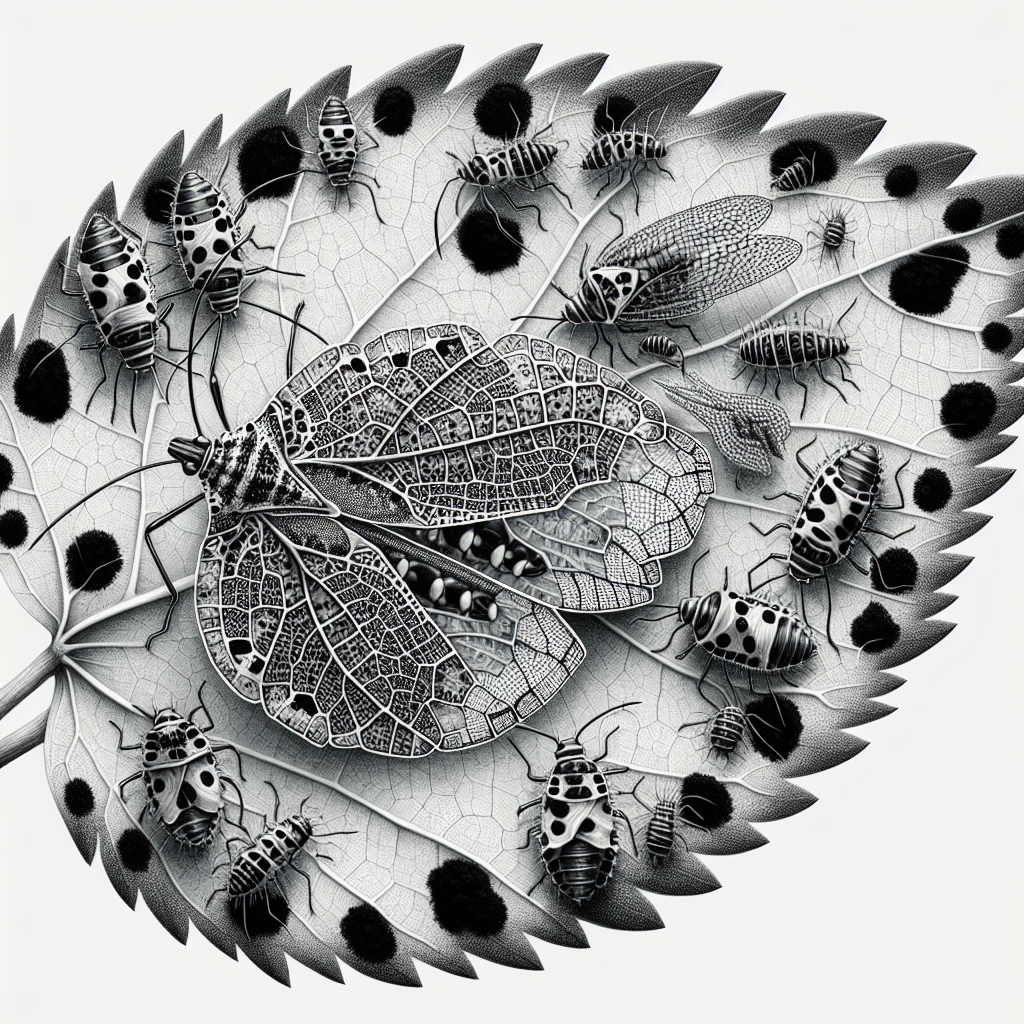
Spotting linden lace bug damage early prevents escalation. Initial signs appear on leaf undersides: clusters of nymphs and adults surrounded by shiny black fecal spots (frass) and translucent cast nymphal skins. Upper leaf surfaces show bronze or gray stippling from chlorophyll loss, progressing to yellow mottling and necrosis. Severely infested leaves become leathery, curl, and drop prematurely, leading to sparse canopies by mid-summer.
Diagnostic hallmarks include:
- Stippling: Tiny white or yellow dots coalescing into patches.
- Frass: Black tarry droplets forming sooty mold, attracting ants.
- Nymphal Groups: Black-and-white nymphs in star-shaped clusters.
- Premature Defoliation: Up to 50-70% leaf loss in heavy outbreaks.
Differentiate from mites by the presence of visible insects and frass; mites leave finer webbing without excrement. Shake branches over white paper to dislodge bugs for confirmation. Damage peaks in late spring and midsummer, stressing trees and inviting leaf spot diseases. In agricultural settings near apple or cherry orchards, monitor for crossover infestations.
Economic impacts include reduced nursery stock value and ornamental appeal. Trees may refoliate weakly, entering dormancy early and becoming vulnerable to borers or cankers. Threshold: Treat if >20% leaves show stippling.
Lifecycle and Progression of linden
Linden lace bugs complete 1-3 generations annually, synchronized with host phenology. Overwinter as eggs in bark fissures or old leaves. Eggs hatch in spring (April-May) as temperatures exceed 10°C (50°F), coinciding with bud break.
Lifecycle Stages:
- Eggs: Tiny, barrel-shaped, inserted into leaf veins; incubate 7-10 days.
- Nymphs (5 instars): 10-14 days feeding; molt skins accumulate.
- Adults: Winged, disperse to new leaves; females lay 20-50 eggs.
- Summer Generations: Overlap, peaking July-August.
- Overwintering: Eggs laid in fall persist through winter.
Full cycle: 3-6 weeks. Progression accelerates in heat (>25°C/77°F), slowing in cool, wet weather. Monitor with sticky traps or branch beats. Understanding this timeline enables targeted interventions, like horticultural oils during crawler emergence. Compare to whiteflies, which have similar sap-feeding but produce honeydew.
Environmental Triggers & Risk Factors
Linden lace bugs thrive in hot, dry microclimates with low humidity (<60%). Urban heat islands exacerbate outbreaks on street trees. Stressed linden—drought, poor soil, root compaction—emit volatiles attracting females. Over-fertilization with nitrogen boosts tender foliage, ideal for nymphs.
Key triggers:
- Weather: Prolonged dry spells >2 weeks.
- Site Factors: Full sun exposure, south-facing slopes.
- Tree Health: Water stress, transplant shock.
- Proximity: Infested neighbors via adult flight.
Risk spikes post-drought or in new plantings near maple (occasional host). Avoid monocultures; diversify with resistant cultivars like Tilia cordata 'Greenspire'. Climate change extends generations, demanding vigilant scouting.
Organic Control & Treatment Plans
IPM prioritizes organics for linden lace bugs. Cultural: Irrigate deeply to reduce stress; mulch to retain moisture. Prune infested branches pre-bud break, disposing off-site.
Biological: Encourage predators like assassin bugs, lacewings, and birds. Release predatory mites (e.g., Amblyseius spp.) at 1-2 per leaf.
Organic Sprays:
- Horticultural Oils: Dormant or early-season (1-2% rate); smother eggs/nymphs.
- Insecticidal Soaps: Weekly on undersides during crawlers; 2% potassium salts.
- Neem Oil: Azadirachtin disrupts molting; apply evenings to avoid phytotoxicity.
- Pyrethrins + Synergists: For heavy infestations; rotate to prevent resistance.
Treatment Plan:
- Scout weekly spring-fall.
- Threshold hit: Oil/soap at crawler peak.
- Follow-up: BTi for secondary lepidopterans.
- Fall cleanup: Rake leaves to break egg cycle.
Efficacy: 80-95% with timing. Avoid broad-spectrum; preserve ladybugs. For orchards, integrate with thrips controls.
Preventing linden in the Future
Prevention beats cure. Select resistant lindens like Tilia mongolica or hybrids. Plant in well-drained, fertile soil; avoid compaction. Maintain vigor: 2-4 cm water/week, balanced fertilizer.
Strategies:
- Monitoring: Sticky traps, branch sampling.
- Sanitation: Destroy debris; inspect nursery stock.
- Barriers: Horticultural oil dormant sprays.
- Diversity: Interplant with yarrow for predators.
- Timing: Prune winter; mulch spring.
Long-term: IPM audits annually. Resistant trees + predators reduce outbreaks 70%. Learn more in Soil Health Mastery: 5 Proven Strategies for Small Farms to Build Fertile Ground Without Breaking the Bank.
Crops Most Affected by linden
Primarily linden (Tilia americana, T. cordata), but spills to sycamore, oaks. Ornamentals/nurseries hit hardest; indirect impacts on nearby peach, plum via stressed hedgerows. Urban farms lose aesthetic value; agroforestry sees reduced windbreaks. Little direct crop damage, but monitor adjacents for scale insects.