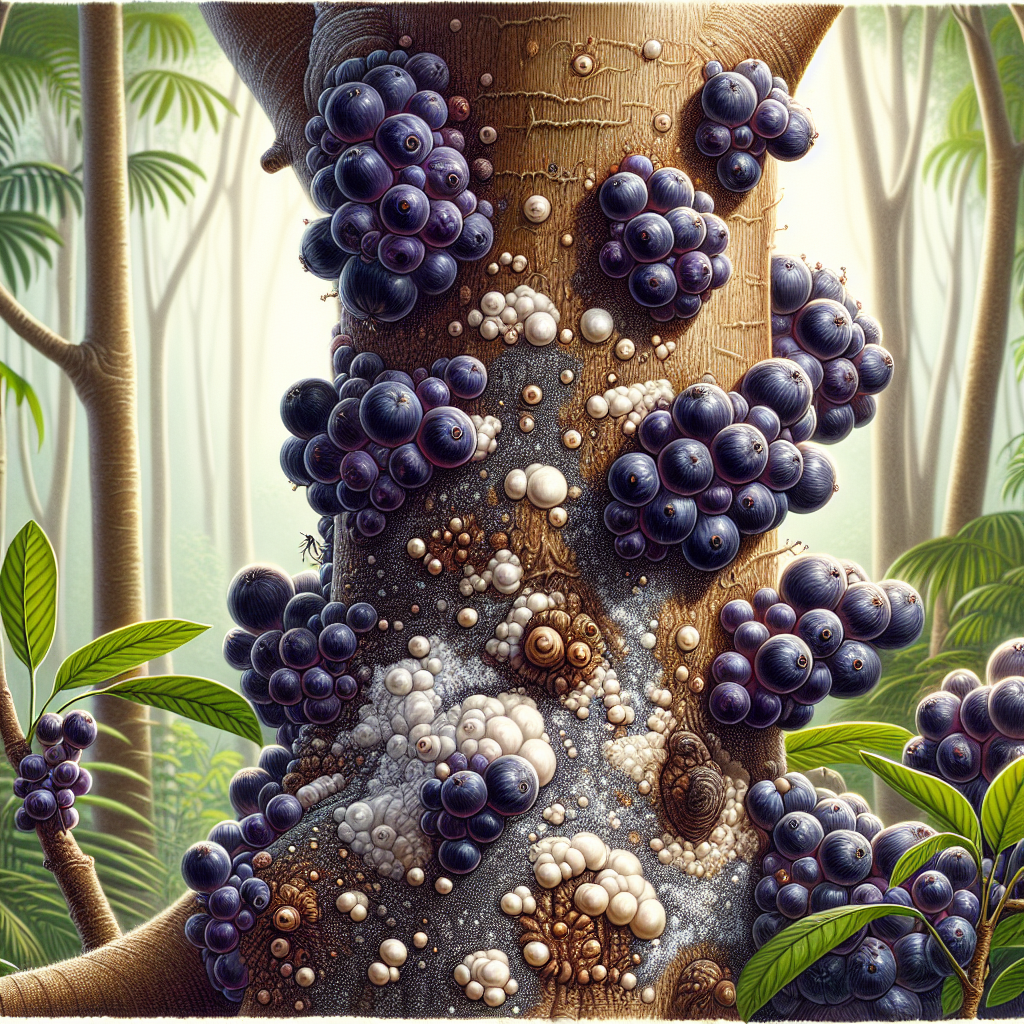
Introduction to Jaboticaba
Jaboticaba (Plinia cauliflora), often called the Brazilian grape tree or jabuticaba, is an evergreen tree native to Brazil, celebrated for its extraordinary fruiting habit where glossy, grape-like fruits cluster directly on the trunk and larger branches—a phenomenon known as cauliflory. Thriving in USDA zones 9-11, jaboticaba trees prefer humid subtropical climates with well-drained, slightly acidic soils (pH 5.5-6.5) and consistent moisture without waterlogging. Reaching 10-15 meters in height, they produce dark purple, 1-2 cm fruits with a sweet-tart white pulp surrounding a single seed, harvested multiple times yearly.
As a slow-growing tree, jaboticaba demands vigilant pest and disease management to sustain productivity. Common threats include sap-sucking insects like mealybugs and scale insects, fungal pathogens causing leaf spots and fruit rots, and environmental stressors exacerbating vulnerabilities. Effective management integrates cultural practices, organic controls, and monitoring, as outlined in this comprehensive guide. For small farms, early intervention prevents up to 70% yield loss, aligning with strategies in Why 90% of Small Farms Fail at Pest Management - And 8 Organic Fixes That Actually Work.
Identifying Symptoms & Damage
Diagnosing jaboticaba issues requires keen observation of leaves, bark, trunk, and fruit. Key symptoms include:
- Leaf Damage: Yellowing or bronzing leaves with sticky honeydew indicate aphids or scale insects. Curled leaves signal thrips or mites. Black sooty mold on leaves points to honeydew-producing pests.
- Trunk and Bark Issues: Cauliflorous fruits marred by black lesions suggest anthracnose. Cracked, oozing bark denotes Phytophthora root rot, often with wilting branches.
- Fruit Damage: Premature fruit drop, soft rots, or sunken spots are hallmarks of fungal infections like Botrytis. Larval tunnels in fruits indicate fruit flies or borers.
- Overall Tree Decline: Sparse foliage, dieback, and stunted growth stem from root pests like root-knot nematodes or poor drainage.
Use a 10x hand lens to spot tiny crawlers or eggs. Differentiate pests from diseases: insects leave frass or webbing; diseases show concentric lesions. Regular scouting, especially post-rain, catches issues early. Compare with healthy mango trees nearby for contrast.
Lifecycle and Progression of Jaboticaba
Jaboticaba's lifecycle spans 5-10 years to first fruiting, with peak production at 15-20 years. Flowering occurs year-round in tropics, peaking in spring, with fruits maturing in 2-3 months. Pests exploit this:
- Egg/Larva Stage: Caterpillars or weevils lay eggs on bark/fruit; larvae bore into tissues, causing gummosis.
- Nymph/Adult Stage: Sap-feeders like scales complete 4-6 generations annually, peaking in warm, wet seasons.
- Overwintering: Many pests pupate in bark cracks, resuming in spring.
Disease progression accelerates in humid conditions: spores germinate on wet surfaces, spreading via splashing rain. Infestations progress from localized spots to canopy-wide defoliation within weeks if unchecked. Lifecycle awareness informs timing—target eggs with oils pre-flowering.
Environmental Triggers & Risk Factors
Jaboticaba thrives at 18-30°C, but stressors amplify pest pressure:
- High Humidity (>80%): Fuels powdery mildew and anthracnose; poor air circulation in dense plantings worsens it.
- Excessive Rainfall: Promotes root rots via waterlogged soils; overhead irrigation mimics rain splash.
- Nutrient Imbalances: Nitrogen excess boosts succulent growth, attracting whiteflies; deficiencies weaken resistance.
- Temperature Extremes: Drought stress invites spider mites; heatwaves (>35°C) weaken trees, per insights from Why Summer Heatwaves Are Silently Killing Small Farm Yields - And 7 Organic Strategies to Fight Back.
- Weed Competition: Harbors pests; poor pruning traps humidity.
Risk is highest in new plantings or after transplant shock. Test soil annually and mulch to stabilize microclimates.
Organic Control & Treatment Plans
Prioritize IPM: monitor, cultural, biological, then targeted organics.
- Cultural Controls: Prune for airflow; mulch with 5-10 cm organic matter to suppress weeds and retain moisture. Ensure 4-6m spacing.
- Biological Agents: Release predatory beetles for scales; ladybugs for aphids. Neem-based biocontrols target larvae.
- Organic Sprays: Horticultural oils smother scales/mealybugs (apply dusk, 2% solution). Bacillus thuringiensis (Bt) for caterpillars. Potassium bicarbonate for mildews.
- Soil Treatments: Beneficial nematodes for root pests; compost teas boost microbes against rots.
- Fruit Protection: Kaolin clay barriers deter flies; remove dropped fruit weekly.
Rotate treatments; apply post-harvest for clean starts. For severe cases, integrate with companion planting like marigold to repel nematodes.
Preventing Jaboticaba in the Future
Prevention outperforms cure:
- Site Selection: Choose well-drained slopes; amend clay soils with gypsum.
- Resistant Varieties: Opt for 'Sabara' or grafted stock.
- Sanitation: Sterilize tools; destroy debris.
- Monitoring: Weekly inspections; trap fruit flies with lures.
- Fertility: Balanced NPK (10-5-20) slow-release; micronutrients via seaweed extracts.
- Mulching/Irrigation: Drip systems; organic mulches deter weeds/pests.
Annual plans reduce incidence by 80%. Build soil health via cover crops like clover.
Crops Most Affected by Jaboticaba
Jaboticaba shares pest complexes with tropical/subtropical fruits:
- Primary: Guava, mango, avocado—susceptible to scales, anthracnose.
- Secondary: Banana, papaya, grapes—fruit flies, mites.
- Ornamentals: Figs, citrus face similar rots/nematodes.
Cross-management benefits polycultures; control scales on jaboticaba protects nearby dragon fruit.
(Total word count: 1427)