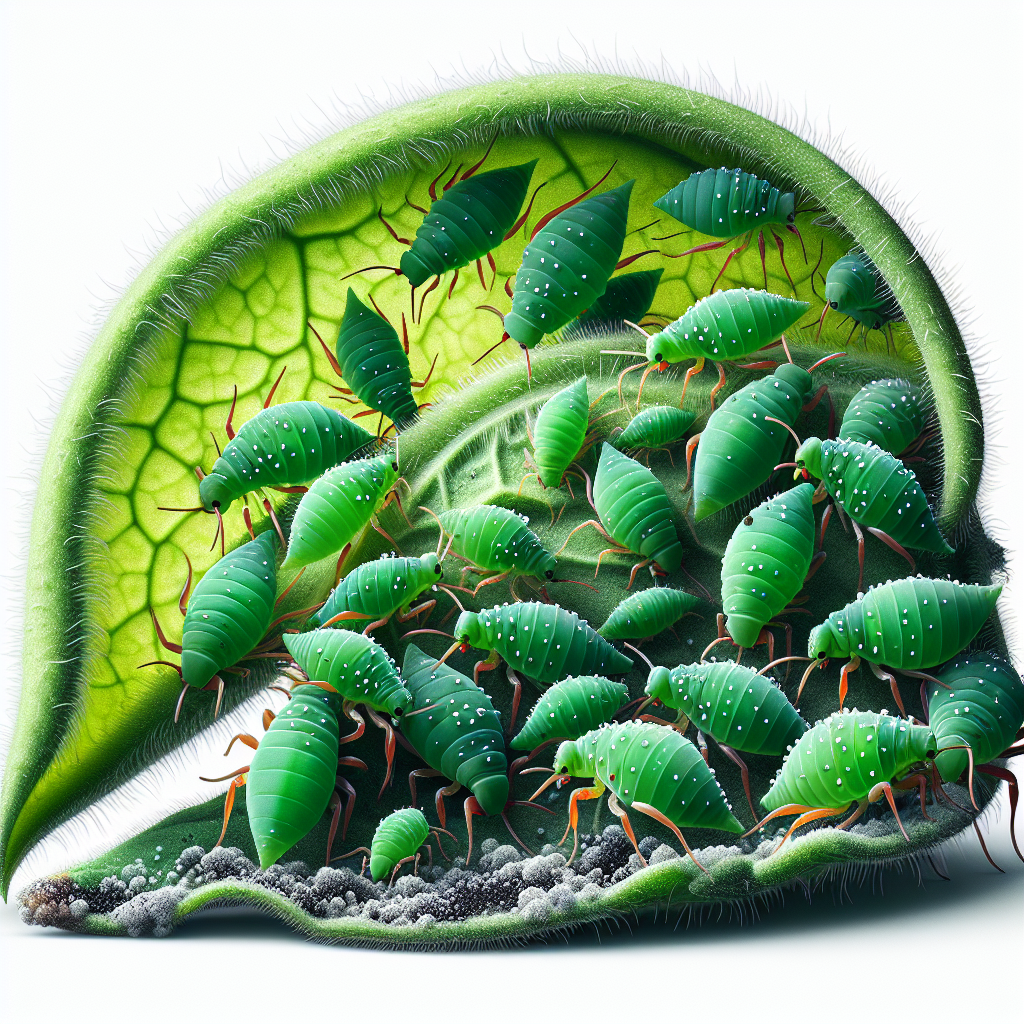
Introduction to Green peach aphids
Green peach aphids, scientifically known as Myzus persicae, rank among the most notorious pests in global agriculture due to their extraordinary adaptability and voracious feeding habits. These tiny, pear-shaped insects, typically 1.5-3 mm long, feature a soft green body that can shift to yellow, pink, or black depending on environmental conditions and life stage. Native to temperate regions but now cosmopolitan, they attack over 400 plant species, making them a universal threat to vegetable gardens, orchards, and field crops alike.
What sets green peach aphids apart is their role as vectors for over 100 plant viruses, including critical ones like potato virus Y and cucumber mosaic virus. A single aphid can transmit viruses during brief feeding probes, leading to stunted growth, mottled leaves, and yield losses up to 50% in severe infestations. Their rapid reproduction—females produce up to 12 offspring per day without mating via parthenogenesis—allows populations to explode from a few colonizers to thousands within weeks. In commercial settings, unchecked outbreaks can necessitate crop destruction, while home gardeners face sticky honeydew-covered plants attracting ants and sooty mold. Understanding their biology is key to implementing timely, integrated pest management (IPM) strategies that minimize chemical use and preserve beneficial insects. This guide provides professional-grade diagnostics, organic controls, and prevention tactics tailored for small farms and large operations alike. For broader context on aphid pests, see our detailed entry on Aphids (pest).
Identifying Symptoms & Damage
Spotting green peach aphids early prevents escalation. Look for clusters of tiny, pear-shaped insects on new growth, undersides of leaves, and stems. Adults have cornicles (tailpipes) at the rear; nymphs lack wings. Heavy infestations cause leaves to curl upward, cup, or twist, with yellowing and necrosis at feeding sites. Plants appear stunted, with reduced branching and smaller fruits.
The hallmark sign is honeydew, a sticky exudate that coats leaves and fruits, fostering black sooty mold. Ants farm aphids for this sugary secretion, worsening spread. Virus transmission manifests as mosaic patterns, leaf puckering, or bronzing—e.g., severe distortion on tomato resembling herbicide injury. On peach trees, aphids target tender shoots, causing witches'-broom-like growth.
Diagnostic tips: Shake infested foliage over white paper; aphids tumble like green dandruff. Use a 10x hand lens to confirm species—green peach aphids have black cornicles and siphuncles. Differentiate from similar pests like cabbage aphids (grayish) or melon aphids (waxy). Damage thresholds vary: 50 aphids per plant on lettuce signals action; on potatoes, 100+ nymphs/leaf warrants intervention. Scouting weekly with sticky traps captures winged forms signaling migration.
Lifecycle and Progression of Green peach aphids
Green peach aphids exhibit complex, environmentally responsive life cycles, alternating sexual and asexual reproduction. In spring, fundatrices (stem mothers) overwinter as eggs on peach or related Prunus trees, hatching into wingless females. These parthenogenetically birth 20-50 nymphs in 7-10 days at 20°C, maturing in 5-10 days depending on temperature (optimal 15-25°C).
Summer generations are all-female, asexual clones; winged alates disperse to secondary hosts like vegetables. Each female produces 12-18 nymphs daily for 20 days, yielding 50-100 offspring. At autumn cues (short days, cool temps), males and sexual females (oviparae) form, mating on primary hosts to lay cold-hardy eggs. Complete cycle: egg to adult in 6-25 days; 10-40 generations yearly in mild climates.
Progression phases: Colonization (few aphids), exponential growth (clusters), alate exodus (winged scouts), and senescence (crowding induces wings). High humidity (>70%) and nitrogen-rich plants accelerate outbreaks. Monitor with degree-day models: first alates at 200-300 heat units above 4°C.
Environmental Triggers & Risk Factors
Green peach aphids flourish in mild, stable conditions: 15-28°C daytime, no frost, moderate RH. Over-fertilization with nitrogen promotes tender, succulent growth ideal for feeding. Close plant spacing traps humidity, fostering outbreaks; drought stress weakens resistance, increasing susceptibility.
Weeds like mustard and lamb's quarters serve as reservoirs. Windless weather aids alate settling; nearby potato or pepper fields amplify risk. Climate change extends seasons, boosting populations. Ant presence signals aphids; scout edges first, as invasions start peripherally.
Organic Control & Treatment Plans
Organic management emphasizes IPM: prevention, monitoring, biologicals, then targeted organics. Immediate action: Blast with strong water jets 2-3x daily for 3 days, dislodging 70-90% without residues. Introduce predators like ladybugs (Hippodamia convergens), lacewings (Chrysoperla carnea), and parasitic wasps (Aphidius colemani)—release 1,000-5,000 per acre at first sighting.
Sprays: Insecticidal soap (1-2% solution) or neem oil (0.5-1%) every 5-7 days, covering undersides; rotate to prevent resistance. Pyrethrins or spinosad for heavy infestations, applied evenings to spare beneficials. Horticultural oils smother all stages at dormancy.
Treatment plans:
- Light (<20 aphids/plant): Predators + water spray.
- Moderate (20-100): Add soaps/neem.
- Severe (>100): Biologicals + oils + reflective mulches. Reflective mulches (aluminum) repel alates by 50-75%. Check out Spring Pest Patrol: Organic AI Strategies to Shield Your Crops from Common Invaders for tech-enhanced scouting tips.
Preventing Green peach aphids in the Future
Prevention hinges on cultural resilience. Plant resistant varieties: 'Green Flash' lettuce, 'Defiant' tomato. Time plantings to avoid peak flights (use traps). Intercrop with aphid-repellent garlic, onion, or marigold. Maintain low nitrogen; use slow-release fertilizers.
Destroy weeds/residue; till under infested plants. Encourage predators via flowering borders (dill, fennel). Row covers exclude alates until flowering. Fall cleanup removes overwintering sites. Monitor with yellow sticky traps (10/acre); thresholds guide action. Long-term: Polycultures disrupt host chains.
Crops Most Affected by Green peach aphids
Green peach aphids plague diverse crops, prioritizing nightshades, brassicas, and cucurbits. Top targets: potato (virus vector), tomato (curling), pepper (stunting), lettuce (tipburn), peach (primary host). Also devastate sweet potato, spinach, broccoli, cabbage, carrot, and grains like wheat. Ornamentals and weeds amplify spread. In fields, edges near ornamentals suffer first.