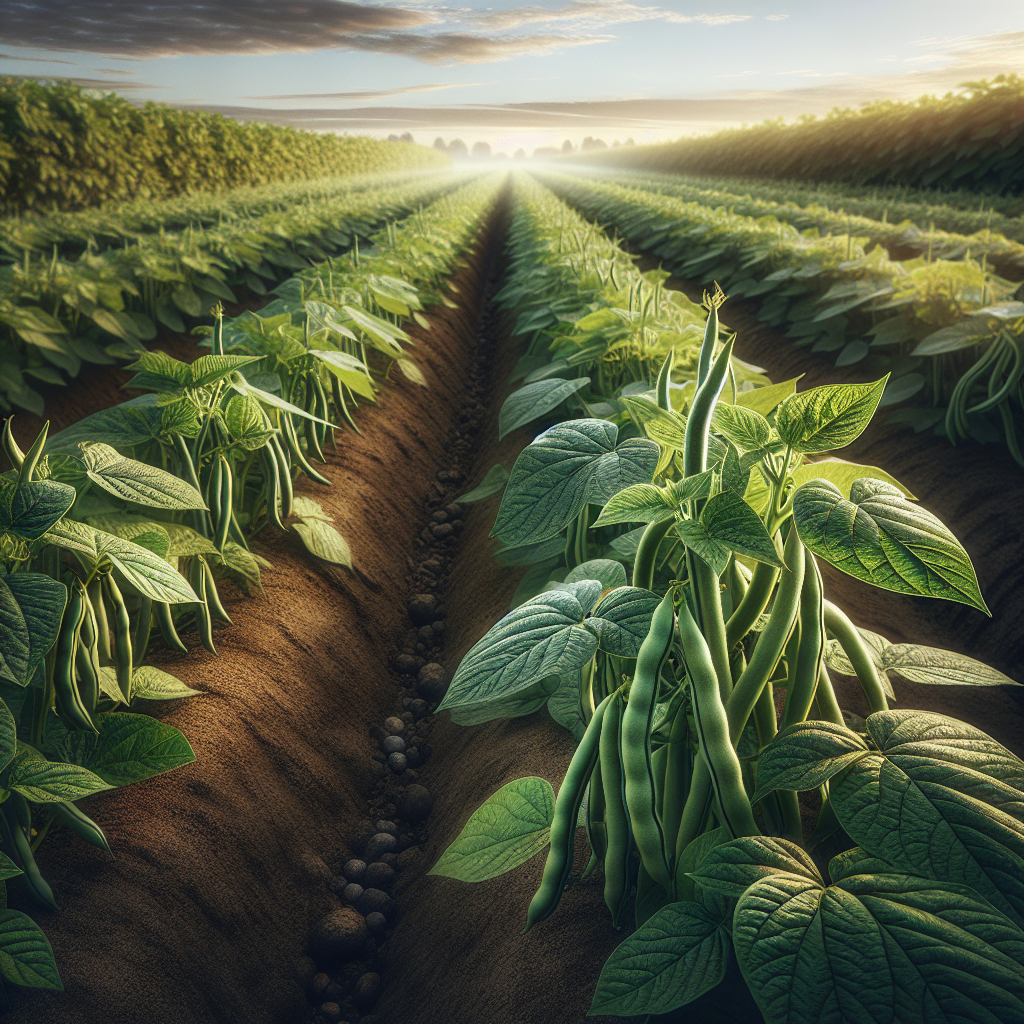
Introduction to Great Northern Bean
A classic white dry bean, this crop occupies an important place between navy beans and larger cannellini types in both seed size and culinary use. It is typically grown as a determinate or semi-determinate bush common bean for mature dry seed rather than fresh snap pods, though the immature pods are botanically similar to other common beans.
Historically, dry beans from the species Phaseolus vulgaris were domesticated in the Americas and later spread throughout Europe and North America, where regional market classes emerged. Great Northern beans became especially associated with dryland and irrigated production systems in the northern Great Plains and western United States because they combine acceptable yield, uniform white seed, relatively mild flavor, and strong suitability for soups, stews, baked dishes, and canning.
For growers, the key distinction is that this is not a heavy-feeding, lush-foliage crop. It performs best when managed for balanced vegetative growth early, followed by clean flowering, pod set, and dry-down. Overfertilizing, especially with soluble nitrogen, often produces rank plants with delayed maturity, softer tissues, and increased disease pressure rather than more beans. If you already grow other legumes, compare management with soybeans only loosely, because Great Northern bean is generally less forgiving of waterlogging and often more sensitive to certain foliar and root diseases.
For broader field fertility and structure strategies, see soil health tips.
Botanical Profile of Great Northern Bean
This crop belongs to the family Fabaceae, genus Phaseolus, species vulgaris. Great Northern is not a single unique botanical species separate from other common beans; instead, it is a market class within common bean characterized by medium-sized, white, oval seeds and dry-bean end use.
Plants are usually bush habit rather than vining, with height commonly ranging from about 30 to 60 cm depending on cultivar, fertility, spacing, and weather. Leaves are trifoliate, medium green, and somewhat thinner than those of some vigorous snap bean cultivars. Flowers are typically white to pale cream, self-pollinating, and produced in clusters near branch terminals and leaf axils. Pods are slender to moderately broad, green when immature, then yellowing and finally tan to straw-colored as seeds mature and dry.
The root system is relatively modest and concentrated in the topsoil, though roots can explore deeper when soil structure is open and moisture is available. Like other legumes, plants may form nodules with compatible Rhizobium bacteria, allowing biological nitrogen fixation. However, nodulation is never a license to neglect fertility entirely; phosphorus, potassium, sulfur, molybdenum, and overall soil biological conditions strongly influence performance.
From emergence to physiological maturity, most Great Northern bean cultivars require roughly 85 to 100 days, though this varies with temperature and day-to-day stress. Heat units matter more than calendar days. Cool early weather slows emergence and initial canopy development, while extreme heat during bloom can cause flower drop and patchy pod set.
A useful botanical nuance for growers is that common bean flowers are self-fertile and generally pollinate before opening fully, so cross-pollination rates are low. This helps maintain varietal purity in small-scale seed production, though isolation is still recommended if seed saving is a goal.
Soil, pH, and Climate Requirements for Great Northern Bean
This bean demands a well-drained mineral soil more than it demands very high fertility. Ideal textures are sandy loam, loam, or silt loam with enough fine material to retain moisture but enough pore space to drain quickly after rain or irrigation. Heavy clay can work if structured, raised, and not compacted, but dense, poorly aerated ground sharply increases root disease risk and uneven stands.
The best pH range is 6.0 to 7.2, with 6.3 to 6.8 often ideal for nutrient availability and nodulation. Below pH 5.8, phosphorus availability and rhizobial activity may drop, and manganese or aluminum stress can become more likely on certain soils. Above pH 7.5, micronutrient imbalances such as iron chlorosis may appear, especially on calcareous ground.
Beans prefer moderate fertility. Excessive nitrogen is one of the most common mistakes. A preplant soil test should guide all amendments, but as a practical rule, this crop benefits from modest starter nutrition rather than rich manure applications or heavy compost immediately before sowing. Fresh manure is particularly risky because it can drive excessive vegetative growth, increase salinity, and introduce weed pressure.
Temperature is critical. Soil should be at least 16 to 18°C at planting depth for reliable germination, and emergence is much more uniform once the soil is above 18°C. Optimal air temperatures for growth generally fall between 18 and 29°C. Below 10°C, growth slows markedly; frost can kill seedlings, flowers, or pods. Above about 32 to 35°C, particularly with hot nights, plants may abort blossoms or set fewer pods.
This crop is best suited to temperate, warm-summer climates with a frost-free growing period long enough to reach dry maturity. It can perform in semi-arid regions under irrigation, but humidity-related diseases intensify in regions with frequent summer rainfall and poor airflow.
Soil moisture should be kept consistent but never saturated. A practical target is evenly moist soil in the top 10 to 15 cm during germination and establishment, followed by moderate moisture through flowering and pod fill. In field terms, avoid conditions where soil remains sticky and anaerobic for more than 24 to 48 hours after rain. In garden terms, if you squeeze a handful of soil from root depth and water drips out, it is too wet; if it forms no ball at all and feels powdery, it is too dry.
Step-by-Step Planting & Propagation
This crop is propagated by seed and is almost always direct-sown. Transplanting is generally not recommended because common beans resent root disturbance and often lose vigor after transplant shock.
Select clean, high-germination seed from a reputable dry bean source. For production plantings, choose seed lots free of cracked coats, discoloration, or visible mold. Seedborne disease in beans can establish serious problems before the season begins.
Prepare a fine, firm seedbed. The top few centimeters should be crumbly rather than cloddy. Avoid overworking wet soil, which creates compaction and hard cRusting later.
Inoculate seed if beans have not been grown recently in that field. Use the correct inoculant for common beans, coating seed just before sowing according to label directions. This is especially useful in ground new to legumes or where nodulation history is uncertain.
Plant only after frost danger has passed and the soil has warmed. Seed placed into cold soil often rots or emerges unevenly.
Sow seed 2.5 to 4 cm deep in most soils. In lighter, warmer soils, depth can be slightly greater; in heavy or cool soils, stay shallow to improve emergence. The goal is moisture contact without forcing weak seedlings through a thick, cold layer.
Space seed 5 to 10 cm apart within the row for dense dry-bean production, or 10 to 15 cm apart in small garden systems where easier airflow and hand weeding are priorities. Rows are commonly set 45 to 75 cm apart depending on equipment and canopy goals.
Irrigate lightly after sowing if soil is dry. Keep the seed zone evenly moist until emergence, but never water so heavily that the bed seals or puddles.
Thin only if overcrowded. Bush dry beans tolerate fairly close spacing, but if seedlings emerge in clumps, thin to maintain airflow and reduce disease.
Expected emergence is usually 7 to 12 days in warm soil. Poor emergence often traces back to cold planting conditions, Seedcorn maggot injury, cRusted soil, or seed rot.
For rotational planning, avoid sowing immediately after another bean crop, and be cautious after heavy-residue legumes. A three-year break from beans in the same ground is preferable where disease pressure exists. Cereals such as corn are often useful rotational partners because they interrupt bean-specific disease cycles and help diversify residue structure.
Care & Maintenance regimes for Great Northern Bean
Once established, this crop rewards disciplined, moderate management rather than constant intervention. The most important care tasks are moisture regulation, weed control, restrained fertility, and disease prevention.
Water management should shift by growth stage. During germination and early establishment, maintain moisture in the top 5 to 10 cm. During vegetative growth, water when the upper soil begins drying but before plants wilt hard in midday heat. During flowering and pod fill, moisture consistency becomes especially important because drought stress at this stage reduces seed number and seed size. A general guideline is 25 to 38 mm of water per week from rainfall plus irrigation, increasing slightly in sandy soils or hot, windy weather. Deep, infrequent watering is better than daily shallow sprinkling.
Signs of underwatering include dull leaf color, leaflets folding early in the day, flower abortion, and pods with poorly filled seeds. Signs of overwatering include yellowing lower leaves, slow growth despite adequate fertility, soft stems near the base, algae or moss on the soil surface, and a sour smell in saturated beds. Repeated waterlogging can trigger root rots even if plants initially recover.
Irrigation method matters. Drip or furrow irrigation is preferable to overhead watering because it keeps the canopy drier. If overhead irrigation is unavoidable, water early in the day so foliage dries rapidly.
Weed control is crucial in the first 30 to 40 days after emergence. Beans are not strong competitors early on. Shallow hoeing or wheel hoe cultivation works well, but avoid deep cultivation once roots spread near the surface. Mulch can help in garden systems, though it should not trap excessive moisture against stems. Keep the planting clean until canopy closure, because weeds stealing light, water, and airflow can cut yield dramatically.
Fertilization should be conservative. If soil organic matter is moderate and inoculation is successful, beans may need little additional nitrogen. Where soils are poor, a light preplant application emphasizing phosphorus and potassium is often enough. Foliar feeding is usually unnecessary unless a confirmed deficiency exists. Pale leaves from waterlogging or cold stress are often misread as nitrogen deficiency.
Monitor nodulation about three to five weeks after emergence by digging, not pulling, a plant. Healthy nodules on compatible beans are often pinkish or reddish inside when active. If nodules are absent and plants are pale despite good drainage, a small rescue nitrogen application may be justified, but only modestly.
Avoid working in the field when foliage is wet. Many bacterial and fungal problems spread readily through handling, brushing, or cultivation in damp conditions.
Pests, Diseases & Organic Management
Great Northern beans can be highly productive, but they are vulnerable to several pests and pathogens, particularly when rotations are short or canopies stay wet.
Common insect pests include Mexican bean beetle, Aphids, Leafhoppers, Thrips, Seedcorn maggot, Cutworms, and Spider mites in hot dry conditions. Mexican bean beetle feeding skeletonizes leaves and can seriously reduce photosynthesis. Aphids cluster on tender growth and undersides of leaves, sucking sap and sometimes transmitting viruses. Leafhoppers may cause hopperburn, visible as yellowing or bronzing along leaf margins.
Organic management begins with prevention. Use crop rotation, clean borders, timely planting, and balanced fertility. Avoid lush, overfertilized growth that attracts sap-feeding pests. Row cover can protect seedlings from early insect damage, but remove it by flowering if pollinator access to nearby companion blooms is desired.
If infestations appear, begin with least-disruptive actions: hand removal in small plots, strong water sprays for Aphids, insecticidal soap for soft-bodied pests, and neem-based products where permitted and effective. Beneficial insects often suppress Aphids if broad-spectrum sprays are avoided.
Major diseases include Anthracnose, Halo blight, Common bacterial blight, Rust, White mold, Fusarium root rot, Rhizoctonia, and various damping-off organisms. Bean common mosaic virus and other viruses may also occur.
Anthracnose often shows as dark, sunken lesions on pods, stems, or leaf veins. Bacterial blights can produce water-soaked lesions that turn brown with yellow halos. Rust appears as small reddish-brown pustules, often first on lower leaves. White mold is especially damaging in dense, moist canopies and produces bleached stems with cottony fungal growth. Root rots lead to poor stands, stunting, and uneven maturity.
The core organic disease strategy is integrated and non-negotiable:
- Start with certified disease-free seed.
- Rotate out of beans and other susceptible legumes for at least 2 to 3 years.
- Plant into warm, well-drained soil.
- Maintain row spacing and weed control for airflow.
- Avoid overhead irrigation during bloom and pod fill when possible.
- Never work among wet plants.
- Remove and destroy heavily infected crop debris where disease pressure is severe.
Copper products may help suppress some bacterial and fungal issues, but they are preventive rather than curative and should be used carefully to avoid unnecessary soil accumulation. Biologicals containing Bacillus or Trichoderma may support suppression in some systems, especially as part of a broader rotation and sanitation plan rather than a standalone fix.
Harvesting, Curing & Optimal Storage
For dry beans, harvest timing is based on pod and seed maturity, not green-pod tenderness. Plants are ready when most leaves have yellowed or dropped, pods are tan to straw-colored, and seeds are hard enough that a thumbnail cannot dent them easily. Ideally, harvest occurs when seeds have dried substantially in the field but before repeated rain, pod shatter, or mold losses begin.
In small plantings, whole plants can be cut or pulled and laid under cover on screens, tarps, or slatted racks to finish drying. In larger systems, plants may be windrowed or direct-combined depending on climate and equipment. Handle gently once pods are brittle, because cracking seed coats lowers quality and storage life.
Target seed moisture for safe storage is about 12 to 14% for short- to medium-term storage, and closer to 10 to 12% for longer-term storage in cool, sealed conditions. If you do not have a moisture meter, use practical indicators: seeds should be hard, no longer cool or leathery inside, and should shatter rather than squash under firm pressure. Pods should thresh cleanly, not bend.
Thresh by beating dried plants in a clean sack, on a tarp, or with small-scale mechanical threshers. Winnow to remove chaff and dust. Sort out broken, stained, insect-damaged, or moldy seed.
For curing and storage, place beans in breathable containers for a few days after threshing if they were finished under cover, ensuring any residual moisture equalizes. Then store in airtight jars, food-grade buckets, or sealed bins in a cool, dark, dry location. Ideal storage temperature is below 15°C, with low humidity. Warm storage combined with even slight moisture encourages weevils and mold.
For seed saving, select only the healthiest, truest plants from disease-free areas of the plot. Store seed especially dry and cool, and label clearly with cultivar and harvest year.
Companion Planting for Great Northern Bean
This crop benefits most from companions that either improve spatial efficiency, attract beneficial insects, or reduce pest pressure without competing aggressively for the same root zone. Traditional intercropping with maize is historically important because the cereals and beans exploit different canopy layers and nutrient strategies, though spacing must be adjusted so the bean crop still receives adequate light and airflow.
Among the best practical companions are corn, carrot, radish, and nasturtium. Corn can serve as a structural and rotational ally in diversified plantings, though with bush Great Northern beans it is more often a neighboring strip or alternating row partner than a living trellis. Carrot and radish occupy different soil layers and can help make better use of bed space early in the season. Nasturtium is valued in mixed gardens for attracting beneficial insects and serving as a visual trap plant for some pests.
Keep companions from shading the beans excessively. Great Northern bean is grown for dry seed, so a clean, sunlit canopy and good air movement matter more than crowding extra species into every gap. Avoid pairing with heavy-feeding, sprawling crops that monopolize moisture or make harvest difficult. Alliums can be useful nearby in some systems, but any companion strategy should still preserve access for weeding, scouting, and timely dry-down.
In professional or market-garden settings, think of companion planting as a supplementary tactic rather than the main driver of success. Rotation, drainage, sanitation, planting date, and moisture management will have a larger effect on bean yield and quality than any companion combination.