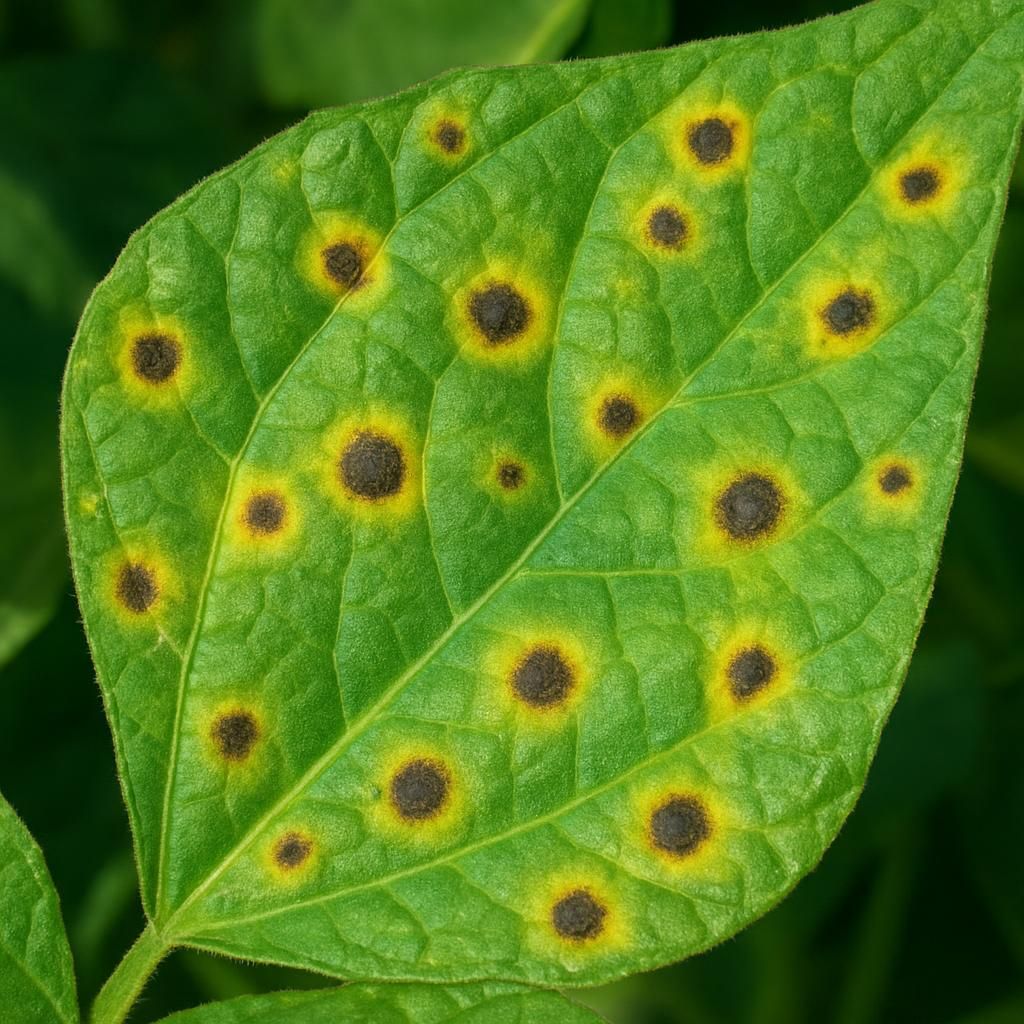
Introduction to Halo blight
Halo blight, caused by the bacterium Pseudomonas syringae pv. phaseolicola, is one of the most destructive bacterial diseases impacting legume crops worldwide. First identified in the early 20th century, it poses a serious threat to bean production, particularly in temperate regions with cool, moist climates. The disease gets its name from the distinctive yellow 'halo' that surrounds small, water-soaked lesions on leaves, a hallmark symptom that differentiates it from other blights like bacterial blight or common blight.
Farmers often face rapid crop devastation during outbreaks, with yield losses reaching 40-60% in severe cases. The pathogen thrives in overhead irrigation systems and rainy periods, making it a persistent challenge for small-scale and commercial growers alike. Early detection and integrated management are crucial, as there are no curative chemical treatments approved for organic systems. This guide equips you with professional-grade diagnostic tools, organic control plans, and prevention strategies to safeguard your bean fields. For insights on optimizing farm management, check this blog post on why timing kills small farm profits.
Understanding halo blight's biology is key to effective control. The bacterium is seedborne, surviving on contaminated seeds, plant debris, and even weeds. It enters through natural openings or wounds, multiplying rapidly in high humidity. Unlike fungal blights, halo blight spreads via splashing rain, wind-driven rain, or contaminated tools, emphasizing the need for strict sanitation protocols.
Identifying Symptoms & Damage
Accurate diagnosis begins with recognizing halo blight's unique symptoms, which appear 7-10 days after infection. Initial signs include small, water-soaked spots on the underside of leaves, often near veins. These lesions expand to 3-10 mm, turning dark brown or black with a characteristic yellow halo on the upper surface—hence the name. In advanced stages, centers become necrotic, and spots may merge, causing leaf blight and premature defoliation.
Pods develop sunken, water-soaked lesions that turn brown, sometimes with a milky bacterial ooze under wet conditions. Infected seeds appear shriveled or discolored, reducing germination rates. Stems may show irregular brown streaks, leading to wilting and plant death in severe infections. Differentiate from angular leaf spot by the halo and lack of angular confinement by veins.
Damage assessment reveals significant economic impact: leaf loss reduces photosynthesis by up to 50%, pod infection cuts harvestable yield, and seed transmission perpetuates the disease cycle. Scout fields weekly during cool, wet weather, using a 10x hand lens to spot bacterial ooze. Conduct a quadrant sample: examine 20 plants per 100 sq m. If 5% show symptoms, initiate controls immediately. Yield losses correlate with infection timing—early-season infections cause 75% reductions versus 25% for late infections.
Lifecycle and Progression of Halo blight
Halo blight's lifecycle is tied to cool, moist conditions (optimal 18-25°C, >90% humidity). The bacterium overwinters in crop residue, seeds (up to 75% contamination), and volunteer plants. Primary infection occurs via contaminated seed or splashing from debris. Bacteria multiply in leaf wetness periods (>6 hours), producing exopolysaccharides for protection.
Progression unfolds in phases: incubation (3-5 days), symptom expression (symptoms appear), and systemic spread via xylem. Secondary cycles amplify via rain splash, with each wetting event releasing billions of cells. Under 30°C, symptoms slow; above 35°C, the pathogen dies. In storage, infected seeds spread to healthy ones via moisture.
Understanding this cycle informs timing: plant after soil warms to 20°C, avoid overhead irrigation post-rain. The disease progresses fastest in dense canopies, underscoring spacing and airflow importance.
Environmental Triggers & Risk Factors
Cool temperatures (15-24°C) and prolonged leaf wetness (>8 hours) are primary triggers, common in spring/fall or high-altitude regions. Overhead irrigation, heavy dews, and frequent rains exacerbate spread. High nitrogen fertilizers promote lush growth, increasing susceptibility.
Risk factors include planting contaminated seeds (biggest source), poor rotation (legume monocultures), and mechanical injury from cultivation. Volunteer beans and weeds like pigweed harbor the pathogen. Clay soils retain moisture, worsening conditions; sandy soils dry faster, reducing risk. Climate change may shift patterns, with erratic rains increasing outbreaks.
Organic Control & Treatment Plans
Organic management relies on cultural, biological, and physical strategies—no antibiotics allowed. Seed treatment: Hot water (52°C for 10 min) or biofungicides like Bacillus subtilis reduce contamination by 90%. Plant certified disease-free seeds.
Sanitation: Rogue infected plants immediately, bury debris post-harvest. Disinfect tools with 10% bleach or alcohol. Avoid overhead watering; use drip irrigation.
Biologicals: Apply copper-based products (e.g., fixed copper at 2-3 kg/ha) at first symptoms, but rotate to prevent resistance. Biocontrols like Pseudomonas fluorescens suppress populations. Plant resistant varieties like 'Carrier' or 'Labrador'.
Integrated plan:
- Scout weekly.
- Apply copper at 7-day intervals during wet periods (max 3 apps).
- Thin plants for airflow.
- Mulch to reduce splash. Once established, remove and destroy infected plants—no recovery expected. Combine with spring pest patrol strategies for holistic defense.
Preventing Halo blight in the Future
Prevention is 90% of control. Use certified pathogen-free seeds tested via grow-out or PCR. Rotate with non-hosts like corn or wheat for 2-3 years. Time planting for warm soils (>18°C) to outpace infection.
Enhance airflow: space 5-7 cm between plants, stake upright. Drip irrigate, water early AM. Cover crops like clover build soil health without hosting. Monitor weather; avoid working fields when wet. Fall tillage buries residue. Long-term, breed resistant lines and use forecasts for preemptive action.
Crops Most Affected by Halo blight
Primarily beans (Phaseolus vulgaris), including snap, dry, and lima varieties. Also impacts peas, lentils, chickpeas, and cowpeas. Less common on fava beans or soybeans. Global hotspots: Americas, Europe, Africa. In pinto bean fields, losses hit 50%; green beans suffer pod deformation. Resistant crops like tomato unaffected.