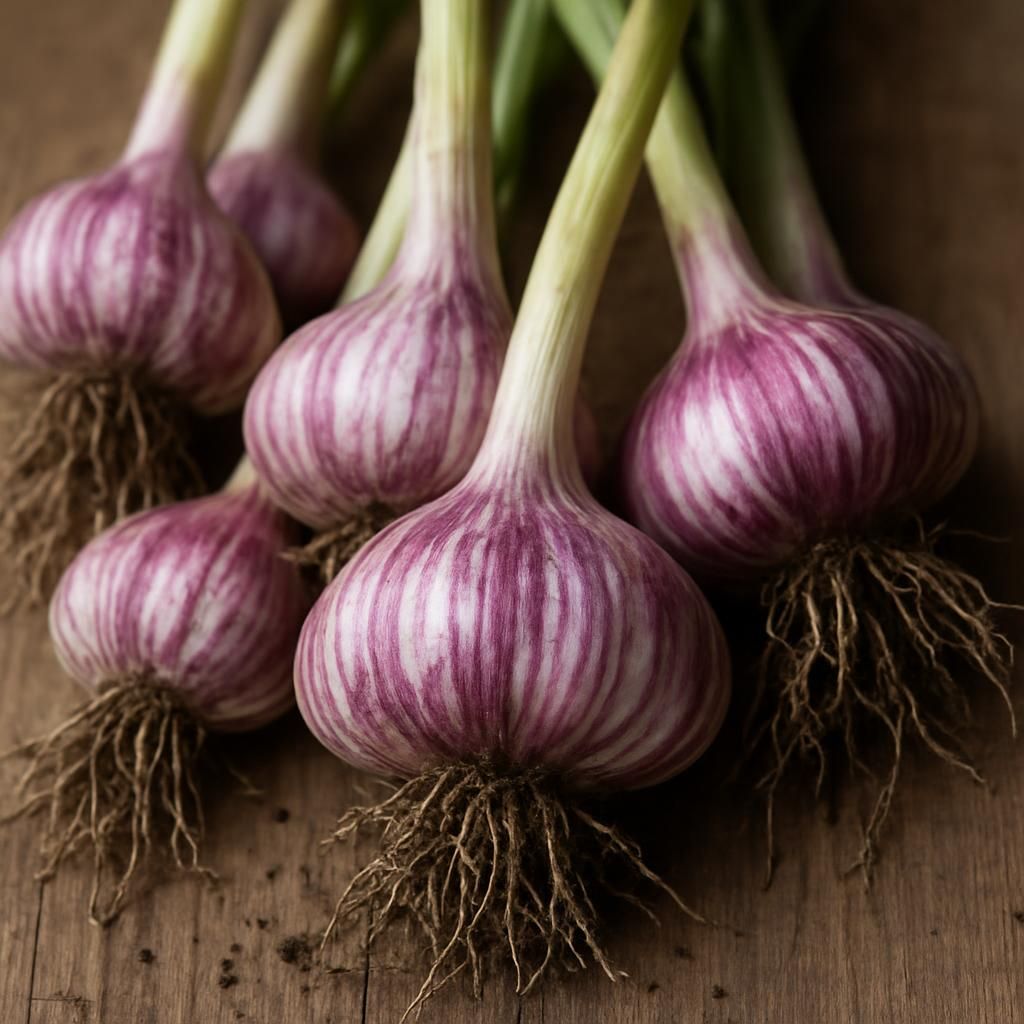
Introduction to Garlic (German Red)
German Red garlic is a premium hardneck cultivar originating from German heritage stock, renowned among chefs and gardeners for its strong, spicy flavor profile with earthy undertones. This variety produces large, easy-to-peel cloves wrapped in distinctive purple-streaked skins that make it visually appealing for both fresh markets and culinary applications. As a hardneck type, it sends up a scape in late spring that must be removed to direct energy into bulb formation.
Home growers and small-scale farmers favor German Red for its reliable overwintering performance and high yields when grown in well-managed soils. Unlike softneck varieties, hardnecks like German Red generally offer superior cold hardiness and complex flavor but require more precise harvest timing. Successful cultivation hinges on fall planting, consistent moisture during active growth, and proper curing to preserve quality.
This comprehensive guide covers every stage from soil preparation through long-term storage, providing professional agricultural recommendations tailored specifically to German Red garlic.
Botanical Profile of Garlic (German Red)
German Red belongs to the Allium genus within the Amaryllidaceae family, sharing lineage with Onion and other alliums. As a hardneck garlic, it develops a stiff central stalk (scape) that produces an umbel of bulbils rather than flowers. The plant forms a compound bulb composed of 8–12 large cloves arranged in a single layer around the central stem.
Each clove is encased in a thin, papery tunic marked with vivid purple striping, a hallmark trait of this cultivar. Foliage consists of flat, blue-green leaves that emerge in early spring and continue growing until scape formation. The variety exhibits strong bolting behavior, making timely scape removal essential for maximizing bulb size.
German Red typically matures in 90–100 days after spring growth resumes, classifying it as a mid-season hardneck. Its robust root system allows excellent nutrient uptake from fertile soils, contributing to the variety’s reputation for intense flavor and long storage life when properly cured.
Soil, pH, and Climate Requirements for Garlic (German Red)
German Red performs best in loose, well-drained loam or sandy loam soils with high organic matter content. Heavy clay soils should be amended with compost or aged manure to improve structure and drainage. Raised beds are highly recommended in regions with poor native drainage.
| Parameter | Ideal Range/Value | Notes |
|---|---|---|
| Soil Type | Loam or sandy loam | Avoid compacted or waterlogged soils |
| Soil pH | 6.0 – 7.0 | Slightly acidic to neutral; test annually |
| Soil Temperature at Planting | 50–60 °F (10–15.5 °C) | Plant 4–6 weeks before first hard frost |
| Air Temperature Range | 32–75 °F (0–24 °C) | Cool-season crop; tolerates light freezes |
| Annual Rainfall | 20–30 inches (500–760 mm) | Supplemental irrigation often required |
| Sunlight | Full sun (minimum 6–8 hours) | South-facing exposure preferred |
| Hardiness Zones | USDA 3–8 | Excellent cold tolerance for overwintering |
Adequate soil fertility is critical. Incorporate 2–3 inches of well-rotted compost or aged manure prior to planting. Avoid fresh manure, which can promote disease and soft bulbs.
Step-by-Step Planting & Propagation
Site Selection & Preparation: Choose a sunny location with the soil conditions listed above. Remove all weeds and incorporate organic matter 2–3 weeks before planting.
Clove Selection: Use only large, healthy, disease-free cloves from certified stock or previous successful harvests. Smaller cloves produce smaller bulbs.
Timing: Plant in fall when soil temperature drops to 50–60 °F. In northern climates this is typically September–October; southern growers may plant as late as November.
Spacing: Plant cloves 4–6 inches apart in rows 12–18 inches apart. Point the pointed end upward and plant 2–3 inches deep.
Mulching: Immediately after planting, apply 4–6 inches of straw or shredded leaves to insulate against winter freeze-thaw cycles and suppress weeds.
Watering In: Provide 1 inch of water after planting to settle soil around cloves.
Care & Maintenance regimes for Garlic (German Red)
Consistent care throughout the growing season ensures large, flavorful bulbs. Focus on moisture management, nutrient balance, and timely removal of scapes.
| Growth Stage | Watering Schedule | Fertilizer Application | Pruning/Scape Management |
|---|---|---|---|
| Fall Establishment | 1 inch per week if no rain | None (rely on pre-plant compost) | None |
| Early Spring | 1–1.5 inches per week | Side-dress with 1 lb nitrogen/1000 sq ft (blood meal or fish emulsion) | Remove any winter-damaged leaves |
| Mid-Spring (Scape Stage) | Maintain even moisture; avoid water stress | Light compost tea every 3–4 weeks | Remove scapes when they form loops |
| Bulb Swelling (Late Spring) | Reduce to 0.75 inches per week | Stop nitrogen; apply potassium-rich amendment if deficiency symptoms appear | Continue scape removal |
| Pre-Harvest (2–3 weeks before) | Withhold water 10–14 days prior to harvest | None | None |
Monitor leaf color: pale yellow tips often indicate nitrogen deficiency, while overly lush foliage may signal excess nitrogen that delays bulb formation.
Pests, Diseases & Organic Management
German Red garlic is generally resilient but can be affected by several common issues. Prevention through crop rotation, healthy soil biology, and sanitation is the foundation of organic management.
Major Pests:
- Aphids can colonize new growth in spring; blast with water or apply insecticidal soap.
- Onion thrips cause silvery streaking on leaves; reflective mulch and beneficial insects provide control.
- Wireworms and cutworms may damage cloves; beneficial nematodes applied at planting help suppress populations.
Major Diseases:
- White rot (Sclerotium cepivorum) is the most serious threat; practice strict 4–6 year rotations and destroy infected plants.
- Fusarium basal rot causes yellowing and rotting at the base; plant only healthy cloves and avoid overwatering.
- Botrytis neck rot can develop during storage if bulbs are not properly cured.
Regular scouting, removal of volunteer alliums, and maintaining good airflow between rows reduce disease pressure significantly.
Harvesting, Curing & Optimal Storage
German Red is ready for harvest when lower leaves begin to yellow and dry while upper leaves remain green—typically 90–100 days after spring growth. Pull bulbs gently on a dry day, shaking off excess soil without washing.
Cure in a well-ventilated, shaded area with temperatures of 60–70 °F and 60–70% humidity for 2–4 weeks. Hang in bundles or spread on screens with good airflow. Once necks are dry and papery, trim roots and tops, leaving 1 inch of stem.
Store cured bulbs in mesh bags or open crates at 32–40 °F with 60–70% humidity. Properly cured German Red can maintain quality for 6–8 months. Avoid refrigeration, which triggers sprouting.
Companion Planting for Garlic (German Red)
Garlic acts as a natural pest deterrent when planted strategically. Its sulfur compounds repel many insects and may inhibit fungal pathogens.
Beneficial Companions:
- Tomato and Pepper benefit from reduced aphid and spider mite pressure.
- Carrot and Beet grow well alongside garlic; the allium odor masks their scent from carrot fly.
- Lettuce and Spinach appreciate the partial shade provided by garlic foliage in early spring.
Avoid:
- Other alliums (onions, leeks) as they compete for nutrients and share pests/diseases.
- Beans and Peas may experience stunted growth due to allelopathic effects.
Plant garlic in dedicated beds or rotate it through the garden every 4–6 years for best results. For more on strategic pairings, see Summer Companion Planting: 10 Organic Pairings to Boost Small Farm Resilience.