Definitive Diagnostic and Management Guide for Gall Wasps
Introduction to Gall wasps
Gall wasps (family Cynipidae) represent a diverse group of minute wasps notorious in agriculture and horticulture for their unique gall-forming behavior. These pests, often less than 3mm in length, lay eggs into plant tissues, triggering the host plant to produce nutrient-rich galls that serve as protective nurseries for their larvae. Affecting over 1,000 plant species worldwide, gall wasps pose significant challenges to orchard managers, foresters, and home gardeners, particularly in temperate regions.
The economic impact is profound: in chestnut orchards, species like the chestnut gall wasp can reduce nut yields by up to 70%, while oak gall wasps distort timber quality. Unlike chewing or sucking pests such as aphids or mites, gall wasps cause indirect damage through gall-induced stress, which weakens plants and opens doors to secondary infections like powdery mildew or root rot. Early identification is crucial, as mature galls are notoriously difficult to treat.
This guide provides professional-grade diagnostics, lifecycle insights, and organic management strategies optimized for small farms and commercial operations. By understanding gall wasp biology, growers can implement proactive measures to safeguard high-value crops like apple, oak, and chestnut trees. For real-world case studies on integrated pest management, see our Spring Pest Patrol blog post.
Gall wasps exhibit sexual and asexual generations, complicating control timing. Females use specialized ovipositors to inject eggs into buds, leaves, stems, roots, or flowers during spring flush. The resulting galls—spherical, spiky, or elongated—vary by species and host, often mimicking fungal galls or tumors. While not always lethal, severe infestations stunt growth, deform fruits, and reduce photosynthesis, leading to 20-50% yield losses in susceptible varieties.
Global distribution spans Europe, North America, Asia, and Australia, with invasive species like the Oriental chestnut gall wasp (Dryocosmus kuriphilus) spreading rapidly via infested plant material. Climate change exacerbates outbreaks by extending growing seasons, allowing multiple generations. Successful management demands an IPM approach: monitoring, cultural sanitation, biological augmentation, and targeted organics. This comprehensive resource equips you with actionable steps to diagnose, disrupt lifecycles, and prevent recurrence.
Identifying Symptoms & Damage
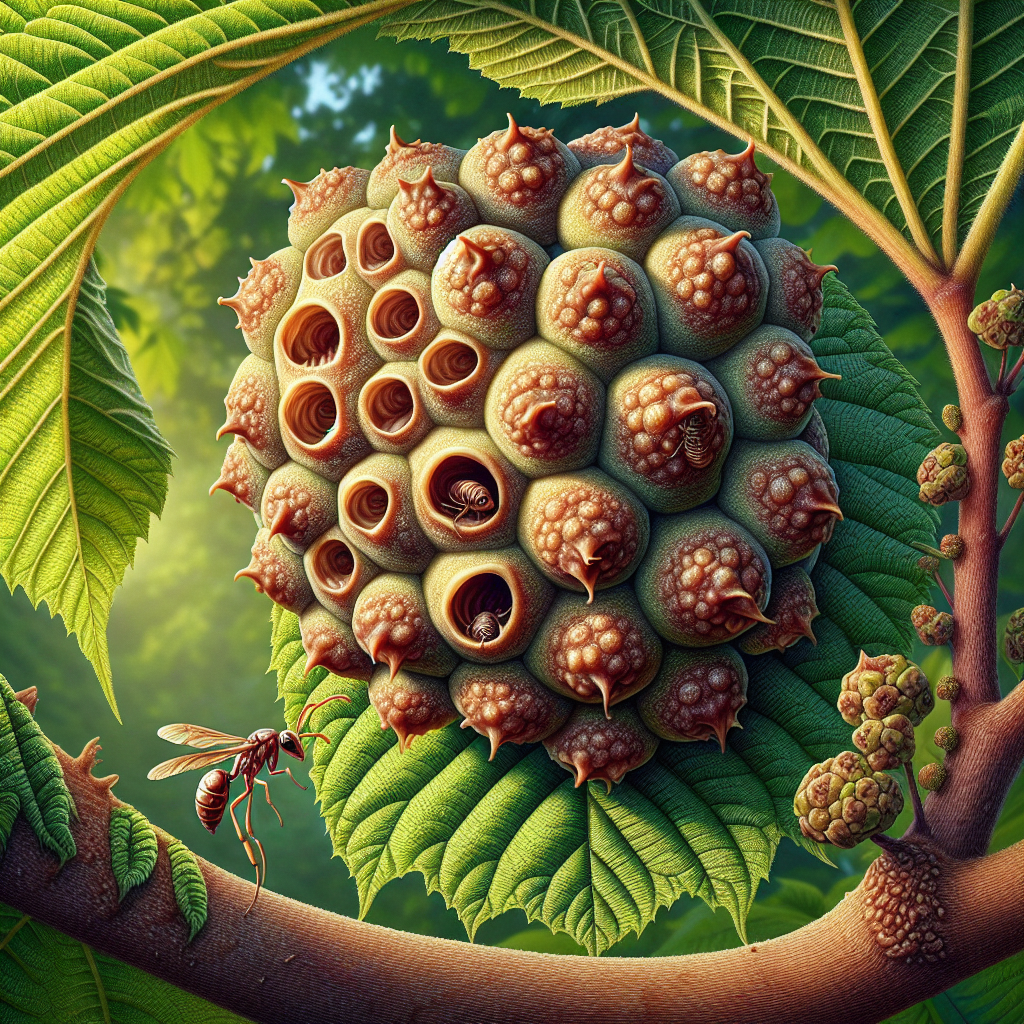
Diagnosing gall wasp infestations requires keen observation of distinctive symptoms. Primary signs include abnormal swellings or galls on leaves, twigs, buds, catkins, or roots—typically green initially, turning brown, red, or woody as they mature. Galls feel firm and may contain a single central chamber housing the larva; cutting one open reveals a creamy-white grub without legs.
On oaks, Andricus species produce marble galls (1-2cm diameter, smooth) or knopper galls (distorted acorns). Chestnut trees show bun-shaped galls clustered on shoots, while roses develop mossy galls on canes. Damage escalates: young galls divert nutrients, causing leaf chlorosis, twig dieback, and reduced flowering. Severe cases lead to branch girdling, canopy thinning, and tree mortality over 2-3 years.
Differentiate from lookalikes: fungal galls (soft, spore-covered) lack insect larvae; phyllody causes leafy flowers without swellings; crown gall occurs at soil line with irregular tumors. Scout during bud break (March-May in temperate zones) using 10x magnification for tiny (1-2mm) wasps or exit holes (0.5mm) on old galls. Damage thresholds: treat if >10% buds infested.
Secondary effects include sooty mold on honeydew from attendant ants, predisposing to sooty mold. Yield impacts: oaks lose 30% acorn production; fruit trees show deformed apples/pears. Use sticky traps or pan traps (yellow, soapy water) for adults; monitor gall development with degree-day models (base 10°C).
Lifecycle and Progression of Gall wasps
Gall wasps undergo complete metamorphosis with gall formation central to their lifecycle. Parthenogenetic females (asexual generation) emerge from overwintered galls in early spring, seeking tender buds. Eggs hatch in 5-10 days; plant hormones induce gall within 2 weeks. Larvae feed 4-6 months, pupate in fall, overwinter as prepupae.
Sexual generation (males + females) emerges summer, mates, lays eggs for next spring's asexual cycle—up to 2-3 generations/year. Species-specific: oak apple gall wasp (Biorhiza pallida) has one-year cycle; chestnut gall wasp multiple overlapping. Adults live 1-2 weeks, females oviposit 20-100 eggs.
Progression: Egg (1wk), young gall (soft, 2cm/mo growth), mature gall (hardened, 1-5cm), larval diapause (winter), adult emergence (spring holes). Disrupt at oviposition (pre-gall) or larval stage. Track with phenology: 200-400 GDD for egglaying.
Environmental Triggers & Risk Factors
Gall wasps thrive in mild, humid springs (15-25°C, >60% RH) favoring bud flush synchronization. Drought stress weakens hosts, increasing susceptibility; excessive nitrogen promotes tender growth. Poor air circulation in dense canopies traps humidity, aiding egg survival.
Risk factors: Monocultures (Hass avocado orchards), infested nursery stock, nearby wild hosts (oaks). Invasive spread via birds transporting galls. Climate: warmer winters boost survival (e.g., 20% more in mild EU years). Soil pH >7 reduces natural enemies.
Organic Control & Treatment Plans
Organic management emphasizes prevention and biologicals. Cultural: Prune/destroy galls pre-emergence (late winter); thin canopy for airflow. Biological: Encourage parasitoids (Torymus spp., 70% control in chestnuts); release 500/ha. Insecticidal soap/neem on young nymphs (pre-gall, 2x/wk); spinosad for larvae.
Treatment Plan: 1) Scout weekly spring. 2) Remove 90% galls. 3) Kaolin clay barrier pre-budbreak. 4) BTi if caterpillars present. 5) Monitor parasitism. Efficacy: 80% reduction Year 1.
Preventing Gall wasps in the Future
Plant resistant varieties (Gala apple); diversify with non-hosts like Thai basil. Quarantine imports; mulch suppresses soil pupae. Companion marigold repels. Annual sanitation + monitoring prevents 95% outbreaks.
Crops Most Affected by Gall wasps
Oaks (80% species), chestnut, roses, apple, pear, hazel, walnut, willow. Commercial: chestnut gall wasp devastates nut crops; oak galls ruin timber.