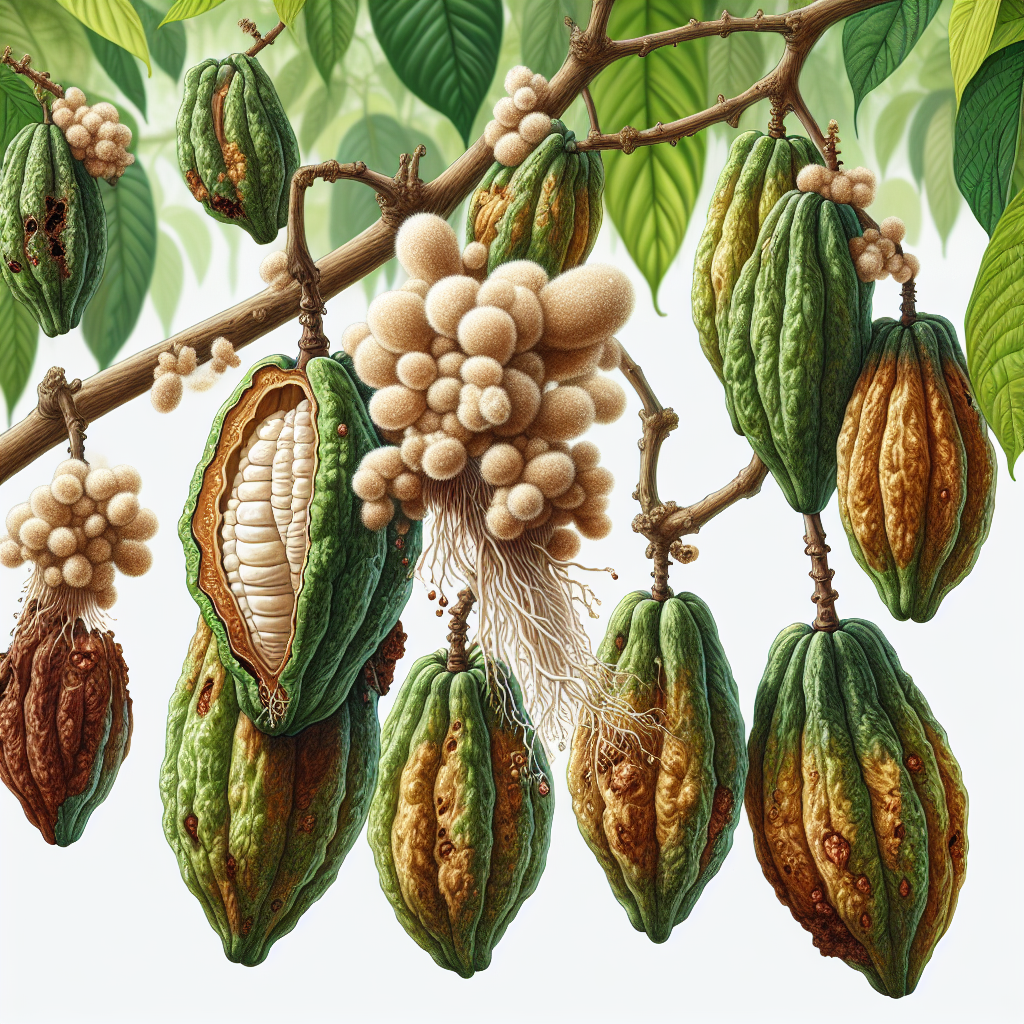
Introduction to Cherelle Wilt
Cherelle wilt, scientifically known as frosty pod rot when affecting mature pods but distinctly recognized for its impact on cherelles (immature cacao fruits under 10 cm), represents one of the most destructive diseases in cacao (Theobroma cacao) production worldwide. First identified in Colombia in 1920, this fungal ailment has spread across Central and South America, parts of Africa, and Southeast Asia, devastating smallholder farms and commercial plantations alike. The disease is caused by Moniliophthora roreri, a hemibiotrophic fungus that thrives in warm, humid environments typical of cacao-growing regions.
Farmers often mistake cherelle wilt for other wilts like Fusarium wilt, but its hallmark is the rapid shriveling of young pods rather than vascular discoloration. Yield losses can exceed 30-50% in unmanaged orchards, making early diagnosis critical. This guide provides professional-grade diagnostic criteria, lifecycle insights, and organic management strategies to safeguard your cacao harvest. Understanding cherelle wilt empowers growers to implement integrated pest management (IPM) protocols that sustain long-term productivity without synthetic chemicals.
In tropical agriculture, where cacao is a high-value export crop, cherelle wilt poses economic threats amplified by climate variability. Read our comprehensive Soil Health Mastery blog post for foundational practices that bolster disease resistance. Proactive monitoring and cultural controls form the backbone of successful cacao farming amid rising global demand for chocolate.
Identifying Symptoms & Damage
Early detection of cherelle wilt hinges on recognizing subtle signs on young cherelles, which are pencil-sized fruits emerging post-flowering. Initial symptoms appear 7-14 days after infection: affected cherelles turn pale green, then olive-brown, wilting longitudinally with a characteristic 'wilted cigar' appearance. Unlike mature pod rot, cherelles do not sporulate externally but show internal white mycelial growth visible upon slicing.
Progressing symptoms include blackened, necrotic tissue spreading from the peduncle attachment point, often accompanied by premature abscission. Dropped cherelles litter the orchard floor, emitting a faint almond-like odor from fungal metabolites. Severe infections cause 80-100% cherelle drop, stunting tree vigor and reducing future pod set. Differentiate from Phytophthora infections, which produce sporangia and affect all pod stages, or nutritional deficiencies manifesting as uniform yellowing without necrosis.
Damage quantification is straightforward: scout 100 random cherelles per tree, noting wilted percentage. Thresholds above 10% warrant intervention. Economic impact is profound; in high-density plantings (1,000 trees/ha), losses equate to 500-1,000 kg/ha of potential bean yield. Secondary effects include fungal spread to maturing pods, compounding with black pod rot. Use hand lenses to inspect for microscopic white spores on aborted cherelles, confirming M. roreri presence.
Photographic monitoring aids diagnosis: wilted cherelles hang limp, contrasting healthy turgid ones. In advanced cases, trees exhibit sparse pod clusters, signaling chronic infection. Always rule out root rot via root excavations, as dual infections exacerbate symptoms.
Lifecycle and Progression of Cherelle Wilt
Moniliophthora roreri follows a polycyclic lifecycle synchronized with cacao phenology. Primary inoculum arises from mummified pods or cherelles on the tree or ground, releasing basidiospores during wet periods. These airborne spores germinate on cherelle surfaces within 6-12 hours of moisture (dew or rain >90% RH, 20-30°C).
Penetration occurs via direct hyphal growth or wounds, establishing biotrophy inside tissues for 10-20 days. Transition to necrotrophy triggers rapid cell death, with mycelium filling cherelle cavities. Sporulation follows, producing millions of white, cottony spores per infected fruit—key secondary inoculum. Wind and rain splash disseminate spores up to 100m, with peak infection during main flowering flushes (biannual in most cultivars).
Disease progression accelerates in microclimates: shaded lower canopies retain humidity, fostering 7-day cycles from infection to sporulation. Overwintering occurs as sclerotia in debris, germinating next season. Lifecycle completion (infection to new infection) averages 14-21 days, enabling 10-15 cycles per rainy season. Monitor via disease calendars aligning with pod set peaks.
Environmental Triggers & Risk Factors
Cherelle wilt epidemics correlate with prolonged leaf wetness (>48 hours), temperatures 22-28°C, and relative humidity >85%. High rainfall (>2,000 mm/year) regions like Ecuador's coastal lowlands report 90% incidence. Poor airflow in dense plantings (>1,200 trees/ha) traps moisture, elevating risk 3-fold.
Risk factors include susceptible varieties like cacao Nacional, excessive nitrogen favoring succulent growth, and adjacent infected farms. Monoculture without shade trees amplifies spread, as M. roreri exploits uniform phenology. Soil waterlogging predisposes roots to stress, indirectly boosting wilt via weakened defenses. Climate change intensifies triggers: erratic rains extend wetting periods, per IPCC models for tropics.
Assess farm risk via wetness duration loggers; >72 hours/week signals high alert. Companion crops like banana reduce humidity via transpiration but host alternate pathogens if unmanaged.
Organic Control & Treatment Plans
Organic management emphasizes sanitation, biocontrols, and barrier methods. Core practice: weekly removal of infected cherelles/pods, burying >50cm deep or incinerating to curb inoculum (reduces incidence 60-80%). Prune lower branches for 1-2m canopy clearance, enhancing airflow.
Apply potassium phosphite (0.5-1%) foliar sprays biweekly during flushes; boosts SAR (systemic acquired resistance) without residues. Trichoderma harzianum-enriched compost (5 t/ha) suppresses soil sclerotia. Neem oil (2%) + Bacillus subtilis mixtures deter spore germination, applied pre-rain.
Step-by-step plan:
- Scout weekly, threshold 5% cherelles.
- Sanitize immediately.
- Spray organics: Week 1 phosphite, Week 2 biofungicide.
- Mulch with Gliricidia prunings to moderate soil moisture.
Integrate with IPM: release predatory mites against vectors. Trials in Peru show 70% control combining sanitation + biofungicides. Avoid copper overuse to preserve beneficials.
Preventing Cherelle Wilt in the Future
Long-term prevention centers on resistant hybrids like CCN-51 (90% resistance) and agroforestry with taller avocado shade trees reducing humidity 20-30%. Rotate with non-hosts like coffee every 5-7 years. Soil solarization (clear plastic, 6 weeks summer) kills sclerotia pre-planting.
Certify disease-free planting material via meristem culture. Annual IPM audits track progress. Educate laborers on hygiene: footbaths, clean tools. Buffer zones (50m) from wild Theobroma spp. prevent spillover. Monitor via apps linking to Why Misidentifying Plants Costs Small Farms Thousands—early alerts save yields.
Build resilience: diversify with vanilla intercrops. Research grafting onto resistant rootstocks shows promise.
Crops Most Affected by Cherelle Wilt
Cherelle wilt is hyper-specific to Theobroma cacao, with no commercial impacts on other crops. Wild relatives like Theobroma bicolor show minor susceptibility. Primary host: fine-flavor cacao varieties in Ecuador, Venezuela. Robust hybrids like TSH clones resist better. No records on coconut or mango—pathogen fidelity limits host range. Focus vigilance on cacao orchards.