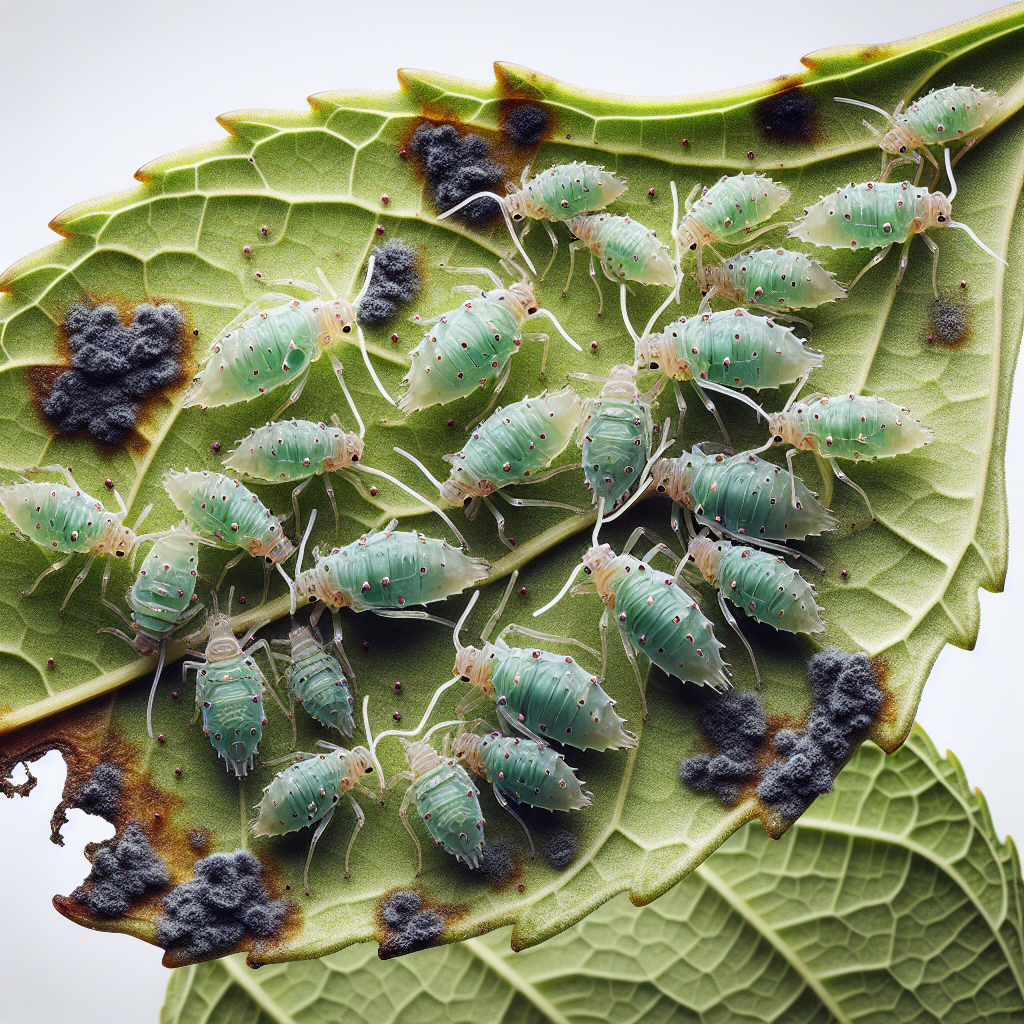
Introduction to Dusky-veined walnut aphid
The dusky-veined walnut aphid, scientifically known as Panaphis juglandis, is a pervasive pest in walnut orchards worldwide, particularly in regions with Walnut (crop) cultivation like California, Europe, and parts of Asia. These small, soft-bodied insects (1-2 mm long) feed on plant sap from leaves, shoots, and twigs, leading to significant economic losses through distorted growth, honeydew production that fosters sooty mold, and weakened tree vigor. As a specialist on Juglans species, it poses a unique threat to commercial Chandler Walnut (crop) and English Walnut (crop) varieties. Early identification is crucial, as populations explode in spring, potentially reducing nut yields by 20-50% in severe infestations. This guide equips growers with professional diagnostics, lifecycle knowledge, and organic management to safeguard harvests. For broader context on aphid pests, see our Aphids (pest) wiki page.
Understanding this pest's biology allows for targeted interventions, minimizing chemical use and promoting sustainable walnut production. Infestations often coincide with flush growth, making scouting essential from bud break to nut development.
Identifying Symptoms & Damage
Dusky-veined walnut aphids cause distinctive symptoms that differentiate them from other pests like walnut aphid or mites. Primary signs include:
- Leaf Curling and Distortion: Aphids cluster on the undersides of new leaves, causing upward curling and crinkling. Affected leaves turn yellow-green and brittle, reducing photosynthesis by up to 40%.
- Honeydew and Sooty Mold: Sticky honeydew coats leaves and branches, promoting black sooty mold growth, which blocks sunlight and lowers nut quality.
- Shoot Dieback: Heavy feeding on terminals leads to blackened, wilted tips, stunting growth in young trees.
- Reduced Nut Yield: In orchards, infestations correlate with smaller nuts and 15-30% drop in harvestable yield.
Visual diagnosis: Look for pale green to yellowish aphids with dusky veins on wings (in alates). Nymphs are smaller, pear-shaped. Use a 10x hand lens to confirm. Differentiate from scale insects by mobility and lack of waxy covering. Damage peaks in spring; scout weekly during bud swell.
Secondary effects include ant attendance (for honeydew) and sooty mold impacting marketability. In severe cases, trees show premature leaf drop, mimicking walnut blight. Threshold: 10-20 aphids per leaf warrants action.
Lifecycle and Progression of Dusky-veined walnut aphid
Panaphis juglandis completes 8-12 generations annually in temperate climates, overwintering as eggs on bark. Lifecycle spans 20-30 days per generation:
- Egg Stage (Winter): Shiny black eggs hatch at bud break (March-April).
- Fundatrix (Spring): Wingless females produce nymphs parthenogenetically.
- Nymphs (1-4 Instars): 7-10 days, feeding voraciously on tender growth.
- Alates (Summer): Winged forms disperse to new trees; males appear late season.
- Sexual Forms (Fall): Produce overwintering eggs.
Peak populations occur May-June, declining with summer heat (>90°F). Cold-hardy eggs ensure annual reinfestation. Monitor with sticky traps for alates. Lifecycle aligns with walnut phenology: primary damage during Stages 2-4 (shoot elongation).
Environmental Triggers & Risk Factors
Infestations surge under specific conditions:
- Warm, Humid Springs: Optimal 65-75°F with high RH (>70%) favors rapid reproduction.
- Nitrogen-Rich Soil: Excess N promotes succulent growth, attracting aphids.
- Poor Air Circulation: Dense canopies in young orchards trap humidity.
- Ant Presence: Ants protect aphids from predators.
- Stress Factors: Drought or root rot weakens trees, increasing susceptibility.
Risk highest in first 3 years post-planting and valleys with fog. Climate change extends active seasons. For hyper-local forecasts, check Why 80% of Small Farms Battle Weather Disasters - And How Hyper-Local AI Forecasts Can Save Your Harvest.
Organic Control & Treatment Plans
Integrated Pest Management (IPM) emphasizes organics:
- Cultural Controls: Prune for airflow; irrigate to avoid stress. Destroy volunteer Juglans.
- Biological Controls: Release Trioxys pallidus parasitoid (80% efficacy); encourage ladybugs and lacewings.
- Organic Sprays:
- Insecticidal Soap/Neem Oil: 1-2% solution weekly at thresholds; targets soft bodies.
- Pyrethrins: Short-residual for outbreaks.
- Oils (Dormant): Horticultural oil in winter kills eggs.
- Monitoring Plan: Scout 20 trees/orchard weekly; treat at 15 aphids/leaf.
Application: Early morning, high volume (200 gal/acre). Rotate modes to prevent resistance. Combine with Spring Pest Patrol: Organic AI Strategies to Shield Your Crops from Common Invaders. Efficacy: 90% control with IPM.
Preventing Dusky-veined walnut aphid in the Future
Proactive strategies minimize risks:
- Resistant Varieties: Plant tolerant rootstocks like Paradox.
- Sanitation: Remove wild walnuts; mulch to suppress weeds.
- Beneficial Habitats: Interplant yarrow or thyme for predators.
- Timing: Dormant oil + spring releases.
- Monitoring Tech: Use apps for degree-day models (base 45°F).
Long-term: Cover crops reduce ant habitats. Annual audits prevent buildup. Success rate: 70-85% reduction in treatments.
Crops Most Affected by Dusky-veined walnut aphid
Primarily walnut (Juglans regia, J. nigra), including Chandler Walnut, Hartley Walnut, Franquette Walnut. Minor hosts: pecan (Pecan (crop)), butternut. Global impact: 100,000+ acres affected yearly. No significant field crops; orchard-specific.