Introduction to Walnut blight
Walnut blight is one of the most economically important bacterial diseases impacting Walnut production globally, particularly in regions with cool, wet springs. Caused by the pathogen Xanthomonas arboricola pv. juglandis (Xanthomonas arboricola pv. juglandis), this disease targets blossoms, leaves, shoots, and developing nuts, often resulting in 50-100% crop loss in severe epidemics. First identified in the early 1900s in California walnut orchards, it has since spread to major production areas in the US, Europe, China, and Chile.
The disease's impact is profound on commercial Chandler Walnut and English Walnut cultivars, which dominate global markets. Symptoms appear shortly after bloom, with bacteria entering through natural openings or wounds during rain events. Without intervention, repeated infections weaken trees, reduce nut quality, and shorten orchard lifespan. This guide provides definitive diagnostic criteria, lifecycle insights, and proven organic management strategies for growers seeking to protect their yields. Early detection and prevention are critical, as chemical controls are limited for organic systems. For small farms optimizing disease management, tools like Why Misidentifying Plants Costs Small Farms Thousands - And How AI Camera Diagnosis Fixes It Fast can revolutionize scouting efficiency.
Understanding walnut blight requires knowledge of its bacterial nature—unlike fungal blights, it spreads via rain splash and contaminated tools, making sanitation paramount. Annual losses exceed $30 million in California alone, underscoring the need for integrated approaches. This comprehensive resource equips botanists, farmers, and orchard managers with actionable steps from diagnosis to long-term prevention.
Identifying Symptoms & Damage
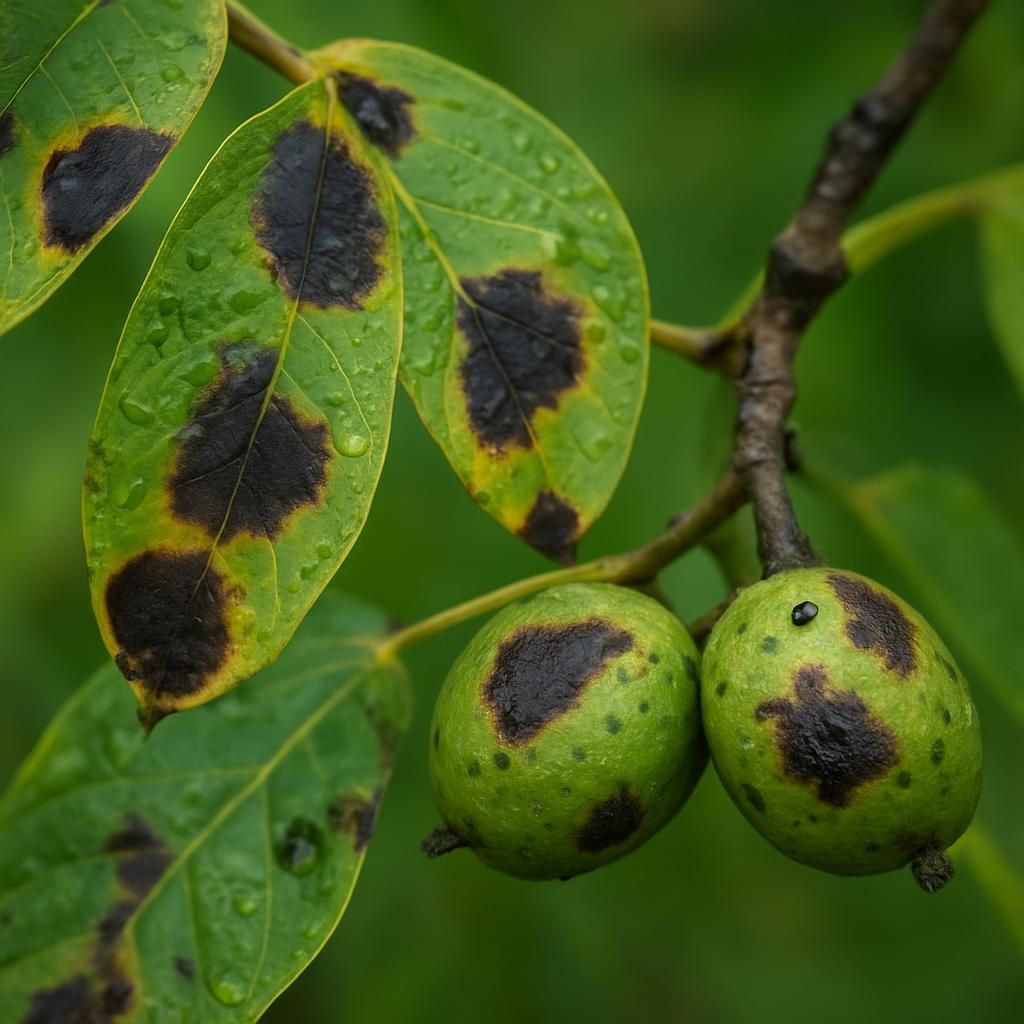
Accurate diagnosis of walnut blight hinges on recognizing distinctive symptoms that differentiate it from fungal diseases like Phytophthora or Botrytis. Primary signs emerge 1-2 weeks post-infection on new growth. Blossoms turn black and shrivel, often with a watery appearance before drying. Leaves develop irregular, dark brown to black lesions with yellow halos, progressing from margins inward; severely affected leaves drop prematurely, leading to defoliation.
Shoot tips exhibit 'black tip' symptoms—blackened, wilted terminals with angular lesions. Nuts show the hallmark sign: dark, sunken cankers on husks, sometimes with amber bacterial ooze exuding during wet weather. Cut stems reveal brown discoloration in vascular tissue. Unlike Alternaria leaf spot, walnut blight lesions are water-soaked initially and lack concentric rings.
Damage quantification is key: blight reduces nut set by killing catkins and pistillate flowers, with infected nuts dropping early or developing deformed shells. Yield losses correlate with infection timing—pre-bloom infections devastate, while mid-season hits quality. Secondary effects include twig dieback, increased susceptibility to Walnut husk fly, and tree stress promoting root rot. Scout weekly from pink bud stage, using a 10x hand lens to spot ooze. Lab confirmation via ELISA or PCR distinguishes from look-alikes like copper phytotoxicity.
In young orchards, symptoms mimic herbicide injury, but bacterial streaming in water mounts confirms diagnosis. Economic thresholds: >5% blighted shoots warrant action. Document via photos for IPM records.
Lifecycle and Progression of Walnut blight
Xanthomonas arboricola pv. juglandis is a non-spore-forming bacterium surviving in dormant buds, bark lesions, and leaf scars over winter. Primary inoculum overwinters in blighted twigs; spring rains (0.1-0.25 inches) splash bacteria onto blooms at petal fall to nutlet stages. Optimal infection occurs at 20-25°C with leaf wetness >12 hours, entering stomata or hydathodes.
Progression unfolds in cycles: incubation 5-14 days yields symptoms, then secondary spread via rain to nearby tissues. Bacteria multiply in host parenchyma, producing exopolysaccharides for ooze. Peak epidemics coincide with repeated wetting events during early nut development. Systemic movement is limited, but high inoculum loads (>10^6 CFU/g) amplify spread.
One lifecycle per season, but polycyclic within-tree spread mimics fungal pathogens. Summer heat (>30°C) halts activity, resuming in fall rains. Overwinter survival: 70-90% in cankers. Disease triangles emphasize inoculum reduction via pruning.
Environmental Triggers & Risk Factors
Wet springs with >10 rain events post-bloom are primary triggers, with free water on tissues driving epidemics. High humidity (>85%) and temperatures 15-27°C optimize infection; drought stress exacerbates via stomatal opening. Risk factors include susceptible varieties like Hartley Walnut, dense canopies limiting air flow, and overhead irrigation.
Soil factors: high nitrogen promotes succulent growth, ideal for bacteria. Poor drainage fosters Phytophthora root/crown rot, compounding blight. Regional risks peak in California's Sacramento Valley and Mediterranean climates. Wind-driven rain accelerates splash dispersal up to 50m between trees.
Organic Control & Treatment Plans
Organic management centers on cultural IPM, excluding synthetic bactericides. Prune blighted shoots >20cm below lesions in late summer/dormancy, removing 10-20% canopy if needed; destroy debris. Apply copper hydroxide or fixed copper (e.g., Cueva, Badge X2) at 2-4 lbs/A pre-bloom, petal fall, and nutlet stages—target 80% coverage with airblast sprayers. Timing via UC Davis models (rainfast within 2 hours).
Biologicals like Bacillus subtilis (Serenade) suppress via competition; apply weekly during high-risk windows. Streptomycin alternatives limited organically—rely on oils like JMS Stylet-Oil for contact kill. Nutrition: balanced K:Mg ratios harden tissues; avoid excess N. Resistant rootstocks (e.g., Paradox) and scions like Tulare reduce incidence 30-50%.
Sanitation: disinfect tools with 10% bleach between trees; foot baths for workers. For outbreaks, strip-pick infected nuts early. Integrate with Spring Pest Patrol: Organic AI Strategies to Shield Your Crops from Common Invaders for holistic defense. Monitor via sticky traps for Walnut aphid synergy.
Step-by-step plan: 1) Dormant prune/sanitize. 2) Copper at green tip/pink bud. 3) Scout bloom. 4) Reapply post-rain. 5) Thin canopy. Success rates: 70-90% reduction with compliance.
Preventing Walnut blight in the Future
Long-term prevention builds resilient orchards. Select resistant cultivars like Howard, Solano; plant at 30x30ft spacing for airflow. Site selection: well-drained slopes, avoid low frost pockets. Drip irrigation minimizes wetting; mulch conserves moisture without splash.
Annual practices: dormant copper + hort oil; urea sprays for bud thinning. Windbreaks reduce rain velocity. Biofumigants like mustard cover crops suppress soil inoculum. Monitor weather via apps for spray windows. Rotate copper formulations to curb resistance. Orchard renewal: remove >20% blighted trees. Research UAS scouting enhances early detection. Commit to 3-year IPM for sustained control.
Crops Most Affected by Walnut blight
Primarily Walnut species, especially Juglans regia cultivars: Chandler (most susceptible), Hartley, Franquette (Walnut (Franquette)), Serr (Walnut (Serr)). English walnuts dominate losses; black walnuts (Juglans nigra) show tolerance. No other major crops affected, though minor reports on pecan (Pecan) and butternut. Focus protection on commercial walnut orchards.