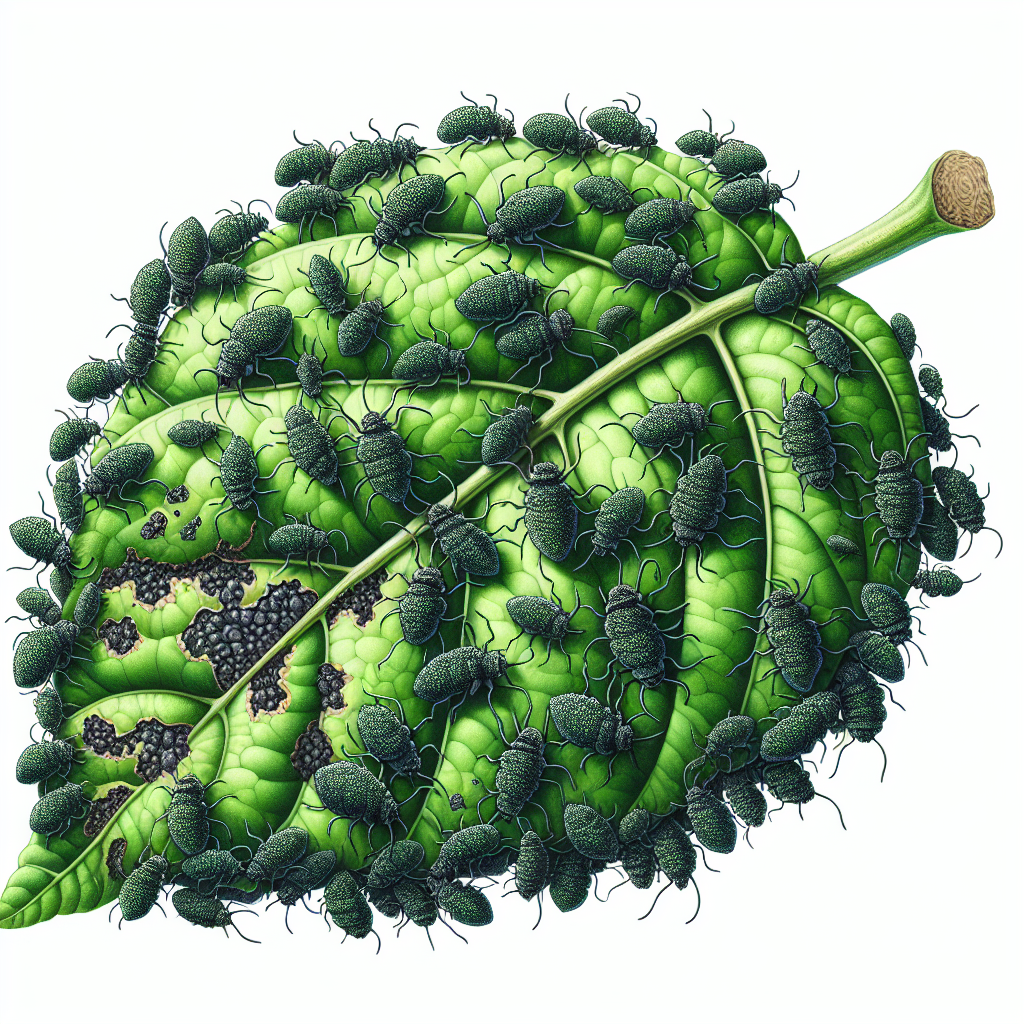
Introduction to Walnut aphid
The walnut aphid, scientifically known as Chromaphis juglandicola, is a pervasive pest targeting walnut trees worldwide, particularly in commercial orchards and home gardens. Native to North America, this aphid species has adapted to various walnut cultivars, thriving in temperate climates where walnuts are cultivated. As a sap-feeding insect, it colonizes new growth, leading to significant economic losses through reduced photosynthesis, deformed foliage, and secondary infections. Understanding this pest is crucial for walnut growers, as unchecked infestations can reduce nut yields by up to 50% in severe cases.
Walnut aphids are small, pear-shaped insects typically measuring 1.5-2.5 mm in length, with adults appearing dark green to black and wingless forms dominating populations. They excrete honeydew, a sugary substance that promotes sooty mold fungus, further compromising tree vigor. For more on general Aphids, see our detailed wiki. Early detection and integrated pest management (IPM) are key to minimizing damage, especially since chemical controls can disrupt beneficial predators. This guide provides professional-grade diagnostics, lifecycle insights, and organic strategies tailored for sustainable walnut production.
In walnut-growing regions like California, which produces over 99% of U.S. walnuts, aphids can complete multiple generations per season, exacerbating outbreaks. Climate change may extend their activity periods, making proactive management essential. By integrating cultural, biological, and minimal chemical tactics, growers can protect yields while preserving ecosystem balance.
Identifying Symptoms & Damage
Walnut aphid infestations manifest through distinct visual cues on foliage, particularly on the undersides of young leaves. Initial signs include leaf curling and crinkling, where tender shoots twist upward, creating a 'rosette' appearance. Heavily infested leaves turn yellow or brown, drop prematurely, and reduce the tree's canopy density, impairing nut development.
A hallmark symptom is honeydew excretion, forming sticky droplets that coat leaves, branches, and even ground below. This attracts ants and fosters sooty mold (Capnodium spp.), a black fungal growth that blocks sunlight and stunts growth. Severe infestations lead to twig dieback, reduced terminal growth, and smaller, lower-quality nuts. Scout by tapping branches over white paper; aphids appear as tiny black specks.
Damage peaks in spring during bud break and again in fall on new flush. Differentiate from other pests like mites or scale insects, which lack honeydew. Economic thresholds: 10-20 aphids per leaf warrant action in commercial settings. Young trees suffer most, with growth suppression lasting seasons.
Lifecycle and Progression of Walnut aphid
The walnut aphid exhibits a complex lifecycle synchronized with walnut phenology, typically spanning 10-12 generations annually in mild climates. Overwintering occurs as black eggs on twigs near buds, hatching in early spring (March-April) as nymphs that feed on unfolding leaves. Wingless females (viviparous) reproduce parthenogenetically, birthing live nymphs every 7-10 days at 20-25°C.
Nymphs molt four times over 10-14 days, maturing into adults that continue rapid reproduction. Populations explode mid-spring, with winged forms (alates) dispersing to new trees during peaks. Summer sees declining populations due to heat (>30°C) and natural enemies, but resurgence occurs in fall on late-season growth. Sexual forms appear in autumn, laying overwintering eggs.
Lifecycle duration shortens with warmth: 8 days at 27°C vs. 20 days at 15°C. Monitor using degree-day models (base 7°C) for precise timing. Understanding progression aids targeted interventions, like applying treatments at nymphal stages when vulnerable.
Environmental Triggers & Risk Factors
Walnut aphids flourish under specific conditions favoring rapid reproduction. Cool, moist springs (10-25°C, high humidity) trigger egg hatch and population booms, especially after mild winters reducing egg mortality. Excessive nitrogen fertilization promotes succulent growth, ideal for aphid feeding, while drought-stressed trees become more susceptible.
Poor orchard sanitation, like unmanaged weeds or nearby alternate hosts (e.g., English walnut seedlings), serves as reservoirs. Ants farming aphids for honeydew exacerbate infestations by protecting them from predators. Climate factors: El Niño patterns increase rainfall, boosting aphids; hot, dry summers naturally suppress them via mortality and predation.
Risk is higher in young orchards (<5 years) and dense canopies limiting spray penetration. For insights on Walnut (crop), check our wiki. Regional variations: California's Central Valley sees peak pressure; avoid over-irrigation to toughen foliage.
Organic Control & Treatment Plans
Organic management emphasizes IPM, prioritizing prevention and biological controls. Monitoring: Weekly scouts from bud swell to hull split using beat trays or sticky traps. Threshold: 5-10% shoot tips infested.
Biological Controls: Encourage natural enemies like lady beetles (Coccinella spp.), lacewings (Chrysoperla spp.), and syrphid flies, which devour 50-100 aphids daily. Release Aphidoletes aphidimyza midges (1,000/acre) at first detection. Neem oil (0.5-2% azadirachtin) disrupts feeding/molting; apply evenings to spare predators. Insecticidal soaps (1-2% potassium salts) smother aphids; 2-3 applications at 7-day intervals, covering undersides.
Cultural Tactics: Prune for open canopy, enhancing airflow and predator access. Summer pruning removes aphid hotspots. Reflective mulches deter alates. Strong water blasts dislodge colonies.
Advanced Organic: Kaolin clay barriers reduce landing; horticultural oils in dormancy smother eggs. Check our blog on Spring Pest Patrol: Organic AI Strategies to Shield Your Crops from Common Invaders for tech-enhanced scouting. Rotate tactics to prevent resistance; combine with ant baits (boric acid) to disrupt mutualism.
Treatment Plan: 1) Scout weekly. 2) Introduce predators at low levels. 3) Soap/neem at thresholds. 4) Monitor efficacy. Success rates exceed 80% with consistency.
Preventing Walnut aphid in the Future
Long-term prevention builds resilient orchards through cultural and genetic strategies. Select resistant cultivars like Chandler Walnut or Hartley Walnut, which show tolerance. Plant windbreaks to disrupt alate dispersal and maintain balanced nutrition (avoid excess N).
Sanitation: Remove volunteer walnuts and debris post-harvest to eliminate egg sites. Cover crops like clover attract predators. Timing irrigation to avoid peak flushes toughens growth. Dormant oil sprays (2-3% mineral oil) target eggs, applied at 50% leaf drop.
Encourage biodiversity: Interplant with yarrow or thyme for predator habitats. Annual IPM audits track trends. Learn from Soil Health Mastery: 5 Proven Strategies for Small Farms to Build Fertile Ground Without Breaking the Bank to foster healthy trees resisting pests. Consistent prevention reduces outbreaks by 70-90%.
Crops Most Affected by Walnut aphid
Primarily targeting walnuts, Chromaphis juglandicola shows host specificity but can infest related Juglandaceae. Primary Host: Walnut trees, especially English (Juglans regia) varieties like Chandler, Howard, and Serr. Young orchards and Paradox rootstocks suffer most.
Secondary Hosts: Butia (wingnut), pecan (Carya illinoinensis) minimally, and native black walnut (Juglans nigra). No significant impact on other nuts like almond or pecan, though honeydew may spread sooty mold indirectly. Commercial walnuts face 20-50% yield losses; home trees see aesthetic damage. Focus protection on walnut blocks.