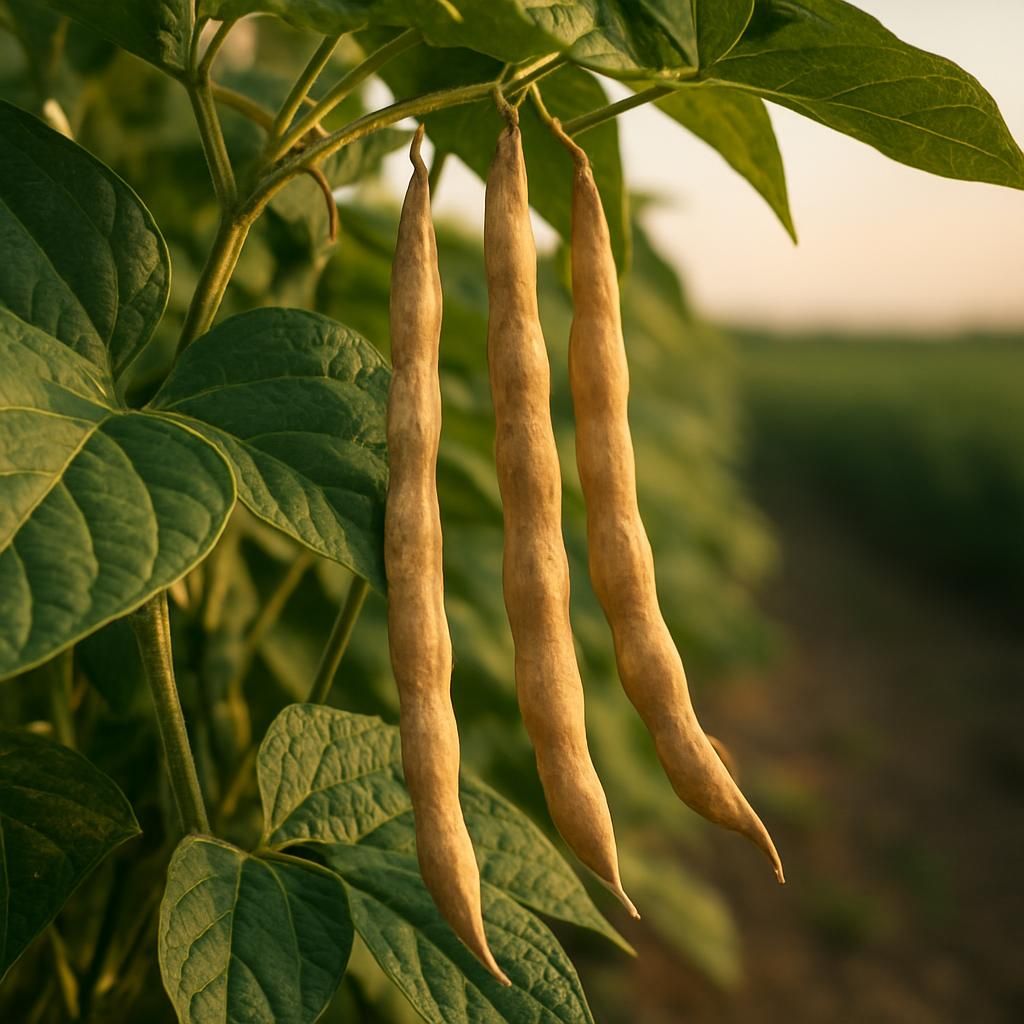
Introduction to Dry Beans
Dry beans (Phaseolus vulgaris) rank among the most important pulse crops worldwide, supplying high-quality protein, complex carbohydrates, fiber, and essential minerals to millions of people. Commercial and small-scale growers value them for their nitrogen-fixing ability, relatively short growing season, and strong market demand for varieties such as pinto, black, kidney, and navy beans. Successful production depends on matching variety selection to local climate, implementing precise planting windows, and following integrated pest and disease management.
Botanical Profile of Dry Beans
Dry beans belong to the Fabaceae family and exhibit a range of growth habits including determinate bush types that reach 30–60 cm and indeterminate pole types that climb 2–3 m. Plants produce trifoliate leaves, white to purple papilionaceous flowers, and elongated pods containing 4–8 seeds. Seed color, size, and hilum patterns vary widely by cultivar. The root system features a taproot with extensive lateral roots that host Rhizobium bacteria for atmospheric nitrogen fixation.
Soil, pH, and Climate Requirements for Dry Beans
Dry beans thrive in well-drained, fertile loamy soils with good structure. They perform best when soil temperature at planting depth reaches at least 15 °C. Excessive moisture or compaction quickly leads to poor emergence and root diseases.
| Parameter | Ideal Range/Value | Notes |
|---|---|---|
| Soil Type | Loam to sandy loam | Good drainage essential; avoid heavy clays |
| Soil pH | 6.0–7.0 | Below 5.8 increases aluminum toxicity risk |
| Organic Matter | 2–4 % | Improves moisture retention and fertility |
| Planting Soil Temp | 15–18 °C | Minimum for rapid, uniform germination |
| Air Temperature | 18–29 °C daytime; >10 °C nights | Sensitive to frost at all growth stages |
| Annual Rainfall | 400–600 mm well distributed | Supplemental irrigation often required |
| Frost-Free Period | 90–120 days | Short-season cultivars available |
Step-by-Step Planting & Propagation
Select certified seed treated with the appropriate Rhizobium inoculant for Phaseolus. Inoculate immediately before planting if seed is not pre-treated. Prepare seedbeds by incorporating compost or well-rotted manure to reach 2–4 % organic matter. Plant when soil temperature stabilizes above 15 °C and risk of frost has passed. Sow bush beans 2.5–4 cm deep, 5–8 cm apart in rows 45–60 cm apart. For pole beans, space seeds 10–15 cm apart along trellises or tepees with 75–90 cm between rows. Maintain consistent moisture during germination; avoid crusting by light irrigation or row covers.
Care & Maintenance regimes for Dry Beans
Timely irrigation, balanced nutrition, and weed control drive high yields. Apply water to maintain 50 % field capacity during flowering and pod fill. Side-dress with low-nitrogen fertilizer once nodules are established. Mulch between rows to suppress weeds and conserve moisture.
| Growth Stage | Water Schedule | Fertilizer Application | Pruning / Other Care |
|---|---|---|---|
| Pre-plant / Emergence | Light irrigation to settle seedbed | Incorporate 20–30 kg N/ha starter if soil test low | Remove weeds; firm soil around seedlings |
| Vegetative (V2–V6) | 25–30 mm/week if rainfall insufficient | None if nodules active; 15 kg P/ha banded if needed | Cultivate shallow; scout for pests |
| Flowering / Pod Set | 35–40 mm/week; avoid water stress | 10–15 kg K/ha if tissue test indicates deficiency | Avoid disturbing roots |
| Pod Fill to Maturity | Reduce to 20 mm/week as pods dry | No additional N; stop all fertilization | Remove late weeds; prepare for harvest |
Pests, Diseases & Organic Management
Major insect pests include bean leaf beetles, Mexican bean beetle, aphids, and cutworms. Scout weekly and use floating row covers during early growth. Release beneficial insects such as lady beetles and parasitic wasps. Common diseases are anthracnose, bacterial blight, Fusarium wilt, and root rot. Use disease-resistant cultivars, practice 3–4 year crop rotation, and remove crop debris after harvest. Copper-based sprays and neem oil provide organic suppression when applied at first sign of symptoms.
Harvesting, Curing & Optimal Storage
Harvest when pods are fully mature, dry, and seeds rattle inside. Pull entire plants or use a combine set for dry beans. Field-dry pods to 13–15 % moisture or use forced-air dryers at <35 °C. Clean seed to remove chaff and damaged beans. Store in airtight containers or bins at 10–15 °C and <65 % relative humidity. Monitor for bruchids and storage beetles; freeze small lots 48 hours or use diatomaceous earth for organic protection.
Companion Planting for Dry Beans
Dry beans pair well with corn and squash in the traditional Three Sisters system, where beans fix nitrogen for heavy-feeding corn. Compatible aromatic companions include thyme, rosemary, and marigold that deter pests. Avoid planting near onion, garlic, or leeks as alliums can inhibit bean growth. Interplant with radish or carrot to maximize bed space and improve biodiversity.