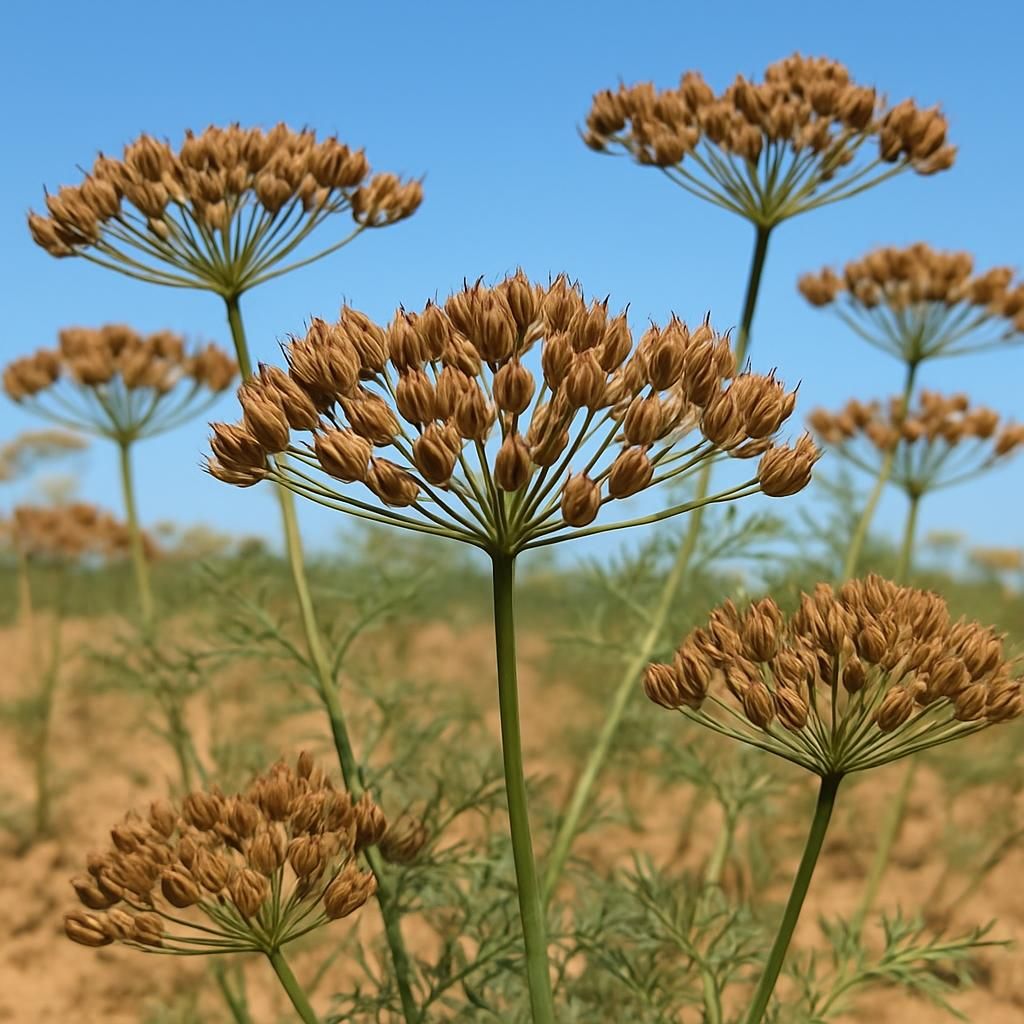
Introduction to Cumin Seed
Cumin (Cuminum cyminum) is one of the earliest cultivated spice crops, originating in the eastern Mediterranean and spreading across arid zones of the Middle East, North Africa, and South Asia. The small, elongated seeds are prized for their distinctive earthy, nutty flavor and high essential oil content, particularly cuminaldehyde. Today, major commercial production occurs in India, Turkey, Iran, and Syria, where the crop supports both domestic spice markets and substantial export industries. Successful cultivation demands attention to soil drainage, temperature control, and water management to prevent common fungal issues while achieving consistent seed quality.
Botanical Profile of Cumin Seed
Cuminum cyminum is an annual herbaceous plant reaching 15–50 cm in height with slender, branched stems and finely divided, feathery leaves. It produces small, white or pinkish flowers arranged in compound umbels that develop into schizocarp fruits containing two elongated seeds. The plant exhibits a taproot system that aids drought tolerance once established. Cumin belongs to the Apiaceae family alongside Coriander and Caraway, sharing similar flowering structures and seed morphology.
Soil, pH, and Climate Requirements for Cumin Seed (MUST INCLUDE A MARKDOWN TABLE OF IDEAL CONDITIONS)
Cumin performs best in light, well-drained sandy loam or loam soils with good structure that prevents waterlogging. Heavy clay soils increase the risk of root rot and should be avoided or heavily amended. The crop tolerates moderate salinity but requires neutral to slightly alkaline conditions for optimal nutrient uptake.
| Parameter | Ideal Range | Notes |
|---|---|---|
| Soil Type | Sandy loam to loam | Excellent drainage essential |
| Soil pH | 6.8 – 8.3 | Slightly alkaline preferred |
| Temperature (Day) | 20 – 30 °C | Critical during flowering and seed set |
| Temperature (Night) | 10 – 18 °C | Avoid frost after emergence |
| Annual Rainfall | 300 – 600 mm | Supplemental irrigation required in drier zones |
| Growing Season Length | 100 – 140 days | Long, warm, dry period needed for ripening |
Step-by-Step Planting & Propagation
Cumin is almost exclusively propagated by seed. Select certified, disease-free seed with high germination rates above 85 %. Prepare the seedbed by incorporating well-rotted compost to improve structure and fertility without excess nitrogen. Sow seeds directly in rows 25–30 cm apart at a depth of 1–2 cm when soil temperature reaches a consistent 18 °C. Maintain row spacing of 30–45 cm to allow airflow and ease of weeding. Thin seedlings to 8–10 cm within rows once they reach 5–7 cm in height. Germination typically occurs in 7–14 days under optimal moisture.
Care & Maintenance regimes for Cumin Seed (MUST INCLUDE A MARKDOWN TABLE OF WATER, FERTILIZER, AND PRUNING SCHEDULES)
Cumin requires careful irrigation to avoid both drought stress and waterlogging. Apply light, frequent irrigations during establishment, then reduce frequency as plants develop deeper roots. Nitrogen should be applied moderately early in the season, while phosphorus and potassium support root and seed development. No pruning is required beyond removing weeds.
| Growth Stage | Irrigation Schedule | Fertilizer Application | Pruning/Weeding |
|---|---|---|---|
| Pre-sowing to Emergence | Light irrigation every 3–4 days | Incorporate 20–25 kg N, 40 kg P₂O₅, 20 kg K₂O/ha | Hand weed or shallow cultivation |
| Vegetative (4–8 weeks) | Every 7–10 days, 25–30 mm | Side-dress 15–20 kg N at 4–5 weeks | Remove weeds; no pruning |
| Flowering to Seed Set | Every 10–14 days, avoid overhead | Apply 10 kg K₂O if deficiency symptoms appear | Maintain weed-free rows |
| Ripening (last 3 weeks) | Withhold irrigation 10–14 days before harvest | None | Final weeding only |
Pests, Diseases & Organic Management
Major pests include aphids, thrips, and cutworms that damage seedlings and reduce seed set. Spider mites may appear under hot, dry conditions. Key diseases are Fusarium wilt, Alternaria leaf spot, and powdery mildew. Implement crop rotation with non-host crops such as wheat or barley for at least three years. Use neem-based sprays and insecticidal soaps for aphids and mites. Improve airflow through proper spacing and remove infected debris promptly. Soil solarization before planting reduces soil-borne pathogen loads.
Harvesting, Curing & Optimal Storage
Cumin reaches maturity 100–140 days after sowing when seeds turn brown and plants begin to dry. Harvest in the early morning by cutting plants at the base or uprooting entire plants. Bundle and hang in a well-ventilated, shaded area for 5–7 days until fully dry. Thresh seeds by gentle beating or mechanical threshing, then winnow to remove chaff. Store cleaned seeds in airtight containers at 10–15 °C and below 60 % relative humidity to preserve essential oils for up to 18 months.
Companion Planting for Cumin Seed
Cumin benefits from association with onion and garlic, which deter aphids and improve soil health. Avoid planting near fennel or other Apiaceae family members that may cross-pollinate or compete for resources. Intercropping with chickpeas or lentils can enhance nitrogen availability and reduce weed pressure. Marigold borders help repel nematodes and attract beneficial insects.
For more on building resilient small-farm systems through strategic crop choices, see Summer Companion Planting: 10 Organic Pairings to Boost Small Farm Resilience.