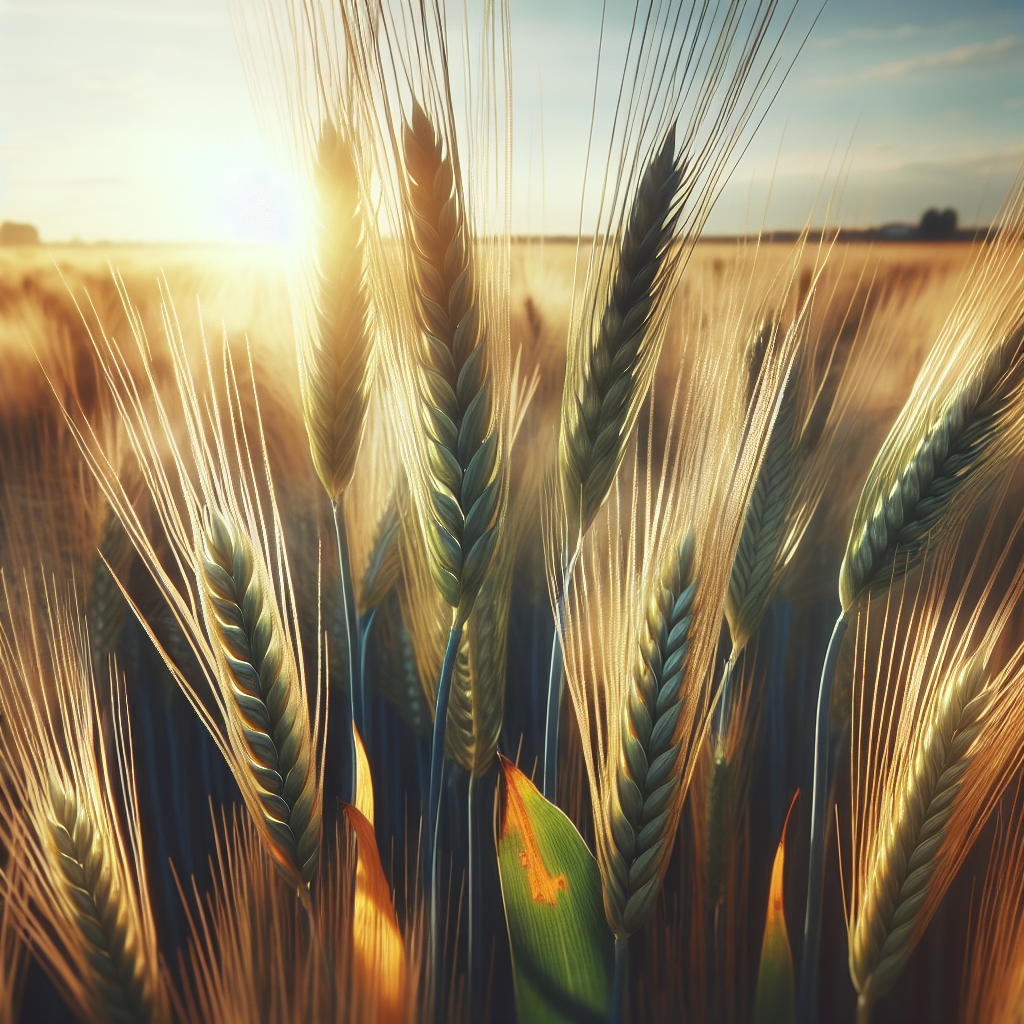
Introduction to Cereal Rye
A true temperate cereal, this species has been cultivated for centuries across northern and eastern Europe, western Asia, and other regions where winters are severe and soils are too light, acidic, or infertile for less resilient grains. Historically, it became the bread grain of colder, poorer landscapes because it could produce where other cereals failed. That same toughness explains why modern growers use it not only for grain but also for grazing, haylage, green chop, straw, and especially as a high-performance winter cover crop.
It is important to distinguish cereal rye from ryegrass. Cereal rye is a grain-forming cereal in the genus Secale, while ryegrass is a forage grass in the genus Lolium. This distinction matters because cereal rye produces a taller, more upright plant, deeper roots, stronger winter hardiness, and significant allelopathic effects that can suppress small-seeded weeds and, if poorly managed, slow establishment of following crops.
For rotational planning, many growers compare its field role with Wheat, but rye generally tolerates lower fertility, more acidic soils, and colder winter conditions. It also establishes rapidly in cool weather, often outgrowing weeds late in the season when many other covers are slowing down. For system-level soil benefits, see soil health strategies.
From a practical perspective, cereal rye is one of the most forgiving autumn-sown crops available. It can germinate in cool soils, protect land from erosion, capture leftover nitrogen after a heavy-feeding crop, and produce large amounts of biomass in spring. When grown for grain, it offers moderate yield potential with lower input demand than many alternative cereals. When grown as a cover crop, its value often exceeds direct cash yield because of weed suppression, soil structuring, and improved trafficability.
Botanical Profile of Cereal Rye
This species belongs to the grass family, Poaceae, and is a diploid cereal with the botanical name Secale cereale. It is typically grown as an annual, though its growth habit is strongly seasonal. Most production types are winter annuals sown in late summer to fall, vernalized by winter cold, then elongated, headed, and flowered the following spring or early summer. Spring rye exists but is less widely used than winter forms.
Plants usually reach 3 to 6 feet tall depending on cultivar, fertility, moisture, and intended use. Leaves are narrow, flat, and blue-green to gray-green, often with a waxy bloom. The ligule is short and membranous, and auricles are small or absent compared with some other cereals. Stems are hollow culms with nodes, and the inflorescence is a dense, elongated spike rather than a branched panicle. Each spikelet generally contains two fertile florets, occasionally more, and produces elongated grains enclosed by hull structures until threshing.
The root system is one of the crop's greatest agronomic strengths. Cereal rye forms a fibrous but penetrating network that can extend far deeper than many small grains under favorable soil structure, often exploiting soil layers below 3 feet and sometimes significantly deeper. This makes it especially effective at scavenging residual nitrate, improving aggregate stability, and opening channels that benefit subsequent crops. Its aggressive rooting also helps explain its drought tolerance once established.
Unlike wheat and barley, rye is strongly cross-pollinated, largely due to self-incompatibility mechanisms. That biological trait contributes to high genetic diversity in traditional populations and older landraces. Many modern cultivars are selected for winter hardiness, standability, disease tolerance, forage yield, grain yield, or earlier maturity. Hybrid rye has also become important in some regions because of improved vigor and yield, though management must be more precise to realize its full potential.
Growth stages follow the usual cereal sequence: germination, emergence, tillering, winter dormancy or slowed growth, spring green-up, stem elongation, boot, heading, anthesis, grain fill, and physiological maturity. For cover cropping, termination timing is typically chosen around stem elongation through early anthesis, depending on whether the priority is easy kill, biomass, mulch persistence, or soil moisture conservation.
Soil, pH, and Climate Requirements for Cereal Rye
This crop is famous for adapting to difficult ground. It performs well on sandy loams, loams, and lighter-textured soils where other cereals may struggle, but it can also grow on heavier soils if drainage is adequate. The key limitation is not texture itself but prolonged waterlogging. Oxygen-starved roots rapidly lose vigor, tillers die back, and nutrient uptake falters. If water stands for more than 48 hours during cool establishment periods, expect uneven emergence and a thinner stand.
Ideal soil pH is about 5.5 to 7.0, though the crop can remain productive below that range better than many cereals. It is notably tolerant of acidic soils and is often used where pH has slipped to 5.0 or slightly lower. However, tolerance is not the same as optimal performance. Below pH 5.2, aluminum or manganese toxicity, reduced microbial activity, and poorer phosphorus availability can begin limiting root growth and tillering. Where grain production is the goal, liming to roughly pH 6.0 to 6.5 usually improves nutrient efficiency and stand uniformity.
Cereal rye thrives in cool temperate climates and is among the most winter-hardy annual cereals in cultivation. Well-established plants can survive temperatures far below freezing, especially under snow cover. The crop prefers cool autumn establishment, cold winter vernalization, and mild spring grain fill. It is less well suited to hot, humid finishing conditions than some spring cereals because heat during flowering and grain filling can reduce pollination success and kernel weight.
For germination, soil temperatures of 34 to 86°F are workable, but 45 to 75°F gives the most reliable and rapid emergence. Seedlings can emerge in 5 to 10 days under moist, cool conditions. Fall-seeded stands should ideally have enough time before hard freeze to produce 3 to 5 leaves and some tillers. That growth stage improves winter survival, anchorage, and spring vigor.
Moisture needs are moderate. Seasonal water demand varies with yield target, biomass target, and environment, but a grain crop often performs best with roughly 12 to 20 inches of total available water across the season, including stored soil moisture and rainfall. For fall establishment, the seed zone should be evenly moist, not saturated. A practical benchmark is soil moisture near 50 to 75% of field capacity in the top 2 inches during germination. If squeezed soil forms a weak ball and lightly stains the hand without releasing free water, conditions are usually suitable. If the seedbed is powder dry, germination becomes staggered; if it is glossy, sticky, and smearing, oxygen is too low and crusting risk rises.
Signs of underwatering include delayed or uneven emergence, bluish-gray foliage, reduced tillering, rolled leaves during dry spring afternoons, and short, weak stems. Signs of excessive moisture include yellowing lower leaves, root browning, stunting, soft crowns, and increased disease pressure, especially where surface compaction traps water.
Fertility demands are moderate. For cover crop use, residual fertility from the previous crop often suffices, because the objective is biomass and nutrient capture rather than maximum grain yield. For grain production, nitrogen is the primary driver of yield and protein, but too much early nitrogen can encourage lush growth and lodging. Phosphorus supports root development and winter hardiness, while potassium improves stress tolerance and stem strength. Sulfur may be limiting on sandy, low-organic-matter soils.
Step-by-Step Planting & Propagation
Propagation is by seed. Use certified, cleaned seed with high germination, especially if the crop is intended for grain or seed production. Farm-saved seed can be viable, but it should be tested for germination, screened for ergot bodies and weed seed, and used only if varietal purity matters less than cost.
Choose the planting window carefully. For winter rye, sow from late summer to mid-fall depending on latitude and frost timing. The target is usually 4 to 8 weeks before the ground freezes hard. In colder northern climates, planting may begin in late August or September; in milder regions it can extend into October or even early November. Earlier planting increases fall biomass and weed suppression, while excessively early planting may encourage too much top growth, greater aphid pressure, and more risk of winter lodging in lush stands.
Prepare a firm seedbed or no-till slot. Conventional drilling works well into a fine, firm seedbed. No-till seeding after soybean, corn silage, or vegetable crops is also highly effective. Good seed-to-soil contact matters more than intensive tillage. A properly firmed surface should allow a boot heel to leave only a shallow imprint rather than sinking deeply.
Adjust seeding rate to the purpose. For grain production, a common drilled rate is about 55 to 90 pounds per acre, depending on seed size, planting date, and local recommendations. For cover crop use, rates often range from 60 to 120 pounds per acre drilled, with higher rates used for late planting, weed suppression, or broadcast establishment. Broadcast seed generally requires 10 to 25% more seed than drilled seed because placement is less uniform.
Set proper seeding depth. Plant 1 to 1.5 inches deep in medium-textured moist soils. In sandy or drier conditions, 1.5 to 2 inches may be appropriate. Shallower than 1 inch can work in ideal moisture but increases risk of winter heaving and poor anchorage. Deeper than 2 inches may delay emergence and reduce stand density.
Maintain row spacing based on goals. Grain stands are often drilled in 6 to 7.5 inch rows. Wider rows can work but reduce early canopy closure. For cover cropping, narrow spacing is preferred because it accelerates soil cover and suppresses winter annual weeds.
Monitor emergence. A strong stand usually emerges evenly and reaches a uniform green haze across the field. Patchiness often signals uneven depth, dry pockets, residue hairpinning in no-till, or slug feeding in high-residue systems.
Avoid transplanting. This is not a crop for nursery propagation or transplant production. Direct seeding is the standard and superior method.
If interseeding into standing cash crops, timing becomes more delicate. Seed dropped too early into a dense canopy may fail from shading; too late and the rye may not establish enough before frost. Aerial seeding into maturing soybeans or overseeding into corn before leaf drop can work where late-season rainfall is reliable.
Care & Maintenance regimes for Cereal Rye
Once established, this crop demands less intervention than many annual cereals, but high performance still depends on disciplined management. The care regime differs depending on whether the stand is intended for grain, forage, or cover.
For moisture management, irrigation is seldom necessary in humid temperate grain systems, but in dry autumns a single establishment irrigation of 0.5 to 1 inch may be enough to activate germination. During spring growth, maintaining available moisture in the upper 1 to 2 feet of soil is most important from stem elongation through grain fill. If irrigating, deeper, less frequent watering is better than repeated shallow applications. Aim to refill the root zone before plants show prolonged midday leaf rolling or loss of lower canopy vigor. Chronic over-irrigation encourages lush, lodging-prone growth and diseases such as rusts and leaf spots.
Nitrogen management should be matched to purpose. For a simple cover crop after a fertilized main crop, added nitrogen may be unnecessary. If residues are low and rapid fall cover is desired, 20 to 40 pounds N per acre can boost establishment. For grain production, total nitrogen programs often fall in the 50 to 100 pounds N per acre range, adjusted for soil organic matter, previous legume credit, manure history, and yield goals. Split applications are often superior: a modest amount at establishment if needed, then the majority in late winter to early spring at green-up. Excess nitrogen increases lodging risk, especially in taller cultivars or fertile soils.
Phosphorus and potassium should be based on soil test. Deficient phosphorus shows as stunted plants with dark or purplish tones, especially in cool soils. Potassium deficiency may appear as marginal scorch on older leaves and weak stems. Sulfur deficiency is more likely on sandy soils and shows as general yellowing of younger tissues.
Weed management is one of rye's strengths. Dense stands suppress many annual weeds through rapid canopy closure, heavy residue production, and allelopathic compounds released during residue breakdown. Even so, poor early establishment allows winter annuals to invade. The best maintenance practice is therefore preventive: plant on time, at adequate density, with proper fertility. In grain fields, a clean start matters because late rescue options are limited in low-input systems.
Lodging management becomes critical in high-fertility conditions. To reduce stem collapse, avoid excessive spring nitrogen, choose shorter or more standable cultivars where available, and do not allow manure-driven luxury growth without balancing potassium. Lodged rye is harder to harvest, more disease-prone, and more likely to sprout if wet weather arrives near maturity.
For cover crop termination, methods include roller-crimping, mowing, grazing, winterkill in very harsh climates, or incorporation. The stage of growth matters greatly. Before stem elongation, mechanical suppression is often incomplete and regrowth is likely. Near flowering, roller-crimping becomes much more reliable. If the next crop is small-seeded, allow time between termination and seeding because rye residue and allelopathy can reduce germination. Larger-seeded crops tolerate rye mulch better.
Pests, Diseases & Organic Management
Although comparatively rugged, cereal rye is not pest-free. The most serious issues depend on region, weather, and whether the crop is grown for grain or as a cover.
Among insect pests, aphids are important not only for direct feeding but also because they can vector barley yellow dwarf virus. Fall aphid pressure is most concerning in early-sown fields during warm autumns. Organic management relies on avoiding overly early planting in high-risk periods, encouraging beneficial insects, and preventing volunteer cereal hosts from bridging pest populations. armyworms, cutworms, wireworms, and slugs may also injure seedlings, especially in high-residue no-till conditions.
Disease pressure increases in dense stands, mild wet weather, and rotations with frequent cereals. rusts, powdery mildew, leaf blotches, and ergot are key concerns. ergot deserves special attention because rye is particularly susceptible due to its flowering biology. The disease replaces grain with dark purple-black sclerotia containing toxic alkaloids. Risk rises in cool, wet flowering weather and where wild grasses or contaminated seed serve as inoculum sources. Organic prevention depends on clean seed, rotation away from cereals and grasses, field edge sanitation, and careful cleaning of harvested grain.
snow mold can affect lush fall growth under prolonged snow cover, especially where planting was very early and nitrogen was abundant. Root and crown issues become more likely in compacted, saturated soils. Many foliar diseases can be minimized by moderate fertility, good airflow, and avoiding continuous cereal sequences.
For organic management, start with rotation. Do not plant rye after rye repeatedly if grain quality matters. Rotating with broadleaf crops such as Soybeans or other non-grass species interrupts disease cycles and changes weed pressure. Maintain balanced nutrition; overfed, succulent plants are usually more vulnerable. Encourage predatory beetles, lacewings, hoverflies, and parasitic wasps by retaining habitat strips and reducing unnecessary disturbance.
Mechanical and cultural controls are often enough. A vigorous stand suppresses many weeds, and proper drainage lowers disease pressure. If grazing is part of the system, managed fall or early spring grazing can reduce excessive canopy density, though overgrazing crowns weakens regrowth. For ergot-prone areas, inspect heads before harvest and avoid saving grain from infected fields as seed.
Harvesting, Curing & Optimal Storage
Harvest timing depends entirely on end use. For grazing, the crop can be used from the vegetative stage onward, but quality falls rapidly as stems elongate. For hay or haylage, the boot to early heading stage often balances yield and feed value. For grain, harvest begins when kernels are fully mature and moisture has dropped sufficiently for safe combining and storage.
A mature grain crop turns from green to golden tan, and the peduncle below the head loses green color. Kernels become hard and difficult to dent with a thumbnail. Typical combine harvest moisture is around 13 to 15%, though some growers may harvest slightly tougher grain and then dry it. Waiting too long can increase shattering, lodging losses, and weather damage. Wet periods close to maturity raise the risk of pre-harvest sprouting and ergot contamination.
Combine settings should be adjusted for rye's long straw and relatively slender grain. Cylinder or rotor speed should be aggressive enough to thresh but gentle enough to minimize cracking. Fan speed must remove chaff without blowing grain out the back. Because rye straw can be tough and wiry, sharp knives and well-maintained feeding components are especially important.
If cut for forage, wilting time is influenced by stem thickness and ambient humidity. For dry hay, target baling moisture generally under 15 to 18% depending on bale size. Large dense bales require drier forage to prevent heating. For silage or baleage, typical moisture is higher, but packing density and oxygen exclusion become critical.
After grain harvest, clean the lot thoroughly. Remove weed seeds, broken kernels, and especially any ergot bodies or moldy material. Safe long-term grain storage is best at 12 to 13% moisture or lower, in cool, aerated bins. At higher moistures, respiration, heating, insect activity, and mold growth rise quickly. Grain should be cooled soon after binning, ideally below 60°F and then lower as ambient conditions permit. Monitor bins for crusting, condensation, musty odor, or hot spots.
Rye straw stores well if baled dry and protected from rain. Because the straw is strong and slower to break down than some cereal residues, it can also be valuable as bedding or surface mulch. If the field is intended for a following crop, residue management matters: heavy straw loads may need chopping, spreading, or strategic removal to prevent seeding difficulties.
Companion Planting for Cereal Rye
In diversified systems, the strongest companions are usually not traditional side-by-side garden partners but functional species used in mixtures for nutrient balance, weed control, and soil structure. The classic and most important partner is Clover, especially in fall or spring mixtures where rye provides rapid canopy and winter hardiness while clover contributes nitrogen fixation and understory ground cover. Rye can protect young clover seedlings from erosion and winter exposure, though seeding rates should be moderated so the rye does not completely dominate.
Peas are another useful partner in forage or green manure mixtures. The rye supplies trellis-like support and structural biomass, while peas improve protein content and contribute biologically fixed nitrogen. This pairing is particularly valuable for spring forage harvests or for building a more balanced residue profile than rye alone.
Radish, especially forage-type daikon forms, combines well in cover crop blends. The radish opens compacted surface layers and scavenges nutrients early, while rye extends soil cover later into winter and resumes growth vigorously in spring. In colder regions the radish winterkills, leaving channels that complement rye's fibrous roots.
When designing mixtures, reduce the rye seeding rate relative to monoculture so companion species are not crowded out. A blend dominated by rye can still be agronomically useful, but it ceases to function as a true multi-species system. Also remember that rye's spring vigor can suppress slower companions if termination is delayed too long. In orchards, vineyards, and vegetable rotations, companion use is primarily about timing, biomass goals, and termination strategy rather than simple adjacency.