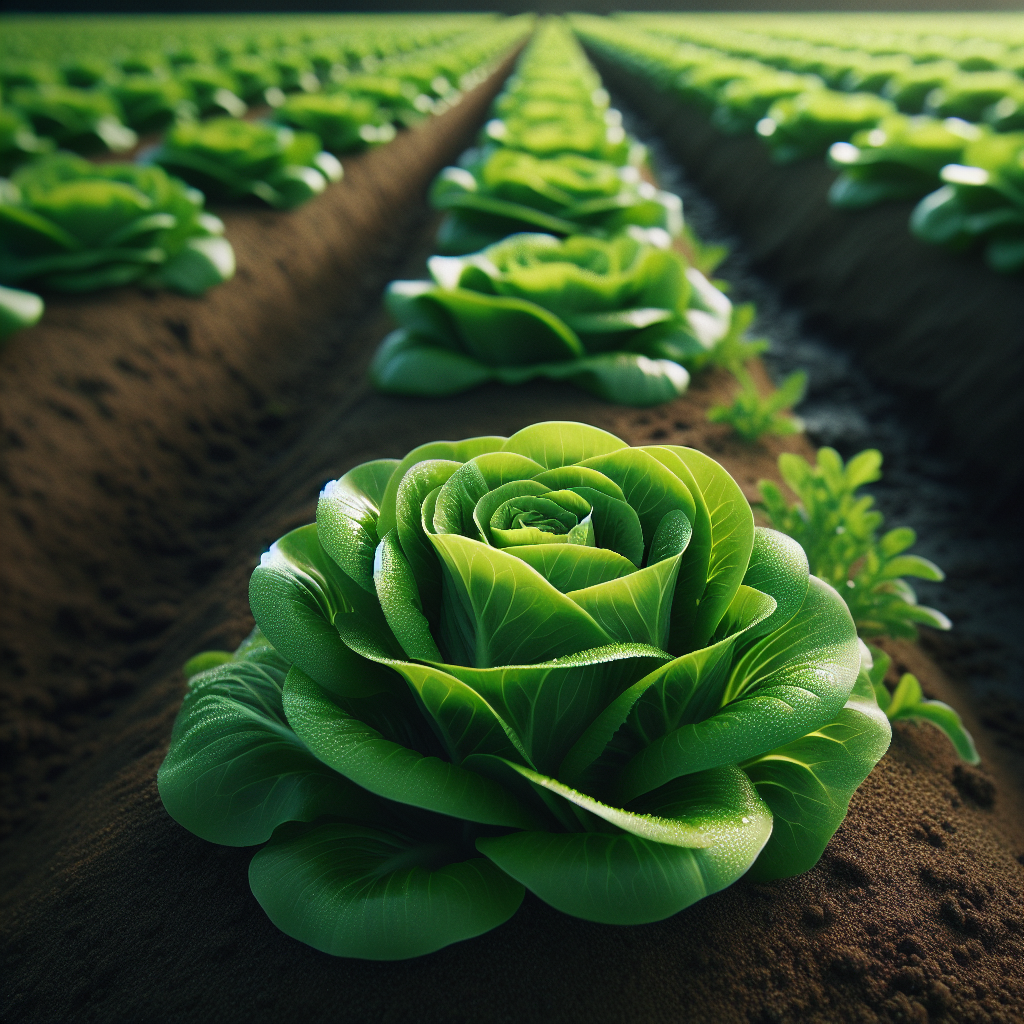
Introduction to Butterhead Lettuce (Bibb)
A classic salad crop with refined texture and delicate flavor, Bibb is one of the most recognizable butterhead lettuces. It forms small to medium, loosely folded heads with silky, pliable leaves and a blanched, creamy interior when grown well. Compared with crisphead types, it is less rigid and less storage-tolerant, but it compensates with superior tenderness and a buttery mouthfeel that makes it a premium market-garden crop.
The name “Bibb” is historically associated with lettuce selections developed in the United States in the 19th century, particularly in Kentucky, where John Bibb helped popularize this type. In modern production, Bibb is often grouped with Boston lettuce under the butterhead category, but Bibb generally tends to produce smaller, more compact heads and is especially valued for high-density fresh market production, restaurant use, and protected cultivation.
Because the crop grows quickly and has a shallow, fibrous root system, quality is closely tied to consistency. Even brief stress from heat, drought, overcrowding, or nutrient imbalance can cause bitterness, tipburn, misshapen heads, or premature bolting. For growers wanting a reliable cool-season leafy crop, it is useful to understand the broader Lettuce guide, but Bibb requires particularly close attention to temperature moderation and uniform soil moisture.
Botanical Profile of Butterhead Lettuce (Bibb)
This crop belongs to the Asteraceae family, the same family as sunflower, chicory, and endive. It is a cultivated annual grown for vegetative leaf production before flowering. In commercial and garden settings, it is usually harvested well before reproductive development.
Taxonomically, cultivated lettuce is classified as Lactuca sativa, and butterhead forms are commonly placed within var. capitata. Bibb types produce a loose head rather than a tight ball. Leaves are broad, thin, tender, and often slightly cupped, with smooth to faintly crinkled margins depending on cultivar. Outer leaves remain soft and green, while inner leaves become paler as the head folds inward and light exposure decreases.
Rooting is shallow, with the majority of feeder roots concentrated in the upper 15-20 cm of soil. That shallow habit explains why the crop responds so rapidly to drying, salinity, compaction, and overfertilization. It also means weed competition is disproportionately harmful in the first few weeks after establishment.
Bibb is physiologically a cool-season plant. Vegetative growth is most efficient under moderate light and cool temperatures. Once day length increases and temperatures rise, the plant shifts toward stem elongation and flower initiation. This transition, called bolting, is accelerated when temperatures repeatedly exceed the ideal range, especially if root-zone moisture fluctuates. After bolting begins, leaves typically become more bitter, the head loosens, and market quality declines sharply.
Typical production windows range from 45 to 70 days from sowing, depending on season, cultivar, and whether transplants are used. Baby-leaf Bibb can be cut much earlier, but true head production requires enough spacing and steady growth to allow proper cupping and heart formation.
Soil, pH, and Climate Requirements for Butterhead Lettuce (Bibb)
High-quality Bibb starts with soil that is fertile, well drained, and consistently moist without staying saturated. The ideal texture is a friable loam or sandy loam with high organic matter. Heavy clay can work if raised beds and compost are used to improve aeration, but poorly drained soil sharply increases the risk of root disease, stunting, and lower leaf yellowing.
Optimal soil pH is generally 6.0 to 7.0, with a preferred range around 6.2 to 6.8. Below pH 6.0, nutrient availability becomes less balanced and calcium uptake may suffer, raising the risk of marginal leaf necrosis and tipburn in fast-growing heads. Above pH 7.2, micronutrients such as iron and manganese may become less available, sometimes causing pale foliage and slower growth.
Before planting, incorporate mature compost rather than fresh manure. Fresh or poorly decomposed manure can release excessive soluble nitrogen, increase salt stress, and contribute to leaf contamination risk. A professional target is soil rich in stable organic matter that can hold water evenly across the root zone. Uniform moisture matters more for Bibb than simply “rich soil.” If the bed cycles between wet and dry, leaves can become tough and inner head development becomes uneven.
Temperature is the most important climatic driver. The ideal air temperature for growth is roughly 10-21°C, with especially good head formation near 15-18°C. Seeds germinate best in cool to moderate conditions, generally 15-20°C. Germination declines as soil temperature rises, and many lettuce seeds become thermoinhibited above about 27°C. In warm climates, sowing into cooled media, irrigating before seeding, or starting transplants in a shaded nursery can improve emergence.
Mature plants tolerate light frost, especially when hardened off, but severe freezing can damage tender head tissue. Conversely, repeated daytime temperatures above 24°C, especially combined with warm nights, often induce bolting, bitterness, and weak head formation. In mild spring and autumn climates, full sun is suitable. In warmer regions or late spring production, afternoon shade or 30% shade cloth can significantly improve tenderness and reduce heat stress.
Wind exposure should also be managed. Constant drying wind increases transpiration and can cause leaf edge burn, slow growth, and more frequent irrigation needs. Protected beds, windbreaks, or low tunnels are particularly helpful for preserving quality in exposed sites.
For growers seeking broader bed-building and fertility strategies, see soil health tips.
Step-by-Step Planting & Propagation
Propagation is almost always by seed. Direct seeding works well in cool, stable conditions, but transplanting is often preferred for premium Bibb production because it improves spacing precision, bed occupancy, and early weed control.
Prepare the bed thoroughly. Remove perennial weeds, loosen the top 20-25 cm of soil, and incorporate finished compost. Rake to a fine tilth because small lettuce seed requires close contact with fine particles for uniform germination.
Pre-irrigate the bed or propagation trays. The medium should be evenly moist, not muddy. If you squeeze a handful, it should hold together lightly but not drip.
Sow seed shallowly. Lettuce seed needs light or very light covering to germinate well. Plant 3-6 mm deep at most. Deeper sowing often causes weak or failed emergence.
For transplant production, sow into plug trays 3-4 weeks before field setting. Maintain cool conditions, bright light, and steady moisture. Avoid oversized transplants; once seedlings become root-bound or begin crowding, they may stall after planting and form irregular heads.
Harden off transplants for 3-5 days before planting outside. Gradually expose them to cooler air and brighter light while preventing wilting.
Transplant when seedlings have 3-4 true leaves. Space plants 20-30 cm apart in rows 25-35 cm apart for full heads. Tighter spacing produces smaller heads and less airflow; wider spacing produces larger, softer heads with better form.
If direct seeding, sow in bands or rows, then thin aggressively once seedlings establish. Final spacing should not be delayed too long; crowded young plants stretch and never fully recover head quality.
Water immediately after sowing or transplanting to settle soil around roots. The top 5-8 cm of soil should remain uniformly moist until establishment is complete.
Succession sow every 7-14 days in cool seasons for continuous harvest. In climates with short springs, staggered sowing is essential because several plantings may mature at nearly the same time once temperatures rise.
Care & Maintenance regimes for Butterhead Lettuce (Bibb)
Irrigation must be precise. Bibb needs a consistently moist root zone, especially during head formation, but it is very sensitive to oxygen-poor saturated soil. As a practical field standard, aim to keep the upper root zone evenly damp to a depth of roughly 10-15 cm. Soil should feel cool and moist when pressed, never powder-dry and never sticky for days at a time.
Underwatering signs include dull or slightly gray-green leaves, loss of leaf turgor during mild weather, slowed head expansion, increased bitterness, and thicker, less delicate leaf texture. Severe moisture stress can trigger bolting or cause outer leaves to toughen before the head reaches market size.
Overwatering signs include persistently wet soil, yellowing lower leaves, slowed growth despite adequate fertility, algae on the soil surface, and a sour smell indicating poor aeration. In advanced cases, roots brown and plants become stunted or collapse. Frequent shallow watering is inferior to moderate, consistent irrigation that wets the full root zone and then allows slight air exchange before the next cycle.
Drip irrigation is preferable to overhead watering because it keeps foliage drier, reduces leaf disease, and improves efficiency. If overhead irrigation is used, water early in the day so leaves dry quickly. Late evening irrigation can extend leaf wetness periods and encourage Downy mildew and bacterial issues.
Nutrient management should favor steady, balanced growth rather than lush, excessive nitrogen. Lettuce is a relatively heavy feeder for its short cycle because it grows rapidly and contains high water content, but too much soluble nitrogen causes overly soft tissue, tipburn susceptibility, and nitrate accumulation. A modest preplant nitrogen base, followed by one light sidedress once plants begin active expansion, is usually enough in fertile soil. Calcium availability is especially important during rapid inner leaf growth. Because calcium moves with water, irregular irrigation often causes tipburn even when soil calcium levels test adequately.
Mulching with clean straw, leaf mold, or compost can stabilize soil temperature, reduce splashing, and suppress weeds, but keep mulch slightly away from the crown in humid climates to prevent rot. In intensive systems, biodegradable mulch films can be effective if irrigation is managed carefully.
Weed control is critical early. Bibb does not compete well because of its shallow roots and low canopy height during establishment. Use shallow cultivation only; deep hoeing can damage feeder roots. Once heads begin closing, minimize disturbance.
Temperature moderation is often the difference between acceptable and excellent quality. Use row cover to accelerate early spring growth and protect from light frost, but vent or remove covers as temperatures rise to avoid heat buildup. In warm spells, shade cloth reduces bolting pressure and maintains softer leaves.
In greenhouse or tunnel culture, maintain high airflow. Excess humidity combined with dense spacing creates ideal conditions for disease. Bibb responds well to protected cultivation if temperature is held cool and fertility is not pushed too hard.
Pests, Diseases & Organic Management
Aphids are among the most common problems, especially because they can hide deep inside the head where sprays are less effective. Watch the undersides of leaves and the heart of the plant. Early infestations can often be controlled with strong water sprays, insecticidal soap, or release of beneficial insects in protected systems. Overfertilized, lush growth is especially attractive to Aphids.
Slugs and snails are serious pests in cool, moist conditions. They chew irregular holes and contaminate heads with frass. Control includes habitat reduction, boards or traps for monitoring, iron phosphate baits, and reducing dense debris around beds.
Cutworms may sever young transplants at the soil line. Collars, careful scouting at dusk, and weed management before planting are effective preventive tactics. Leafminers can tunnel within leaves, reducing visual quality, especially in baby-leaf production.
Common diseases include Downy mildew, Bottom rot, Damping-off, and Bacterial soft rots. Downy mildew is favored by cool, humid conditions and prolonged leaf wetness. Symptoms include pale angular lesions on upper leaf surfaces and white to gray fungal growth underneath. Space adequately, irrigate early, and avoid overcrowded plantings. Bottom rot, commonly associated with Sclerotinia and Rhizoctonia-type issues, appears when leaves contact wet soil for prolonged periods. Mulch, clean beds, and rotation help reduce losses.
Damping-off affects germinating seed and young seedlings, causing collapse at the stem base. Use clean trays, sterile seed-starting media, good airflow, and avoid overwatering. Soft rots often enter through damaged tissue and spread rapidly in warm, wet conditions, particularly after rough handling or harvest in heat.
Tipburn deserves special mention because growers often misidentify it as a disease. It is primarily a physiological disorder linked to inadequate calcium delivery to rapidly expanding inner leaves, usually caused by irregular moisture, excessive nitrogen, rapid growth under protected conditions, or heat stress. The solution is not simply adding more calcium fertilizer; it is improving steady transpiration and irrigation balance.
Organic management depends on prevention: crop rotation of at least 2-3 years away from lettuce and related composites where disease pressure is high, sanitation of crop residues, moderate fertility, and strict moisture control. Frequent scouting is essential because Bibb quality can deteriorate quickly once pests or disease enter the head.
Harvesting, Curing & Optimal Storage
Harvest timing should be based on head formation, leaf tenderness, and weather trends rather than maximum size alone. Bibb is best cut when heads are full enough to feel lightly firm when gently squeezed, but before elongation, bitterness, or tipburn develops. Waiting too long can turn a premium crop into a low-grade one in just a few warm days.
Harvest in the cool morning when leaves are fully hydrated. Use a clean, sharp knife to cut at the base just above the soil line. Remove damaged outer leaves in the field, but do not overtrim if the crop will be transported, since a few wrapper leaves protect the inner head.
Unlike onions, garlic, or curing squashes, lettuce is not cured in the traditional sense. Instead, postharvest handling focuses on rapid field heat removal. Move harvested heads out of sun immediately. If possible, hydrocool or refrigerate promptly to near 0-2°C with very high relative humidity, ideally 95-100%. This slows respiration and preserves tenderness.
Do not store heads wet with free water trapped inside packaging, as that encourages decay. Leaves should be cool and clean, but surface moisture should not remain excessive. Perforated liners or breathable crates help maintain humidity without creating stagnant condensation.
Under excellent cold storage, Bibb generally keeps for about 7-14 days, though quality is best when marketed sooner. It is more delicate and shorter-lived than many romaine or crisphead types. Ethylene exposure should be avoided; storing near ripening fruit can accelerate deterioration and browning.
For direct-market sales, chilling immediately after harvest and maintaining the cold chain are crucial. Customers notice textural decline quickly in butterhead lettuce, so premium quality depends as much on postharvest handling as on field production.
Companion Planting for Butterhead Lettuce (Bibb)
Good companions are those that either improve pest balance, use space efficiently, or help moderate conditions without competing aggressively for light and water. Carrot is a strong partner because it occupies a different root niche and shares similar cool-season growing preferences. The shallow lettuce canopy also helps shade soil lightly while carrots establish.
Onion and Garlic are widely used alongside lettuce because their scent can help confuse certain pests, and their upright growth does not heavily shade Bibb. They also fit neatly into intensive beds where space efficiency matters. Keep fertility balanced, however, since alliums do not need the same high moisture consistency as butterhead lettuce, so irrigation should still be scheduled around the lettuce crop.
Nasturtium is especially useful in mixed plantings as a trap and beneficial-insect support plant. It can attract Aphids away from market heads and bring in pollinators and predatory insects, though it should be placed at bed edges so it does not overrun the crop.
Avoid pairing Bibb too closely with large, sprawling, or heavy-feeding warm-season crops that quickly cast shade and compete for root-zone moisture. Also avoid dense canopies that trap humidity and increase foliar disease risk. In small plots, a practical layout is alternating short rows or blocks with upright companions, while preserving airflow and access for harvest.
The best companion strategy is always functional rather than ornamental: reduce pest pressure, maintain access, and protect the shallow root zone from unnecessary competition.