Introduction to Sclerotinia
Sclerotinia sclerotiorum, commonly known as Sclerotinia blight or white mold, ranks among the most destructive fungal pathogens in agriculture, infecting over 400 host plants worldwide. This soilborne fungus thrives in temperate climates with prolonged cool, moist conditions, causing significant economic losses estimated at billions annually across vegetable, legume, and oilseed crops. Known for its hardy sclerotia—resting structures that persist in soil for up to 10 years—Sclerotinia poses a long-term challenge for crop rotation and soil health management.
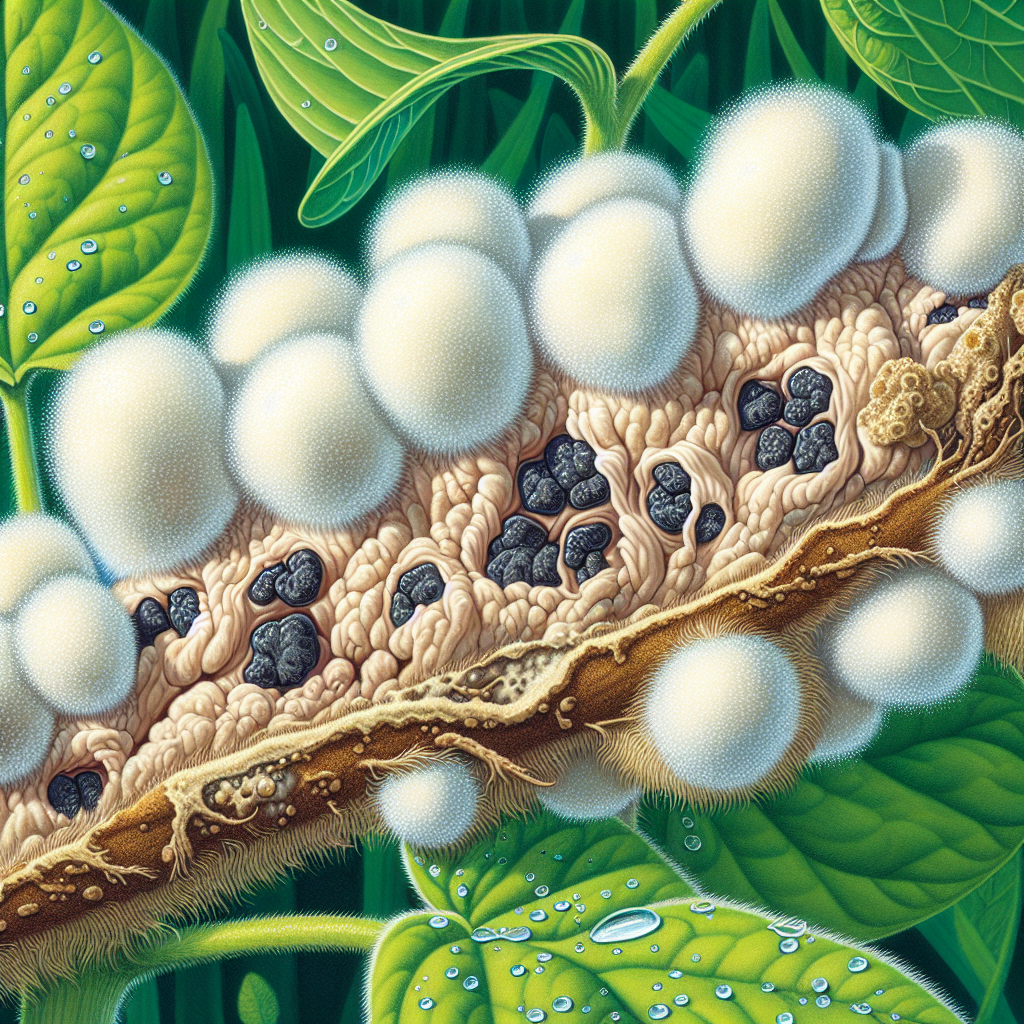
Farmers first encounter Sclerotinia during flowering stages when petal drop provides entry points for infection. The disease manifests as water-soaked lesions that develop fluffy white mycelium, eventually forming black, irregular sclerotia resembling rat droppings. In severe outbreaks, entire fields can be lost, with yield reductions up to 100% in susceptible varieties. Understanding its biology is crucial for effective diagnostics and control, especially as climate variability increases wet periods favoring spore germination. This comprehensive guide equips growers with professional-grade strategies to diagnose, manage, and prevent Sclerotinia, drawing from decades of agronomic research.
Identifying Symptoms & Damage
Accurate diagnosis begins with recognizing Sclerotinia's hallmark symptoms, which vary by crop but share consistent fungal signatures. Initial signs appear on lower stems or leaf axils as pale green to water-soaked lesions, often coinciding with petal fall. Within 24-48 hours, these lesions expand, turning tan to gray with a white, cottony mycelial growth under humid conditions—earning its 'white mold' moniker.
As infection progresses, stems shred longitudinally, revealing black sclerotia embedded in decayed tissue. In soybeans, pods abort or fill with sclerotia, drastically reducing seed quality. Lettuce heads collapse with brown, decayed centers harboring sclerotia, while in sunflowers, heads wilt with black fungal bodies on the backside. Crown infections cause plant wilting without obvious aboveground symptoms until sudden death.
Damage quantification reveals Sclerotinia's severity: in dry beans, stem girdling leads to lodging and 50-80% yield loss; carrots show fork-like roots with sclerotia, rendering them unmarketable. Differentiate from Botrytis (gray fuzz, rapid sporulation) or Rhizoctonia (brown, web-like strands) via lab confirmation: sclerotia >1mm, brick-red apothecia in spring. Scout fields post-flowering, using a hand lens to spot mycelium. Economic thresholds: 1-5% incidence warrants action, scaling to 20% for severe interventions.
Lifecycle and Progression of Sclerotinia
Sclerotinia sclerotiorum's lifecycle is a masterclass in fungal persistence, cycling through sclerotia, mycelial growth, and ascospore dispersal. Primary inoculum resides as sclerotia in soil or crop debris, viable for 3-10 years depending on depth and moisture. Spring germination (10-15°C, >7 days wet) produces mushroom-like apothecia, releasing millions of ascospores dispersed by wind up to 1km.
Spores infect senescing petals or wounded tissue, germinating in free water (dew, rain) at 15-25°C. Mycelium colonizes petals, which stick to stems, enabling direct plant penetration via enzymes degrading cell walls. Inside the host, mycelium ramifies, forming new sclerotia in 7-14 days under low oxygen (anaerobic microsites in dense canopies). Secondary spread occurs via mycelial contact in humid microclimates or splashing rain.
Progression accelerates in dense, flowering canopies: infection to sclerotia formation takes 10-21 days. Overwintering sclerotia near surface (0-5cm) pose highest risk. Interrupt the cycle by burying sclerotia >20cm or flooding fields to degrade them. Monitor apothecia emergence with baiting traps (e.g., radish seeds in soil samples). Full lifecycle completion yields 100-1000x sclerotia amplification per infection cycle, underscoring prevention's importance.
Environmental Triggers & Risk Factors
Sclerotinia epidemics hinge on specific environmental cues: cool temperatures (15-22°C optimal), prolonged leaf wetness (>48 hours), and high humidity (>85%). Nighttime temps 10-15°C with daytime fog or drizzle maximize apothecia formation. Soil moisture at 60-80% field capacity promotes sclerotia germination.
Cultural risk factors amplify vulnerability: narrow row spacing (<30cm) traps humidity, increasing canopy wetness duration. Excessive nitrogen fosters lush growth, delaying senescence and extending susceptibility windows. Continuous cropping of hosts like peas, beans, or lettuce builds inoculum. Poor drainage, high organic matter soils (pH 6-7), and no-till residue retention elevate risks.
Climate change exacerbates issues with erratic wet springs. Risk models integrate GDD (growing degree days >10°C), rainfall (>20mm/week), and RH forecasts. High-risk zones: northern temperate regions (Midwest USA, Canada prairies, northern Europe). Assess fields via soil sampling (sclerotia/kg soil): >10/kg signals danger.
Organic Control & Treatment Plans
Organic management targets lifecycle disruption without synthetics, emphasizing integrated cultural, biological, and physical tactics. Crop rotation (4-6 years) with non-hosts like corn or wheat dilutes soil inoculum by 70-90%. Deep tillage (20-30cm) buries sclerotia beyond germination zone.
Biological controls shine: Trichoderma harzianum (e.g., RootShield) colonizes sclerotia, reducing viability 80%. Coniothyrium minitans parasitizes sclerotia in soil. Apply at 10^9 CFU/kg soil pre-planting. Bacillus subtilis (Serenade) suppresses mycelial growth via antibiotics, sprayed at flowering (3-5L/ha).
Check out this Soil Health Mastery blog post for enhancing beneficial microbes. Cultural tweaks: wider rows (45-60cm), 20% residue removal, early planting to escape peak spore release. Aerobic flooding (summer) kills 90% surface sclerotia via carpogenic germination exhaustion.
Resistant varieties (e.g., soybeans with upright architecture) reduce incidence 50%. Organic fungicides like potassium bicarbonate or sulfur (post-flowering) limit spread. Scout weekly; rogue infected plants. Integrated plans yield 30-60% control, stacking methods for synergy. For Sclerotinia stem rot specifics, see our wiki.