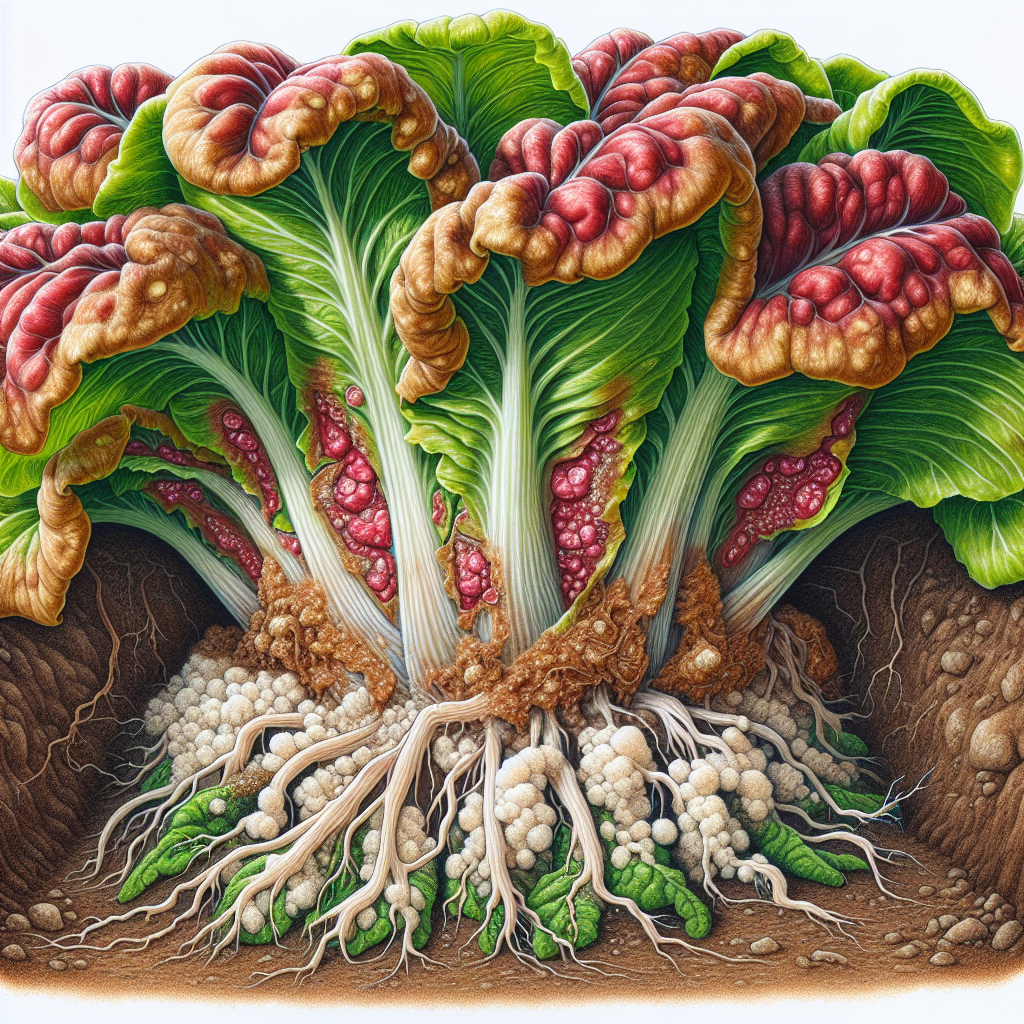
Introduction to bottom rot
Bottom rot, also known as lettuce bottom rot or basal rot, is a serious fungal disease that strikes at the base of plants, particularly cool-season leafy vegetables. Caused mainly by the soilborne fungus Rhizoctonia solani Rhizoctonia, this pathogen attacks the lower leaves and stems, leading to brown, sunken lesions that progress upward, often resulting in plant death. First identified in lettuce fields in the early 20th century, bottom rot has become a global concern for growers, causing up to 50-100% yield losses in severe outbreaks.
The disease is especially problematic in dense plantings where high humidity and poor air circulation create ideal conditions for spore germination. Unlike foliar diseases, bottom rot originates from infected soil or plant debris, making prevention challenging but crucial. Understanding its pathology allows farmers to implement targeted strategies that minimize damage and protect harvests. This guide provides comprehensive diagnostic tools, lifecycle insights, and proven management tactics for sustainable control.
Identifying Symptoms & Damage
Early detection is key to limiting bottom rot spread. Initial symptoms appear on the oldest, lower leaves closest to the soil surface. Look for small, water-soaked spots that quickly turn brown and develop a reddish-brown hue with irregular margins. These lesions expand rapidly, often girdling the petioles and causing leaves to wilt and collapse.
As the disease progresses, a characteristic white mycelial growth may appear between infected leaves under high humidity, later turning brown. Advanced stages show sunken, necrotic tissue at the plant base, with the core rotting and emitting a foul odor. Affected plants appear stunted, with yellowing upper leaves before total collapse. Differentiate from similar issues like Pythium damping-off (which hits seedlings) or Phytophthora rot (often with more uniform blackening).
Damage assessment reveals bottom rot's economic impact: in lettuce, it reduces head quality, making marketable produce unsellable. Scout fields weekly, focusing on low-lying areas. Use a hand lens to spot fungal sclerotia—small, hard, brown resting structures on debris, confirming Rhizoctonia presence. Yield losses correlate with infection timing; early-season attacks wipe out entire beds.
Lifecycle and Progression of bottom rot
Rhizoctonia solani persists in soil as sclerotia or dormant mycelium on plant residues, surviving for years without a host. Infection begins when sclerotia germinate in response to root exudates or moist conditions, producing mycelium that contacts lower leaves. Optimal germination occurs at 20-30°C (68-86°F) with free water on foliage.
The fungus penetrates plant tissues directly via hyphae or through wounds, colonizing intercellular spaces. Progression is rapid in warm, humid weather: lesions form in 2-3 days, full rot in 7-10 days. Under dry conditions, growth halts, but sclerotia form for overwintering. No airborne spores; spread is via splashing rain, irrigation, tools, or transplants.
Lifecycle completes in one season, but polycyclic infections occur if conditions persist. Infected debris releases new sclerotia, perpetuating the cycle. Crop rotation disrupts this, as the fungus has a broad host range including cabbage and beet.
Environmental Triggers & Risk Factors
Bottom rot explodes under specific conditions: temperatures of 24-28°C (75-82°F), high soil moisture, and prolonged leaf wetness (>12 hours). Poor drainage, heavy clay soils, and over-irrigation exacerbate risks by keeping foliage wet. Dense planting (<30 cm spacing in lettuce) traps humidity, while low-lying fields collect runoff.
Other triggers include excessive nitrogen promoting lush growth susceptible to infection, acidic soils (pH <6.0), and compacted ground limiting root aeration. Warm spells in cool-season crops like lettuce coincide with peak vulnerability during head formation. Risk multiplies with continuous cropping or following hosts like potato, harboring sclerotia.
Climate change intensifies outbreaks via erratic rains. For more on weather impacts, see Why 80% of Small Farms Battle Weather Disasters - And How Hyper-Local AI Forecasts Can Save Your Harvest. Monitor forecasts to preempt triggers.
Organic Control & Treatment Plans
No cure exists post-infection; focus on suppression. Start with sanitation: remove and destroy infected plants immediately, avoiding composting. Solarize soil pre-planting—cover moist beds with clear plastic for 4-6 weeks in summer to kill sclerotia.
Apply organic biocontrols like Trichoderma harzianum or Bacillus subtilis drenches at planting (rates: 5-10 g/L water). These antagonists compete with Rhizoctonia. Mustard biofumigation—incorporating fresh mustard residues—releases natural isothiocyanates toxic to fungi.
Cultural tactics: elevate beds 15-20 cm for drainage, space plants 30-40 cm, and irrigate early morning via drip to minimize wetting. Use mulches like straw to suppress splash. Foliar sprays of compost teas or potassium bicarbonate reduce humidity effects.
For outbreaks, rogue 20-30% infected plants weekly. Integrate marigold as trap crops to draw nematodes aiding Rhizoctonia. Monitor with bait tests: place sterile lettuce leaves in soil; mycelial growth confirms activity. Combine with resistant varieties like 'Salad Bowl' lettuce.
Preventing bottom rot in the Future
Long-term prevention hinges on rotation: avoid leafy crops for 2-3 years, interplant with non-hosts like onion or grains. Test soil pH, amend to 6.5-7.0 with lime. Improve tilth with cover crops like clover to enhance drainage and suppress pathogens.
Select certified disease-free transplants. Time planting to avoid peak warm-wet periods—early spring or fall for lettuce. Use raised beds universally. Scout rigorously: threshold of 5% infection triggers action.
Build soil biology with mycorrhizal inoculants and vermicompost, fostering beneficial microbes. Avoid overhead irrigation; install drip systems. Post-harvest, deep plow residues and disk fields to bury sclerotia. Annual soil tests guide amendments. These IPM strategies can reduce incidence by 80-90%.
Crops Most Affected by bottom rot
Lettuce (Iceberg Lettuce, Romaine Lettuce) tops the list, with bottom rot causing billions in losses yearly. Other salad greens like endive, escarole, and spinach suffer similarly. Cabbage and brassicas show basal rots under wet conditions.
Celery, kale (Curly Kale), and broccoli are vulnerable during transplant stage. Root crops like radish and turnip face stump rots. Tomatoes (Roma Tomato) occasionally affected via stem lesions. Broad hosts amplify rotation needs.