Introduction to Brad's Atomic Grape Tomato
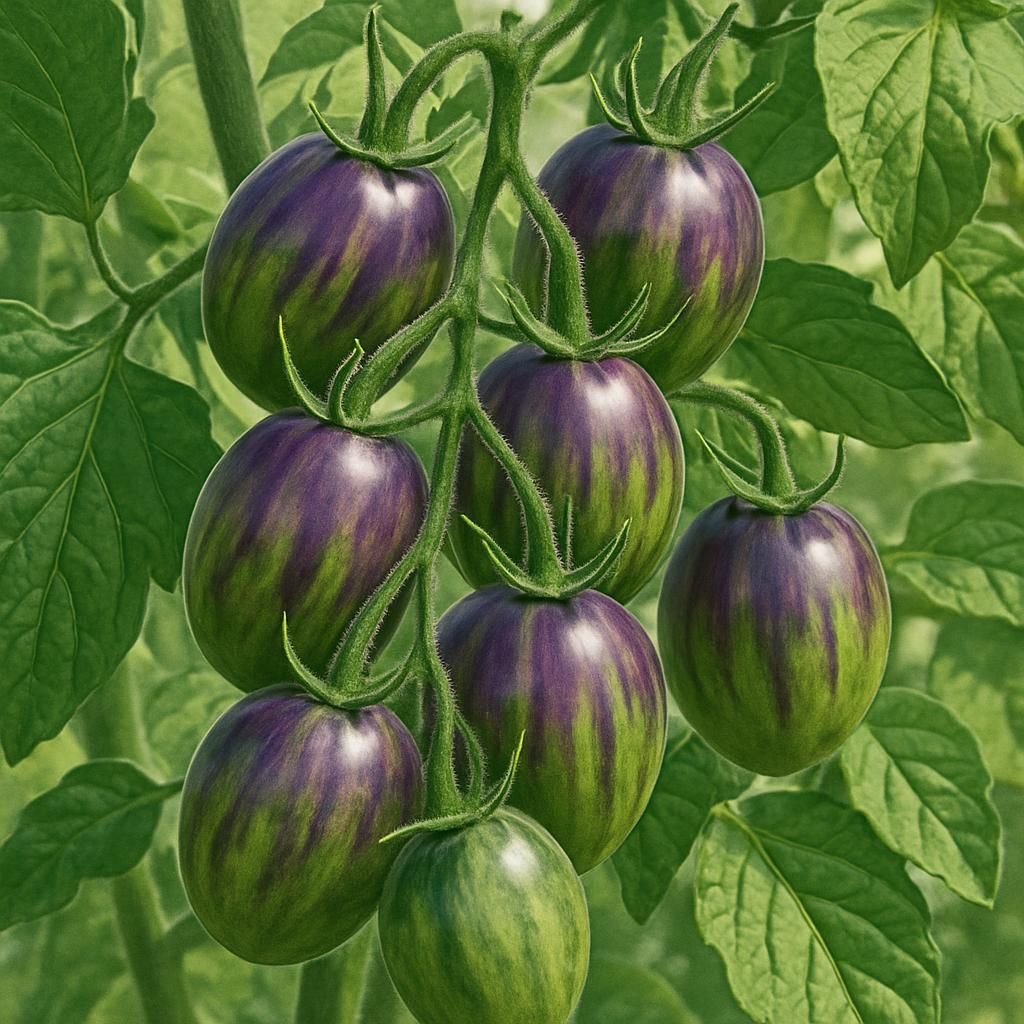
Brad's Atomic Grape Tomato stands out among specialty tomatoes for its vivid purple-and-green striped skin, elongated grape shape, and intense sweet-tart flavor. Released by California breeder Brad Gates, this indeterminate variety combines the compact fruit size of grape tomatoes with the rich anthocyanin pigmentation usually seen only in larger heirlooms. Home gardeners and small-scale growers value its high yield, crack resistance, and market-differentiating appearance that commands premium prices at farmers' markets.
The variety grows vigorously in warm climates and produces clusters of 1–2 inch fruits that ripen from green-striped to deep purple with metallic green shoulders. Flavor intensity peaks when fruits reach full color and develop slight softening at the blossom end. Because the plants continue setting fruit until frost, a single well-managed planting can supply continuous harvests for 10–14 weeks.
Commercial appeal stems from both visual novelty and eating quality; the tomatoes hold well on the vine without splitting and maintain flavor after short-term refrigeration. The variety also performs reliably in protected culture such as high tunnels, extending the season in cooler regions.
Botanical Profile of Brad's Atomic Grape Tomato
Brad's Atomic Grape Tomato belongs to the nightshade family (Solanaceae) and exhibits typical tomato morphology with compound leaves, yellow five-petaled flowers, and fleshy berries. The plant is classified as an indeterminate type, meaning the main stem continues to elongate and set fruit throughout the growing season rather than terminating in a flower cluster.
Stems are covered in fine glandular trichomes that produce a characteristic tomato scent when brushed. Leaves are dark green with serrated margins and prominent veins; anthocyanin expression in stems and leaf undersides intensifies under high light and cool nights. Flowers form in simple or compound cymes of 6–12 blossoms, each capable of setting fruit when pollinated by wind or bees.
Fruit morphology features an elongated oval shape averaging 15–25 g, with a thin but tough cuticle displaying irregular purple striping over a green base that turns metallic green-purple at maturity. The interior contains two to three locules filled with juicy, gel-encased seeds. Flavor chemistry includes elevated sugars (Brix 8–10) balanced by moderate acidity and volatile compounds responsible for its distinctive grape-like aroma.
Soil, pH, and Climate Requirements for Brad's Atomic Grape Tomato
Successful cultivation begins with well-drained, fertile soil enriched with organic matter. Brad's Atomic Grape Tomato thrives in loamy or sandy loam textures that retain moisture without waterlogging. Heavy clay soils should be amended with compost or aged manure and possibly raised beds to improve drainage and root aeration.
| Parameter | Ideal Range | Notes |
|---|---|---|
| Soil Type | Loamy or sandy loam | Avoid compacted or waterlogged soils |
| Soil pH | 6.2–6.8 | Slightly acidic; test and adjust annually |
| Organic Matter | 4–6 % | Incorporate compost or well-rotted manure |
| Daytime Temperature | 21–29 °C (70–85 °F) | Optimal fruit set and flavor development |
| Nighttime Temperature | 15–20 °C (59–68 °F) | Prevents blossom drop |
| Frost Tolerance | None | Protect or transplant after last frost |
| Sunlight | Full sun, minimum 8 hours | Higher light increases anthocyanins |
| Spacing | 45–60 cm (18–24 in) between plants | 1.2–1.5 m (4–5 ft) between rows |
Site selection should maximize southern exposure while providing wind protection. In regions with intense summer heat above 32 °C (90 °F), afternoon shade cloth or evaporative cooling can reduce blossom drop and improve fruit quality.
Step-by-Step Planting & Propagation
Start seeds indoors 6–8 weeks before the last expected frost. Sow ¼ inch deep in sterile seed-starting mix at 24–27 °C (75–80 °F). Maintain consistent moisture with a humidity dome until germination occurs in 5–10 days. Once seedlings develop their first true leaves, transplant into 4-inch pots and grow under 14–16 hours of supplemental light.
Harden off transplants for 7–10 days by gradually increasing outdoor exposure. Plant outdoors when soil temperature reaches 18 °C (65 °F) and nighttime air temperatures remain above 13 °C (55 °F). Dig holes twice the width of the root ball and amend with compost. Position plants so the lowest leaves sit just above soil level; burying the stem encourages adventitious roots and stronger plants.
Install stakes, cages, or trellis systems at planting to support indeterminate growth. Space plants 45–60 cm apart in rows 1.2–1.5 m apart. Water thoroughly after transplanting and apply a balanced organic starter fertilizer high in phosphorus to promote root establishment.
Care & Maintenance regimes for Brad's Atomic Grape Tomato
Consistent cultural practices maximize yield and fruit quality. Mulch with 5–8 cm of organic material to conserve moisture, suppress weeds, and moderate soil temperature. Remove suckers below the first flower cluster and prune to one or two main leaders for better airflow and easier harvest.
| Growth Stage | Watering Schedule | Fertilizer Application | Pruning Actions |
|---|---|---|---|
| Transplant to 30 cm | Deep watering 2–3× weekly | Balanced NPK (e.g., 5-5-5) at planting | Remove lower leaves touching soil |
| Flowering | 2.5–3.8 cm (1–1.5 in) per week | Side-dress with compost tea or fish emulsion every 3 weeks | Continue sucker removal weekly |
| Fruit Set | Increase to 3.8 cm if temps >29 °C | Switch to low-nitrogen, high-potassium formula | Prune interior branches for light penetration |
| Ripening | Maintain even moisture to prevent cracking | Reduce nitrogen; foliar calcium if BER risk | Minimal pruning; focus on harvest access |
Monitor soil moisture at 10–15 cm depth; allow the top 2–3 cm to dry between waterings. Avoid overhead irrigation to reduce foliar disease pressure. Provide 2.5–5 cm of water weekly, increasing during heat waves.
Pests, Diseases & Organic Management
Common tomato pests include aphids, hornworms, whiteflies, and spider mites. Scout weekly and use insecticidal soap, neem oil, or Bacillus thuringiensis (Bt) for caterpillar control. Yellow sticky traps help monitor and reduce whitefly and aphid populations.
Major diseases include early blight, late blight, septoria leaf spot, and fusarium wilt. Practice crop rotation with non-solanaceous crops for at least three years. Remove and destroy infected foliage promptly. Apply copper-based fungicides or Bacillus subtilis products preventively during humid periods.
Cultural controls such as proper spacing, staking for airflow, and morning watering reduce disease incidence. Resistant rootstocks can be used in soils with known soil-borne pathogens. Beneficial insects like lady beetles and lacewings provide natural aphid suppression when habitat is preserved.
Harvesting, Curing & Optimal Storage
Harvest Brad's Atomic Grape Tomato when fruits reach full color with slight softening at the blossom end. Frequent picking every 2–3 days encourages continued production. Use clean pruners to clip clusters, leaving a short stem to prolong shelf life.
For short-term storage, keep fruits at 12–15 °C (54–59 °F) with 85–90 % relative humidity; they maintain quality for 7–10 days. Avoid refrigeration below 10 °C, which causes chilling injury and flavor loss. For longer preservation, process into sauces, salsas, or dehydrate into sun-dried tomatoes.
Companion Planting for Brad's Atomic Grape Tomato
Strategic companions enhance pest management and soil health. Basil planted nearby repels aphids and improves tomato flavor perception. Marigold and nasturtium deter nematodes and whiteflies while attracting beneficial insects. Garlic and onion provide allium volatiles that mask tomato scent from pests.
Avoid planting near potato, eggplant, or pepper to reduce shared disease pressure. Clover or hairy vetch as living mulch fixes nitrogen and suppresses weeds. Tall companions like sunflower can provide afternoon shade in extreme heat while supporting pollinators.
Tomato rotation with legumes and brassicas maintains soil fertility and breaks pest cycles. Incorporating these pairings aligns with the principles outlined in Summer Companion Planting: 10 Organic Pairings to Boost Small Farm Resilience.