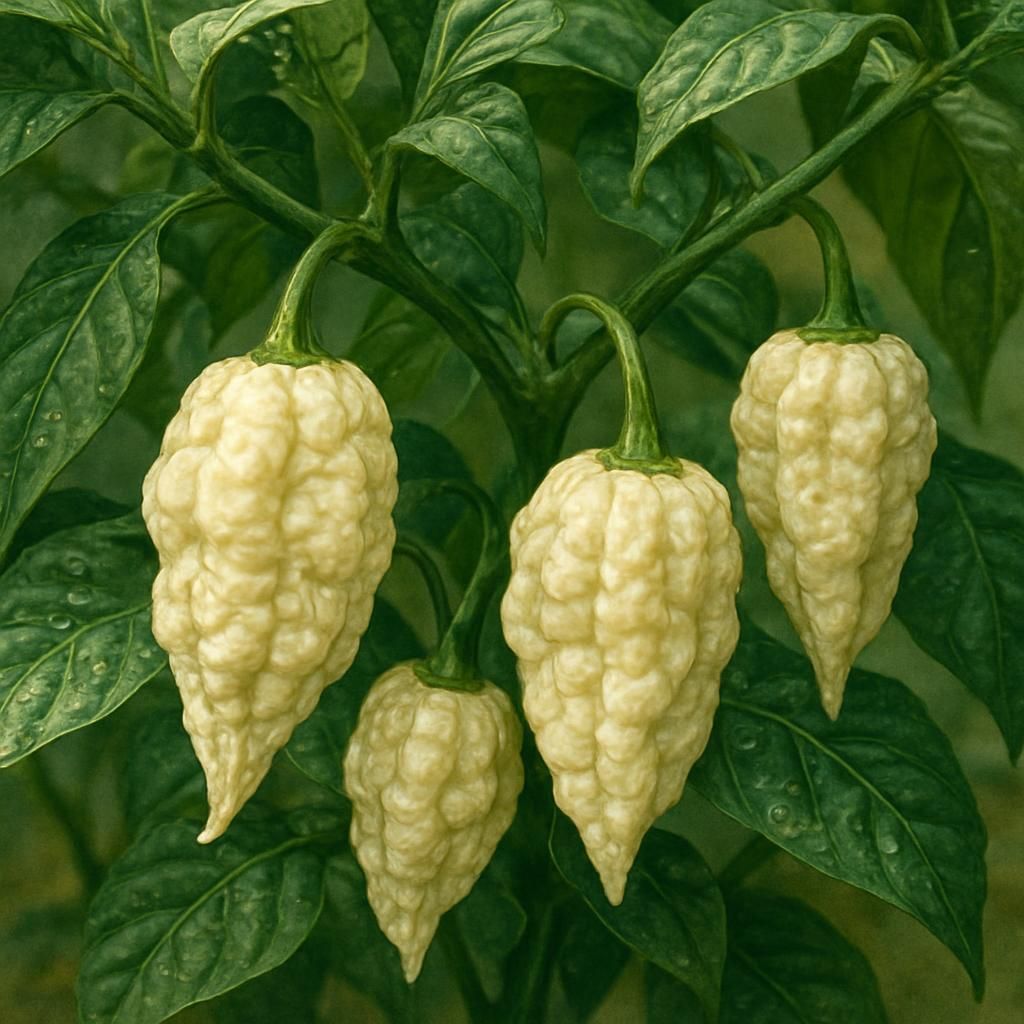
Introduction to Bhut Jolokia White
Bhut Jolokia White is a striking albino mutation of the legendary ghost pepper, prized by chili enthusiasts and specialty growers for its ghostly white pods and blistering heat that often exceeds 1 million Scoville Heat Units. Originating from selective breeding programs in Northeast India and later stabilized in controlled environments, this cultivar combines the intense capsaicin punch of traditional ghost peppers with unique visual appeal that commands premium prices at farmers' markets and in hot-sauce production. Because of its extended maturation period and sensitivity to temperature fluctuations, successful cultivation requires precise attention to microclimate, soil biology, and integrated pest management.
Botanical Profile of Bhut Jolokia White
Bhut Jolokia White belongs to the species Chili Pepper within the Solanaceae family. Plants typically reach 60–90 cm in height with a bushy, multi-branched habit and dark green, ovate leaves. The flowers are small, creamy-white, and self-pollinating, though cross-pollination with other C. chinense varieties can occur. Fruit starts pale green before maturing to a creamy ivory-white, sometimes developing faint peach or yellow blushes under intense sunlight. Pods measure 5–8 cm long, are heavily wrinkled, and taper to a sharp point. The variety is perennial in USDA zones 9–11 but is most commonly grown as an annual in temperate regions.
Soil, pH, and Climate Requirements for Bhut Jolokia White (MUST INCLUDE A MARKDOWN TABLE OF IDEAL CONDITIONS)
Bhut Jolokia White demands fertile, well-drained loam or sandy loam with high organic matter. The crop performs best when soil biology is active and compaction is minimal. Avoid heavy clay soils unless heavily amended with aged compost and perlite. Consistent warmth and protection from wind are essential throughout the growing cycle.
| Parameter | Ideal Range | Notes |
|---|---|---|
| Soil pH | 6.0–6.8 | Slightly acidic; test and adjust annually |
| Soil Temperature | 21–29 °C (70–85 °F) | Critical for germination and fruit set |
| Air Temperature (Day) | 24–32 °C (75–90 °F) | Avoid prolonged exposure above 35 °C |
| Air Temperature (Night) | 18–24 °C (65–75 °F) | Cooler nights improve capsaicin development |
| Spacing | 45–60 cm between plants; 75–90 cm rows | Allows airflow and ease of harvest |
| Sunlight | Full sun, minimum 8 hours | Supplemental light in northern latitudes |
| Growing Season Length | 120–150 frost-free days | Start indoors 8–10 weeks before last frost |
Step-by-Step Planting & Propagation
Begin seed propagation indoors 8–10 weeks prior to the last expected frost. Use sterile seed-starting mix and maintain soil temperature at 24–27 °C with a heat mat. Germination typically occurs in 10–21 days. Transplant seedlings into 10 cm pots once they develop two true leaves, then harden off for 7–10 days before moving to the field or greenhouse. Plant at the same depth as the nursery pot and water thoroughly. In regions with short summers, consider grafting onto vigorous Tomato or Eggplant rootstock to accelerate growth and increase disease resistance.
Care & Maintenance regimes for Bhut Jolokia White (MUST INCLUDE A MARKDOWN TABLE OF WATER, FERTILIZER, AND PRUNING SCHEDULES)
Consistent moisture without waterlogging is vital. Mulch with 5–8 cm of organic material to moderate soil temperature and suppress weeds. Side-dress with balanced organic fertilizer at flowering and again at fruit set. Prune lower branches to improve airflow and reduce disease pressure.
| Growth Stage | Watering Frequency | Fertilizer (NPK) | Pruning Action |
|---|---|---|---|
| Seedling (0–4 wks) | Keep evenly moist; water daily | 5-5-5 at half strength weekly | Pinch growing tip at 4th node |
| Vegetative | 2–3 times weekly; 2.5 cm/week | 8-4-8 every 3 weeks | Remove lower leaves below 15 cm |
| Flowering | Increase to 3–4 times weekly | 5-10-10 at first flower | Tip prune to encourage branching |
| Fruiting | Deep watering 2× weekly | 4-8-12 every 3 weeks | Remove damaged or crossing branches |
| Late Season | Reduce to prevent cracking | Stop nitrogen; apply potassium only | Clean up basal suckers |
Pests, Diseases & Organic Management
Common threats include Aphids, Spider Mites, Thrips, and Whiteflies. Monitor weekly with yellow sticky traps. Introduce beneficial insects such as lady beetles and lacewings at the first sign of infestation. For fungal issues such as Powdery Mildew and Phytophthora, maintain strict airflow and avoid overhead irrigation. Neem oil and potassium bicarbonate sprays provide effective organic control when applied at dusk. Rotate plantings every two seasons and solarize beds between crops to reduce soil-borne pathogens.
Harvesting, Curing & Optimal Storage
Harvest pods when they reach full creamy-white coloration and begin to soften slightly at the shoulder. Use clean shears to avoid damaging the plant. For fresh market sales, store at 7–10 °C with 85–90 % humidity for up to two weeks. For drying, hang whole plants in a well-ventilated, shaded area at 25–30 °C until pods snap cleanly. Once fully dry, store in airtight glass jars away from light. For long-term preservation, freeze whole pods or create value-added products such as fermented hot sauces.
Companion Planting for Bhut Jolokia White
Pair Bhut Jolokia White with nitrogen-fixing legumes such as Bush Beans and Peas to improve soil fertility. Aromatic herbs including Thai Basil and Rosemary deter aphids and whiteflies while attracting pollinators. Marigolds planted at row ends repel nematodes and provide beneficial insect habitat. Avoid planting near Fennel or Dill, which can inhibit pepper growth. Interplanting with Nasturtium creates a living mulch that suppresses weeds and provides edible flowers.
Ghost Pepper varieties share similar cultivation requirements and may be referenced for comparative heat management strategies. For additional insights on timing harvests to maximize market value, growers should consult The Overlooked Art of Seasonal Harvest Timing for Small Farm Profit.