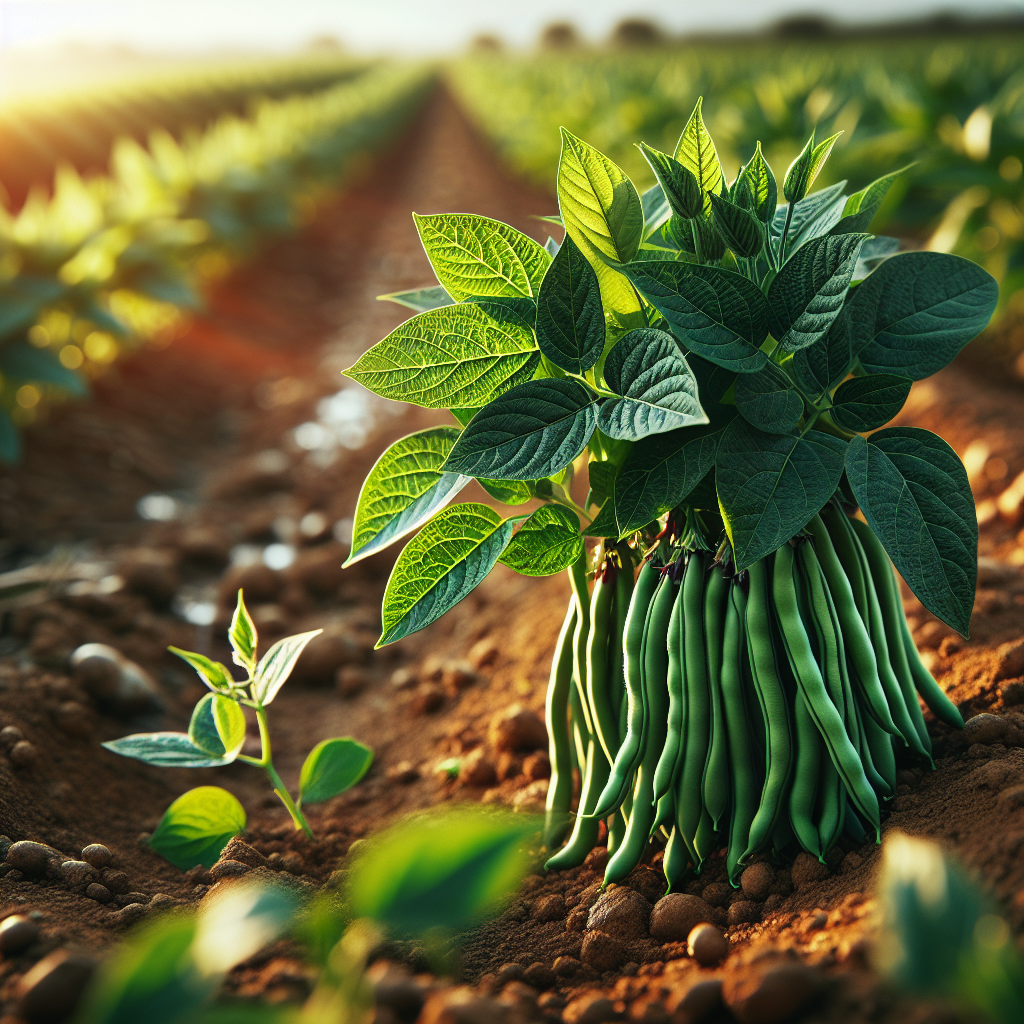
Introduction to Blue Lake Bush Bean
Few bush snap beans have earned the long-standing reputation of this variety. Blue Lake types trace their heritage to the Blue Lake district of Oregon in the United States, where cool nights, fertile soils, and a thriving canning industry helped select for beans with exceptional pod quality, tenderness, and uniformity. The bush form was developed from the original pole-type Blue Lake lineage to deliver the same recognizable flavor and dark green, round, meaty pods on compact plants that do not require trellising.
This is primarily grown as a fresh snap bean, meaning the pods are harvested immature while seeds inside are still small and the pod wall remains crisp and succulent. It is especially valued for a smooth, refined bean flavor, strong productivity over a relatively short period, and pods that hold quality well if harvested on time. Compared with some very early bush beans, Blue Lake Bush Bean often prioritizes eating quality and pod shape over absolute earliness, making it a favorite for gardeners and growers who want premium table beans rather than merely fast beans.
As a warm-season annual legume, it can fix atmospheric nitrogen in association with Rhizobium bacteria, but growers should not assume this eliminates all fertility needs. Blue Lake Bush Bean still requires balanced nutrition, excellent drainage, and careful moisture management to produce abundant straight pods. When its environmental needs are met, it is one of the most rewarding bean cultivars for succession sowing through the warm part of the season.
Botanical Profile of Blue Lake Bush Bean
This cultivar belongs to the common bean species, Phaseolus vulgaris, one of the most important vegetable legumes in global agriculture. The plant is determinate to semi-determinate in habit, typically reaching about 12 to 20 inches tall, though height varies with fertility, moisture, and strain. Bush plants form a compact canopy, with multiple short lateral branches supporting clusters of flowers and pods above and within the foliage.
Leaves are trifoliate, medium to deep green, and slightly rough-textured. Healthy foliage should appear turgid and evenly colored; pale lower leaves may indicate nitrogen shortage, waterlogging, or root stress. Flowers are generally white to pale cream, small and self-fertile, which means pollination usually occurs without the need for heavy insect activity. However, beneficial insects still improve overall garden ecology and can support neighboring crops such as cucumber.
Pods are the main commercial trait. Blue Lake Bush Bean is known for round to slightly oval, smooth, deep green pods that are typically 5 to 6 inches long when harvested at prime snap stage. They are usually stringless or nearly so in modern seed lines, though delayed harvest can increase fiber development. The pods are borne in clusters, and high-quality harvests depend on frequent picking before seeds swell noticeably. Once the seed bulges become prominent, tenderness drops quickly.
Like other common beans, the root system is relatively shallow compared with deep-rooted crops. Most active roots occupy the top 6 to 12 inches of soil, which explains why this crop reacts strongly to swings in soil moisture, cRusting, and compaction. Nodulation, if successful, appears as small swellings on roots; when sliced open, active nodules often show a pinkish interior due to leghemoglobin, indicating ongoing nitrogen fixation.
Days to maturity commonly fall around 50 to 60 days from sowing, depending on temperature and strain. In cool soils, emergence is slow and uneven; in warm, biologically active soil, emergence is rapid and uniform. The cultivar is best understood as a high-quality mid-early bush snap bean rather than an ultra-early bean.
Soil, pH, and Climate Requirements for Blue Lake Bush Bean
This variety performs best in friable, well-drained loam or sandy loam with moderate organic matter and good aeration. Heavy clay can work if thoroughly improved, but it increases the risk of cRusting, poor emergence, root diseases, and transient yellowing after rains. Extremely rich, manure-heavy soil can push excess vegetative growth, delay pod set, and increase susceptibility to foliar disease by creating a dense, humid canopy.
An ideal soil pH is 6.0 to 7.0, with the sweet spot around 6.3 to 6.8. Below pH 5.8, phosphorus availability can drop and nodulation may be less efficient. Above pH 7.5, micronutrient tie-up, especially iron and zinc, may cause chlorosis. If liming is needed, do it several months before planting rather than immediately before sowing. Freshly applied, high-rate lime can create nutrient imbalances in some soils.
Blue Lake Bush Bean is distinctly frost-sensitive. Seed should go into the ground only after danger of frost has passed and soil temperatures are reliably warm. Minimum soil temperature for acceptable germination is about 60°F (16°C), but 70 to 85°F (21 to 29°C) is much better for fast, even emergence. Air temperatures between 65 and 85°F (18 to 29°C) are ideal through most of the crop cycle. Night temperatures below 50°F (10°C) slow growth; sustained daytime heat above 90°F (32°C), especially during flowering, can reduce pod set and produce misshapen or sparse pods.
Soil moisture should be kept consistently moderate, roughly equivalent to 60 to 80% of field capacity in the active root zone. In practical terms, the top 2 inches should not remain powder-dry for days, nor should the soil stay sticky, saturated, or sour-smelling. If you squeeze a handful of soil from root depth, it should hold loosely together but break apart easily when touched. Overly wet soil excludes oxygen, damages fine roots, slows nodulation, and encourages Pythium and Rhizoctonia. Above-ground clues of overwatering include limp leaves despite wet soil, lower leaf yellowing, slowed growth, and increased disease spotting.
Choose a site with full sun, ideally at least 8 hours daily. Beans will tolerate light partial shade, but pod production and sweetness decline as shade increases. Good air movement matters, especially in humid climates, because dry foliage resists bacterial and fungal diseases better. For long-term soil productivity, rotate away from beans and other legumes for at least 2 to 3 years to reduce disease carryover.
For broader soil preparation principles, see soil health basics.
Step-by-Step Planting & Propagation
Blue Lake Bush Bean is almost always direct-seeded. Unlike some transplants, beans resent root disturbance, and starting them indoors usually creates more setbacks than benefits unless using fully biodegradable plugs planted very young.
Prepare the bed 1 to 2 weeks before sowing. Remove weeds, break up cRusted soil, and incorporate finished compost lightly at about 1 to 2 inches over the bed surface if soil is poor. Avoid fresh manure.
Form a fine, level seedbed. Bean seeds need good seed-to-soil contact, but not a fluffy bed that dries too fast. Raised beds are especially useful in cool or wet regions because they warm quickly and drain better.
If beans have not been grown in the area recently, consider inoculating seed with the appropriate Rhizobium inoculant for common beans. This can improve nodulation in biologically inexperienced soils.
Sow seeds 1 to 1.5 inches deep in most soils. In sandy soil during hot weather, sow up to 2 inches deep to place seed in steadier moisture. In cold or heavy soil, stay closer to 1 inch.
Space seeds 2 to 4 inches apart in rows 18 to 24 inches apart. For intensive beds, multiple rows can be set 12 inches apart if airflow remains adequate. Narrow spacing boosts yield per square foot but may increase foliar disease in humid summers.
Water immediately after sowing with enough moisture to wet the seed zone thoroughly, then maintain even moisture until emergence. If the surface dries and cRusts before seedlings break through, emergence may be patchy.
Expect emergence in 5 to 10 days under warm conditions, longer in cooler soil. If seedlings fail, gently dig one seed to inspect. Soft, discolored seed suggests rot from cold wet soil; a swollen but ungerminated seed often points to temperature stress or poor vigor.
Thin only if necessary. Beans generally tolerate close spacing, but severe overcrowding reduces airflow and pod quality.
For season-long harvests, succession sow every 2 to 3 weeks until about 8 to 10 weeks before expected fall frost. In hot-summer climates, skip sowing during the most extreme heat and resume when nights moderate. A practical approach is to sow three waves: late spring, early summer, and midsummer for late summer harvest.
Mulch may be applied once seedlings are 3 to 4 inches tall and soil has warmed. Use clean straw or shredded leaves lightly to buffer soil moisture and reduce splash-borne disease, but keep mulch from smothering tiny stems.
Care & Maintenance regimes for Blue Lake Bush Bean
Once established, this crop rewards steady rather than excessive care. Irrigation should target roughly 1 to 1.5 inches of water per week from rain and supplemental watering, with adjustments for soil type and weather. Sandy soils may require smaller, more frequent irrigation; loams can be watered more deeply and less often. The most critical stages are flowering and pod fill. Drought stress at flowering often causes blossom drop or short, curved pods. Water stress during pod fill reduces length, tenderness, and yield.
The best irrigation method is drip or low, directed watering at soil level. Overhead irrigation is acceptable early in the day when foliage can dry quickly, but repeated evening wetting encourages bacterial blights and Rust. Monitor the top 3 to 4 inches of soil twice weekly. If it feels dry below the first inch and plants appear slightly dull by midday, irrigate before stress becomes severe. Temporary midday softening that recovers by evening can be normal in extreme heat; morning wilting is a clearer sign of inadequate root-zone moisture.
Fertilization should be moderate. Excess nitrogen causes lush leaves and fewer pods. A balanced pre-plant application such as a modest low-nitrogen vegetable fertilizer is usually enough in reasonably fertile soil. If growth is weak and leaves pale despite good drainage, a light side-dress of compost or a restrained organic fertilizer can help at early flowering. Avoid high-ammonium feeding.
Weed control is important because beans compete poorly in the first few weeks. Shallow hoeing is safest, since roots are close to the surface. Cultivate only when soil is dry enough not to compact. Once plants canopy over, they shade many weeds on their own.
Avoid working the plants when foliage is wet. This is one of the most important but overlooked management rules in bean production because bacterial diseases spread readily by hands, tools, and clothing. If picking or weeding must be done, wait until dew and irrigation water have dried completely.
Hilling is usually unnecessary, but if heavy rain exposes roots, draw a small amount of soil around the base. In fertile ground, bush plants can lodge slightly under heavy pod load; dense spacing often helps neighboring plants support each other.
Flowering typically begins 4 to 6 weeks after sowing. Once pods begin forming, harvest frequency becomes part of maintenance. Picking every 2 to 3 days keeps plants producing and prevents pods from becoming overmature. Leaving large pods on the plant signals the crop to shift from producing new pods to filling seed.
Pests, Diseases & Organic Management
Blue Lake Bush Bean is generally dependable, but like all snap beans it can suffer when warm, humid weather combines with dense foliage and frequent leaf wetness.
Common insect pests include Mexican bean beetles, Aphids, Spider mites, Leafhoppers, Flea beetles, and occasionally Bean leaf beetles depending on region. Mexican bean beetle larvae skeletonize leaves, reducing photosynthetic capacity and weakening pod fill. Hand-picking egg masses and larvae works in small plantings. Floating row cover can protect young plants before flowering, but it must be removed when plants need open airflow and access for picking. Aphids cluster on tender growth and undersides of leaves; they excrete sticky honeydew and can vector viruses. A strong water spray, insecticidal soap, and encouragement of beneficial insects usually manage them well.
Spider mites become serious in hot, dusty, drought-stressed conditions. Look for fine stippling, bronzing, and faint webbing on leaf undersides. Preventive management includes avoiding chronic water stress and reducing dust around beds. If mites establish, repeated, thorough sprays of insecticidal soap or horticultural oil directed to leaf undersides can suppress populations.
Major diseases include Common bean mosaic virus, Bacterial brown spot, Halo blight, Common blight, Rust, Anthracnose, Damping-off, and Root rots. Disease prevention is far more effective than cure.
Start with clean, high-quality seed from reputable sources. Seedborne pathogens are a major issue in beans. Never save seed from diseased plants if the crop is intended for future sowing. Rotate away from beans, peas, and related legumes; while crop family relationships vary in disease relevance, rotating out of the same bed remains sound practice. Ensure wide enough spacing for airflow, avoid overhead irrigation late in the day, and keep foliage dry whenever possible.
Rust appears as small Rusty pustules, often on leaf undersides. It spreads rapidly in humid conditions. Remove heavily infected foliage if the planting is small and improve air circulation. Copper-based organic products may offer partial suppression for bacterial and some fungal problems, but they work best preventively, not after severe infection. Anthracnose may cause dark, sunken lesions on pods and stems, while bacterial diseases often produce angular lesions with yellow halos or water-soaked spots. Once bacterial disease is active, sanitation and moisture management are the main tools.
Virus symptoms include mottling, leaf distortion, stunting, and reduced pod set. Rogue out symptomatic plants promptly, especially if Aphids are present. Keep weeds controlled, since some weeds serve as virus reservoirs.
Organic management depends on integration: resistant or healthy seed, crop rotation, residue removal after harvest, mulching to reduce soil splash, watering at the base, and regular scouting. Inspect the crop at least twice weekly. Look not only at upper leaves but also under the canopy, where the first signs of stress, mites, and disease often begin.
Harvesting, Curing & Optimal Storage
The premium harvest stage is when pods are fully elongated, smooth, crisp, and still slender, with seeds inside only minimally developed. For most strains, this means pods around 5 to 6 inches long, deep green, and firm enough to snap cleanly. If pods feel leathery, show strong seed bulges, or lose their bright sheen, harvest is late for snap use.
Pick in the cool part of the morning after dew has dried. Hold the stem gently to avoid tearing branches, especially on heavily loaded bush plants. Frequent harvest every 2 to 3 days maximizes quality and total yield. In warm weather, pods can move from ideal to overmature surprisingly fast.
Blue Lake Bush Bean is not a curing bean in the dry-bean sense unless intentionally left to mature fully for seed. For fresh-market or kitchen use, the postharvest goal is rapid cooling and moisture retention without condensation buildup. Immediately shade harvested beans. Field heat shortens shelf life and dulls texture.
For best storage, cool beans promptly to about 40 to 45°F (4 to 7°C) with high relative humidity around 95%. Under these conditions they may hold 7 to 10 days, sometimes a little longer, but flavor is best when used within several days. In a home setting, place unwashed beans in a perforated plastic bag or breathable container in the refrigerator crisper. Washing before storage can increase surface moisture and spoilage, so wash only before use.
Do not store near ethylene-heavy fruit such as apples, bananas, or melons for extended periods, as quality can decline faster. For longer preservation, blanch and freeze promptly. Blue Lake types are especially prized for freezing and canning because the pods retain good texture and color when harvested young.
If saving seed, allow pods to mature and dry on the plant as long as weather permits. Harvest before repeated rains cause mold or seed staining. Finish drying under cover until pods are brittle, then shell and store seed in a cool, dry place. However, seed saving is only advisable when the crop remained free of disease and was isolated from unwanted cross-planting concerns.
Companion Planting for Blue Lake Bush Bean
This bean fits well into mixed vegetable systems because of its modest size, warm-season growth, and shallow root profile. Good companions either help repel pests, make efficient use of space, or avoid direct competition. Excellent partners include corn, carrot, nasturtium, and cucumber. Corn provides light structural diversity and partial wind buffering without requiring the bean to climb, while carrots occupy a different root zone and make efficient use of bed space. Nasturtium is especially useful in diversified gardens as a trap and distraction plant for certain pests, and cucumbers share similar summer timing when spacing and airflow are managed carefully.
Beans also perform well after heavy-feeding crops, since they generally need less nitrogen than leafy vegetables and can contribute some residual soil benefit through root biomass and nodulation. They are often paired with moderate feeders rather than planted immediately beside crops that cast dense shade.
Avoid placing bush beans too close to alliums such as strong onions or garlic if space is limited and soil fertility is marginal, since some growers observe reduced vigor in tight mixed plantings, though this effect is not universal. The bigger practical issue is competition for space, airflow, and harvesting access. Keep companion design simple: preserve sun exposure, maintain harvest lanes, and do not crowd the bean canopy.
In market gardens and productive home plots, one of the best systems is a rotation block where bush beans follow spring greens and precede fall roots. This takes advantage of their quick maturity and allows multiple crops from the same bed in one year. For more layout ideas, review a practical companion planting guide.
The key principle is that companion planting should support, not complicate, management. Blue Lake Bush Bean yields best when light, airflow, and timely harvesting remain the top priorities.