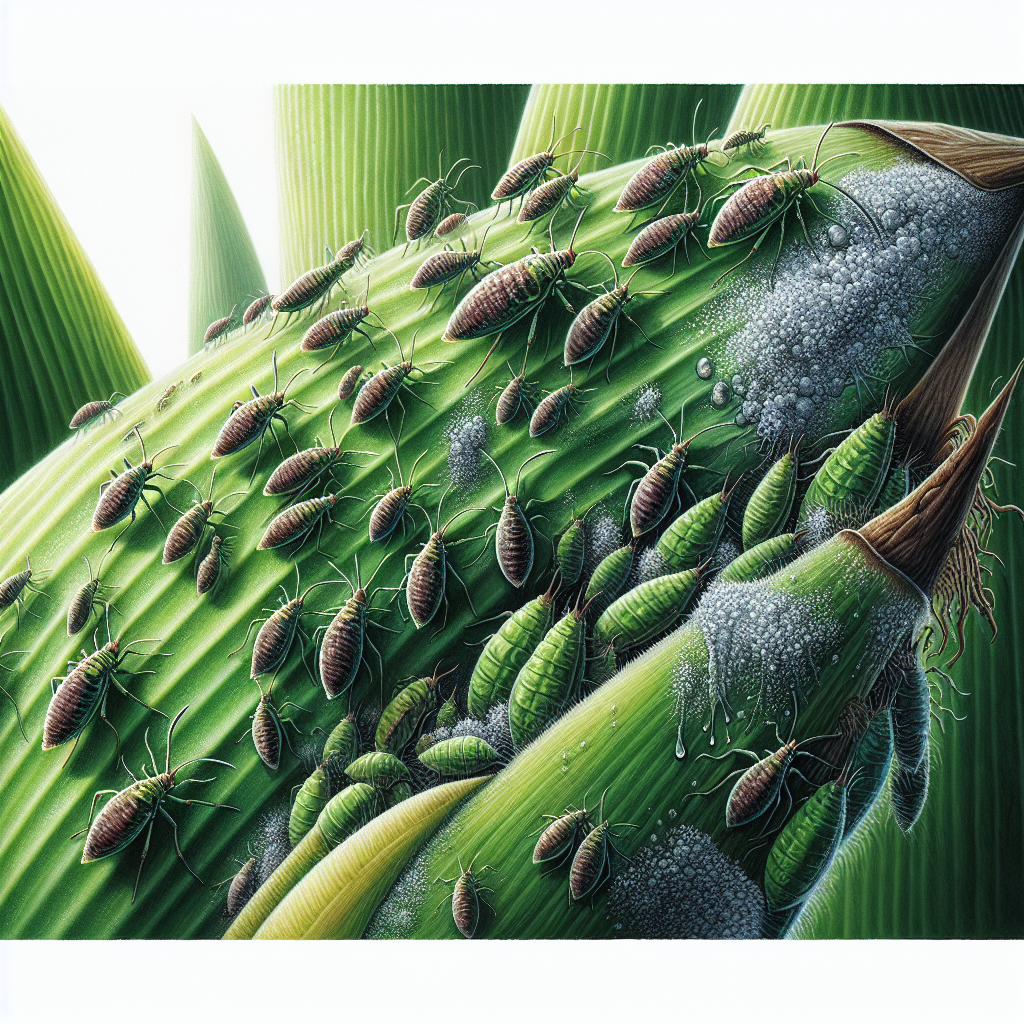
Introduction to banana aphids
Banana aphids, scientifically known as Pentalonia nigronervosa, represent one of the most insidious pests affecting banana cultivation worldwide. These tiny sap-sucking insects, typically measuring 1.5-2.5 mm in length, are dark brown to black with a pear-shaped body and prominent antennae. Unlike many aphids, banana aphids thrive in the pseudostem and leaf sheaths of banana plants, making them particularly challenging to detect and control.
As primary vectors of the banana bunchy top virus (BBTV), these aphids pose a catastrophic threat to commercial and small-scale banana production. A single infected plant can doom an entire plantation if not managed swiftly. Native to Southeast Asia, banana aphids have spread globally via infected planting material, impacting millions of hectares annually. Their rapid reproduction—females give birth to live young without mating—allows populations to explode under favorable conditions.
Understanding banana aphids is crucial for growers of Dwarf Cavendish banana, Cavendish banana, and other varieties. Early detection through symptom scouting and integrated pest management (IPM) forms the cornerstone of defense. This comprehensive guide covers identification, lifecycle, triggers, organic treatments, prevention, and affected crops to empower farmers with actionable knowledge. For more on general aphid management, check our Spring Pest Patrol blog post.
Identifying Symptoms & Damage
Banana aphid infestations manifest through several telltale signs, often confused with nutrient deficiencies or viral diseases they transmit. The primary visual cue is clusters of tiny, dark aphids congregating at the base of leaf petioles, within pseudostem leaf sheaths, and around the growing point. Affected leaves exhibit stunted growth, upward curling, and a brittle texture. Severe infestations cause yellowing and necrosis at feeding sites.
Look for sooty mold, a black fungal growth on honeydew excreted by aphids, coating leaves and reducing photosynthesis. Distorted bunch development—small, malformed fingers—and pseudostem cracking signal advanced damage. Unlike mealybugs or scale insects, banana aphids move actively and produce little visible webbing.
The most alarming symptom is bunchy top disease transmission: leaves form a 'bunch' at the plant's top, with dark green streaks and midrib chlorosis. Infected plants rarely fruit, with yields dropping 100% in epidemics. Scout weekly by peeling back leaf sheaths on 20-30 plants per hectare; even 1% infestation warrants action. Differentiate from spider mites by the absence of fine webbing and stippling.
Economic damage includes 30-50% yield loss from direct feeding and up to 100% from virus transmission. In plantain fields, aphids weaken ratoon crops, reducing lifespan by 6-12 months. Use a 10x hand lens for confirmation; aphids excrete honeydew, attracting ants that exacerbate spread.
Lifecycle and Progression of banana aphids
Banana aphids exhibit a complex lifecycle adapted to tropical environments, completing generations in 20-30 days. Wingless females (1.2-2.0 mm) dominate populations, reproducing parthenogenetically—producing 50-100 nymphs over 20 days without males. Nymphs (4 instars) mature in 7-10 days, feeding on tender tissues.
Winged forms (alates) emerge under stress (overcrowding, host decline), dispersing up to 1 km for new colonies. Eggs are rare; populations rely on live birth. Peak activity occurs during wet seasons, with 10-15 generations yearly. Overwintering occurs as nymphs in mild climates.
Progression starts with colonization of young suckers, progressing upward. First instars target meristematic tissue, injecting saliva that disrupts phloem. By week 3, colonies reach 100-500 aphids per plant. Virus acquisition happens within minutes of feeding on infected plants, with transmission lifelong.
Lifecycle stages: Egg (rare), 4 nymphal instars (3-5 days each), adult (20-30 days). Temperature optima: 25-30°C; development halts below 15°C. High humidity (>70%) accelerates reproduction. Understanding this enables targeted interventions during nymphal vulnerability.
Environmental Triggers & Risk Factors
Banana aphids flourish in warm (25-32°C), humid (>80%) conditions, common in banana-growing tropics. Excessive nitrogen fertilization promotes lush growth, ideal for aphid colonization. Poor airflow from dense planting (<2m spacing) traps humidity, favoring outbreaks.
Introduction via infested suckers or tools spreads aphids rapidly. Ants farming aphids for honeydew worsen infestations. Drought stress weakens plants, making them susceptible. Rainy seasons trigger winged dispersal, infesting new fields.
Risk factors include monoculture banana plantations, lack of varietal diversity, and proximity to ornamentals. Weedy borders harbor reservoirs. Overuse of broad-spectrum insecticides kills predators like ladybugs and parasitic wasps, causing rebounds. Climate change extends favorable periods, increasing epidemic risks.
Soil pH >7.0 and waterlogged conditions compound issues, mimicking root rot symptoms. Monitor during flush growth post-rain; thresholds: 5 aphids/plant (action), 20+ (epidemic).
Organic Control & Treatment Plans
Organic management emphasizes IPM: monitoring, cultural controls, biological agents, and targeted organics. Step 1: Scout and Rogue. Remove and destroy infested plants (burn/dig out), preventing virus spread. Disinfect tools with 10% bleach.
Step 2: Biological Controls. Release Aphidius colemani parasitoids (1,000/ha) and Harmonia axyridis ladybugs (2,000/ha). Neem oil (0.5% weekly sprays) disrupts feeding; insecticidal soaps (1-2% potassium salts) smother nymphs. Apply evenings to spare predators.
Step 3: Cultural Practices. Plant certified clean suckers; hot water dip (52°C/20min). Prune lower leaves for airflow; mulch suppresses weeds. Companion plant with marigold or thyme as repellents.
Treatment Timeline: Week 1: Rogue + soap spray. Week 2: Neem + predators. Weeks 3-6: Monitor + boosters. Rotate sprays; avoid >3 neem applications. Efficacy: 80-95% reduction in 4 weeks. For broader pest insights, see aphids.
Advanced Organic: Garlic-chili extracts (1:10 dilution), pyrethrum (IRAC Group 3A sparingly). Boost native predators with flowering borders. Success metrics: <2 aphids/plant post-treatment.
Preventing banana aphids in the Future
Prevention hinges on exclusion and resilience. Source virus-free planting material from certified nurseries; tissue culture preferred. Implement 3-month quarantine for new stock. Use parasitized suckers (20% rate) as natural controls.
Maintain 2.5-3m spacing for ventilation; desuckering keeps fields clean. Reflective mulches deter alates. Border traps with yellow sticky cards (50/ha) capture dispersers. Rotate with non-hosts like cassava every 3 years.
Annual IPM audits: Pre-monsoon clean-up, predator releases. Train scouts for early detection. Resistant varieties like FHIA hybrids reduce risk 50%. Avoid overhead irrigation; drip systems minimize humidity. Long-term: Build soil health with compost, enhancing plant vigor against aphids.
Crops Most Affected by banana aphids
Banana aphids primarily target Musa species: commercial Cavendish banana, Dwarf Cavendish banana, Lady Finger banana, plantain, and backyard varieties. Secondary hosts include heliconias, gingers (ginger), and ornamentals like bird-of-paradise.
High-value crops like Blue Java banana and export plantains suffer most from virus transmission. In Asia-Pacific, losses exceed $500M yearly. Minor impacts on pineapple and canna lilies. Focus protection on Musa-dominated regions: Latin America, Africa, Southeast Asia.