Introduction to Blue Java Banana (Ice Cream)
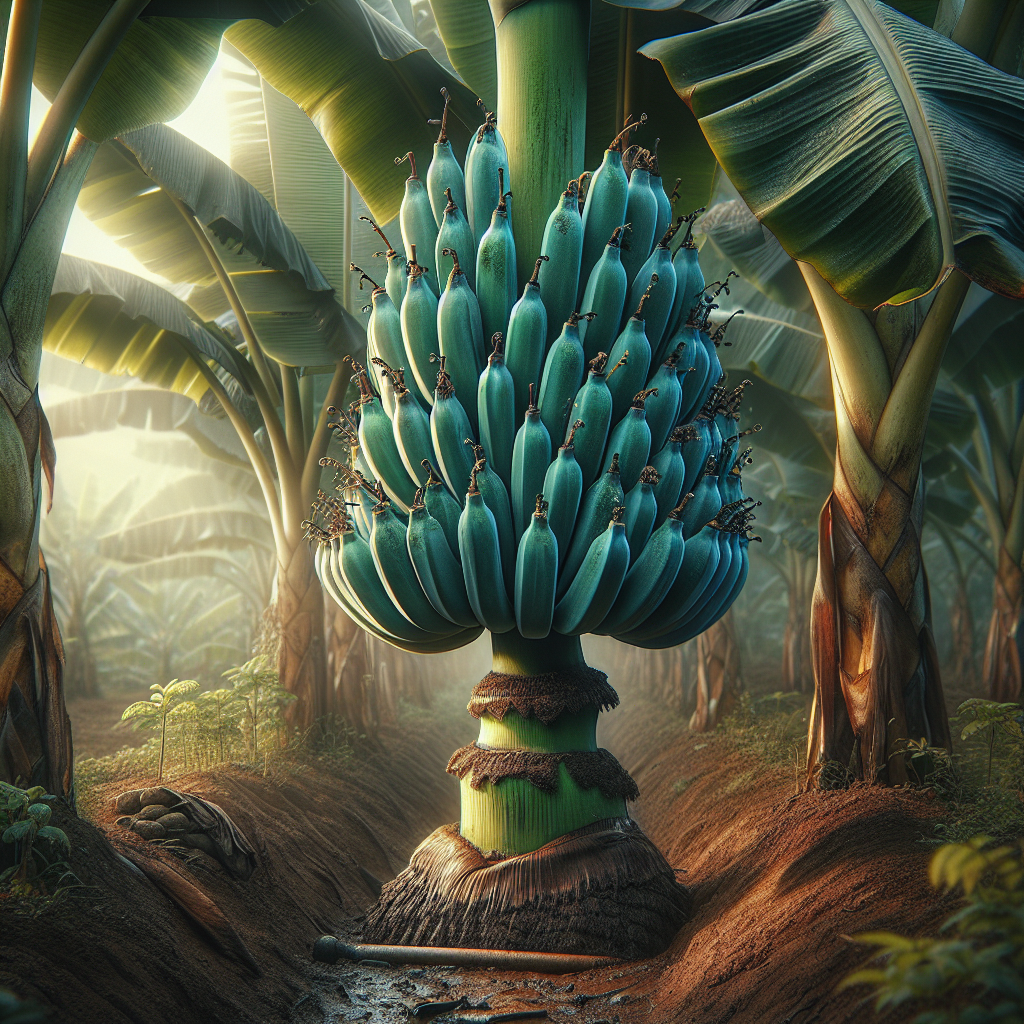
Known for its unusual silvery-blue fruit when immature and its soft, custard-like texture when ripe, this cultivar has become one of the most sought-after specialty bananas for home growers and tropical fruit collectors. The popular nickname “Ice Cream banana” comes from the fruit’s aroma and texture rather than any true dairy-like flavor, though many growers describe notes of vanilla, marshmallow, or sweet cream.
Blue Java is not just a novelty variety. In production terms, it is valued because it performs better in slightly cooler banana-growing regions than many common dessert types, although it still remains a frost-sensitive crop. Compared with many commercial Cavendish types, it typically produces a taller plant, a more imposing canopy, and fruit with a thicker peel and softer interior. For growers who already know standard banana culture, many principles are similar; however, the cultivar’s height, long crop cycle, and sensitivity to prolonged waterlogging make site selection and structural support especially important. If you want a baseline comparison with a more common dessert type, see our Dwarf Cavendish Banana guide.
In favorable conditions, a Blue Java mat can become highly productive, but quality depends on maintaining uninterrupted growth. Bananas do not go dormant in the true sense under tropical conditions; they simply slow down when temperatures, moisture, or nutrition become limiting. Any serious check in growth during the pseudostem-building phase usually reduces bunch size later. That is why professional management emphasizes continuous root-zone moisture, heavy feeding, mulching, and careful sucker selection.
Botanical Profile of Blue Java Banana (Ice Cream)
This cultivar belongs to the genus Musa, a group of giant herbaceous monocots rather than woody trees. The apparent “trunk” is actually a pseudostem formed by tightly packed leaf sheaths. The true stem is an underground corm that produces roots, suckers, and the inflorescence. After fruiting, each pseudostem dies and is replaced by daughter suckers, so productive banana growing is really the management of a perennial clump, often called a mat.
Blue Java is generally classified among dessert bananas and is often associated with ABB genomic heritage in horticultural literature, which helps explain its comparatively improved tolerance of wind, cool conditions, and certain environmental stresses versus more delicate AAA dessert bananas. Plants are typically tall, often reaching 12 to 20 feet depending on climate, soil fertility, and whether measurements include the highest leaf. Pseudostems are stout, usually with a waxy appearance that complements the glaucous bloom seen on unripe fruit.
Leaves are broad, bright to medium green, and prone to tearing in exposed sites. This tearing is not always harmful; split banana leaves can actually reduce wind resistance. However, excessive shredding lowers photosynthetic area and weakens bunch filling. The inflorescence emerges from the center of the pseudostem as a pendulous flower stalk. Female flowers develop first into the hands of bananas, followed by neutral or male flowers beneath the terminal bud.
Fruit is medium to large, usually more angular when young and fuller at maturity. The peel carries a distinctive blue-silver cast before ripening, particularly under strong natural bloom. As fruit matures, the peel turns pale yellow and may show brown flecking. The pulp is white to cream colored, very soft when fully ripe, and bruises more readily than firmer shipping cultivars. That makes it excellent for local consumption but less suited to rough post-harvest handling.
A single plant typically takes 15 to 24 months from planting to first harvest, depending on starting material, heat accumulation, fertility, and irrigation consistency. Warmer lowland tropical sites shorten the cycle; cooler subtropical sites lengthen it substantially.
Soil, pH, and Climate Requirements for Blue Java Banana (Ice Cream)
This cultivar performs best in deep, fertile, organically rich loam with excellent drainage and high water-holding capacity. The ideal soil texture is one that can remain evenly moist without becoming anaerobic. Bananas are heavy feeders with a shallow but extensive root system concentrated mostly in the upper 12 to 24 inches of soil, so compaction, crusting, and drought stress quickly reduce vigor.
A target soil pH of 5.5 to 7.0 is optimal, with 6.0 to 6.8 often giving the best nutrient balance. In soils below pH 5.5, calcium, magnesium, and phosphorus availability can become limiting, while manganese and aluminum may become excessive. In alkaline soils above pH 7.5, iron, manganese, and zinc deficiencies are more likely, showing up as chlorosis in younger foliage. Before planting, incorporate large quantities of fully decomposed compost or well-aged manure and correct major imbalances according to a soil test. For general fertility-building principles, review soil health strategies.
Drainage is critical. Blue Java likes abundant water, but not stagnant water around the corm. In poorly drained ground, the first signs of trouble are slow leaf emergence, yellowing lower leaves, weak sucker development, and a sour smell in the planting hole. In more advanced cases, roots turn dark and soft, pseudostems lose vigor, and fungal diseases increase. If your site puddles for more than 24 hours after heavy rain, plant on raised mounds or ridges 12 to 24 inches high.
Temperature is the major climatic driver. Best growth occurs between about 75 and 95°F. Growth slows markedly below 60°F, becomes sluggish below 55°F, and tissue damage is likely with frost. Blue Java is often described as cold hardy, but that should be understood as relatively hardy for a banana, not winter hardy in a temperate sense. Short exposure to the upper 30s°F may be survivable for established mats if the pseudostem is protected, but leaf burn and growth setback are expected.
Humidity and rainfall matter. Ideal annual rainfall is roughly 60 to 100 inches, well distributed, or the irrigation equivalent. In dry climates, maintain a consistently moist root zone with mulch and regular irrigation. In very arid heat with low humidity, leaf margins may scorch even when soil moisture is adequate. Wind protection is equally important. Strong winds shred leaves, topple tall stems, scar fruit, and reduce bunch quality. Plant near a windbreak, but avoid dense shade.
Full sun is preferred for best fruiting. Plants can survive partial shade, but bunches are usually smaller, crop cycles longer, and disease pressure often higher because foliage dries more slowly.
Step-by-Step Planting & Propagation
Start with disease-free planting material from a reputable nursery whenever possible. Tissue-cultured plants offer uniformity and lower initial disease risk, while sword suckers from healthy mother mats often establish vigorously. Avoid water suckers with broad, weak leaves at the base; they usually produce inferior plants because they have a weaker connection to the corm reserves.
- Choose a protected site with at least 8 hours of direct sun, deep soil, and no persistent standing water.
- Clear perennial weeds thoroughly. Bananas compete poorly during establishment if grass or bindweed occupies the root zone.
- Test soil and amend before planting. Work organic matter into the top 12 to 18 inches if feasible.
- Dig a hole roughly 18 to 24 inches wide and deep for nursery plants, or larger if your soil is compacted. In heavy soils, prioritize width over depth and plant slightly high rather than deep.
- Mix removed soil with compost. Do not overload the hole with raw manure or high-salt fertilizers, which can burn new roots.
- Set the plant so the corm sits level with or slightly above the surrounding soil line. Deep planting encourages rot.
- Backfill firmly enough to eliminate large air pockets, then water deeply to settle the soil.
- Apply 3 to 6 inches of coarse organic mulch over a broad circle, keeping mulch a few inches away from direct contact with the pseudostem.
Spacing depends on management intensity. For home production, 10 to 16 feet between mats is common. In tighter systems, 8 to 10 feet may work with aggressive desuckering and fertility management, but overcrowding raises disease pressure and reduces air movement.
For propagation from suckers, select sword suckers 3 to 4 feet tall with narrow juvenile leaves and a healthy base. Cut them away cleanly with a sharp spade, retaining a portion of corm and roots. Trim damaged tissue, inspect for borer or rot, and allow the cut surfaces to dry briefly in shade before planting. Some growers pare the corm and hot-water treat or dust with biological fungicides in areas with serious pest and disease histories.
If planting in marginal climates, place young plants when soil is warming and nights are reliably mild. In tropical monsoon climates, plant at the onset of rains only if drainage is excellent; otherwise, wait until the heaviest waterlogging risk has passed.
Care & Maintenance regimes for Blue Java Banana (Ice Cream)
Consistent moisture is the foundation of good management. The root zone should remain evenly moist to a depth of about 12 inches through most of the growing season. A practical field target is soil that feels cool and slightly adhesive when squeezed, but not slick, swampy, or foul smelling. If the top 2 inches dry rapidly while lower soil remains moist, increase mulch before increasing irrigation frequency. Mature plants in hot weather may need the equivalent of 1.5 to 2.5 inches of water per week, sometimes more in sandy soils. Drip or micro-sprinkler irrigation is ideal because it maintains steady moisture without prolonged leaf wetness.
Signs of underwatering include slow unfurling leaves, dull foliage, marginal leaf burn, narrow emerging leaves, reduced bunch size, and fruit that fills unevenly. Signs of overwatering include persistent yellowing, limp but not dry-feeling leaves, reduced root vigor, fungal odor in the soil, and eventual pseudostem decline.
Blue Java is a heavy nutrient consumer, especially of potassium. Nitrogen drives leaf and pseudostem growth, phosphorus supports rooting and energy transfer, and potassium is essential for fruit filling, disease tolerance, and pseudostem strength. A balanced feeding schedule usually works best: frequent light applications rather than infrequent heavy doses. In organic systems, combine compost, aged manure, feather meal or blood meal for nitrogen, and sulfate of potash or wood ash used cautiously for potassium depending on soil test results. Magnesium is often overlooked; deficiency appears as yellowing on older leaves while midribs remain greener.
As a practical regime, feed every 6 to 8 weeks during active growth. Young plants need nitrogen-forward fertility to build canopy. Once pseudostems approach flowering size, ensure potassium is abundant to support bunch development. Keep fertilizer in a ring 12 to 36 inches from the pseudostem rather than against the base, where it can burn tissue.
Mat management is critical. Retain one mother plant, one follower, and one young sucker as the standard three-generation system. Remove excess suckers at ground level and destroy the growing point if they resprout. This channels energy into fewer stems, improves air circulation, and produces more consistent bunches. Allowing too many suckers leads to smaller fruit, thinner stems, and a congested, disease-prone mat.
Pruning is minimal but strategic. Remove dead leaves, badly shredded leaves, and leaves touching developing fruit where friction may scar the peel. Do not over-prune healthy green leaves, because bananas rely on a large photosynthetic surface to size fruit. After harvest, cut the spent pseudostem down and chop it into pieces as mulch unless disease is present.
Tall stems often need support once bunches develop. Use a forked prop, bamboo brace, or tied support system to prevent lodging. This is especially important in windy sites or after heavy rain, when top-heavy stems may snap near the base.
Cold protection in subtropical areas may include thick mulching, wrapping the pseudostem with frost cloth, and maintaining a dry, insulated root zone before cold nights. If a freeze kills leaves but the corm survives, recovery depends on whether the growing point in the pseudostem was damaged.
Pests, Diseases & Organic Management
The most common problems depend on region, but several issues are widespread in banana production. Banana aphids are important not only because they sap vigor but because they can vector Banana bunchy top virus where that disease is present. Mealybugs and Scale insects also colonize leaf sheaths and fruit stalks, especially in dense plantings. Spider mites may appear in hot, dusty conditions. Organic control begins with sanitation, spacing, and vigorous plants rather than sprays alone. Remove old sheath debris if it shelters pests, encourage natural enemies, and use horticultural soap or neem-based products only when infestations are clearly building.
Banana weevils and Corm borers are serious pests in some production zones. Adults lay eggs near the plant base, and larvae tunnel into the corm and pseudostem, weakening plants and causing toppling. Symptoms include poor vigor, delayed growth, and internal tunneling visible when stems are cut. Start with clean planting material, remove harvested stems promptly, and avoid leaving infested residues beside healthy mats. Pseudostem traps made from cut stem sections can help monitor and reduce adult populations.
Nematodes, especially burrowing and lesion types, can devastate roots and undermine anchorage. Infested plants appear nutrient deficient even when fertility is adequate. Roots become sparse, darkened, and dysfunctional. Organic suppression relies on clean propagation material, generous organic matter, crop hygiene, and in some systems the use of companion groundcovers such as Clover in adjacent zones rather than directly smothering the corm area.
Fungal leaf diseases such as Sigatoka cause streaking, necrotic lesions, and loss of green leaf area, directly reducing fruit fill. Good airflow, sunlight penetration, removal of badly diseased leaves, and avoiding overhead irrigation late in the day all help. Blue Java is not immune, so preventive canopy management matters.
Panama disease, caused by Fusarium oxysporum f. sp. cubense, is one of the most serious banana diseases globally. It is soilborne, persistent, and difficult to eradicate. Symptoms include yellowing older leaves, longitudinal splitting of the pseudostem base, vascular discoloration, and eventual collapse. The best organic defense is exclusion: never introduce suspect suckers, tools, or soil from infected areas.
Bacterial soft rots and Crown rots usually follow injury, waterlogging, or poor sanitation. Use clean cutting tools, avoid damaging roots during weeding, and do not let mulch remain soggy against the pseudostem. Healthy drainage is often the deciding factor between a productive mat and chronic disease.
Harvesting, Curing & Optimal Storage
Blue Java is usually harvested mature-green rather than waiting for full ripening on the plant, especially where birds, bats, insects, or fruit splitting are concerns. Fruit maturity is judged by the filling of the fingers: the sharp angular edges become more rounded, the peel color lightens from dark blue-green to paler green, and the floral remnants at the tip dry down. Depending on climate, harvest may occur 75 to 150 days after flowering.
Use a sharp knife and harvest with two people if possible. One person supports the bunch while the other cuts the stem partly through and lowers it gently. This cultivar bruises easily once physiologically mature, and rough handling will show later as brown pulp patches.
After cutting, keep bunches shaded and cool. Wash only if necessary, using clean water, and dry thoroughly. Commercial curing in bananas is less about healing like onions or sweet potatoes and more about careful post-harvest handling and controlled ripening. If you want even ripening, hang the bunch or separate hands and keep them at about 58 to 68°F. Colder temperatures can cause chilling injury, showing as dull peel color, poor ripening, and off texture.
For home ripening, leave fruit at room temperature until the peel turns yellow with scattered brown flecks. Blue Java is often best when just fully colored but before the peel turns heavily blotched and the flesh becomes overly loose. At peak ripeness, the fruit is aromatic, very soft, and ideal for fresh eating, smoothies, and desserts.
Do not refrigerate green bananas. Once fully ripe, short refrigeration is possible, but peel darkening accelerates and texture softens quickly. Because the cultivar is delicate, it is best consumed within a few days of ripening. For longer storage, peel and freeze slices or puree.
Companion Planting for Blue Java Banana (Ice Cream)
Good companions for banana systems serve one or more of four functions: they suppress weeds, improve soil cover, recycle nutrients, or provide additional harvests without competing aggressively for light and root space. The best companions are usually shallow, manageable understory species or edge crops rather than large woody competitors.
Ginger is one of the most useful companions in humid tropical gardens because it tolerates partial shade, benefits from the moist, organic-rich conditions around banana mats, and occupies a different canopy layer. Turmeric behaves similarly and is especially valuable where a living understory is needed to reduce bare-soil evaporation. Both should still be planted far enough from the banana pseudostem to avoid crowding the immediate feeding zone.
Clover can work as a low-growing living mulch in pathways or around the outer root zone, where it helps reduce erosion and adds organic matter when cut back. Keep it from forming a dense mat right up against newly planted bananas, since young plants need low competition while establishing. In warm, wet climates where clover struggles, use locally adapted cover crops with the same management principles.
Sweet Potato is another effective companion where spacing allows. It covers soil quickly, suppresses weeds, and reduces splash-up that can spread foliar disease spores. However, monitor vigor closely: if vines begin climbing the pseudostem or restricting access for mat maintenance, trim them back. The key principle with all companions is to keep the central 18 to 24 inches around each banana plant open, mulched, and easy to inspect for suckers, borers, and disease symptoms.