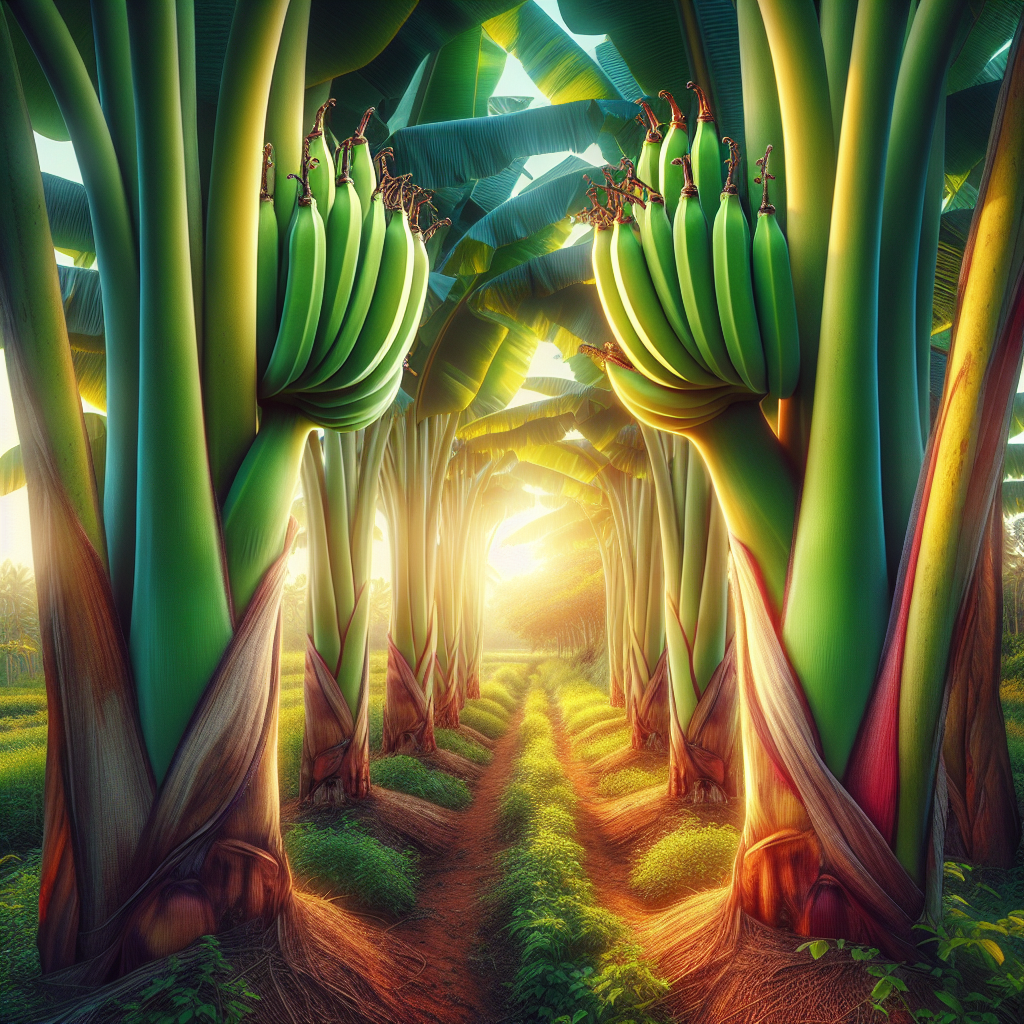
Introduction to Lady Finger Banana
A classic small dessert banana, this variety is widely appreciated for its thin, elegant fruits, creamy texture, and rich sweetness that often develops with hints of honey or vanilla when fully ripe. In many regions, “Lady Finger” refers to a subgroup of sweet bananas related to the Sucrier type, though local naming can vary, so growers should always confirm the exact clone from a reputable nursery before planting on any scale.
Unlike the heavy, thick-fingered export bananas common in supermarkets, this type is typically grown for premium local markets, home orchards, mixed tropical plantings, and direct consumption. Its fruits are usually shorter and slimmer than standard Cavendish types, with a thinner peel and a more delicate eating window. That means it can command excellent value where customers recognize superior flavor, but it also demands careful harvest timing and gentle handling.
Bananas are giant perennial herbs rather than trees. What appears to be a trunk is actually a pseudostem formed by tightly wrapped leaf sheaths. That distinction matters in cultivation: after fruiting, each pseudostem dies and is replaced by suckers arising from the underground corm. Successful production therefore depends on managing a continuous mat of mother plants, followers, and young sword suckers rather than treating the crop like a permanent woody fruit tree.
For growers comparing banana types, it can be useful to understand general banana growth habits in relation to Banana. Lady Finger is usually chosen when flavor and niche market appeal are more important than rugged transport performance.
Botanical Profile of Lady Finger Banana
This cultivar is generally placed within Musa acuminata-dominant dessert bananas, often in the AA genomic group for true Sucrier types, although naming in trade can overlap with other slender dessert bananas in some countries. Plants typically produce a medium-height pseudostem, often in the range of 2.5 to 4 meters under good conditions, though actual height varies by clone, fertility, irrigation, and wind exposure.
Leaves are broad, soft, and highly susceptible to shredding in exposed windy sites. Healthy leaf retention is critical because bunch filling depends on photosynthetic capacity. As a rule, a plant should carry at least 8 to 10 functional leaves at flowering and maintain as many green leaves as possible through fruit development. When severe wind or Sigatoka pressure strips the canopy, fingers remain thin, bunch weight falls, and ripening may become uneven.
The root system is fibrous and relatively shallow, with the majority of feeding roots concentrated in the top 30 to 60 cm of soil, though roots can spread laterally well beyond the pseudostem. This is why bananas respond strongly to mulching, frequent irrigation, and surface nutrient applications. They are not drought crops; they are high-transpiration tropical herbs with continuous nutrient demand.
The inflorescence emerges from the center of the pseudostem and bends downward as hands develop. Female flowers form the fruit-bearing hands first, followed later by neutral and male flowers under the bracts. In some production systems, the lingering male bud is removed after the last useful hand has set to reduce pest harboring and divert energy to fruit fill.
Lady Finger fruit characteristically develops in neat clusters of slim, slightly curved fingers. The peel is generally thinner than Cavendish types, and ripe fruit bruises more easily. Flesh is dense yet creamy, with high sugar accumulation when harvested at proper physiological maturity. Because of this thinner peel and delicate finish, postharvest handling must be more careful than with sturdier market bananas such as Dwarf Cavendish Banana.
Soil, pH, and Climate Requirements for Lady Finger Banana
This crop performs best in deep, fertile, well-drained loam or sandy loam with high organic matter and excellent moisture-holding capacity. The ideal rooting zone is loose and aerated to at least 60 cm depth, but deeper is better. Heavy clay can work if drainage is engineered with raised beds, mounds, or broad ridges. Waterlogged soil is one of the fastest ways to weaken root systems, invite rot organisms, and reduce vigor.
An ideal soil pH is 5.5 to 7.0, with the best nutrient availability commonly seen around pH 6.0 to 6.5. Below pH 5.2, aluminum and manganese toxicity risks rise and calcium, magnesium, and phosphorus availability often become limiting. Above pH 7.5, micronutrient deficiencies, especially iron and zinc, become more common. If soil is strongly acidic, incorporate agricultural lime several months before planting based on soil test results. If alkaline, heavy use of compost, acid-forming fertilizers, and micronutrient correction may be needed.
Lady Finger bananas thrive where average temperatures remain between 24 and 30°C. Growth slows below 18°C, and chilling injury can appear with prolonged exposure under 12 to 14°C depending on plant condition. Frost is usually fatal to leaves and may destroy the pseudostem. Heat above 35°C can be tolerated if soil moisture is constant and humidity is moderate, but bunch filling may suffer under hot, dry winds.
Rainfall of 1,500 to 2,500 mm annually is suitable when well distributed, though excellent irrigation can replace irregular rainfall. The crop prefers evenly moist soil, not wet-dry extremes. In the active root zone, aim for soil moisture near field capacity without saturation. Practically, the soil at 15 to 20 cm depth should feel cool and crumbly, not dusty and not sticky-slimy. If you squeeze a handful and it forms a weak ball that breaks apart with light pressure, moisture is usually in a good range.
Overwatering signs include sour-smelling soil, yellowing older leaves despite adequate nutrition, reduced new leaf emergence, soft roots, poor anchorage, and pseudostems that appear lush but weak. Underwatering signs include leaf folding along the midrib during midday, marginal scorching, narrow emerging leaves, delayed shooting, and undersized fingers. Consistent moisture is especially important from floral initiation through bunch filling.
Wind protection is essential. Because leaves tear easily, plant in locations buffered by windbreaks, contour hedges, buildings, or mixed orchard design. However, maintain airflow around mats to reduce leaf disease pressure. In cyclone- or storm-prone areas, avoid overly soft nitrogen-heavy growth late in the season and maintain potassium and silicon where available to improve tissue strength.
Step-by-Step Planting & Propagation
Use disease-free planting material only. The best options are tissue-cultured plants from certified sources or sword suckers taken from vigorous, symptom-free mats. Sword suckers are preferred over broad-leaf water suckers because they have a stout base, stronger connection to the corm, and better early vigor. Select suckers 1 to 1.5 meters tall with a firm conical form.
Before planting, prepare the site thoroughly. Remove perennial weeds, loosen the soil deeply, and incorporate generous organic matter. Well-rotted compost at 10 to 20 kg per planting hole improves microbial activity and moisture buffering. If nematodes or soil-borne diseases are known problems, avoid replanting immediately into old banana ground without sanitation and rotation.
Spacing depends on fertility, irrigation, cultivar height, and intended management intensity. A practical spacing is 2.5 x 2.5 meters for moderate-density production, while 3 x 3 meters gives better airflow and easier management in humid regions. In small gardens, allow enough room for each mat to carry one mother plant, one follower, and one peeper without crowding.
Planting steps:
- Dig a hole roughly 45 to 60 cm wide and deep, or build a raised mound in poorly drained soils.
- Mix removed soil with compost and, if needed, a small amount of rock phosphate or a balanced basal fertilizer according to soil test results.
- Trim damaged roots and remove any decayed tissue from suckers. Some growers pare the corm lightly and dip it in a biological fungicide or hot-water treatment where sanitation is critical.
- Set the plant so the corm sits firmly with the soil line just covering the base. Do not bury too deeply.
- Backfill and press gently to eliminate air pockets.
- Water thoroughly to settle the root zone.
- Mulch immediately with 8 to 15 cm of organic material, keeping mulch 10 cm away from direct contact with the pseudostem.
Tissue-cultured plants need hardening if raised under protected conditions. Acclimatize them for 1 to 2 weeks in partial shade before field establishment. Keep humidity high initially and protect from scorching sun and strong wind.
Planting is best timed for the onset of warm rainy weather or early in the irrigation season so the crop establishes before heat stress peaks. In monsoonal climates, planting just before reliable rains begin is ideal, provided drainage is adequate.
Care & Maintenance regimes for Lady Finger Banana
Nutrition drives bunch size, fruit quality, and ratoon performance. Lady Finger is a heavy feeder, especially for nitrogen and potassium, with significant demand for magnesium, calcium, sulfur, and trace elements. Use soil and leaf analysis whenever possible. In general practice, feed lightly but frequently rather than applying one large dose. Split applications every 4 to 6 weeks during active growth are more efficient and reduce leaching losses.
Nitrogen supports leaf production and canopy development, but excess nitrogen without matching potassium leads to weak, watery growth and softer fruit. Potassium is particularly important for bunch filling, sweetness, disease tolerance, and stem strength. If leaves are lush green but bunches remain small or fruit quality is poor, potassium deficiency or imbalance is often part of the problem.
A practical organic regime may include composted manure, vermicompost, mulch recycling from chopped leaves and spent pseudostems, wood ash in modest amounts where pH allows, and supplementary organic potassium sources if available. Maintaining a constant mulch blanket is one of the most effective banana management practices; it moderates soil temperature, feeds soil life, suppresses weeds, and conserves water.
Irrigation should be adjusted to soil type and weather. Young plants may need 10 to 15 liters every 2 to 3 days in light soils during hot weather, while established fruiting mats can require the equivalent of 25 to 50 mm of water per week, and more in sandy soils or extreme heat. Drip irrigation is ideal because it keeps the root zone evenly moist without prolonged waterlogging. Micro-sprinklers also work well where humidity management is acceptable.
Desuckering is essential. Maintain a mat with one bearing pseudostem, one strong follower for the next crop, and one small successor if desired. Remove excess suckers regularly by cutting them at ground level and destroying the growing point. Neglected mats become overcrowded, nutrient-starved, and disease-prone.
Propping may be necessary once bunches fill, especially in windy sites or fertile soils where plants become top-heavy. Use forked poles or soft ties to support the pseudostem without damaging tissues. Remove dry, fully senescent leaves, but avoid excessive pruning of green leaves because each functioning leaf contributes directly to fruit filling.
Debudding and bunch care can improve market quality. After the final hand sets, remove the male bud if local practice supports it and disease pressure justifies it. In commercial systems, bunch sleeving with perforated bags can reduce insect blemish and produce cleaner fruit, though ventilation is important in humid climates.
For long-term fertility improvement around banana mats, growers often borrow mulch and cover-cropping concepts from broader tropical soil management systems. A useful general reference is soil health tips.
Pests, Diseases & Organic Management
The biggest production problems usually come from root and leaf disorders rather than occasional chewing insects. Banana weevil borers tunnel into the corm and lower pseudostem, weakening anchorage and reducing yield. Symptoms include poor vigor, reduced bunch size, snapping in wind, and tunnels visible when the corm is cut. Sanitation is the first defense: use clean planting material, remove old harvest residues promptly, and trap adults with cut pseudostem pieces that are collected and destroyed regularly.
Plant-parasitic nematodes, especially burrowing and Lesion nematodes, damage roots and predispose plants to toppling. Infested plants often appear undernourished despite fertilization. Organic management includes clean planting stock, heavy organic matter incorporation, crop rotation before replanting, and the use of antagonistic soil biology through composts and biologically active mulches.
Aphids are important because they can vector Banana bunchy top virus in regions where that disease occurs. Monitor for dark aphid colonies near leaf axils and young tissues. Remove and destroy infected plants immediately if viral symptoms such as erect narrow leaves, dark green streaking, and stunted bunchless growth appear. Do not compost confirmed virus-infected material unless fully thermophilic composting is guaranteed.
Sigatoka leaf spot diseases reduce green leaf area and can dramatically cut fruit fill. Early symptoms are small streaks that develop into elongated necrotic lesions. Good airflow, leaf sanitation, balanced nutrition, and avoiding overhead irrigation late in the day all help. In organic systems, copper-based materials may be used where permitted, but they should support rather than replace cultural control.
Fusarium wilt, or Panama disease, is among the most serious banana diseases globally. It causes yellowing, one-sided leaf collapse, vascular discoloration, and eventual plant death. There is no curative treatment once established in soil. Prevention is everything: plant certified clean material, prevent movement of contaminated soil on boots and tools, improve drainage, and rogue symptomatic mats quickly. Never move suckers from unknown sources.
Crown rot and postharvest Anthracnose can affect fruit if bunches are harvested in wet conditions or handled roughly. Keep harvest tools clean, avoid bruising, and move bunches into shade immediately.
Harvesting, Curing & Optimal Storage
Harvest timing determines flavor, shelf life, and marketability. Lady Finger bananas should be cut at full physiological maturity but before full ripening on the plant for most handling situations. Look for filled fingers with reduced angularity, a plumper cross-section, and a slight color lightening from deep green to a softer green. Depending on climate, this may occur roughly 10 to 16 weeks after flowering, though local conditions strongly affect timing.
For local fresh use, fruit can be harvested slightly more mature to maximize sweetness. For transport, cut a little earlier while the fruit is still firm. Use a clean sharp knife and support the bunch during cutting to prevent impact bruising. Because the peel is delicate, never drop hands onto hard surfaces.
After harvest, keep bunches shaded and cool. Wash gently if needed, ideally in clean sanitized water, and allow surfaces to dry before packing. In small-scale operations, “curing” mainly means letting field heat dissipate, latex dry, and wounds settle before storage or market. It does not mean dry curing as with onions or garlic.
Optimal storage for green fruit is generally around 13 to 15°C with high relative humidity near 85 to 95%. Below about 12°C, chilling injury may occur, expressed as dull peel color, poor ripening, and flesh disorders. At room temperature, fruit ripens quickly and should be monitored daily. Once yellow, Lady Finger bananas are best consumed promptly because they progress from perfectly ripe to overripe faster than thicker-skinned types.
Do not store bananas in sealed, unventilated conditions. Ethylene accelerates ripening, so if fast ripening is desired, place mature green fruit in a breathable bag with a ripe apple or tomato for a short period. If slower ripening is desired, keep fruit cool, separate from ethylene-producing produce, and avoid sun exposure.
Companion Planting for Lady Finger Banana
Companion planting around banana mats works best when the goal is soil protection, weed suppression, humidity buffering, and efficient use of the partially shaded understory. Because bananas are shallow rooted and heavy feeders, companions should not be aggressive climbers or dense woody competitors.
Turmeric is one of the best companions in tropical systems. It tolerates partial shade, benefits from the moist, organic-rich conditions around banana mats, and helps turn the understory into a productive layer without excessive root competition. Ginger serves a similar role and is especially useful where growers want an additional cash crop or household spice crop from the same irrigated zone.
Clover can be used in suitable climates as a living groundcover in inter-rows, especially where temperatures are not excessively hot year-round. It helps reduce erosion, moderates weed pressure, and contributes organic matter. In tropical orchards, low-growing local legumes may fill a similar role if clover is not well adapted.
Taro is another useful intercrop in wetter tropical settings where the soil remains consistently moist but drained. It makes efficient use of humid understory conditions, though spacing must be generous so both crops receive enough nutrients.
Avoid heavy feeders planted too close to the mat base, and do not let companions smother suckers or reduce airflow around the pseudostem. Keep the inner 50 to 75 cm around each banana plant heavily mulched and mostly clear so irrigation, fertilization, desuckering, and disease inspection remain easy.